Category Archives: Food Hygiene

USA – Hepatitis A Exposure At Kentucky Ave. Burger King in Indianapolis

Food Poisoning Bulletin

A worker at the Burger King at 3311 South Kentucky Avenue, near Mann Road in Indianapolis has been diagnosed with hepatitis A. Anyone who ate at that facility from January 21 through January 24, 2019 may have been exposed to the pathogenic virus.

The Marion Countuy Public Health Department is hating a special clinic on Monday, February 4, 2019, from 11:00 am to 7:00 pm at its South District Health Office at 7551 South Shelby Street. Anyone who visited that restaurant on the above dates can get a vaccination. People who ate there on January 21 have until today to get a shot, since the vaccine is only effective if given within two weeks of exposure. You can also get the shot at doctor’s offices.

The Burger King restaurant management is cooperating with public health officials and is cleaning the restaurant. The restaurant is remaining open while the investigation is ongoing.

Kenya – Clovers and Mother Nature’s Peanut Butter Exceeds Aflatoxin Levels – KEBS

All Africa

Nairobi — Kenya Bureau of Standards (KEBS) has withdrawn the permits of Triclover and Mother nature’s after their peanut butter products were found to exceeded aflatoxin levels.

In a statement, KEBS said factory inspections undertaken in 2018 revealed that Clovers Peanut Butter and Mother nature’s had aflatoxin levels above the acceptable levels of 15 parts per billion.

“In the last 7 months, KEBS has been undertaking market surveillance of peanut butter. 54 samples of peanut butter have been collected from various points of sale and manufacturers from 1st July, 2018 to date and tested,” said KEBS Acting Managing Director Nguyo Bernard.


USA – Norovirus Outbreak Associated with La Fuente in Renton, WA

Food Poisoning Bulletin Eurofins

A possible norovirus outbreak has been associated with La Fuente restaurant, located at 14400 South East Petrovitsky Road in Renton, Washington, according to a press release by the King County Public Health Department. Twenty-eight people are sick after eating food and drinking beverages there on January 25, 2019. The 28 people were all from one party.

New Zealand – Shellfish biotoxin alert – Northland East Coast region

MPI

The Ministry for Primary Industries (MPI) today reduced the area affected by the public health warning against collecting shellfish on the Northland East Coast to the area between Kokota (The Sandspit) and Farmer Point.

Routine tests on shellfish samples taken from this region have shown levels of Paralytic Shellfish Poisoning (PSP) toxins above the safe limit of 0.8 mg/kg set by MPI. Anyone eating shellfish from this area is potentially at risk of illness.

Mussels, oysters, tuatua, pipi, toheroa, cockles, scallops, catseyes, kina (sea urchin) and all other bivalve shellfish should not be eaten.

Note: cooking shellfish does not remove the toxin.

Pāua, crab and crayfish may still be eaten if the gut has been completely removed prior to cooking, as toxins accumulate in the gut. If the gut is not removed its contents could contaminate the meat during the cooking process.

Symptoms typically appear between 10 minutes and 3 hours after ingestion and may include:

  • numbness and a tingling (prickly feeling) around the mouth, face, and extremities (hands and feet)
  • difficulty swallowing or breathing
  • dizziness
  • headache
  • nausea
  • vomiting
  • diarrhoea
  • paralysis and respiratory failure and in severe cases, death.

Map highlighting in red the areas affected.

Australia – Mungalli Creek Kefir 1 Litre BB Date 22/2/2019 No other products affected – E.coli

FSAU

Mungalli Creek Dairy would like to alert their Cairns and Townsville customers that the above item has been recalled. Please do not consume and return the product to your place of purchase for a full refund. We have already retrieved 95% of stock prior to sale and are asking for your assistance in retrieving the remaining 5% of stock.

Problem: The recall is due to testing showing the possible presence of E.coli

Food Safety Hazard: Food products contaminated with E. coli may cause illness if consumed

Country of origin: Australia

What to do: Any consumers concerned about their health should seek medical advice. Customers should return the product to the place of purchase for a full cash refund. No other products are affected and this is the only batch of Kefir affected. All new batches will have additional testing to ensure product integrity. We thank you for your assistance and apologise for any inconvenience.
For further information contact Michelle Bell-Turner on 0438 171 248​

Research -Identification and Spoilage Potential of the Remaining Dominant Microbiota on Food Contact Surfaces after Cleaning and Disinfection in Different Food Industries

Journal of Food Protection

After cleaning and disinfection (C&D), surface contamination can still be present in the production environment of food companies. Microbiological contamination on cleaned surfaces can be transferred to the manufactured food and consequently lead to foodborne illness and early food spoilage. However, knowledge about the microbiological composition of residual contamination after C&D and the effect of this contamination on food spoilage is lacking in various food sectors. In this study, we identified the remaining dominant microbiota on food contact surfaces after C&D in seven food companies and assessed the spoilage potential of the microbiota under laboratory conditions. The dominant microbiota on surfaces contaminated at ≥102 CFU/100 cm2 after C&D was identified based on 16S rRNA sequences. The ability of these microorganisms to hydrolyze proteins, lipids, and phospholipids, ferment glucose and lactose, produce hydrogen sulfide, and degrade starch and gelatin also was evaluated. Genera that were most abundant among the dominant microbiota on food contact surfaces after C&D were Pseudomonas, Microbacterium, Stenotrophomonas, Staphylococcus, and Streptococcus. Pseudomonas spp. were identified in five of the participating food companies, and 86.8% of the isolates evaluated had spoilage potential in the laboratory tests. Microbacterium and Stenotrophomonas spp. were identified in five and six of the food companies, respectively, and all tested isolates had spoilage potential. This information will be useful for food companies in their quest to characterize surface contamination after C&D, to identify causes of microbiological food contamination and spoilage, and to determine the need for more thorough C&D.


Research – Growth and Survival of Listeria monocytogenes and Salmonella on Whole and Sliced Cucumbers

Journal of Food Protection cucumber
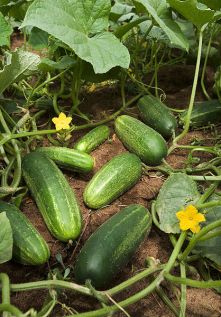
Cucumbers were associated with four multistate outbreaks of Salmonella in the United States between 2013 and 2016. This study evaluated the fate of Listeria monocytogenes and Salmonella on whole and sliced cucumbers at various storage temperatures. Cucumbers were inoculated with five-strain cocktails of L. monocytogenes or Salmonella, air dried, and stored at 23 ± 2, 4 ± 2, and −18 ± 2°C. Whole and sliced cucumber samples were enumerated on nonselective and selective media at 0, 0.21, 1, 2, 3, and 4 days (23 ± 2°C); 0, 1, 2, 3, 7, 14, and 21 days (4 ± 2°C); and 0, 7, 28, 60, 90, and 120 days (−18 ± 2°C). For Salmonella, additional time points were added at 8 and 17 h (23 ± 2°C) and at 17 h (4 ± 2°C). Population levels were calculated for whole (CFU per cucumber) and sliced (CFU per gram) cucumbers. Both pathogens grew on whole and sliced cucumbers held at ambient temperatures. At 23 ± 2°C, L. monocytogenes and Salmonella populations significantly increased on whole (2.3 and 3.4 log CFU per cucumber, respectively) and sliced (1.7 and 3.2 log CFU/g, respectively) cucumbers within 1 day. Salmonella populations significantly increased on whole and sliced cucumbers after only 5 h (2.1 log CFU per cucumber and 1.5 log CFU/g, respectively), whereas L. monocytogenes populations were not significantly different on whole and sliced cucumbers at 5 h. L. monocytogenes and Salmonella populations survived up to 21 days on refrigerated whole and sliced cucumbers. At 4 ± 2°C, L. monocytogenes populations significantly increased on whole (2.8 log CFU per cucumber) and sliced (2.9 log CFU/g) cucumbers, whereas Salmonella populations significantly decreased on whole (0.6 log CFU per cucumber) and sliced (1.3 log CFU/g) cucumbers over 21 days. Both pathogens survived on frozen whole and sliced cucumbers for at least 120 days. The ability of L. monocytogenes and Salmonella to grow on whole and sliced cucumbers in short amounts of time at ambient temperatures, and to survive on whole and sliced cucumbers past the recommended shelf life at refrigeration temperatures, highlights the need to reduce the likelihood of contamination events throughout the cucumber supply chain.

Canada – Raw Chicken Salmonella Outbreak in Canada Grows to 529 Sick

Food Poisoning Bulletin


A raw chicken Salmonella outbreak in Canada has grown to include 529 laboratory-confirmed illnesses. Ninety people have been hospitalized, and three people have died. However, Salmonella was not the case of death for two of those patients, and it was not determined whether this illness contributed to the death of the third person.

USA – Outbreak of Multidrug-Resistant Salmonella Infections Linked to Raw Turkey Products – Update

CDC

Latest Outbreak Information

Illustration of a megaphone.

At A Glance

  • Since the last update on November 8, 2018, 52 ill people from 26 states and the District of Columbia have been added to this investigation.
  • As of December 18, 2018, 216 people infected with the outbreak strain of SalmonellaReading have been reported from 38 states and the District of Columbia.
    • 84 people have been hospitalized, and one death has been reported from California.
  • Epidemiologic and laboratory evidence indicates that raw turkey products from a variety of sources are contaminated with Salmonella Reading and are making people sick.
  • In interviews, ill people report eating different types and brands of turkey products purchased from many different locations. Three ill people lived in households where raw turkey pet food was fed to pets.
  • The outbreak strain has been identified in samples taken from raw turkey pet food, raw turkey products, and live turkeys.
    • On November 15, 2018, Jennie-O Turkey Store Sales in Barron, Wisconsin recalled approximately 91,388 pounds of raw ground turkey products.
    • On December 21, 2018, Jennie-O Turkey Store Sales, LLC, in Faribault, Minnesota recalled approximately 164,210 pounds of raw ground turkey products.
    • On January 28, 2019, Woody’s Pet Food Deli in Minnesota recalled raw turkey pet food. The recalled product was sold in 5-pound plastic containers labeled “Woody’s Pet Food Deli Raw Free Range Turkey” and was sold in Minnesota.
    • A single, common supplier of raw turkey products or of live turkeys has not been identified that could account for the whole outbreak.
  • The Public Health Agency of Canada has identified ill people infected with the same DNA fingerprint of Salmonella Reading bacteria in Canada.
  • The outbreak strain of Salmonella Reading is present in live turkeys and in many types of raw turkey products, indicating it might be widespread in the turkey industry. CDC and USDA-FSIS have shared this information with representatives from the turkey industry and asked about steps that they may be taking to reduce Salmonella contamination.

USA – FDA Investigated Recalled Duncan Hines Cake Mixes Potentially Linked to Salmonella Agbeni Illnesses

FDA

Update: January 31, 2019

On January 14, 2019, CDC reported that this outbreak appears to be over. The FDA, CDC, public health and regulatory officials in several states worked together to investigate this multistate outbreak of SalmonellaAgbeni infections. In early November, FDA investigated the facility that produced the recalled cake mix; however, product and environmental samples collected at that time were negative for Salmonella. There was not enough epidemiologic and traceback information available to determine if the ill people in this outbreak had eaten the contaminated cake mix produced by Duncan Hines.

Recommendation:

The FDA recommends consumers to not bake with or eat the recalled product. Additionally, consumers should not eat uncooked batter, flour, or cake mix powder.

Case Counts

Total Illnesses: 7
Hospitalizations: 0
Deaths: 0
Last illness onset: October 5, 2018
States with Cases: FL (1), MD (2), MO (1), OH (2), WI (1)

Conagra Brands reports that the products covered by this recall were distributed for retail sale in the U.S. and limited international exports; the specific product information is listed below. These products may be available in grocery stores around the U.S., and consumers should check their labels carefully.