Category Archives: Food Hygiene

USA – Multistate Outbreak of Gastrointestinal Illnesses Linked to Oysters Imported from Mexico is Over

CDC

Photo of oysters.

Image CDC

This outbreak appears to be over. Consumers, restaurants, and retailers should always handle and cook oysters properly. Get CDC’s tips for preventing foodborne illness from oysters and other shellfish.

Final Outbreak Information

Illustration of a megaphone.
  • As of June 21, 2019, this outbreak appears to be over.
  • Sixteen ill people were reported from five states.
    • Illnesses started on dates ranging from December 16, 2018, through April 17, 2019.
    • Two people were hospitalized. No deaths were reported.
  • Laboratory testing on samples from patients identified multiple pathogens causing infections. Some people were infected with more than one pathogen.
  • Case counts by pathogen or illness:
    • Four cases of Shigella flexneri infection
    • Two cases of Vibrio parahaemolyticus infection
    • One case of Vibrio parahaemolyticus and Shiga toxin-producing Escherichia coli (STEC) non-O157 coinfection
    • One case of Vibrio parahaemolyticus and Shigella flexneri coinfection
    • One case of Shigella flexneri and Campylobacter lari coinfection
    • One case of Vibrio albensis infection
    • One case of norovirus genogroup 1 infection
    • One case of infection with Vibrio of unknown species
    • Four cases of illness without a pathogen identified
  • Epidemiologic and traceback evidence indicated that raw oysters harvested from Estero El Cardon in Baja California Sur, Mexico, were the likely source of this outbreak.
  • On May 6, 2019, one U.S. distributor of oysters harvested from Estero El Cardon issued a voluntary recallexternal icon.
  • At the request of Mexico’s public health authorities, all raw oysters distributed from Estero El Cardon from the last week of April 2019 through the first week of May 2019 were recalled pdf icon[PDF – 474 KB]external icon.

 

USA – Mai Tai Restaurant on Presque Isle with Hepatitis A issue

Food Poison Journal

The Maine Center for Disease Control and Prevention has identified a case of acute hepatitis A viral infection in Presque Isle.

Close contacts at risk are currently being notified and that the only potential risk to the public at this time involves those who ate at the Mai Tai Restaurant, CDC officials stated in a Friday press release. The individual that has acquired hepatitis A served food and drinks at the restaurant while infectious on May 26 and June 2.

Maine CDC recommends that anyone who ate or worked at the Mai Tai Restaurant in Presque Isle between 11 a.m. and 4:30 p.m. on June 2 receive the hepatitis A vaccine by Sunday, June 16, as there is a 14-day window during which prophylaxis is effective after exposure.

Anyone who visited the restaurant between 11 a.m. and 4:30 p.m. on May 26 is outside the window for which prophylaxis is recommended but should watch for symptoms and seek medical attention if symptoms develop.

USA – Seneca Harbor Station restaurant in Watkins Glen has a Hepatitis A problem

Food Poison Journal

Schuyler County health officials have issued an alert letting people know if they dined at Seneca Harbor Station restaurant in Watkins Glen between June 11 and 21 they could have been exposed to hepatitis A.

Most people do not get sick when an employee at a restaurant has hepatitis A, but there is still a risk, health officials said. People who may have been exposed are urged to receive treatment to prevent infection.

Schuyler County Public Health is advising anyone who ate food at the restaurant between June 12 and June 21 to receive a free hepatitis A vaccine during one of the upcoming vaccine clinics.

USA – Cartersville Willy’s Mexicana Grill has a Hepatitis A problem

Food Poison Journal

The Bartow County Health Department is warning people after a restaurant worker tested positive for Hepatitis A.

It happened at a Willy’s Mexicana Grill on Main Street in Cartersville.

The health department is offering free Hepatitis A immunizations.

Anyone who ate there between May 31st and June 17th could be at risk. They are being asked to:

  • Monitor their health for symptoms of hepatitis A infection up to 50 days after exposure.
  • Wash their hands with soap and warm water frequently and thoroughly, especially after using the bathroom and before preparing food.
  • Stay at home and contact their healthcare provider immediately if symptoms of hepatitis A infection develop.

Hepatitis A is a viral infection that affects the liver.

USA – Burger Boy Restaurant in Caribou Maine link in 9 person Hepatitis A Outbreak

Food Poison Journal

The Maine Center for Disease Control and Prevention (Maine CDC) has identified three additional cases of hepatitis A virus infection in Aroostook County since the last update on June 18, 2019. There is now a total of nine confirmed hepatitis A cases in Aroostook County since May 17, 2019. All nine cases are linked to exposures at a restaurant (Burger Boy) in Caribou. There is no ongoing risk to the public from eating at this restaurant, nor is there any ongoing risk to the public as a result of the original case.

USA- Hepatitis – Hardee’s, 451 Killian Road, Richland County link in another Hepatitis A scare

Food Poison Journal

In a continuing effort to provide the public vital information about the spread of hepatitis A in South Carolina in the most efficient and appropriate manner, DHEC will report cases involving potential exposures at restaurants on our agency website.

Customers who ate at Hardee’s at 451 Killian Road, Richland County, between June 4 and June 20, 2019, might have been exposed to the hepatitis A virus. DHEC was notified on June 21, 2019, that an employee of the restaurant tested positive for hepatitis A. DHEC is working with Hardee’s to investigate possible exposures and provide guidance for preventive treatment for anyone who may be affected.

This illness is not a foodborne outbreak. The concern is not the restaurant. It is with a food handler who has hepatitis A infection, and they can spread the virus up to two weeks before they know they are sick.

Research – Food Safety Management Systems, Certified Food Protection Managers, and Compliance with Food Safety Practices Associated with the Control of Listeria monocytogenes in Foods at Restaurants

Journal of Food Protection Listeria cdc

ABSTRACT

Listeria monocytogenes is a widespread pathogen of public health concern that is capable of persisting in food processing and retail food environments. Both industry and regulatory agencies continually look for ways to eliminate or prevent the growth of this pathogen. This study investigated the effect of food safety management systems (FSMS) and the presence of a certified food protection manager (CFPM) on the occurrence of proper cold holding and date marking—two food safety practices associated with the control of L. monocytogenes in restaurants. Observational data collected as part of a national study of randomly selected fast food and full-service restaurants were analyzed. Regression analysis found FSMS was the strongest predictor of out-of-compliance observations. Although CFPM was not a significant predictor of out-of-compliance observations when FSMS was taken into account, restaurants with no CFPM employed had a significantly higher mean number of out-of-compliance observations than did restaurants with a CFPM employed but not present and than restaurants with a CFPM present. Having sufficient refrigeration capacity and accessible temperature measuring devices was associated with better cold-holding compliance. Establishments located in jurisdictions requiring the date marking of time-temperature control for safety foods were more likely to properly date mark those foods than those not located in such jurisdictions.

HIGHLIGHTS
  • Proper cold holding and date marking practices help control Lm growth in foods.

  • Most restaurants had ≥1 instance of improper cold holding.

  • Less than 50% of all cold holding observations were found to be out of compliance.

  • Restaurants in areas requiring date marking of food were more likely to date mark.

  • CFPM did not predict out-of-compliance observations when FSMS effects were considered.

Information – Norovirus: UNC breakthrough brings us closer to a vaccine

Outbreak News Today 

Food Borne Illness - Norovirus -CDC Photo

Image CDC

Researchers at the University of North Carolina at Chapel Hill Gillings School of Global Public Health and their colleagues at the University of Texas at Austin and the National Institutes of Health Vaccine Research Center have discovered an antibody that broadly inhibits multiple strains of pandemic norovirus, a major step forward in the development of an effective vaccine for the dreaded stomach virus.

Australia – Coles Express — Coles Fresh Full Cream Milk 2L

ACCC

Photograph of Coles Fresh Full Cream Milk 2L

What are the defects?

The recall is due to microbial (E. coli) contamination.

What are the hazards?

Food products contaminated with E. coli may cause illness if consumed.

What should consumers do?

Consmers must not consume this product and should return the product or proof of purchase to any Coles Supermarket or Coles Express for a full refund.

Any consumers concerned about their health should seek medical advice.

For further information, please contact on Coles Customer Care on 1800 061 562.

Traders who sold this product

Victorian Coles Express sites
Four Coles Express stores in southern NSW – Deniliquin North, Tocumwal, Albury and Albury North

Where the product was sold
New South Wales
Victoria

Recall advertisements and supporting documentation

Information – FDA issues new draft guidance to improve the safety of seeds for sprouting

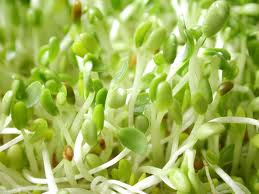
FDA alfalfa

“Over the past 22 years, the FDA has investigated 50 reported outbreaks of foodborne illness associated with contaminated sprouts. Together, these outbreaks resulted in more than an estimated 2,600 cases of illness. Last year, there were two reported outbreaks associated with sprouts, resulting in more than an estimated 100 illnesses. Studies indicate that contaminated seed is the likely source of most sprout-related outbreaks, as this commodity is inherently more susceptible to these issues because they are grown in warm and humid conditions that are favorable for bacteria like Salmonella, Listeria and E. coli,” said FDA Deputy Commissioner for Food Policy and Response Frank Yiannas. “The FDA is committed to taking swift action to respond to outbreaks related to sprouts and keep our food supply safe, but we also know that measures to prevent issues from happening in the first place are an important element of protecting consumers. By studying outbreaks related to sprouts over the years, we have been able to recommend changes in the industry to help lower the incidence of sprout-related outbreaks. Today’s new draft guidance is another critical step, like the Sprout Safety Alliance or sprout-specific requirements of the Produce Safety Rule, the agency is taking to prevent illnesses related to sprouts.”

The U.S. Food and Drug Administration today released a proposed draft guidance, “Reducing Microbial Food Safety Hazards in the Production of Seed for Sprouting,” intended to make the sprout seed industry (seed growers, conditioners, packers, holders, suppliers, and distributors) aware of the agency’s serious concerns with the continuing outbreaks of foodborne illness associated with the consumption of raw and lightly-cooked sprouts.

Incorporating aspects of the Codex Code of Hygienic Practice for Fresh Fruits and Vegetables Annex II, Annex for Sprout Production; the International Sprout Growers Association-Institute for Food Safety and Health’s “U.S. Sprout Production Best Practices”; and Good Agricultural Practices, the FDA’s draft guidance issued today provides the agency’s recommendations to firms throughout the production chain of seed for sprouting. It states that if a grower, holder, conditioner, or distributor reasonably believes that its seeds are expected to be used for sprouting, we recommend that the grower, holder, conditioner, or distributor take steps that are reasonably necessary to prevent those seeds from becoming contaminated. We also recommend that firms throughout the supply chain – from seed production and distribution through sprouting – review their current operations related to seeds for sprouting.

During the 60-day comment period for this draft guidance, stakeholders will be able to provide comments on the draft provisions. For more information on this guidance, as well as instructions on how to submit your comments, please visit Draft Guidance for Industry: Reducing Microbial Food Safety Hazards in the Production of Seed for Sprouting.