Category Archives: food contamination

Research – Microbiological profile, incidence and behavior of Salmonella on seeds traded in Mexican markets.

Journal of Food Protection

Seed consumption has increased in recent years because the high nutrient content of seeds. However, the number of outbreaks caused by Salmonella associated with the consumption of low water activity food items has also increased, although these food items do not support microbial growth. The main goal of this study was to quantify microbial indicators and to determine the prevalence and content of Salmonella spp. in chia, amaranth and sesame seeds obtained from Mexican retail outlets. In addition, the behavior of this pathogen on seeds was also evaluated. One hundred samples of each product (chia, amaranth and sesame seeds) were collected from Queretaro City markets. Aerobic plate count (APC), coliforms and Escherichia coli were quantified, and the presence and number of Salmonella were also determined. Chia, amaranth and sesame seeds (1 kg each) were inoculated with a cocktail containing five Salmonella strains (~6 log CFU mL -1 ) and were stored at ambient temperature and populations of Salmonella were quantified. The median APC contents in chia, amaranth, and sesame seeds were 2.1, 2.4, and 3.8 log CFU g -1 , respectively, and the content of coliforms on the seeds ranged from 0.48 to 0.56 log MPN g -1 . E. coli was present at low concentrations in the three types of seeds. Salmonella was detected in chia (31%), amaranth (15%), and sesame (12%) seeds, and the population ranged from 0.48 to 0.56 Log MPN g -1 . Salmonella spp. decreased through 240 days of storage, showing inactivation rates of 0.017, 0.011 and 0.016 log CFU h -1 in chia, amaranth, and sesame seeds, respectively. The high prevalence of Salmonella in the seeds highlights potential risks for consumers, particularly giving that seeds are generally consumed without treatments guaranteeing pathogen inactivation.
Research – Fate of aflatoxins during almond oil processing

Journal of Food Protection

Almonds rejected as inedible are often used for production of almond oil. However, low-quality almonds are frequently contaminated with aflatoxins, and little is known regarding transfer of aflatoxins to almond oil during processing. In this study, oil was produced from reject almonds by hexane extraction. Of 19 almond samples that were naturally contaminated with aflatoxins, 17 oil samples contained measurable amounts of aflatoxins, and aflatoxin content of contaminated oil was correlated with aflatoxin content of the nuts. However, oil aflatoxin levels were not correlated with the oxidation level of the oil as measured by percent free fatty acids and peroxide value. Adsorbents used in oil refining were tested for their ability to remove aflatoxins from contaminated oil. Fuller’s earth and bentonite were the most effective, removing 96% and 86% of total aflatoxins from contaminated oil samples, respectively. Treatment with diatomaceous earth, in contrast, had no effect on aflatoxin levels in oil. These results show that oil refining steps using mineral clay adsorbents may also function to remove aflatoxins from contaminated oil.

Research – Evaluation of Hot-air Drying to Inactivate Salmonella spp. and Enterococcus faecium on Apple Pieces

Journal of Food Protection

Hot-air drying processes are used to provide specific quality attributes to products, such as dehydrated apple pieces. To comply with the U. S. Food and Drug Administration Food Safety Modernization Act, there is a need to understand microbial lethality during these processes. The objective of this study was to determine the level of inactivation provided by hot-air drying on a Salmonella cocktail inoculated onto apple cubes and to evaluate the performance of Enterococcus faecium as a surrogate. A Salmonella cocktail ( S. Agona, S. Tennessee, S. Montevideo, S. Mbandaka and S. Reading) and E. faecium were individually inoculated onto cored, peeled Gala apple cubes at 9.2 ± 0.3 and 8.8 ± 0.1 log CFU/sample, respectively . Apple cubes were dried at 104°C or 135°C in ~1.5 kg batches using a hot-air dryer with a vertically directed heat source and without mixing. Three subsamples, consisting of 4 inoculated cubes, were enumerated at each time point (n ≥ 5) from multiple product bed depths. Water activity decreased throughout the duration of the study with samples at 135°C drying faster than 104°C. Samples at the bottom bed depth, closer to the heat source, dried faster than those at the higher bed depth, regardless of temperature. Significant microbial inactivation was not seen immediately. It took >10 min at the bottom bed depth or > 40 min of drying at the top bed depth, regardless of temperature (p < 0.05).  By the end of drying average Salmonella inactivation of greater than 5 log CFU/sample was achieved. At temperature conditions evaluated, E. faecium inactivation was slower than Salmonella , indicating that it would likely serve as a good surrogate for in-plant validation studies. Case hardening did not inhibit microbial inactivation in the conditions tested. Hot-air drying under the conditions evaluated may provide a preventive control in the production of dehydrated products, such as apples.

Netherlands – Important safety warning AH burgers, bratwurst and beef finches – STEC E.coli

NVWA

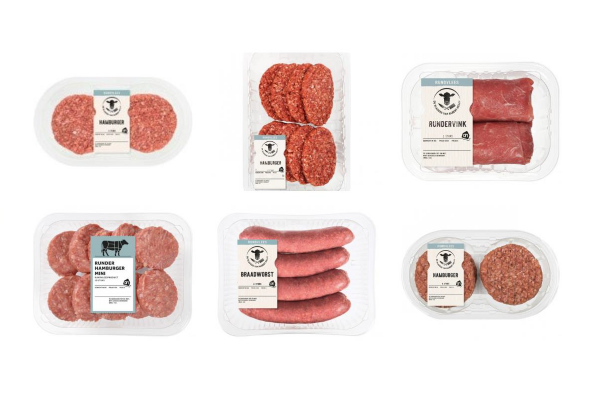
Albert Heijn warns against a number of beef products with an expiry date of 24 or 25 September 2020. The E.coli bacteria was found in the products.

It concerns the following products:

  • AH mini hamburger 10 pieces, TGT 24-09-2020
  • AH hamburger 8 pieces, use-by-date 9/24/2020 and 9/25/2020
  • AH beef bratwurst 4 pieces, TGT 24-09-2020
  • AH hamburger 2 pieces, TGT 25-09-2020
  • AH hamburger 4 pieces, TGT 25-09-2020
  • AH beef finch 2 pieces, TGT 25-09-2020

The beef products are no longer in Albert Heijn stores, but customers can have these products in the freezer. Albert Heijn asks customers not to eat the beef products and to return them to an Albert Heijn store where they will be reimbursed for the purchase price upon return.

See also the Albert Heijn website

Download ‘Important safety warning for AH burgers, bratwurst and beef finches’

PDF document | 1 page | 166 KB

Warning | 05-10-2020

E.coli

Eating a product with an E.coli bacteria (faeces bacteria, STEC, EHEC) can, if not thoroughly cooked, cause nausea, vomiting and (bloody) diarrhea within a week. Especially for young children, the elderly, people with low immunity and pregnant women. Consult your doctor or general practitioner for more information if you have health complaints after eating the said product.

6 packs of Albert Heijn beef products

Egypt – Beheira hospital receives 134 wedding guests with food poisoning

Egypt Independant

El Mahmoudeya Central Hospital, located in Egypt’s Beheira Governorate, received on Thursday 134 people experiencing severe symptoms of food poisoning after eating at a wedding in the village of Ezbet al-Far.

A number of families, including dozens of children, promptly reported to the hospital for treatment.

All cases were successfully treated, according to the hospital’s Director, Ashraf al-Qalfat.

Among the patients that the hospital received, many presented with no symptoms, but were worried that they had contracted the illness, said Qalfat. 

All but five patients have been discharged from the hospital, and those who remain are in stable condition. 


Canada imposes new import measures for romaine lettuce from U.S.

Digital Journal

In an effort to prevent future E. coli illnesses from romaine lettuce, the Canadian Food Inspection Agency (CFIA) is imposing new import measures on shipments from parts of California where prior outbreaks originated.

Belgium – Sequoia – Organic free-range chicken thighs from Le Picoreur. – Salmonella

AFSCA

In agreement with the AFSCA, Sequoia is withdrawing from sale the product Le Picoreur organic free-range chicken thighs and is recalling it to consumers because of the presence of Salmonella.

Sequoia asks its customers not to consume this product and to return it to the point of sale where it was purchased, with proof of purchase for reimbursement.

Product description
– Product name: BLC organic free-range chicken thigh
– Brand: Le picoreur
– Use-by date (DLC) (“To be consumed until”) and batch number:
         – 27, 28 and 30/09 / 20 with batch number 25801101
– 5/10/2020 with batch number 26501501 (update)
– Health stamp: FR 85.223.001 CE
– Sale period: from 09/15/20 to 09/29/20
– Type of packaging: plastic

The product was sold via:
Sequoia Stockel – 101, rue de l’Eglise, 1150 Woluwe-Saint-Pierre
Sequoia Jourdan – 2, rue Gray, 1040 Etterbeek

For any further information , contact:
Sequoia
info@sequoia.bio

USA – Country Fresh Voluntary Product Recall – Watermelon Chunks – Listeria monocytogenes

FDA

Country Fresh is initiating a voluntary recall of a limited quantity of watermelon chunks from select stores as a precautionary measure due to a possible health risk from Listeria monocytogenes detected on equipment used in packing this product. FDA made these findings during a recent inspection.

Listeria monocytogenes is an organism which can cause serious and sometimes fatal infections in young children, frail or elderly people, and others with weakened immune systems. Although healthy individuals may suffer only short-term symptoms such as high fever, severe headache, stiffness, nausea, abdominal pain and diarrhea, Listeria infection can cause miscarriages and stillbirths among pregnant women.

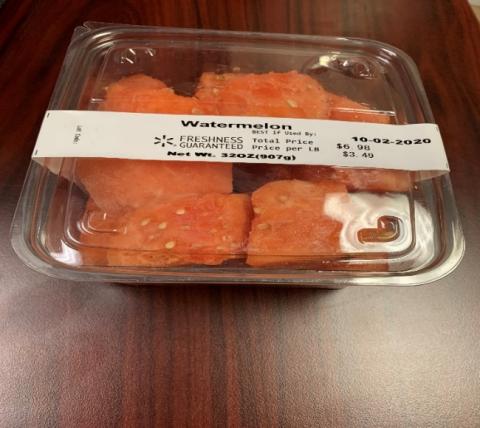
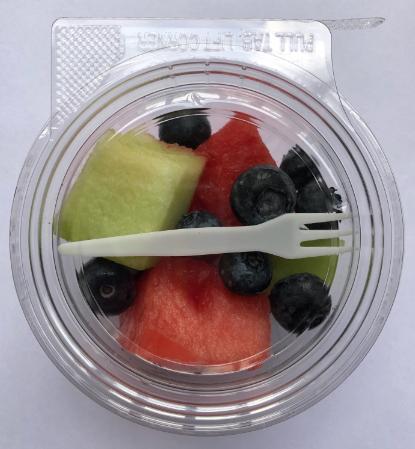
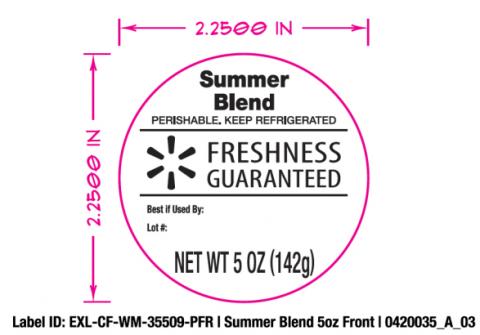
The recall affects product codes of watermelon items shipped directly to Walmart and RaceTrac’s retail distribution centers stores in select stores located in Arkansas, Missouri, Illinois, Oklahoma, and Texas. The product was packaged in a variety of clam shell containers (see photos). The best-if-used by dates of October 2, 3, and 4, 2020 and the SKUs are as follows:

Walmart – Freshness Guaranteed
Watermelon 4 x 10 oz – UPC Code: 681131180672
Watermelon 2 x 32 oz – UPC Code: 681131180672 Watermelon Chunks 2 x 42 oz – UPC Code: 681131180658 Watermelon Spears 4 x 16 oz – UPC Code: 681131180665 Summer Blend FTC 4 x 5 oz – UPC Code: 681131355094

RaceTrac
Watermelon 5.5oz – UPC Code: 74641000644 Melon Trio 5.5oz – UPC Code: 74641031945

Country Fresh has not received any reports of illnesses to date associated with these recalled items. The recalled products were distributed from 9/23/2020 – 9/25/2020. RaceTrac and Walmart retail stores are removing the recalled product from store shelves and inventories immediately. Customers with recalled watermelon should discard it immediately and not consume it.

This recall is being undertaken with the knowledge of the U.S. Food and Drug Administration.

Country Fresh takes food safety matters very seriously, stringently follows all mandated regulations and implements preventive measures designed to minimize potential risks. Country Fresh is working in close coordination with FDA in its continuing investigation to resolve the matter promptly and deeply regrets the inconvenience to our consumers and customers. If you have any questions, please contact Customer Service at: 1-877-251-8300 Monday – Friday, 8-5pm CST

Watermelon 32oz, Lot URR0103, Use By 10/2/20
Watermelon 32oz, Lot URE0103, Use By 10/3/20
Watermelon 42oz, Lot URR0103, Use By 10/2/20
Watermelon 42oz, Lot URE0103, Use By 10/3/20
Watermelon 16oz, Lot URR0103, Use By 10/2/20
Watermelon 16oz, Lot URS0103, Use By 10/4/20
Watermelon 10oz, Lot URR0103, Use By 10/2/20
Watermelon 10oz, Lot URE0103, Use By 10/3/20
Watermelon 10oz, Lot URS0103, Use By 10/4/2
Watermelon 5.5oz, Lot URE0103, Use By 10/4/20
Summer Blend 5oz, Lot URR0103, Use By 10/2/20
Summer Blend 5oz, Lot URE0103, Use By 10/3/20
Summer Blend 5oz, Lot URS0103, Use By 10/4/20
Melon Trio 5.5oz, Lot URE0103, Use By 10/4/20

Expanded Press Release


Company Contact Information

Consumers:
Country Fresh Customer Service
 1-877-251-8300

Product Photos

Germany – Manner Powidl buttons 180g -Mould

LMB

Warning type:

Food

Date of first publication:

02.10.2020

Product name:

Manner Powidl buttons 180g

Manufacturer (distributor):

Josef Manner & Comp. AG

Reason for warning:

Possibility of mold growth

Packaging Unit:

180g

Durability:

s. attached press release

Lot identification:

s. attached press release

Additional Information:

Reference is made to the attached press release from the food business operator.

Contact to the responsible authorities:

Baden-Württemberg:

poststelle@mlr.bwl.de

Bavaria:

poststelle@lgl.bayern.de

Press releases and information
title Attachment or web link
Press release

Germany – Dulano Delikatess Lyoner, cut into strips 2 x 200 g – Listeria monocytogenes

LMB

Warning type:

Food

Date of first publication:

02.10.2020

Product name:

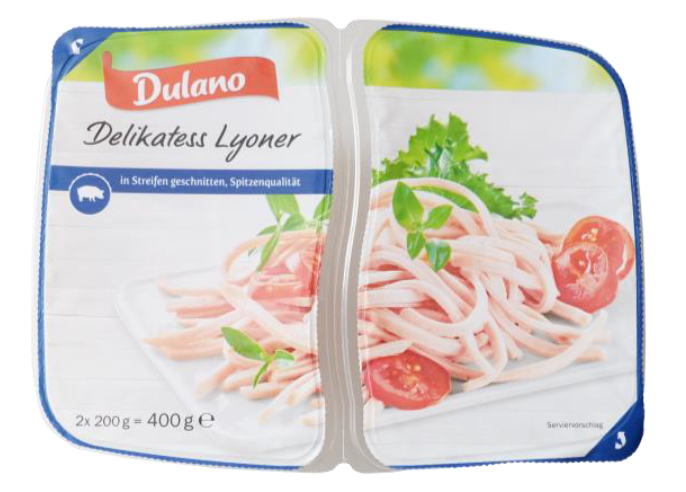
Dulano Delikatess Lyoner, cut into strips 2 x 200 g

Product pictures:

Image Filialplakat.PNG

Branch poster

Manufacturer (distributor):

Manufacturer Hans Adler OHG Distributed by Lidl in the federal states of Bavaria, Baden-Württemberg, Rhineland-Palatinate and Saarland

Reason for warning:

Listeria monocytogenes was detected in the affected product. Listeria monocytogenes can cause severe gastrointestinal diseases and symptoms similar to flu-like infections. In certain groups of people (infants, young children, pregnant women, as well as old and sick people) the disease can develop seriously.

Packaging Unit:

2 x 200 g

Durability:

09/23/20 (already expired)

Production date:

Packing period 08:40:00 to 13:00:00

Lot identification:

Lot number 230920LYG M: 2 246; Identity label DE EV 143 EG

Additional Information:

Reference is made to the company’s customer information sheet attached.

Contact to the responsible authorities:

Baden-Württemberg:

poststelle@mlr.bwl.de

Bavaria:

poststelle@lgl.bayern.de

Rhineland-Palatinate:

Poststelle.Referat22@lua.rlp.de

Saarland:

poststelle-luv@lav.saarland.de

Press releases and information
title Attachment or web link
Branch poster