Category Archives: food contamination

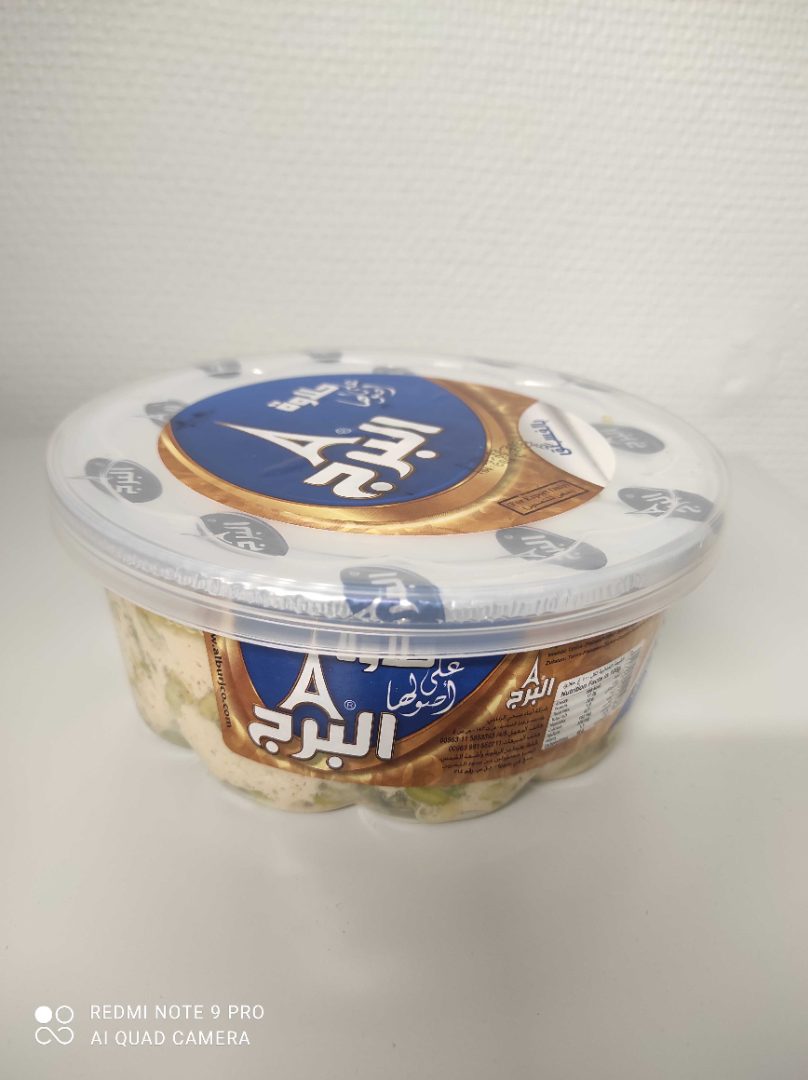
France – Halawa with pistachios – Salmonella

Gov france

Identifying information for the recalled product

  • Product category Food
  • Product sub-category Nuts and seeds
  • Product brand name AL BURJ
  • Names of models or references Halawa with pistachios 400g Halawa with pistachios 800g
  • Product identification
    GTIN Lot Dated
    6217000020486 All lots Date of minimum durability 07/09/2022
    6217000020493 All lots Date of minimum durability 07/31/2022
  • Packaging400g and 800g plastic box
  • Start date / End of marketing From 03/10/2021 to 10/27/2021
  • Storage temperature Product to be stored at room temperature
  • Geographical sales area Whole France
  • Distributors see the list on the PDF file
  • List of points of saleburj_sale_points.pdf

Practical information regarding the recall

  • Reason for recall Presence of SALMONELLE
  • Risks incurred by the consumer Salmonella spp (causative agent of salmonellosis)

Research – When the E. coli hits the fan! Evaluating the risks of dust-associated produce cross-contamination

CPS

Dust represents an understudied vehicle for microbial dispersal and produce contamination by pathogens. Dust deposition onto crops during cultivation is inevitable as plant surfaces serve as a major aerosol sink and dust can serve as a vehicle for bacteria. Wind-driven distribution of dust in agricultural environments can also impact food safety when the sources of dust include particles from natural and human-related reservoirs of pathogens. While the populations of enteric pathogens in water is frequently determined and the microbiological quality of soils are monitored, the evaluation of dust and soil-borne particulates is rarely conducted. This study proposes the following: 1). To evaluate the role of dust in transferring foodborne pathogens to produce surfaces grown in eastern and western regions of the US, 2). To determine the role of humidity in the deposition of dust on produce and the survival of pathogens in dust, and 3). To test dust particulates from animal operations in both regions for the presence of biomarkers indicative of fecal contamination and potentially the presence of pathogens. This study will enhance our understanding of pathogen transport from feces into and through produce fields and will quantify the risk associated with contamination from dust under varying environmental/atmospheric conditions.

Technical Abstract

Dust, broadly defined as fine particulate matter resulting from wind erosion on land surfaces and suspended in the air, is an inseparable component of the atmosphere. Dust represents an understudied vehicle for microbial dispersal in agricultural environments and produce contamination by microorganisms pathogenic to humans. Dust not only affects biological processes in plants, such as stomatal gas exchange, but also the plant surface microbiome. Dust deposition onto crops during field cultivation is inevitable as plant surfaces serve as a major aerosol sink. Studies have indicated that dust can serve as a vehicle for bacteria. Wind-driven distribution of dust in agricultural environments could also impact food safety when the sources of dust include particles from natural (soil, decaying vegetation, feral/wild animal droppings) and human-related (manure-amended soils, silage, municipal sewage-based biosolids, composting, and animal production facilities) reservoirs of human pathogens. While the populations of enteric pathogens in water is frequently determined through periodic testing as recommended by the Food Safety Modernization Act (FSMA) and the microbiological quality of soils are monitored, the evaluation of dust and soil borne particulates is rarely carried out. This study proposes the following: 1). To evaluate the role of dust in transferring foodborne pathogens to the surfaces of produce commodities specific to the eastern and western agricultural regions of the United States, 2). To determine the role of humidity in the deposition of dust on produce and the survival of foodborne pathogens in dust particulates, and 3). To test dust particulates from animal operations in Georgia and Arizona for the presence of biomarkers indicative of fecal contamination and the presence of enteric pathogens. This project will enhance our understanding of pathogen transport from feces into and through produce fields and will quantify the risk associated with contamination from dust under varying environmental and atmospheric conditions.

Click to access BRIGHT_FINAL.pdf

Denmark – Mold/Mould on burger buns

DVFA

Lantmännen Schulstad A / S is recalling a batch of Hatting Wholemeal Burger buns due to the discovery of mold in the product.

Recalled Foods , Published: November 1, 2021

What food:
Hatting Wholemeal Burger
Net weight: 380g
Best before date: 11.09.2021
EAN code: 05701205007553

Sold in:
Grocery stores across the country

Company withdraws:
Schulstad A / S

Reason:
The company has found that there is a risk for mold in the product.

Risk:
Mold formation makes the product unsuitable as food.

Advice for consumers: The Danish
Veterinary and Food Administration advises consumers to deliver the product back to the store where it was purchased or to discard it.

Singapore – Update – “Ceres 100% Apple Juice” – Mycotoxin – Patulin

Click to access extension-of-recall-of-ceres-100-apple-juice-products-due-to-patulin-contamination65a660f67e3641309ad04053f313235e.pdf

Germany – Alburj – Halva with Pistachio Tahini (Sesame) Pistachio Sauce – Salmonella

LMW

Warning type: Food
Date of first publication: 11/01/2021
Product name: Alburj – Halva with Pistachio Tahini (Sesame) Pistachio Sauce
Product pictures:

Picture 1.jpg
Picture 2.jpg
Manufacturer (distributor):

Al Safir Handels GmbH Lagerstraße 24 99086 Erfurt

Reason for warning:

Salmonella was detected in a sample from batch 07/2022.

Packaging Unit: 400 g – can
Durability: 07.2022
Lot identification: 07/2022
Additional Information:

A warning is given before consuming the product.

Salmonella disease manifests itself within a few days after infection with diarrhea, abdominal pain and occasionally vomiting and a slight fever. The symptoms usually subside on their own after several days. Infants, toddlers, the elderly and people with a weakened immune system in particular can develop more severe disease processes. People who have eaten this food and develop severe or persistent symptoms should seek medical attention and advise them of a possible salmonella infection.

Seeking preventive medical treatment without symptoms does not make sense.

Contact to the responsible authorities: 
North Rhine-Westphalia: poststelle@mulnv.nrw.de
Rhineland-Palatinate: Poststelle.Referat22@lua.rlp.de
Thuringia: LM-Ueberendung@tlv.thueringen.de

Germany – Finely ground tiger nut flour – Salmonella

LMW

Warning type: Food
Date of first publication: October 29, 2021
Product name:

Finely grind tiger nut flour

Product pictures:

View_RZ2_REDESIGN_borchers_Packaging_Erdmandelmehl_160x230mm_Seite_1.jpg
View_RZ2_REDESIGN_borchers_Packaging_Erdmandelmehl_160x230mm_Seite_2.jpg
Manufacturer (distributor):

borchers fine food GmbH & Co. KG, Rosa-Luxemburg-Str. 3, 28876 Oyten

Reason for warning:

Detection of salmonella

Packaging Unit: Bag 400g
Durability: Best before 02/22/2022
Lot identification: 21000273 and 21000133
Additional Information:

Salmonella disease manifests itself within a few days after infection with diarrhea, abdominal pain and occasionally vomiting and a slight fever. The symptoms usually subside on their own after several days. Infants, toddlers, the elderly and people with a weakened immune system in particular can develop more severe disease processes. People who have eaten this food and develop severe or persistent symptoms should seek medical attention and advise them of a possible salmonella infection. Seeking preventive medical treatment without symptoms does not make sense.

Sweden – Crown eggs recall eggs from Danaeg’s packing plant with plant number DK7003 – may contain Salmonella

Livsmedelsverket

Crown eggs recall eggs from Danaeg’s packing plant with plant number DK7003. The recall only applies to eggs with these 6 digits stamped after DK on the egg: 081131.

Kronagg

Click to access f-40-52-skabelon-tilbagekalds-dokument-kronägg_se.pdf

Denmark – Risk of salmonella in fresh eggs

DVFA

DANÆG A / S recalls eggs from Danæg pakkeri aut.nr. DK7003 after finding salmonella at one producer. The recall only applies to eggs that on the egg after DK are stamped with 08113 as the last six digits. 

The producer in question has several separate stables, each with its own form of production, therefore the recall covers several types of products.

Recalled Foods , Published: October 30, 2021

What foods:
Free-range eggs: Stamped with 1DK081131
Best before until 16/11/2021 

Barn eggs: Stamped with 2DK081131
Best before until 11.16.2021 

Eggs from caged hens: Stamped with 3DK081131
Best before until 16/11/2021 

Sold in:
Spar, Meny, My Grocery, Letkøb, Løvbjerg, Nærkøb
Kvickly, SuperBrugsen, Fakta, COOP 365, DaligBrugsen, LokalBrugsen
Aldi, ABC Lavpris and on Nemlig.com.

Company recalling:
DANÆG A / S, pakkeri aut.nr. DK7003

Cause:
Risk of salmonella in the products. Read more about Salmonella here 

Risk:
There is a risk of infection with salmonella. You will not get sick from salmonella if the food has been properly heated and you have good cooking habits.
The symptoms are diarrhea, abdominal pain, fever, headache and perhaps nausea and vomiting. The disease can last from a few days to several weeks. If the disease becomes serious or lasts a long time, you can contact your own doctor or the emergency room.

Advice for consumers: The Danish
Veterinary and Food Administration advises consumers to deliver the product back to the store where it was purchased or to discard it.

USA – Out of an Abundance of Caution MaryRuth’s Announces Voluntary Recall of Two Lots of Its Liquid Probiotic for Infants Because of the Potential for Contamination With Pseudomonas aeruginosa

Business Wire

(Photo: Business Wire)

MaryRuth’s, a leading omni-channel health and wellness brand that offers vitamins, minerals, and supplements for the entire family, today announced that, out of an abundance of caution, it is voluntarily recalling two lots of its liquid probiotic for infants (1oz) due to the possibility of contamination by Pseudomonas aeruginosa. Pseudomonas aeruginosa is a microorganism found in the environment that, if ingested, can cause infection in immunocompromised individuals or, rarely, in very young infants. P. aeruginosa infections in immunocompromised infants are generally limited to hospital settings. In such settings, there is the chance that the infant’s immature gut will not be able to prevent P. aeruginosa from gaining access to the blood, and from there it can disseminate elsewhere in the body, resulting in the possibility of serious adverse health consequences.

This recall only affects two lots of the product, Lot #100420218 and Lot #100520218, UPC barcode number 856645008587. Lot numbers are located on the side of the bottle and on the bottom of the outer container in which the product is sold. No other lots or any other MaryRuth’s products are affected by this recall. This product is distributed nationwide through Target, Amazon, and direct sales from the company’s website.

USA – FSIS Issues Public Health Alert for Salame Stick Products Due to Possible Salmonella Contamination

FSIS USDA

WASHINGTON, Oct. 29, 2021 – The U.S. Department of Agriculture’s Food Safety and Inspection Service (FSIS) is issuing a public health alert because Euro Foods, a Freeland, Penn. establishment, produced ready-to-eat (RTE) Italian-style salame stick products that may be contaminated with Salmonella. A recall was not requested because FSIS has not identified a specific contaminated lot or lots, and it is believed that potentially affected products are no longer available to be directly purchased by retail consumers.

The Italian-style salame stick items were produced prior to October 25, 2021. The following product is subject to the public health alert.

FSIS has been working with the Centers for Disease Control and Prevention (CDC) and state public health partners to investigate a multistate outbreak of 21 Salmonella I 4,[5],12:i:- illnesses in eight states with onset dates ranging from September 18, 2021 through October 3, 2021. The epidemiologic and traceback investigation identified that ill people consumed Citterio Italian-style Salame Sticks produced by Euro Foods Inc. FSIS continues to work with federal and state public health partners to determine if there are additional illnesses linked to these products.