Category Archives: Enterotoxin

RASFF Alert- Bacillus cereus – Dark Chocolate Insect Protein Bar

RASFF-Logo

RASFF – Bacillus cereus diarrhoeal enterotoxin (3.8x10E3) in dark chocolate insect protein bar from France in Germany

RASFF Alert – Bacillus cereus Enterotoxin – Pumpkin Seeds

RASFF-Logo

RASFF – Bacillus cereus enterotoxin (130000 CFU/g) in pumpkin seeds from China in the Netherlands

RASFF Alert – Bacillus cereus- Cinnamon and Curry

RASFF-Logo

RASFF – enterotoxin producing Bacillus cereus (6000 and 120000 CFU/g) in cinnamon and curry from the West Bank and Gaza Strip in Slovenia

RASFF Alert – Stpahylococcal Enterotoxin – Sprouts

kswfoodworld food safety poisoning

RASFF-Staphylococcal enterotoxin (presence /25g) in sprouts from Hungary, via Austria in Slovenia

USA – FDA Investigating Multistate Outbreak of E. coli O157:H7 Infections Linked to Romaine Lettuce from Yuma Growing Region

FDA Eurofins Food Testing UK

Update

The FDA, along with CDC and state partners, initiated an environmental assessment in the Yuma growing region to further investigate potential sources of contamination linked to this outbreak.

Samples have been collected from environmental sources in the region, including water, soil, and cow manure. Evaluation of these samples is ongoing.

To date, CDC analysis of samples taken from canal water in the region has identified the presence of E. coli 0157:H7 with the same genetic finger print as the outbreak strain. We have identified additional strains of Shiga-toxin producing E. coli in water and soil samples, but at this time, the samples from the canal water are the only matches to the outbreak strain.

Analysis of additional samples is still ongoing, and any new matches to the outbreak strain will be communicated publicly and with industry in the region.

Identification of the outbreak strain in the environment should prove valuable in our analysis of potential routes of contamination, and we are continuing our investigation in an effort to learn more about how the outbreak strain could have entered the water and ways that this water could have come into contact with and contaminated romaine lettuce in the region.

Research – A new toxin discovered in Cholera bacteria

Science Daily 


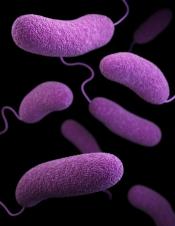
The bacterium Vibrio cholerae was discovered more than 150 years ago but remains as one of the main causes of bacterial infectious disease globally, especially in low-income nations where it occurs endemic, and outbreaks of cholera disease can lead to major epidemics.

In addition to causing cholera disease characterized by very severe watery diarrhea, different variants of V. cholerae can cause, for example, wound infections and infections in the ear canal (ear inflammation). If the infection is reaching the bloodstream, it can lead to blood poisoning. Such variants of Vibrio bacteria are common in brackish water, but can be found both in freshwater and saltwater and are also present in such environments in our country.

Scientists from Umeå University have now discovered and characterised the structure and function of a so far unknown Vibrio toxin. A team led by Professor Sun Nyunt Wai at Department of Molecular Biology and MIMS used the worm Caenorhabditis elegans as a predatory host for the bacteria and identified by molecular genetic analysis the V. cholerae genes required for production and release of the new protein toxin, now called MakA.

“In addition to the toxicity of MakA demonstrated with C. elegans, our studies revealed that upon infection of Zebrafish the toxin caused damage in particular to the intestinal system,” explains Sun Nyunt Wai.

Sun Nyunt Wai lrSun Nyunt Wai and her colleagues were also curious about the details of the bacterial release mechanism of the newly discovered toxin from V. cholerae.

USA- Pinnacle Foods Inc. Recalls Beef Products Due to Possible Processing Deviation – Staphylococcal Toxin – Clostridial Toxin

FSIS USDA 

WASHINGTON, April 28, 2018 – Pinnacle Foods Inc., a Fort Madison, Iowa establishment, is recalling approximately 32,479 pounds of heat-treated, shelf stable beef products due to a possible processing deviation that may have led to staphylococcal enterotoxin and clostridial toxin contamination, the U.S. Department of Agriculture’s Food Safety and Inspection Service (FSIS) announced today.

The ready-to-eat dried, sliced beef items were produced on Jan. 2, 2018 and April 9, 2018. The products have a shelf life of three years. The following products are subject to recall: [View Label (PDF only)]

  • 2.25 oz. glass jars containing “ARMOUR GROUND & FORMED SLICED Dried Beef” with best by dates of JAN-07-21, JAN-08-21, JAN-09-21, JAN-10-21, JAN-11-21, APR-15-21, APR-16-21, APR-17-21, APR-18-21 and APR-19-21 and lot codes 0707011Y11, 0708011Y11, 0709011Y11, 0710011Y11, 0711011Y11, 0715041Y11, 0716041Y11, 0717041Y11, 0718041Y11 and 0719041Y11 .
  • 4.5 oz. glass jars containing “ARMOUR GROUND & FORMED SLICED Dried Beef” with best by dates of JAN-23-21, JAN-24-21, JAN-25-21 and APR-22-21 and lot codes 0723011Y11, 0724011Y11, 0725011Y11 and 0722041YW1.

The products subject to recall bear establishment number “EST. 2AD” inside the USDA mark of inspection. These items were shipped to retail locations nationwide.

The problem was discovered on April 27, 2018 by an Enforcement Investigator and Analysis Officer (EIAO) while conducting a food safety assessment at the establishment.

There have been no confirmed reports of adverse reactions due to consumption of these products. Anyone concerned about an injury or illness should contact a healthcare provider.


USA – USDA Recall – Staphylococcus Enterotoxin – Pork Sausages

USDAEurofins Food Testing UK

Lee Bros. Foodservice Inc., a San Jose, Calif., establishment, is recalling 740 pounds of sausage products that may be contaminated with Staphylococcus aureus enterotoxin, the U.S. Department of Agriculture’s Food Safety and Inspection Service (FSIS) announced today.

The following products are subject to recall: [View Label]

  • 16 oz packages of Lee’s Sandwiches brand Pork Sausages produced on 2/11/13 with an identifying code “042P” printed on the back of the package
  • 16 oz packages of Lee’s Sandwiches brand Pork and Chicken Sausages produced on 2/12/13 with an identifying code of “043PC” printed on the back of the package

Each package bears the establishment number “Est. 11041” inside the USDA Mark of Inspection. The products were sold at the wholesale and retail level in Arizona, California, Oklahoma, Nevada, Texas and online.

The problem was discovered by FSIS personnel during a food safety assessment. The inspector was reviewing processing records and found that the water level in the product may have been high enough to allow for the production of Staphylococcus aureus enterotoxin. FSIS has received no reports of illnesses associated with consumption of these products. Individuals concerned about an illness should contact a physician.