Category Archives: eae

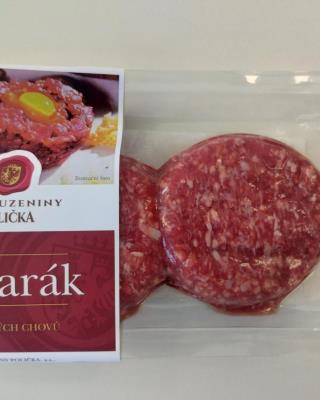
Czech Republic – Shelf Steak Tartar 250 g – Enteropathogenic Escherichia coli (EPEC) – Intimin (eaeA)

Potravinynapranyri

Illustrative photo #1

Place of inspection:
Olomouc ( Velkomoravská 488/29, 779 00 Olomouc )
ID: 26178541
Food group: Meat and meat products Non-heat-treated non-perishable products

Shelf Steak Tartar 250 g
Category: Dangerous foods
Invalid parameter:

Enteropathogenic Escherichia coli (EPEC) – Intimin (eaeA)

The presence of enteropathogenic Escherichia coli was detected in the food  . The presence of this bacterium in food intended for direct consumption represents a high risk of illness in the consumer.​

Batch: L: 145448
Expiration date: 09/08/2024
Packaging: plastic sealed foil
Quantity of the product in the package: 250 g
Manufacturer: Sausage meat, Polička, as, no. 300, 57201 Kamenec u Polička, Czech Republic
Date of sample collection: 31/07/2024
Reference number: 24-000513-SZPI-CZ
The sample was detected by the official control of the State Agricultural and Food Inspection.
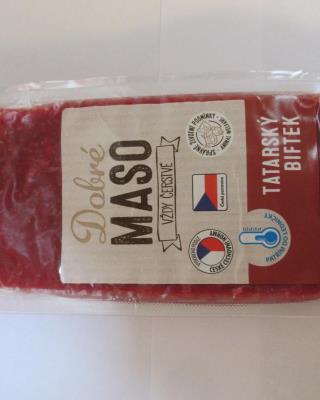
Czech Republic- GOOD MEAT Steak tartare – Enteropathogenic Escherichia coli (EPEC) – Intimin (eaeA)

Potravinynapranyri

Illustrative photo #1

Place of inspection:
Bystřice nad Pernštejnem ( Novoměstská 849, 59301 Bystřice nad Pernštejnem )
ID: 64945880
Food group: Meat and meat products Non-heat-treated non-perishable products

GOOD MEAT Steak tartare
Category: Dangerous foods
Invalid parameter:

Enteropathogenic Escherichia coli (EPEC) – Intimin (eaeA)

The presence of enteropathogenic E. coli was detected in the food . The presence of this bacterium in food intended for direct consumption represents a high risk of disease in the consumer.

The food was evaluated as harmful to health.

Batch: 07/08/2024
Expiration date: 07/08/2024
Packaging: PP
Quantity of the product in the package: 250 g
Manufacturer: Uzeniny Příbram, as, Antala Staška 1670/80, Prague 4
Country of origin:  Czechia
Date of sample collection: 26/06/2024
Reference number: 24-000410-SZPI-CZ
The sample was detected by the official control of the State Agricultural and Food Inspection.

Research – Genomic surveillance of STEC/EHEC infections in Germany 2020 to 2022 permits insight into virulence gene profiles and novel O-antigen gene clusters

Science Direct

Abstract

Shiga toxin-producing E. coli (STEC), including the subgroup of enterohemorrhagic E. coli (EHEC), are important bacterial pathogens which cause diarrhea and the severe clinical manifestation hemolytic uremic syndrome (HUS). Genomic surveillance of STEC/EHEC is a state-of-the-art tool to identify infection clusters and to extract markers of circulating clinical strains, such as their virulence and resistance profile for risk assessment and implementation of infection prevention measures. The aim of the study was characterization of the clinical STEC population in Germany for establishment of a reference data set. To that end, from 2020 to 2022 1257 STEC isolates, including 39 of known HUS association, were analyzed and lead to a classification of 30.4 % into 129 infection clusters. Major serogroups in all clinical STEC analyzed were O26, O146, O91, O157, O103, and O145; and in HUS-associated strains were O26, O145, O157, O111, and O80. stx1 was less frequently and stx2 or a combination of stx, eaeA and ehxA were more frequently found in HUS-associated strains. Predominant stx gene subtypes in all STEC strains were stx1a (24 %) and stx2a (21 %) and in HUS-associated strains were mainly stx2a (69 %) and the combination of stx1a and stx2a (12.8 %). Furthermore, two novel O-antigen gene clusters (RKI6 and RKI7) and strains of serovars O45:H2 and O80:H2 showing multidrug resistance were detected. In conclusion, the implemented surveillance tools now allow to comprehensively define the population of clinical STEC strains including those associated with the severe disease manifestation HUS reaching a new surveillance level in Germany.

Research – Shiga toxin-producing Escherichia coli (STEC) in meat and leafy greens available in the Swedish retail market – Occurrence and diversity of stx subtypes and serotypes

Science Direct

Abstract

Shiga toxin-producing Escherichia coli (STEC) is a major cause of foodborne illness, ranging from mild diarrhea to permanent kidney failure. This study summarizes the results of four surveys performed at different time periods, which investigated the occurrence and characteristics of STEC in beef, lamb and leafy greens available in the Swedish retail market. Such data is required when assessing the public health risk of varying types of STEC in different foods, and for establishing risk management measures. Samples from domestic and imported products were collected based on their availability in the retail market. The occurrence of STEC was investigated in 477 samples of beef, 330 samples of lamb and 630 samples of leafy greens. The detection of virulence genes (stx1stx2eae) was performed using real-time PCR followed by the isolation of bacteria from stx-positive enriched samples using immunomagnetic separation or an immunoblotting method. All STEC isolated from the food samples was further characterised in terms of stx subtyping and serotyping through whole genome sequencing. STEC was isolated from 2 to 14 % of beef samples and 20 to 61 % of lamb samples, depending on the region of origin. STEC was not isolated from samples of leafy greens, although stx genes were detected in 11 (2 %) of the samples tested. In total, 5 of the 151 sequenced STEC isolates from meat contained stx2 and eae, of which 4 such combinations had the stx2a subtype. The stx2 gene, stx2a in particular, is strongly associated with serious disease in humans, especially in combination with the eae gene. The isolates belonged to 20 different serotypes. Two isolates from beef and one from lamb belonged to the serotype O157:H7 and contained genes for stx2 and eae. Overall, several combinations of stx subtypes were found in isolates from beef, whereas stx1c, either alone or together with stx2b, was the dominant combination found in STEC from lamb. In conclusion, STEC was rare in whole meat samples of domestic beef in the Swedish retail market, whereas such bacteria were frequently found in minced meat and whole meat samples of imported beef and domestic and imported lamb. Although the number of isolates containing genes linked to an increased risk of severe disease was low, beef and lamb in the Swedish retail market is a common source of human exposure to potentially pathogenic STEC.

EFSA – Story map on Shiga toxin-producing Escherichia coli

EFSA

Shiga toxin-producing Escherichia coli (STEC) are strains of the bacterium Escherichia coli that produce  cytotoxins  known as Shiga toxins and that can be transmitted from animals to humans. Shiga toxins are proteins that have a cytotoxic effect, meaning they can harm cells. These toxins exist in two primary forms: Stx1 and Stx2. Each form can be neutralized by different antibodies. Further, these toxin types are subdivided into multiple subtypes based on small genetic variations. For example, Stx1 includes subtypes such as stx1a, stx1c, and stx1d. Similarly, Stx2 has several subtypes, more than ten described up to now, including stx2a, stx2b, and so on. ( Scheutz et al., 2012 ;  Bai et al., 2021 ).

RASFF Alert- STEC E.coli – Bovine Meat

RASFF

STEC (stx+;eae+) in bovine meat from Belgium in France

Research – Analysis of Escherichia coli O157 strains in cattle and humans between Scotland and England & Wales: implications for human health

Microbiology Research

ABSTRACT

For the last two decades, the human infection frequency of  O157 (O157) in Scotland has been 2.5-fold higher than in England and Wales. Results from national cattle surveys conducted in Scotland and England and Wales in 2014/2015 were combined with data on reported human clinical cases from the same time frame to determine if strain differences in national populations of O157 in cattle could be associated with higher human infection rates in Scotland. Shiga toxin subtype (Stx) and phage type (PT) were examined within and between host (cattle vs human) and nation (Scotland vs England and Wales). For a subset of the strains, whole genome sequencing (WGS) provided further insights into geographical and host association. All three major O157 lineages (I, II, I/II) and most sub-lineages (Ia, Ib, Ic, IIa, IIb, IIc) were represented in cattle and humans in both nations. While the relative contribution of different reservoir hosts to human infection is unknown, WGS analysis indicated that the majority of O157 diversity in human cases was captured by isolates from cattle. Despite comparable cattle O157 prevalence between nations, strain types were localized. PT21/28 (sub-lineage Ic, Stx2a+) was significantly more prevalent in Scottish cattle [odds ratio (OR) 8.7 (2.3–33.7; <0.001] and humans [OR 2.2 (1.5–3.2); <0.001]. In England and Wales, cattle had a significantly higher association with sub-lineage IIa strains [PT54, Stx2c; OR 5.6 (1.27–33.3); =0.011] while humans were significantly more closely associated with sub-lineage IIb [PT8, Stx1 and Stx2c; OR 29 (4.9–1161); <0.001]. Therefore, cattle farms in Scotland were more likely to harbour Stx2a+O157 strains compared to farms in E and W (<0.001). There was evidence of limited cattle strain migration between nations and clinical isolates from one nation were more similar to cattle isolates from the same nation, with sub-lineage Ic (mainly PT21/28) exhibiting clear national association and evidence of local transmission in Scotland. While we propose the higher rate of O157 clinical cases in Scotland, compared to England and Wales, is a consequence of the nationally higher level of Stx2a+O157 strains in Scottish cattle, we discuss the multiple additional factors that may also contribute to the different infection rates between these nations.

RASFF Alert- STEC E.coli – Bovine Meat

RASFF

STEC (stx+;eae+) in bovine meat from Belgium in France

RASFF Alert – STEC E.coli – Bovine Meat

RASFF

STEC (stx+;eae+) in bovine meat (raw material) from the Netherlands in Belgium

Research – Classification and ranking of shigatoxin-producing Escherichia coli (STEC) genotypes detected in food based on potential public health impact using clinical data

Science Direct

Abstract

Risk classification and management of shigatoxin-producing E. coli (STEC) isolated from food has been hampered by gaps in knowledge about the properties that determine the extent to which different subtypes of STEC can cause severe disease. Data on the proportion of infected human cases being affected by severe illness enables an evaluation of existing approaches for classifying STEC strains and the development of a new public health based approach. Evaluations show that existing approaches do not unequivocally classify different STEC variants according to their ability to cause severe disease. A new approach for ranking of STEC genotypes, combining the estimated probability of the strain to cause severe illness with the public health burden associated with the illness in terms of DALY per case, address these limitations. The result is a list of STEC genotypes in descending order of potential public health burden per case. The approach is risk based in considering the probability and consequences following infection (severe illness), and can support transparent risk management. This is illustrated by, arbitrarily, separating the ranked list of genotypes into classes based on the potential public health burden, and by characterising collections of strains isolated from different foods into different classes. Further, the classification of food samples as satisfactory or not based on the cost in terms of proportion of food being rejected and the benefit in terms of the proportion of strains causing severe illness (HUS) that are being captured is demonstrated using this approach.