Category Archives: E.coli

Research – Effectiveness and Functional Mechanism of a Multicomponent Sanitizer against Biofilms Formed by Escherichia coli O157:H7 and Five Salmonella Serotypes Prevalent in the Meat Industry

Journal of Food Protection

ABSTRACT

Biofilm formation by Escherichia coli O157:H7 and Salmonella enterica at meat processing plants poses a potential risk of meat product contamination. Many common sanitizers are unable to completely eradicate biofilms formed by these foodborne pathogens because of the three-dimensional biofilm structure and the presence of bacterial extracellular polymeric substances (EPSs). A novel multifaceted approach combining multiple chemical reagents with various functional mechanisms was used to enhance the effectiveness of biofilm control. We tested a multicomponent sanitizer consisting of a quaternary ammonium compound (QAC), hydrogen peroxide, and the accelerator diacetin for its effectiveness in inactivating and removing Escherichia coli O157:H7 and Salmonella enterica biofilms under meat processing conditions. E. coli O157:H7 and Salmonella biofilms on common contact surfaces were treated with 10, 20, or 100% concentrations of the multicomponent sanitizer solution for 10 min, 1 h, or 6 h, and log reductions in biofilm mass were measured. Scanning electron microscopy (SEM) was used to directly observe the effect of sanitizer treatment on biofilm removal and bacterial morphology. After treatment with the multicomponent sanitizer, viable E. coli O157:H7 and Salmonella biofilm cells were below the limit of detection, and the prevalence of both pathogens was low. After treatment with a QAC-based control sanitizer, surviving bacterial cells were countable, and pathogen prevalence was higher. SEM analysis of water-treated control samples revealed the three-dimensional biofilm structure with a strong EPS matrix connecting bacteria and the contact surface. Treatment with 20% multicomponent sanitizer for 10 min significantly reduced biofilm mass and weakened the EPS connection. The majority of the bacterial cells had altered morphology and compromised membrane integrity. Treatment with 100% multicomponent sanitizer for 10 min dissolved the EPS matrix, and no intact biofilm structure was observed; instead, scattered clusters of bacterial aggregates were detected, indicating the loss of cell viability and biofilm removal. These results indicate that the multicomponent sanitizer is effective, even after short exposure with dilute concentrations, against E. coli O157:H7 and S. enterica biofilms.

HIGHLIGHTS
  • No viable biofilm cells were detected after treatment with the multicomponent sanitizer.
  • Prevalence of both pathogens was low after treatment with the multicomponent sanitizer.
  • SEM analysis revealed that treatment dissolved the EPS matrix and destroyed the biofilm.

Research – Inhibitory effect of thyme and cinnamon essential oils against E. coli O157:H7 in Tahini

Scielo

Tahini is a common food product in the Mediterranean area that is used as a main ingredient in variety of ready-to-eat foods. The objective of the current study was to investigate the inhibitory effect of thyme oil (TO) or cinnamon oil (CO) on E. coli O157:H7 viability in tahini and diluted tahini at different storage temperatures. Addition of 2.0% CO to tahini reduced E. coli O157:H7 numbers by 1.38, 1.79 or 2.20 log10 CFU/mL at 10, 25 or 37 °C, respectively, by 28d. In diluted tahini at 10 °C, no viable cells of E. coli O157:H7 by 21d were detected when 1.0% CO was used. However, at 25 and 37 °C, no viable cells were detected by 14d when CO was added at 0.5% level. Addition of 2.0% TO to tahini, resulted in 1.82, 2.01 or 1.65 log10 CFU/mL reduction in E. coli O 157:H7 numbers was noted at 37, 25 or 10 °C, respectively, by 28d. In diluted tahini, TO at 0.5% or 1.0% induced complete reduction in the viability of E. coli O157:H7 by 28d storage at 37 or 25 °C. At 10 °C, a 3.02 log10 CFU/mL reduction was observed by 28d compared to the initial inoculation level in samples treated with 2.0% TO.

Research – Presence of Bacterial Pathogens and Levels of Indicator Bacteria Associated with Duck Carcasses in a Commercial Processing Facility

Journal of Food Protection

ABSTRACT

Little information has been published on the microbiological aspects of U.S. commercial duck processing. The objective of this study was to measure prevalence and/or levels of bacteria in duck samples representing the live bird and partially or fully processed oven-ready duck meat. At 12 monthly sampling times, samples were collected at six sites along the processing line in a commercial duck slaughter plant. Crop and cecum samples were collected at the point of evisceration. Whole carcass rinse samples were collected before and after carcass immersion chilling plus application of an antimicrobial spray. Leg quarters were collected from the cut-up line before and after application of an antimicrobial dip treatment. All samples (five from each site per monthly replication) were directly plated and/or enriched for Salmonella and Campylobacter. For the last 10 replications, carcass and leg quarter rinse samples were also evaluated for enumeration of total aerobic bacteria, Escherichia coli, and coliforms. Most cecum, crop, and prechill carcass rinse samples were positive for Campylobacter (80, 72, and 67%, respectively). Carcass chilling and chlorinated spray significantly lowered Campylobacter prevalence (P < 0.01), and even fewer leg quarters were positive for Campylobacter (P < 0.01). Passage through a chlorinated dip did not further reduce Campylobacter prevalence on leg quarters. Salmonella was infrequently found in any of the samples examined (≤10%). Total aerobic bacteria, coliforms, and E. coli levels were reduced (P < 0.01) on whole carcasses by chilling but were not different after cut-up or leg quarter dip treatment. Overall, current commercial duck processing techniques as applied in the tested plant were effective for reducing the prevalence and levels of Campylobacter on duck meat products.

HIGHLIGHTS
  • Campylobacter and Salmonella can be associated with live ducks for commercial slaughter.
  • Antimicrobial treatment reduced the prevalence of Campylobacter in duck samples.
  • Antimicrobial treatment reduced levels of aerobic bacteria, coliforms, and E. coli in duck samples.

USA – Ravioli with E. coli recalled

Food Poison Journal

The U.S. Department of Agriculture’s Food Safety and Inspection Service (FSIS) is issuing a public health alert because approximately 70 pounds of raw beef ravioli products, produced by P&S Ravioli Company, a Philadelphia, Pa. establishment, may be contaminated with E. coli O157:H7. A recall was not requested because the affected product is no longer available for purchase.


Research – Two Generally Recognized as Safe Surfactants plus Acidulants Inactivate Salmonella, Escherichia coli O157:H7, and Listeria monocytogenes in Suspension or on Dip-Inoculated Grape Tomatoes

Journal of Food Protection

ABSTRACT

Contamination of fresh produce with the foodborne pathogens Salmonella enterica, Listeria monocytogenes, and Escherichia coli O157:H7 continues to be problematic, resulting in outbreaks of foodborne illness and costly corporate recalls. Various individual concentrations of citric or lactic acids (0.35 to 0.61%) or isopropyl citrate (0.16 to 0.54%) combined with two generally recognized as safe surfactants, 0.025% sodium-2-ethyl-hexyl sulfate and 0.025% sodium dodecylbenzene-sulfonate, were tested against these three pathogens in suspension and when inoculated and dried on the surface of grape tomatoes. The efficacy of sodium hypochlorite (NaClO; at 46 ppm) was also evaluated under dirty and clean conditions in suspension after addition of 0.3 or 0.03% bovine serum albumin, respectively, as an organic load. NaClO (46 ppm) inactivated the three pathogens in suspension by <0.76 log CFU/mL after 5 min in the presence of 0.3% bovine serum albumin, whereas 9 and 15 ppm of free chlorine inactivated the pathogens by 0.64 and 2.77 log CFU/mL, respectively, after 5 min under clean conditions. Isopropyl citrate (0.16% acidulant) plus 0.05% total concentration of the two surfactants inactivated the pathogens in suspension by up to 7.0 log CFU/mL within 2 min. When applied to grape tomatoes for 2 min, 0.54% isopropyl citrate plus 0.025% concentrations of each of the two surfactants reduced Salmonella, E. coli O157:H7, and L. monocytogenes by as much as ca. 5.47, 4.89, and 4.19 log CFU/g, respectively. These reductions were significantly greater than those achieved with 49 ppm of free chlorine. Citric acid and lactic acid plus surfactant washes achieved greater inactivation than water-only washes, reducing Salmonella, E. coli O157:H7, and L. monocytogenes on tomatoes by up to 4.90, 4.37, and 3.98 log CFU/g, respectively. These results suggest that these combinations of acidulants and surfactants may be an effective tool for preventing cross-contamination during the washing of grape tomatoes, for reducing pathogens on the fruit itself, and as an alternative to chlorine for washing fresh produce.

HIGHLIGHTS
  • Acidulants and surfactants were used in combinations against three foodborne pathogens.
  • Acidulant (0.16%) plus surfactants (0.05%) inactivated pathogens in suspension by up to 7.0 log CFU/mL.
  • Acidulant plus surfactant inactivated pathogens on dip-inoculated grape tomatoes by 3.35 to 5.47 log CFU/g.

Research – Phage Biocontrol Improves Food Safety by Significantly Reducing the Level and Prevalence of Escherichia coli O157:H7 in Various Foods

Journal of Food Protection

ABSTRACT

Management of Shiga toxin–producing Escherichia coli (STEC), including E. coli O157:H7, in food products is a major challenge for the food industry. Several interventions, such as irradiation, chemical disinfection, and pasteurization, have had variable success controlling STEC contamination. However, these interventions also indiscriminately kill beneficial bacteria in foods, may impact organoleptic properties of foods, and are not always environmentally friendly. Biocontrol using bacteriophage-based products to reduce or eliminate specific foodborne pathogens in food products has been gaining attention due to the specificity, safety, and environmentally friendly properties of lytic bacteriophages. We developed EcoShield PX, a cocktail of lytic bacteriophages, that specifically targets STEC. This study was conducted to examine the efficacy of this bacteriophage cocktail for reducing the levels of E. coli O157:H7 in eight food products: beef chuck roast, ground beef, chicken breast, cooked chicken, salmon, cheese, cantaloupe, and romaine lettuce. The food products were challenged with E. coli O157:H7 at ca. 3.0 log CFU/g and treated with the bacteriophage preparation at ca. 1 × 10⁶, 5 × 10⁶, or 1 × 10⁷ PFU/g. Application of 5 × 10⁶ and 1 × 10⁷ PFU/g resulted in significant reductions (P < 0.05) in E. coli O157:H7 levels of up to 97% in all foods. When bacteriophages (ca. 1 × 10⁶ PFU/g) were used to treat lower levels of E. coli O157:H7 (ca. 1 to 10 CFU/10 g) on beef chuck roast samples, mimicking the levels of STEC found under real-life conditions in food processing plants, the prevalence of STEC in the samples was significantly reduced (P < 0.05) by ≥80%. Our results suggest that this STEC-targeting bacteriophage preparation can result in significant reduction of both the levels and prevalence of STEC in various foods and, therefore, may help improve the safety and reduce the risk of recalls of foods at high risk for STEC contamination.

HIGHLIGHTS
  • Shiga toxin–producing E. coli is a major food safety challenge for the food industry.
  • EcoShield PX bacteriophage cocktail reduced E. coli O157:H7 levels in foods by up to 97%.
  • The bacteriophage cocktail reduced the prevalence of E. coli O157:H7 in foods by ≥80%.

Canada -Raw Beef and Veal Recall For E. coli O157:H7 in Canada Updated

Food Poisoning Bulletin

The food recall warning for raw beef and veal for E. coli O157:H7 in Canada that was issued on October 17, 2020 and many other dates has been updated with more information. This information was discovered during the Canadian Food InspectionAgency’s food safety investigation. The investigation has been closed.

You can see the long list of recalled products at the CFIA web site. The products include beef bone-in hind shank, beef back ribs, fresh beef, choice grain-fed veal scallopine (frozen), ground beef, boneless veal shank, flat iron, rump roast, beef liver, beef top sirloin, and boneless beef brisket, among others.

RASFF Alert – STEC E.coli – Frozen Lamb Loins

RASFF-Logo

RASFF – shigatoxin-producing Escherichia coli (O91 stx1+ stx2+ eae- /25g) in frozen lamb loins from New Zealand in Italy

RASFF Alert – E.coli – Betel Leaves

RASFF-Logo

RASFF – Escherichia coli (58000 CFU/g) and Salmonella (1 out of 5 /25g) in betel leaves from Sri Lanka

Research – Tips For Handling Flour Safely to Avoid Food Poisoning

Food Poisoning Bulletin

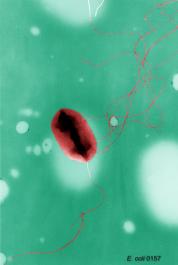
kswfoodworld E.coli O157

Image CDC


When an E. coli O157:H7 outbreak in 2009 was linked to the flour used in prepackaged cookie dough, many people were shocked. How could flour, which seems so innocuous, actually be contaminated with such a serious pathogen? Flour is dry. It seems inert and safe. But flour is a raw agricultural product, and can be contaminated with pathogens just like romaine lettuce. Learn some tips for handling flour safely to avoid food poisoning.