Category Archives: E.coli

Research – The combined effect of green tea and peppermint oil against pathogenic bacteria to extend the shelf life of eggs at ambient temperature and the mode of action

Wiley Online

This work investigated the antimicrobial activities of green tea (GT) at 5 and 10.0% wt/vol and peppermint oil (PP) at 0.1, 0.15, and 0.2% wt/vol against major pathogen bacteria (Escherichia coliSalmonella enteritidis, and Staphylococcus aureus) found on eggs at room temperature (30°C). The quality factors (weight loss, Haugh unit, albumen pH, egg yolk, and albumen index) of treated eggs were also measured while they were stored at room temperature for 14 days. A 9-point hedonic scale was used for sensory evaluation. Scanning electron microscopy was used to examine the morphology of bacteria cells to understand this study’s mechanism of action. It was found that combining 10% GT and 0.15% PP had complete antibacterial activity against all pathogenic bacteria investigated, and could extend the shelf life of treated eggs from 7 days (control) to at least 14 days. The treated egg’s coliforms (≤3.0 log10 colony-forming unit [CFU] g−1), Ecoli (≤1.8 log10 CFU g−1), TVC (≤4.3 log10 CFU g−1), Salmonella spp., (not detected in 25 g), and Saureus (not detected in 25 g) were better able to meet the microbiological criteria for egg after 14 days of storage, when compared to the control, which exceeded the criteria within 7 days. In addition, consumers rated egg acceptability as favorable by giving a sensory score ranging from like slightly to like moderately (~6.7). Furthermore, when compared to the control (6–7 days), all treated eggs retained their quality during storage for 14 days and met the microbiological criteria for egg in food standard (<4.7–6.0 log10 CFU g−1 for total visible count). Compound leakage from within the bacteria, which was the mode of action when GT and PP were combined, resulted in a wrinkled appearance of bacteria cells and serious defects in bacteria membrane morphology. These findings suggest that a sanitizing spray derived from GT and PP can extend the shelf life of eggs and ensure their safety for human consumption at room temperature without using a refrigerator.
RASFF Alerts – E.coli – Japanese Clams – Tellines

RASFF

Too high count of Escherichia coli in live japanese clams from Spain in France

RASFF

Too high count of Escherichia coli in live tellines (Donax trunculus) from Bulgaria in Spain

Research – Characterization of Escherichia coli from Edible Insect Species: Detection of Shiga Toxin-Producing Isolate

MDPI

ecoli

Insects as novel foods are gaining popularity in Europe. Regulation (EU) 2015/2283 laid the framework for the application process to market food insects in member states, but potential hazards are still being evaluated. The aim of this study was to investigate samples of edible insect species for the presence of antimicrobial-resistant and Shiga toxin-producing Escherichia coli (STEC). Twenty-one E. coli isolates, recovered from samples of five different edible insect species, were subjected to antimicrobial susceptibility testing, PCR-based phylotyping, and macrorestriction analysis. The presence of genes associated with antimicrobial resistance or virulence, including stx1stx2, and eae, was investigated by PCR. All isolates were subjected to genome sequencing, multilocus sequence typing, and serotype prediction. The isolates belonged either to phylogenetic group A, comprising mostly commensal E. coli, or group B1. One O178:H7 isolate, recovered from a Zophobas atratus sample, was identified as a STEC. A single isolate was resistant to tetracyclines and carried the tet(B) gene. Overall, this study shows that STEC can be present in edible insects, representing a potential health hazard. In contrast, the low resistance rate among the isolates indicates a low risk for the transmission of antimicrobial-resistant E. coli to consumers. View Full-Text

France – RAW MILK GOAT CHEESES – E.coli

Gov france

Identifying information for the recalled product

  • Product category Food
  • Product sub-category Milk and dairy products
  • Product brand name GOAT CHEESES
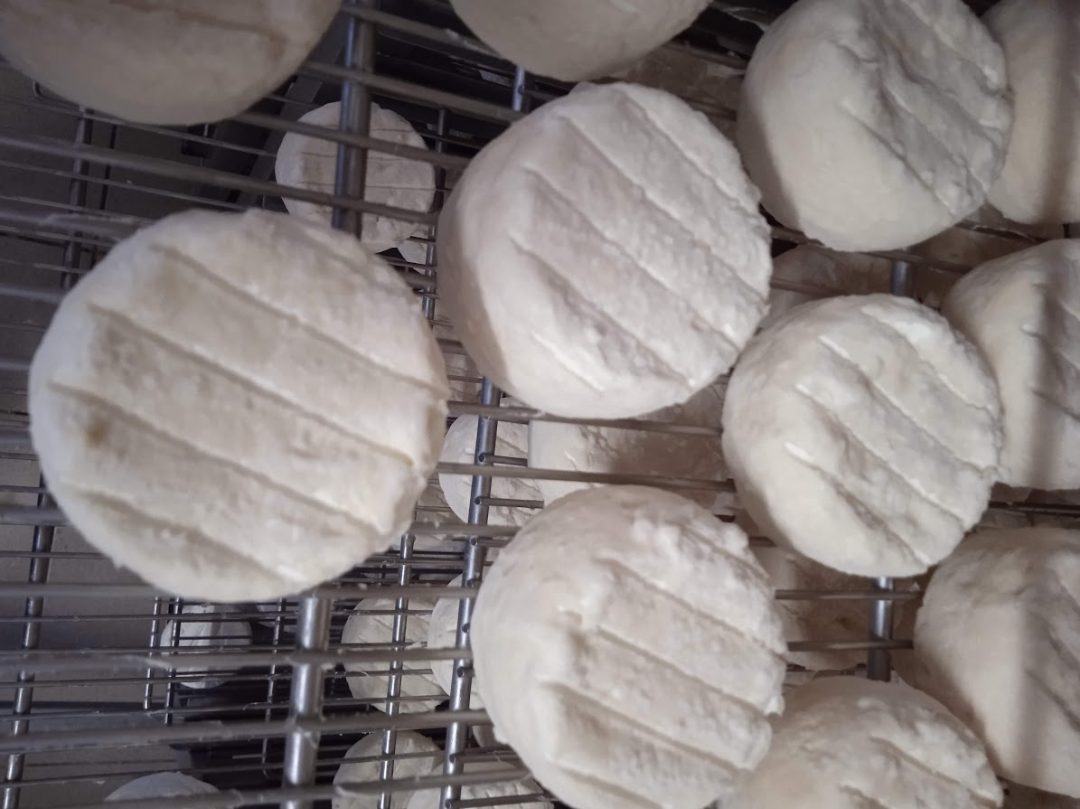
  • Names of models or references GAEC DES PRAIRIES
  • Product identification

    Lot Dated 299/309/110/210/310/410/510/610

    Use-by date between 10/29/2021 and 11/06/2021 79/89/99/109/119/129/139/149/159/169/179/189/199/209/219/229/239/249/259/269/279/289/299/309/110 / 210/310/410/510/610

  • Start date / End of marketing From 09/29/2021 to 10/07/2021
  • Storage temperature Product to be stored at room temperature
  • Geographical sales area Departments: HAUTE-LOIRE (43)
  • Distributors Torrilhon salting

Practical information regarding the recall

  • Reason for recall Risk of E.Coli
  • Risks incurred by the consumer Escherichia coli

France – COW CHEESE IN RAW MILK – E.coli

Gov france

Identifying information for the recalled product

  • Product category Food
  • Product sub-category Milk and dairy products
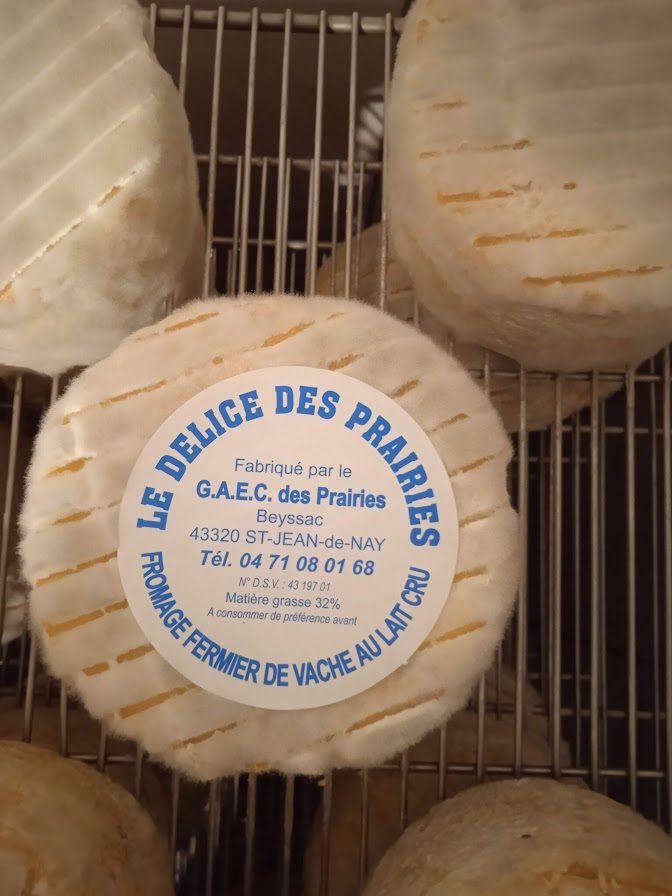
  • Product brand name THE DELICE OF THE PRAIRIES
  • Names of models or references THE GAEC DES PRAIRIES
  • Product identification

    Lot Dated 79/89/99/109/119/149/159/169/179/189/219/229/249/259/289/299/110/210/510/610

    Recommended consumption date between 07/12/2021 and 06/01/2022

  • Start date / End of marketing From 09/27/2021 to 10/07/2021
  • Storage temperature Product to be stored at room temperature
  • Geographical sales area Regions: Auvergne-Rhône-Alpes
  • Distributors Le fromager des halles brives, Clermont neyrat, Thiers, Clermont saint jean, lempdes Intermarché St paulien Super U Langeac Ardèche cicada Proxi Espaly and Loudes Salaison torrilhon Salaison du Velay Chabanon, Méjean, jacob Colombet J

Practical information regarding the recall

  • Reason for recall presence of E.Coli
  • Risks incurred by the consumer Escherichia coli

Research – Prevalence of E. coli Sequence Type 131as a foodborne pathogen in Swiss chicken

Click to access Wetzel%20and%20Fieseler_E.%20coli%20ST131_Prevalence.pdf

Research – Risk evaluation of E. coli ST 131 as a foodborne pathogen in Switzerland

BLV

Within recent years, the topic of multidrug-resistant, uropathogenic Escherichia coli strains has seen a rise in occurrence as foodborne pathogens. At the core of this topic is the specific clonal group referred to as Escherichia coli O25b:H4 sequence type 131 (ST 131). It is an extended-spectrum β-lactamase (ESBL) producing E. coli strain, postulated to be responsible for the spread of ESBL-encoding genes world-wide.
This literature review aimed to evaluate ST 131 as a foodborne pathogen in Switzerland, in order to assess the risk it poses for food producers in Switzerland specifically. On a global scale, ST 131 has been identified on all continents. It is mostly associated with chicken and poultry meat, and has been isolated from retail products many times.
Not exclusive to chicken, it was rarely identified from fish guts and gills. In all other meat products, ST 131 was found only in faecal matter, not in the product itself. Besides meat, the pathogen was not identified from any sources such as dairy, fruit and vegetables.
The situation is similar in Switzerland, where it was isolated frequently from chicken, rarely from fish and a complete absence of the pathogen in all other food product groups. The risk, ST 131 poses towards Swiss food producers has been evaluated as a medium risk factor for both chicken and fish products, and a low risk factor for any other products. Despite ST 131 being evaluated as a medium-to-low risk factor, depending on the product, it is still recommended to perform further research on the topic. Especially looking towards prevalence in Swiss food, in chicken and poultry meat, but also in fish.
Specifically fish designated for raw consumption (Sushi, Sashimi). Moreover, the spread of afore-mentioned ESBL-encoding genes is hypothesized to occur also during infection of humans. This leads to the recommendation, that ST 131 should be considered a food-safety risk in all products, in order to eliminate said spread. Whether this consideration as a food-safety risk is feasible, cannot be said without further analysis of products and viable treatment options.

USA – Kentucky reports outbreak of E. coli due to food distribution

Food Poison Journal

Kentucky Cabinet for Health and Family Services reports that ten Kentuckians recently tested positive with a strain of E. coli O157:H7. Of the cases, two individuals developed a rare but serious condition called hemolytic uremic syndrome (HUS). Public health investigators have not yet identified the source of the outbreak but have noted that some sort of food distribution is likely.

The reported cases primarily include adults, many of whom reside in western Kentucky. No deaths linked to the outbreak have been reported but six people have been hospitalized. Health care providers have been notified of the outbreak and are advised to be alert for patients experiencing acute diarrheal illness, which could be associated with E. coli. This is a particular strain of E. coli that produces a type of toxin (Shiga toxin) that can be dangerous for those infected.

USA – Raw milk recalled in Washington after sampling reveals E. coli contamination

Food Safety News

Williams Valley Family Farm LLC of Clayton, WA, is recalling retail, raw whole milk because of E. coli contamination. The recall was initiated after routine sampling conducted by the Washington State Department of Agriculture (WSDA) revealed the presence of toxin-producing E. coli in the farm’s unpasteurized, raw milk dated Oct. 20-28.

There is concern that consumers may have the milk in their homes because of the expiration date, which has not passed. Consumers who have purchased the recalled products are urged not to drink them and return them to the place of purchase for a full refund, according to the recall notice.

RASFF Alert – E.coli – Oysters

RASFF

Presenza di E. coli oltre i limiti di legge in ostriche//too high count of E. coli in oysters from France and Italy, in France, Italy and Monaco