Category Archives: E.coli

New Zealand – Pams brand Carrot Batons – E.coli

MPI

Pams brand Carrot Batons (300g)

20 January 2023: Foodstuffs Own Brands Ltd is recalling a specific batch of its Pams brand Carrot Batons due to the possible presence of E.coli.

Product type Carrots
Name of product (size) Pams brand Carrot Batons (300g)
Date marking Use By Date 20/01/23
Package size and description The product is sold in a 300g plastic package.
Distribution The product is sold at Pak’n Save, New World and Four Square stores throughout New Zealand.

The product has not been exported.

Notes This recall does not affect any other Pams brand products.

Point of sale notice for retailers

If you are a retailer of the product in this recall notice, you need to download a copy of the below Point of sale notice and display it in your store for one month.

Point of sale notice – Pams brand Carrot Batons [PDF, 47 KB]

Consumer advice

Customers are asked to check the date mark on the back of the packaging.

Affected product should not be consumed. There have been no reports of associated illness, however if you have consumed any of this product and have any concerns about your health, seek medical advice.

Customers should return the product to their retailer for a full refund.

Who to contact

If you have questions, contact Foodstuffs Own Brands Ltd:

  • Phone: 0800 24 51 14
  • Address: 35 Landing Drive, Mangere, Auckland.

Research – Study on bacterial infection in older individuals

News Medical

The older population is prone to microbial infections, which can lead to death. Hence, it is important to understand why this group is vulnerable to microbial infection, especially bacterial infection. A recent Scientific Reports study linked data from two sources to understand the determining factors for microbial infection in the older population in the UK.

The prevalence of bacterial infection significantly increases with age. According to English surveillance data, the incidence of Escherichia coli (E. coli) bacteria is around ten times more in men who are between 45 and 64 years of age and around 100 times more in men above 75 years of age, compared to the younger age group, i.e., those between 15 and 44 years of age. Similar trends were observed with Staphylococcus aureusStreptococcus pneumoniae, and Streptococcus pyogenes bacteria.

Currently, there is no clear explanation for why older individuals are more vulnerable to microbial infections. Nevertheless, environmental risk factors, such as nutrition, lifestyle, and housing, have been deemed possible contributing factors. In addition, the levels of C reactive proteins (CRP) could contribute to individual infection risk.

Serological studies have indicated that aging is associated with a gradual decrease in adaptive immunity, i.e., T-cell responses and antibody levels, which leads to an increase in pneumococcal pneumonia and herpes zoster infections.

In addition to radiological imaging, microbiological sampling (e.g., blood, urine, sputum, peritoneal fluid, and cerebrospinal fluid) can also be used to diagnose an infection by identifying the causal organism of the infection. In England, microbiological specimens are typically processed in hospital laboratories under the National Health Service.

About the Study

The current study used a large-scale population cohort, namely the UK Biobank (UKB), to understand the determining factors of bacterial infection and how it influences subsequent health-related problems.

UKB is a prospective cohort that contains information on around 500,000 men and women aged between 40 and 69 between 2006 and 2010. Initially, this cohort was designed to evaluate the environmental and genetic determinants that lead to common life-threatening diseases.

Public Health England (PHE) has established a second-generation surveillance system (SGSS) to monitor and improve public health. The SGSS dataset contains regularly updated information on human pathogens, such as Campylobacter, Salmonella, and other foodborne pathogens. Additionally, it contains antimicrobial test reports against important pathogens.

The current study demonstrated the possibility of linking UKB prospective cohort data with a national dataset containing information on microbial culture in England (SGSS).

RASFF Alerts – E.coli – Mussels

RASFF

Detection of E.coli in a batch of mussels from Spain in France

Research – An excimer lamp to provide far-ultraviolet C irradiation for dining-table disinfection.

Nature.com

Abstract

Dining tables may present a risk to diners by transmitting bacteria and/or viruses. Currently, there is a lack of an environmental-friendly and convenient means to protect diners when they are sitting together. This investigation constructed far-UVC excimer lamps to disinfect dining-table surfaces. The lamps were mounted at different heights and orientations, and the irradiance on table surfaces was measured. The irradiation doses to obtain different inactivation efficiencies for Escherichia coli (E. coli) were provided. In addition, numerical modeling was conducted for irradiance and the resulting inactivation efficiency. The surface-to-surface (S2S) model was validated with the measured irradiance. The germicidal performance of far-UVC irradiation, the far-UVC doses to which diners were exposed, and the risk of exposure to the generated ozone were evaluated. The results revealed that an irradiation dose of 12.8 mJ/cm2 can disinfect 99.9% of E. coli on surfaces. By varying the lamp irradiance output, the number and positions of the lamps, the far-UVC irradiation can achieve a 3-log reduction for a dining duration of 5 min. Besides, the far-UVC lamp has a low damage risk to diners when achieving an effective inactivation rate. Moreover, there is virtually no ozone exposure risk in a mechanically ventilated dining hall.

Research – Quantifying risk associated with changes in EHEC physiology during post-harvest pre-processing stages of leafy green production

CPS

Summary

The goal of this project is to determine if the time between harvest and end use of romaine lettuce impacts E. coli O157:H7 pathogenicity and detectability resulting in increased health risk. Laboratory scale experiments with inoculated lettuce undergoing simulated harvest and cooling will be used to measure changes in E. coli O157:H7 stress tolerance and virulence. Input from industry partners including temperature data from commercial romaine harvesting and cooling, and details on supply chain logistics, will be combined with the laboratory scale experimental data and used to model risk associated with specific harvest and handling practices. The resulting quantitative tool will be publicly available and allow for growers and producers to determine any practices that should be implemented to reduce the potential for O157 transmission on romaine lettuce.

RASFF Alert – E.coli – Beef

RASFF

E. coli in beef from New Zealand in Austria

Luxembourg – BAME BRAND MUSSELS FROM SPAIN – E.coli

SAP

Last name Mussels from Spain
Brand BAME
Unity 1.4kg
bar code 3293580020804
Use-by date (DLC) 01/05/2023
Batch 36322

Danger  : Potential presence of E. coli bacteria

Escherichia coli can cause food   poisoning which can occur within a week after consumption and result in gastrointestinal disorders often accompanied by cramps. These symptoms may be aggravated in young children, immunocompromised subjects and the elderly. People who have consumed these products and have these symptoms are invited to consult a doctor and report this consumption to him.

Sale in Luxembourg by: Match; Smatch

A sale by other operators cannot be excluded.

Information Source: Match Recall Notification

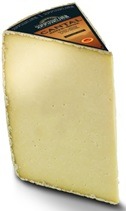
France – Cantal Entre-Deux with raw milk 1/8 wheel x1 (variable weight) – E.coli STEC 0103:H2

Gov france

Identification information of the recalled product

  • Product category Food
  • Product subcategory Milk and dairy products
  • Product brand name REFINERY COUNTER
  • Model names or references1/8 wheel format sold in the cutting department
  • Identification of products
    GTIN Batch Date
    3492840043960 batch: 35621472 Use-by date 31/01/2023
  • Packaging old at the cutting department
  • Marketing start/end date From 29/12/2022 to 03/01/2023
  • Storage temperature Product to be stored in the refrigerator
  • Health mark EN 15.196.001 CE
  • Geographic area of ​​sale Whole France
  • Distributors INTERMARCHE E. LECLERC (SOCAMAINE; SCANORMANDE; SCALANDES; SCACHAP)
  • List of points of sale point_of_sale_list.pdf

Practical information regarding the recall

  • Reason for recall Presence of E.coli STEC 0103:H2
  • Risks incurred by the consumer Toxigenic Shiga Escherichia coli (STEC)

Research -Control measures for Shiga toxin-producing Escherichia coli (‎STEC)‎ associated with meat and dairy products: meeting report

WHO

Although Shiga toxin-producing Escherichia coli (STEC) have been isolated from a variety of food production animals, they are most commonly associated with ruminants from which we derive meat and milk. Because of the widespread and diverse nature of ruminant-derived food production, coupled with the near ubiquity of STEC worldwide, there is no single definitive solution for controlling STEC that will work alone or in all situations. Instead, the introduction of multiple interventions applied in sequence, as a “multiple-hurdle scheme” at several points throughout the food chain (including processing, transport and handling) will be most effective.

This report summarizes the review and evaluation of interventions applied for the control of STEC in cattle, raw beef and raw milk and raw milk cheese manufactured from cows’ milk, and also evaluates available evidence for other small ruminants, swine and other animals. The information is presented from primary production, to the end of processing, providing the reader with information on the currently available interventions based on the latest scientific evidence.

This work was undertaken to support the development of guidelines for the control of STEC in beef, raw milk and cheese produced from raw milk by the Codex Committee on Food Hygiene (CCFH).

RASFF Alerts – E.coli – Cheese

RASFF

E.coli detected on a cheese from France in Belgium