Category Archives: Decontamination Microbial

Research – UK food microbiology lab notes less contact with the EU

Food Safety News

The United Kingdom leaving the European Union has resulted in reduced communication between UK and EU food networks, according to a new report.

The annual report covers work of the UK’s national reference laboratory (NRL) for food microbiology between April 2021 and March 2022.

The UK Health Security Agency (UKHSA) provides this service for the Food Standards Agency (FSA) for Listeria monocytogenes, coagulase-positive staphylococci, E. coli, Campylobacter, Salmonella and antimicrobial resistance.

Spain – New information on the presence of Listeria monocytogenes in cooked pork head meat

ACSA

pig's head meat cooked from the alert

In relation to the alert for the presence of Listeria monocytogenes in cooked pork head meat from Spain , the withdrawal is extended to another batch of the same product.

With this new information, the data of the product involved are:

Denomination: Special pig’s head

Brand: FRIAL

Lot: 2238402, with expiration date 12/14/2022.

Batch: 2238403, with expiration date 12/23/2022.

According to the information available, the distribution of the products has been in the Basque Country, Madrid, Castilla-La Mancha, Castilla y León, Extremadura, Cantabria and Galicia, although it is not ruled out that there is distribution to other autonomous communities.

With the information available there is NO record of any reported case associated with this alert.

The Spanish Agency for Food Safety and Nutrition has received this information from the autonomous community of Castilla-La Mancha and has transferred it to the competent authorities of the autonomous communities through the Coordinated System for the Rapid Exchange of Information (SCIRI) in order to that the withdrawal of the affected products from the marketing channels be verified.

As a precautionary measure, it is recommended that people who have the product indicated above in their homes refrain from consuming it and return it to the points of sale.

In the case of having consumed this product from the affected batches and presenting symptoms compatible with listeriosis (fever, headache, vomiting or diarrhea), it is recommended to go to a health center.

Research – Looking at edible insects from a food safety perspective. Challenges and opportunities for the sector

FAO

The release of the pioneering FAO publication,
 
Edible insects. Future prospects for food and feed security in 2013 spurred considerable interest in insect farming . While insects have been part of the normal diets of many cultures in various regions through the centuries, the practice is not widespread in the Western world .
 
However, with growing concerns about the environmental effects of food production, sustainable agriculture is garnering increasing support within our food systems . This has led to an increased interest in using insects as an additional source of nutrition in human food and animal feed, propelling research activities as well as business opportunities worldwide .Until recently edible insects have been collected mainly from the wild but farming insects for human as well as animal consumption is now on the rise .
 
Their high fecundity, high feed conversion efficiency, and rapid growth rates make insects viable and attractive candidates for farming . In addition, they can be reared in small, modular spaces, making it feasible to raise them in rural as well as urban farm settings .The low carbon, water and ecological footprints associated with insect production, as compared to those of other livestock species, make them attractive from an environmental sustainability standpoint . In general, edible insects are a good source of protein, fatty acids, vitamins, and minerals, though the nutritional profile is insect species dependent .
 
This makes them a potential food source for healthy human diets .Insects can also be a nutritionally beneficial and sustainable source of feed for animals . These factors make insects a good prospect to help address food insecurity issues related to a rising global population, without simultaneously harming the environment .


However, the benefits of this emerging food source must be weighed against all possible challenges: for instance, any food safety issues that could pose health threats to consumers . As with other foods, edible insects can also be associated with a number of food safety hazards .
 
This publication covers some of the major food safety hazards that should be considered, including biological agents (bacterial, viral, fungal, parasitic) as well as chemical contaminants (pesticides, toxic metals, flame retardants) . Safe and successful insect production must include efforts to prevent, detect, identify and mitigate such food safety concerns . Food safety risks can be higher when insects are harvested from the wild and consumed raw .
 
Farming insects under controlled hygienic conditions and implementing sanitary processing techniques should reduce some hazards, such as microbiological contamination .An important area of food safety consideration is the quality and safety of the feed or substrates used for rearing insects . The use of raw materials that are alternative to conventional feed are being explored as potential substrates for mass production of insects .Some of these raw materials include food side streams such as food waste, agricultural by-products or manure from livestock farms .
 
The high nutritional content and low cost of such side streams provide a means to enforce circular economy in the process, in addition to further reducing the environmental footprint and economic costs associated with insect farming . However, as the nutrient content and food safety aspects of reared insects depend on the substrate, further studies and monitoring will be needed to determine the quality and safety of such side streams as well as the insects that are produced .Insects and crustaceans (shrimp, prawns, etc .) belong to the arthropod family . While allergic reactions to shellfish are well-known, the potential allergenic risks associated with consuming edible insects needs further investigation .
 
Individuals already allergic to crustaceans are particularly vulnerable to developing allergic reactions to edible insects, due to allergen cross-reactivity . The immune systems of shellfish-allergic individuals are sensitized to certain proteins from crustaceans .Recognition of similar proteins in insects upon consumption can trigger the immune system to initiate an allergic reaction .
 
In addition to cross-reactivity, there is also a risk associated with developing de-novosensitization to yet unidentified allergens from insects . Research in this area must be broadened to gain a better understanding of this risk .Other challenges facing this emerging sector are also discussed in the publication . These include the general absence of insect-specific regulations governing the production and trade of insects as food and feed, issues related to upscaling the production of insects, and overcoming the negative attitude associated with insect consumption among some consumers .


Research – The monitoring program for algal toxins in shellfish 2021

Mattilsynet

In general, less poisonous shells were detected during the covid-19 years 2020 and 2021 than in the three previous years. We cannot determine whether this is due to fewer samples or less blooms of toxic algal plankton.

In 2021, a total of 723 shell samples were taken and analyzed for various toxins; 384 samples from the Norwegian Food Safety Authority’s annual monitoring program (including the Mussel Alert) and 339 samples from the producers’ own control samples. 

The number of samples from the industry was somewhat fewer in 2021 because demand for shells was lower due to covid-19 with closed restaurants and hotels.

On the monitoring of algal toxins in shellfish

The Norwegian coast is monitored throughout the year for marine algal toxins in shells in connection with commercial harvesting and trade in addition to the Mussel Alert.

The shell samples are analyzed for both the fat-soluble toxins DSP (OA group), AZA, YTX and PTX and the water-soluble toxins with the neurotoxin PSP (STX group), and for the amnesia toxin ASP (DA group).

What did we investigate? Mostly mussels, but also some scallops, flat oysters, Pacific oysters, cockles, knife clams, O-clams, carpet clams, sand clams, circle clams, king snails and sea urchins
Time range: 2021
What were we looking for? The algae toxins DSP, YTX, PTX and AZA, PSP and ASP.
What did we find? Around 98 per cent of all submitted mussels were below the limit value for DSP (OA group).

For PSP (STX group) around 95 per cent were below the limit value, while around 99 per cent were below the limit value for ASP.

For the toxin groups YTX, PTX and AZA, all samples were below given limit values.

Mussels: Had the most detections of DSP and PSP above the limit value, but ASP was also detected above the limit value

Scallops : PSP and ASP were detected above the limit value

Flat oysters : PSP was detected above the limit value in Western Norway for a period in April

PSP : As in previous years, was mainly detected in the spring and early summer.

DSP : The detections above the limit value were distributed throughout the year from April to October with a peak in September. This is consistent with previous years where DSP mainly performs in late summer and autumn.

USA – Stay Food Safe this Thanksgiving Holiday

USDA

Keep your stomach full of turkey and free from foodborne illness this Thanksgiving holiday. The U.S. Department of Agriculture (USDA) reminds us all that it’s important to remember the steps to food safety during America’s biggest meal.

“While the four steps to food safety — clean, separate, cook and chill — are important every day and at every meal, they are particularly significant on Thanksgiving,” said USDA Deputy Under Secretary Sandra Eskin. “There will likely be many guests and many delicious dishes at your holiday table, but you don’t want to invite any foodborne pathogens. Follow those four steps — in particular remember to use a food thermometer — and your Thanksgiving dinner will be a safe one.”

Keep your Thanksgiving celebration food safe by following the tips below.

Clean and Sanitize

Handwashing is the first step to avoiding foodborne illness. Wash your hands for at least 20 seconds with soap and water before, during, and after handling food. In a recent study, 97 percent of participants in a USDA test kitchen failed to wash their hands properly. Make sure to follow these handwashing steps:

  • Wet your hands with clean, running water.
  • Lather your fingers with soap.
  • Scrub soapy hands and fingers thoroughly for at least 20 seconds. Rinse your hands under clean, running water.
  • Dry hands off with a clean towel or air dry them.

Clean and sanitize any surfaces that have touched raw turkey and its juices and will later touch food such as kitchen counters, sinks, stoves, tabletops, etc.

Avoid Cross-Contamination

Cross-contamination is the spread of bacteria from raw meat and poultry onto ready-to-eat food, surfaces, and utensils. One way to avoid this is by using separate cutting boards — one for raw meat and poultry, and another for fruits and vegetables. Our recent study found that sinks are the most contaminated areas of the kitchen. USDA recommends against washing your raw poultry due to the risk of splashing bacteria throughout your kitchen. Clean and sanitize any areas that will come into contact with the turkey before and after cooking.

Thaw the Turkey Safely

Never thaw your turkey in hot water or leave it on a countertop. There are three ways to safely thaw a turkey: in the refrigerator, in cold water and in the microwave.

  • Refrigerator thawing: Turkey can be safely thawed in a refrigerator to allow for slow and safe thawing. When thawing in a refrigerator, allow roughly 24 hours for every four to five pounds of turkey. After thawing, a turkey is safe in a refrigerator for one to two days.
  • Cold water thawing: The cold water thawing method will thaw your turkey faster but will require more attention. When thawing in a cold-water bath, allow 30 minutes per pound and submerge the turkey in its original wrapping to avoid cross-contamination. Change the water every 30 minutes until the turkey is thawed. The turkey must be cooked immediately after thawing.
  • Microwave thawing: To thaw a turkey that fits in the microwave, follow manufacturer’s recommendations. Cook it immediately after thawing because some areas of the food may become warm and begin to cook during the thawing process, bringing the food to the “Danger Zone.”

It’s safe to cook a completely frozen turkey; however, it will take at least 50 percent longer to fully cook.

Cook Thoroughly

Your turkey is safe to eat once it reaches an internal temperature of 165 F. Insert a food thermometer into the thickest part of the breast, the innermost part of the wing and the innermost part of the thigh to check its internal temperature. USDA recommends using a food thermometer even if the turkey has a pop-up temperature indicator to ensure it has reached 165 F in the three previously stated places.

Stuffing your Turkey

USDA recommends against stuffing your turkey since this often leads to bacteria growth. However, if you plan to stuff your turkey, follow these steps:

  • Prepare the wet and dry ingredients for the stuffing separately from each other and refrigerate until ready to use. Mix wet and dry ingredients just before filling the bird’s cavity.
  • Do not stuff whole poultry and leave in the refrigerator before cooking.
  • Stuff the turkey loosely — about 3/4 cup of stuffing per pound.
  • Immediately place the stuffed, raw turkey in an oven set no lower than 325 F.
  • A stuffed turkey will take longer to cook. Once it has finished cooking, place a food thermometer in the center of the stuffing to ensure it has reached a safe internal temperature of 165 F.
  • Let the cooked turkey stand 20 minutes before removing the stuffing.

For more information on turkey stuffing, visit Turkey Basics: Stuffing.

The Two-Hour Rule

Don’t leave your food sitting out too long! Refrigerate all perishable foods sitting out at room temperature within two hours of being cooked, or one hour if the temperature is 90 F or above. After two hours, perishable food will enter the “Danger Zone” (between 40 F and 140 F), which is where bacteria can multiply quickly and cause the food to become unsafe. Discard all foods that have been left out for more than two hours. Remember the rule — keep hot foods hot and cold foods cold.

  • Transporting hot foods — Wrap dishes in insulated containers to keep their temperature above 140 F.
  • Transporting cold foods — Place items in a cooler with ice or gel packs to keep them at or below 40 F.

When serving food to groups, keep hot food hot and keep cold food cold by using chafing dishes or crock pots and ice trays. Hot items should remain above 140 F and cold items should remain below 40 F.

Leftovers

Store leftovers in small shallow containers and put them in the refrigerator. Thanksgiving leftovers are safe to eat up to four days in the refrigerator. In the freezer, leftovers are safely frozen indefinitely but will keep best quality from two to six months.

Resources

For Thanksgiving food safety questions, call the USDA Meat and Poultry Hotline at 1-888-MPHotline (1-888-674-6854), email MPHotline@usda.gov or chat live at ask.usda.gov from 10 a.m. to 6 p.m. Eastern Time, Monday through Friday.

Do you have any last-minute turkey day questions? The Meat and Poultry Hotline will be open on Thanksgiving Day from 8 a.m. to 2 p.m. EST.

USA – Deli Meat and Cheese with Listeria sickens 16 in 6 States since 2021

Food Poison Journal

Key Facts: 16 sick people in California (1), Illinois (2), Maryland (3), Massachusetts (2), New Jersey (1) and New York (7) range in age from 38 to 92 years, with a median age of 74, and 62% are male. Of 13 people with ethnicity information available, 11 are of Eastern European background or speak Russian. Of 14 people with information available, 13 have been hospitalized. One person got sick during their pregnancy, resulting in pregnancy loss. Additionally, one death has been reported from Maryland. Sick people’s samples were collected from April 17, 2021, to September 29, 2022.

CDC, public health and regulatory officials in several states, the U.S. Department of Agriculture’s Food Safety and Inspection Service (USDA-FSIS), and the U.S. Food and Drug Administration (FDA) are collecting different types of data to investigate a multistate outbreak of Listeria monocytogenes infections.

Epidemiologic and laboratory data show that meat and cheese from deli counters contaminated with Listeria are making people sick. Investigators are still working to identify any specific products or delis that may be contaminated with the outbreak strain.

As of November 9, 2022, 16 people infected with the outbreak strain of Listeria have been reported from 6 states – California, Illinois, New York, Maryland, Massachusetts, New Jersey.

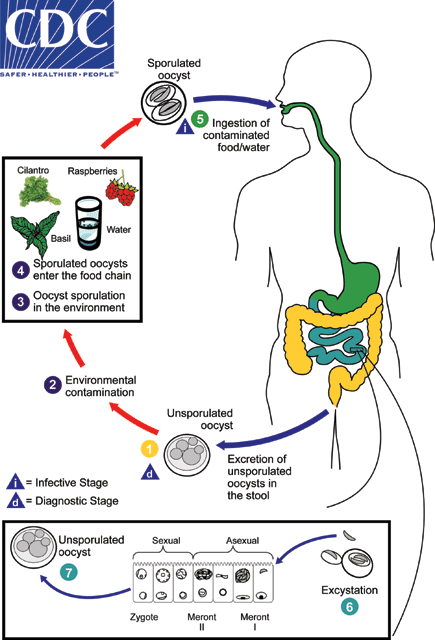
USA – Cooper’s Hawk Winery Cyclospora Outbreak in Jacksonville, Florida:  Victims Still Coming Forward to Seek Justice as 4-Year Statute of Limitations Approaches

Food Poisoning News

Cooper’s Hawk Winery Cyclospora Outbreak in Jacksonville, Florida:  Victims Still Coming Forward to Seek Justice as 4-Year Statute of Limitations Approaches

In June of 2019, the Florida Department of Health in Duval County (DOH-Duval) was notified of an outbreak of gastrointestinal illness (food poisoning) among employees of the local Jacksonville Cooper’s Hawk Winery – the restaurant corporate manager called in the notification. By that time, about 20 employees had become ill. On Sunday, June 23 the Regional Environmental Epidemiologist (REE) was notified by Florida Poison Information Control Network that 16 out of 17 persons who dined at Cooper’s Hawk with a group on June 11, 2019 were ill with a gastrointestinal illness.  This information was sent to DOH-Duval who began an outbreak investigation on June 24.

That same day, another individual called to report he was in a different group (24 persons) who all became ill (except one person) after eating at Cooper’s Hawk Winery in Jacksonville on June 13.

Between June 24 and July 3, 2019, a total of six independent parties contacted DOH-Duval Epidemiology to report gastrointestinal illness after they ate food from the Jacksonville Cooper’s Hawk Winery between June 11 and June 15.

On July 8, the local news media reported on the outbreak which resulted in additional patrons calling in and reporting their illnesses.

USA – Another Seattle area E. coli O157 Outbreak

Food Poison Journal

Public Health is investigating an outbreak of three people infected with Shiga toxin-producing E. coli O157:H7 (also known as STEC). Between October 4 – 16, 2022, 3 people from 3 separate households reported becoming ill. Cases have been among people ranging in age from 18 to 36 years old. Symptoms reported include diarrhea and abdominal pain.

The investigation is ongoing, and no source has been identified. Two of the three ill people report eating dishes that were prepared with raw or undercooked beef but we cannot rule out other possible sources at this time.

Confirmed cases have been linked through genetic fingerprinting results (whole genome sequencing) which indicate that they have the same genetic strain, meaning they likely have a common source of infection.

Research team work on a rapid test for foodborne pathogens in poultry

Poultry World

A research team at Michigan State University will use a grant from the USDA to develop a rapid biosensor test for foodborne pathogens. The rapid test will be used onsite at poultry farms and processing facilities to inspect large samples for Salmonella and Campylobacter.

The US$769,000 grant was received from the US Department of Agriculture’s (USDA) National Institute of Food and Agriculture (NIFA), and Professor Evangelyn Alocilja, who is in the MSU Department of Biosystems and Agricultural Engineering, is leading the project. She is an expert in her field and in rapid biosensing diagnostics for infectious and antimicrobial-resistant diseases, having developed such tests for tuberculosis, dengue and Covid-19.

Poultry products are one of the most common sources of infection

Alocilja says that studies have shown poultry products are one of the most common sources of infection due to bacterial contamination from farm production practices and processing equipment. In the US, the economic burden of Salmonella and Campylobacter from all sources exceeded US$6 billion in 2018, according to the USDA Economic Research Service.

Food Safety Aspects of Edible Insects

Food Safety.Com

A recent review of available scientific literature suggests that, when cooked or processed in certain ways, edible insects can be a safe food product. Food safety considerations for the commodity were explored in the review, including microbiological contaminants, anti-nutritive factors, pesticide residues, toxic heavy metals, mycotoxins, and allergens.

The article outlined various food safety aspects of edible insects, stating that the commodity’s microbiological and anti-nutritive characteristics are of greatest concern. In general, research has demonstrated high counts of microorganisms to be present in fresh insects; however, with the appropriate thermal treatment, microbial loads can be eliminated. As with other foods, the efficacy of heat treatment on edible insects depends on factors such as the type, intensity, and duration of treatment, as well as the treated food composition. Solar and oven drying were underlined by the review as potential heat treatment methods.