Category Archives: Decontamination Microbial

Research – Using TRIS-Buffered Plasma-Activated Water to Reduce Pathogenic Microorganisms on Poultry Carcasses with Evaluation of Physicochemical and Sensory Parameters

MDPI

Abstract

Foodborne diseases are mainly caused by the contamination of meat or meat products with pathogenic microorganisms. In this study, we first investigated the in vitro application of TRIS-buffered plasma-activated water (Tb-PAW) on Campylobacter (C.) jejuni and Escherichia (E.) coli, with a reduction of approx. 4.20 ± 0.68 and 5.12 ± 0.46 log10 CFU/mL. Furthermore, chicken and duck thighs (inoculated with C. jejuni or E. coli) and breasts (with natural microflora) with skin were sprayed with Tb-PAW. Samples were packed under a modified atmosphere and stored at 4 °C for 0, 7, and 14 days. The Tb-PAW could reduce C. jejuni on days 7 and 14 (chicken) and E. coli on day 14 (duck) significantly. In chicken, there were no significant differences in sensory, pH-value, color, and antioxidant activity, but %OxyMb levels decreased, whereas %MetMb and %DeoMb increased. In duck, we observed slight differences in pH-value, color, and myoglobin redox forms for the Tb-PAW, which were not perceived by the sensory test persons. With only slight differences in product quality, its application as a spray treatment may be a useful method to reduce C. jejuni and E. coli on chicken and duck carcasses.

USA – FDA Core Investigation Table Update

FDA

What’s New

  • A new outbreak of Salmonella Hartford (ref # 1144) linked to a not yet identified product has been added to the table. FDA has initiated traceback.
  • For the outbreak of hepatitis A virus (ref #1143), the case count has been adjusted from nine to five cases, following CDC’s exclusion of suspect cases from the case count. FDA has initiated sample collection and analysis.
Date
Posted
Ref Pathogen
or
Cause of
Illness
Product(s)
Linked to
Illnesses

(if any)
Total
Case
Count

Status
3/8/2023 1144 Salmonella Hartford Not Yet
Identified
31 Active
3/1/2023 1143 Hepatitis A Virus Not Yet
Identified
5 Active
2/15/2023 1123 Listeria
monocytogenes
Not Yet
Identified
See
CDC
Investigation
Notice
Active
11/9/2022 1127 Listeria
monocytogenes
Enoki
Mushrooms
See
Outbreak
Advisory
Active

Research – First report of foodborne botulism due to Clostridium botulinum type A(B) from vegetarian home-canned pate in Hanoi, Vietnam

Science Direct

Abstract

Even one case of foodborne botulism constitutes a public health emergency. We report a series of cases with delayed treatment due to delayed diagnosis. Clostridium botulinum type A(B) was isolated from vegetarian home-canned pate, but not from stool samples. These are the first recorded cases of foodborne botulism in Hanoi.

Introduction

Botulism is a rare but serious neuroparalytic illness caused by botulinum neurotoxins (BoNTs) [1,2]. The sources of BoNTs are Clostridium botulinum and sometimes C. butyricum, C. baratii, and C. argentinense. The toxins are produced under anaerobic conditions and act presynaptically at peripheral cholinergic neuromuscular junctions, blocking acetylcholine release. Seven types (A–G) of BoNTs have been identified [3]. The classical early signs of botulism include cranial nerve palsies that progress to the symmetrical descending weakness of the trunk, extremities, and smooth muscle, with eventual flaccid paralysis. Typical early symptoms include diplopia (visual disturbances), dysphagia (difficulty swallowing), dysphonia (voice change), and dysarthria (slurred speech) [4]. Considering the severity and potential public health impact of this disease, rapid diagnosis is necessary. This report describes the first recorded cases of foodborne botulism in Hanoi, associated with vegetarian home-canned pate. This was caused by C. botulinum type A(B), which carries both type A and type B bont genes but does not produce active type B toxin because of mutations or truncations.

Gastro, food poisoning or stomach flu: Everything you need to know

ABC News AU

Whether you’re feeling nauseous, have the runs, or are actively vomiting, there’s nothing pleasant about an upset stomach.

As Nirvana Luckraj, the chief medical officer of Healthdirect Australia explains, gastro is an overarching condition.

Gastroenteritis is a general term that refers to inflammation of the gastrointestinal tract.

“[It] can be caused by a variety of factors including viral or bacterial infections, food poisoning, or it can be a reaction to certain medications, or even dietary changes.”

Her team saw a spike in interest in gastro over the December and January holiday period, but have seen a downward trend since then.

Whatever variant you’re experiencing, this is how to look after yourself and those around you.

What are the symptoms of gastro, food poisoning and the stomach flu?

Symptoms of gastroenteritis can include:

  • Nausea
  • Vomiting
  • Diarrhea
  • Stomach cramps
  • Fever

Dr Luckraj says food poisoning, stomach bugs and other forms of gastro all have similar symptoms, but differ in their causes.

Stomach flu, also known as viral gastroenteritis, is caused by viral infection, and can be spread via contact with an infected person, or by consuming contaminated food or water.

Food poisoning is caused by consuming contaminated food like undercooked meat, contaminated produce, or dairy products. Dr Luckraj says symptoms usually start quickly — even just hours after consumption.

Research – Safe Food Australia – A guide to the Food Safety Standards 

FSANZ

​​​​​​Last updated: February 2023​

Safe Food Australia coverSafe Food Australia is a guide to the four mand​atory food safety standards:

  • Standard 3.1.1 Interpretation and Application
  • Standard 3.2.2 Food Safety Practices and General Requirements
  • Standard 3.2.2A Food Safety Management Tools​
  • Standard 3.2.3 Food Premises and Equipment.

The guide is for government agencies who are responsible for enforcing the standards. Food businesses may also find it offers helpful information about the standards and food safety issues.

Fourth Edition, February 2023

Download the complete Safe Food Australia guide (PDF 7 mb)

​​New content!​

​Standard 3.2.2A is a new food safety standard for food service, caterer and related retail businesses, becoming enforceable in December 2023. It contains requirements for food handler training, a food safety supervisor, and evidence that specific food handling activities are being adequately managed. Businesses will need to implement either two or three of these tools depending on their food handling activities.

InfoBites for food businesses

We’ve also developed some short factsheets to help you understand the food safety standards, by topic. See our InfoBites.

Ireland – Boil Water Notice as parasite detected in East Limerick water -Cryptosporidium

Live95 FM

crypto

Approximately 470 consumers living close to the Tipperary border have been issued a Boil Water Notice. Traces of cryptosporidium was detected in the Glengar Public Water Supply. A map of the affected area is available to view on the supply and service section of water.ie

Following consultation with the (HSE), Uisce Éireann and Tipperary County Council, all consumers affected by this notice are advised to boil their water before drinking it.

supplied by the Glengar Public Water Supply scheme.  Uisce Éireann and Tipperary County Council are issuing this Boil Water Notice with immediate effect.

The notice impacts customers in Glengar, Leugh, Knockanavar, Moher East, Moher West, Shanacloon, Gortaderry, Ballyhane East, Ballyhane West and surrounding areas.

Vulnerable customers who have registered with Uisce Éireann will receive direct communication on this Boil Water Notice and are reminded that the water is safe to consume once boiled and cooled.

Water must be boiled for Drinking;

Food Safety News – USA- Publisher’s Platform: It’s time to deal with hepatitis A and food service workers

Food Safety News

The Advisory Committee on Immunization Practices (ACIP) provides advice and guidance to the Director of the CDC regarding use of vaccines and related agents for control of vaccine-preventable diseases in the civilian population of the United States. Recommendations made by the ACIP are reviewed by the CDC Director and, if adopted, are published as official CDC/HHS recommendations in the Morbidity and Mortality Weekly Report (MMWR).

Presently, approximately 5% of all hepatitis A outbreaks are linked to infected food-handlers.

Here is what the CDC continues to say about vaccinating food-handlers:

Why does CDC not recommend all food handlers be vaccinated if an infected food handler can spread disease during outbreaks?

USA – Ruby Princess: More than 200 sickened on the Princess Cruises voyage

Outbreak News Today

Federal health officials are reporting that some 219 passengers and crew suffered with symptoms of  vomiting and diarrhea during a recent Princess Cruises’ Ruby Princess voyage (RU305P  from February 26–March 5, 2023).

To date, the etiology of the illness has not been discovered.

In response to the outbreak, Princess Cruises and the crew aboard the ship reported the following actions:

  • Increased cleaning and disinfection procedures according to the ship’s outbreak prevention and response plan.
  • Collected stool specimens from gastrointestinal illness cases to send to the CDC lab for pathogenic identification.

Vessel Sanitation Program (VSP) epidemiologists and environmental health officers will board the ship in Galveston, Texas, on March 5 to conduct a formal outbreak investigation.

Research- Development of an Extraction Method to Detect Hepatitis A Virus, Hepatitis E Virus, and Noroviruses in Fish Products

MDPI

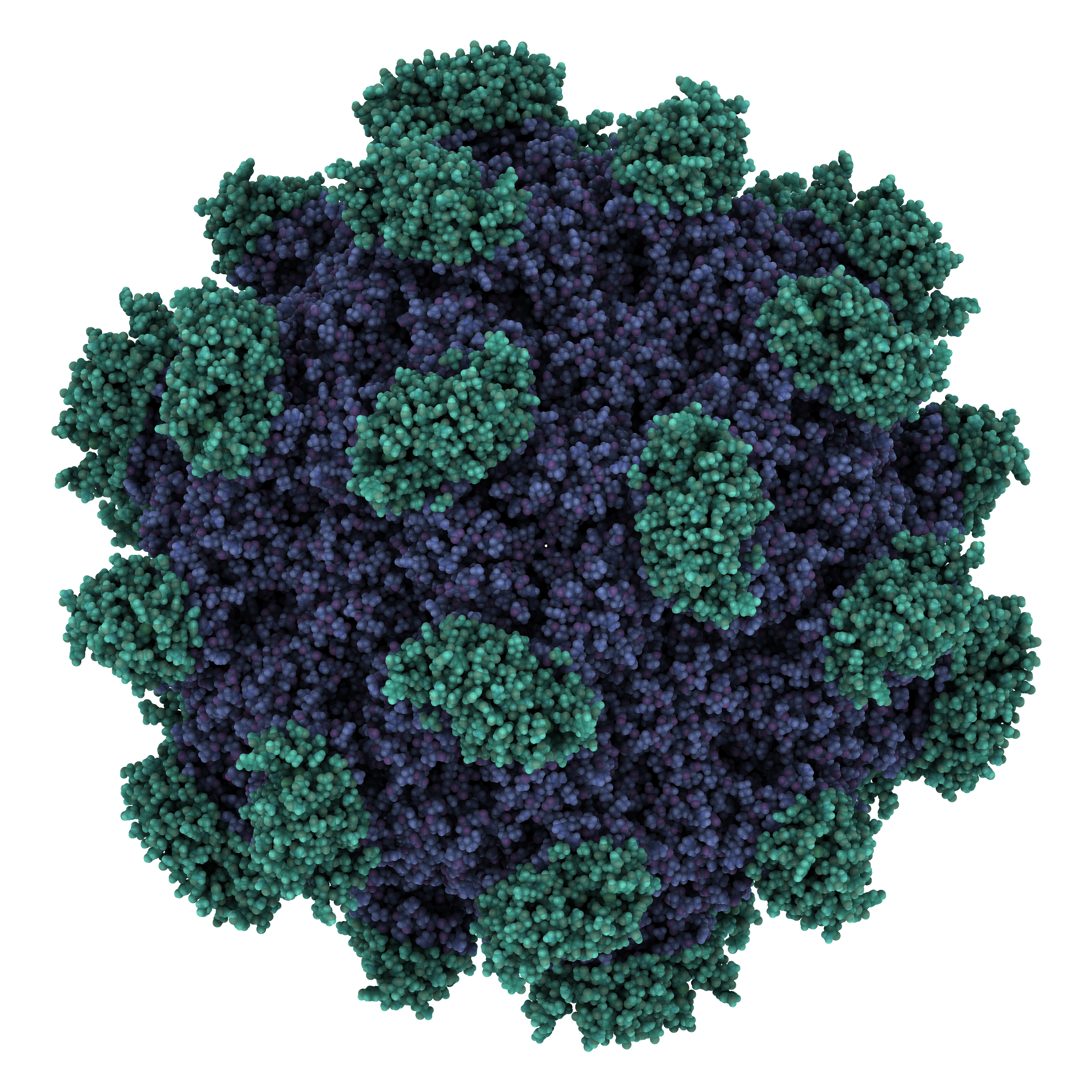
Hepatitis E virus capsid structure. HEV infection causes viral hepatitis. Atomic-level structure.

Abstract

Viruses are a leading cause of foodborne disease worldwide. Hepatitis viruses (hepatitis A (HAV) and hepatitis E (HEV)) and human norovirus are recognized as the main viruses of public health concern in food hygiene. ISO 15216 approved procedures are not validated for detection of HAV and human norovirus in foodstuffs, such as fishes, leading to an inability to ensure the safety of these products. This study aimed to provide a rapid and sensitive method for detecting these targets in fish products. An existing method that includes proteinase K treatment was selected for further validation using artificially contaminated fish products, according to the recent international standard ISO 16140-4. Recovery efficiencies in pure RNA extracts of viruses ranged from 0.2% to 66.2% for HAV, 4.0% to 100.0% for HEV, 2.2% to 100.0% for norovirus GI, and 0.2% to 12.5% for norovirus GII. LOD50 values were between 144 and 8.4 × 10⁴ genome copies/g for HAV and HEV, and 104 and 2.0 × 10³ copies/g for norovirus GI and norovirus GII, respectively. LOD95 values were between 3.2 × 10³ and 3.6 × 10⁵ genome copies/g for HAV and HEV, and between 8.8 × 10³ and 4.4 × 10⁴ genome copies/g for norovirus GI and norovirus GII, respectively. The method developed here was successfully validated in various fish products and can be applied for routine diagnostic needs.

EU – Risk Ranking of Chemical and Microbiological Hazards in Foods ‐ Research Project and International Workshop

EFSA

Abstract

The purpose of this project was to improve the ability to perform risk ranking of current chemical and microbiological hazards in foods. The work was performed in three work packages (WPs) comprising an overview of chemical and microbiological risk assessment (WP1), development of methods for risk ranking (WP2), and the organisation of an international workshop (WP3). The developmental work consisted of 1) a method for chemical hazards that was also adapted for newer toxicological effect data, and 2) an exposure model applicable to both types of hazards in its design. Conclusions at the workshop included that risk ranking fundamentally would provide added support to risk management and risk communication. Both probability and severity of a health effect was regarded to be relevant to incorporate in the metric used for risk ranking. Measures of health burden were regarded as useful by many participants but there was no consensus on the most preferable metric. The value of other metrics, including less data intensive ones, was also noted. While risk ranking should be based on risk assessment principles, management aspects would ultimately need to be considered on top of this. Participants were positive to a joint framework for both chemical and microbiological hazards, but several challenges were identified. In the face of a general lack of desired data it was regarded to be important to make efficient use of the available information, and it may be advantageous if methods are compatible with different sets of evidence. It is recommended that the common metric for risk ranking is further resolved in terms of what aspects it should account for, the usefulness of particular or different metrics, as well as the concept of a tiered approach. Development of an overarching guidance for risk ranking addressing the many types of rankings possible is proposed.