Category Archives: Clostridium

USA – Suspected botulism death prompts warning about home-canned food

Food Safety News

Public health officials in Washington state are urging people to practice safe procedures for home canning after a man died during the weekend.

The man, from Grays Harbor County, was between 55 and 65 years old, according to a news release from the public health department. 

The department has not yet released any other information about the man, except to say it is believed he died from botulism poisoning. Testing is ongoing to confirm the cause of death.

“Grays Harbor County Environmental Health assisted the property owner with the safe disposal of around 170 pint-sized jars of home-canned food and canning jars per CDC guidelines,” according to the county’s news release. 

Botulism is odorless and cannot be seen or tasted; however, even a small taste of food containing the toxin can be deadly, according to the U.S. Centers for Disease control and Prevention, the county release warns.

USA -Soul Cedar Farm Recalls Zesty Sweet Peppers for Possible Botulism

AGR

Soul Cedar Farm in Quilcene, Washington is voluntarily recalling all batches of shelf-stable Zesty Sweet Peppers because they have the potential to be contaminated with Clostridium botulinum toxin, according to the Washington State Department of Health. As of April 19, 2022 there are no reports of illness that are associated with the consumption of this product.

Argentina – Two botulism cases reported in Buenos Aires – Clostridium botulinum

Outbreak News Today

Two women have been hospitalized for botulism, including one in serious condition, according to a La Voz report.

The patients ate matambre (Argentian flank steak) and Russian salad delivered from a  traditional restaurant in the Buenos Aires neighborhood of Boedo.

“The salad is prepared with boiled potatoes and carrots and dried peas soaked in a can, with salt and mayonnaise added. Orders are shipped in disposable plastic containers with lids, and they include four slices of homemade matambre along with a portion of Russian salad”, according to the restaurant.

Research – Two Case Reports of Scombroid in Singapore: A Literature Review

Cureus

Abstract

Scombroid is a foodborne illness that results from eating improperly handled fish. Due to a disruption in the cold chain, these fish have high histamine levels. As a result, scombroid presents with allergy-like symptoms but is not really an allergy per se. Cases have been reported in many countries.

Here, we report two cases of a 48 and 17-year-old father and son in Singapore who developed symptoms suggestive of scombroid after eating tuna imported from Vietnam delivered by an internationally known supply company. The diagnosis was confirmed by elevated histamine levels measured in the culprit fish product. We discuss the pathophysiology, signs, symptoms, and management of scombroid.

Introduction

Scombrotoxin fish poisoning (SFP) also known as scombroid poisoning, scombrotoxicosis, or histamine fish poisoning is a foodborne illness that results from the consumption of fish that has been improperly handled between the time it is caught and the time it is cooked [1]. The word “scombroid” is derived from Scombridae which is a family of dark-fleshed fish consisting of species such as mackerel and tuna. However, non-scombroid fishes such as mahi-mahi, salmon, and sardine have also been implicated in scombroid poisoning [2].

Scombroid poisoning is very common. A 2013 report from the United States estimated over 35,000 cases resulting in 162 hospital admissions between 2000 and 2009 [3]. Scombroid cases have also been reported from countries such as Australia [4], the Netherlands [5], Israel [6], Colombia [7], and many others.

Inappropriate storage, resulting in disruption of the cold chain, of the fish leads to bacterial enzymatic conversion of free histidine into histamine. This is due to the action of bacterial histamine decarboxylase (HDC), usually by mesophilic bacteria such as Clostridium perfringensMorganella morganii, etc. As a result, high levels of histamine are usually found in the culprit seafood item [8]. Whether histamine is the only constituent of “scombrotoxin” is unclear. Nevertheless, the symptomatology is essentially that of histamine toxicity. It is considered an atypical foodborne illness as the main symptoms are not gastrointestinal and also because it is not due to contamination of the product.

While mostly self-limiting and mild, there have been reports of life-threatening scombroid poisoning. A previously healthy young woman developed hypotension needing vasopressors with ST depressions [9] while another scombroid poisoning was complicated by acute pancreatitis [10]. Some cases were severe enough to need ICU admissions. A recent narrative discussed acute coronary syndromes (ACS) associated with scombroid. Of note, there is a potential of hemodynamic failure in the acute stage, even in apparently healthy people [11].

Closer to home, in September 2016, the Agri-Food and Veterinary Authority (AVA) of Singapore issued a recall order on a batch of canned tuna imported from Thailand under a common food brand. This was reported in various newspapers such as The Straits Times and The Independent. In one issue of the Singapore Food Agency’s Food Safety Bulletin in 2018, there was a segment on scombroid. Interestingly, however, a PubMed search was conducted and while we found a case of pufferfish poisoning reported in 2013 [12] and a report of stonefish poisoning in 2009 [13], we found no reports of scombroid poisoning in Singapore. We report two confirmed cases of scombroid poisoning who are from the same household who presented to our hospital after consuming tuna for dinner.

RASFF Alert – Animal Feed – Clostridium perfringens – Fish Meal

RASFF

The presence of Clostridium perfringens in fishmeal from the Czech Republic in Romania

Research – Death by duck paste: Centenary of the Loch Maree botulism tragedy

Press and Journal

kswfoodworld

There were 13 fishermen, two wives, 17 ghillies and three mountain climbers in the party, and they set out that morning with packed lunches prepared by the hotel staff.

The picnic included duck paste sandwiches, the paste coming from the firm of Lazenby & Sons of London.

Little did the diners know that they were carrying a ticking time bomb between slices of bread in their hampers, and that eight of their number would be dead within days.

Read the story at the Link Above

Research – Phytic Acid against Clostridium perfringens Type A: A Food Matrix Study

MDPI

CDC Clost perf

This study evaluated the inhibitory effect of phytic acid (PA) on the spore germination and vegetative cells growth of Clostridium perfringens type A, as well as its effect in combination with maltodextrin (MD) in cooked sausages. The addition of 1% PA showed a satisfactory inhibition of spores’ germination and vegetative cells growth of C. perfringens in BHI media. The inhibitory effect of 1% PA on vegetative cells was similar to the additive sodium sorbate (SS) at 10%. Subsequently, a mixture of PA-MD (1:1; w/w) was evaluated for the inhibition of C. perfringens spores in cooked sausages. The PA-MD 1.5% and 2.5% had a similar performance to SS 10% and a similar or higher performance than 0.015% NO2 (p < 0.05). In an unprecedented way, the present study demonstrated that PA inhibited spore germination and vegetative cells growth of C. perfringens, highlighting its potential use as an alternative and natural preservative for the meat industry. View Full-Text

Slovakia – Report on zoonoses, foodborne diseases and waterborne diseases in the Slovak Republic in 2020

MPSR


The protection of human and animal health can only be achieved through the active cooperation of experts in the field of control and research in the human and veterinary field. The report on zoonoses, foodborne diseases and waterborne diseases in the Slovak Republic for 2020 contains data from official inspections carried out in the field of agriculture and health care, as well as from research institutes and universities. The preparation of the report was coordinated by the National Contact Point for Scientific and Technical Cooperation with the European Food Safety Authority (EFSA EFSA), which is established at the Department of Food Safety and Nutrition of the Ministry of Agriculture and Rural Development of the Slovak Republic (MPRV SR).

The report serves as a basis for the EFSA NCB and scientific experts to set priorities and own national food safety risk assessments. At the same time, the report serves as one of the bases for the Community risk assessment carried out by the European Food Safety Authority (EFSA). Scientific risk assessment is the basis for risk management. The report describes the situation in  35 zoonotic agents, 5 foodborne diseases (ie foodborne diseases) without zoonotic potential and 4 waterborne pathogens. Of the 44 agents monitored, 23 are bacterial, 10 parasitic, 10 viral and prion.

It presents the summary results of examinations and tests performed in 2020 in the Slovak Republic and the evaluation of the national epidemiological situation in humans and animals with a focus on trends and sources of zoonotic and foodborne diseases.

The report presents the summary results of examinations and tests carried out in 2020 and an assessment of the national epidemiological situation in humans and animals , focusing on trends and sources of zoonotic and foodborne diseases . The number of monitored authors, cooperating organizations and experts is growing every year. A wide team of more than 70 experts from 24 scientific and control organizations in the Slovak Republic took part in its elaboration .

In 2020, 17,067 human diseases caused by the study agents were reported, with 29.1% related to campylobacteriosis, 20.9% to Clostridium dificille and 20.4% to salmonellosis. Rotavirus 11.6%, Norwalk virus 5.1%, Borrelia burgdorferi sl 5.6% and  Escherichia coli 1.2% also contributed to a higher percentage of diseases.

Seven of the study agents caused 380 human epidemics, of which 56.6% were salmonellosis, 23.2% were campylobacteriosis and 12.6% of epidemics were caused by rotavirus. Norwalk virus accounted for 5.5%, tick-borne encephalitis virus 1.3%, shigella and 0.5% and yersinia 0.3%.  

35,957 food samples were examined for the presence of 15 pathogens with a positive finding in 2.2% of samples. Higher percentages of positive findings were in  Yersinia spp. 48.1%, Enterococcus spp. 46.3% and  Vibrio spp. 31.8%.

The presence of 30 pathogens was monitored in 2,483,239 samples originating from livestock and wild animals, pets and zoos taken as part of official control, preventive monitoring, research, as well as from sick or dead animals. Positive findings accounted for 0.1% of samples. Higher percentages of positive findings were recorded for  Aeromonas spp. 59.3%, Clostridium spp. 55.4%, Francisella tularensis 50.4%, Babesia spp. 41.1%, Dirofilaria spp. 34.8%, Campylobacter spp. 18.3%, Yersinia spp. 18.3%, Staphylococcus aureus 18.1%, hepatitis E virus 14.1%, Listeria monocytogenes  11.8%, Toxocara spp. 10.5%.

Feed – 385 samples were examined for the presence of Salmonella spp. (1.5% positive samples), Escherichia coli (60.0% positive samples) and Clostridium spp.

(1.7% positive samples).

35,746 water samples were examined for the presence of 9 agents, of which 7.4% were positive, of which Legionella spp. 47.1% and Vibrio spp. 39.5%.

44,633 samples from the environment were examined for the presence of 8 pathogens, of which 2.3% were positive, of which Legionella spp. 36.0%, Vibrio spp. 6.8%,  E.coli 3.6% and  Enterococcus spp. 2.6%.

The report also includes the results of examinations for the resistance of microorganisms to antimicrobials, which has a growing trend worldwide and poses a real danger in the treatment of infections. Microbial resistance was monitored in Salmonella spp., E. coli , Campylobacter spp., Staphylococcus aureus and  Enterococcus spp.

The comprehensive report, which will be published as a publication, has a length of more than 130 pages, will be published in printed form, as a publication with an assigned ISBN. Summaries of individual chapters will be translated into English and published in an electronic version as a publication with an assigned ISBN.

See the appendices for more information.

Attachments (downloadable documents)


Argentina – Botulism behind at least two deaths; others sick in Argentina

Food Safety News

kswfoodworld

Foodborne botulism has been linked to two deaths in an Argentinian province.

The Ministry of Public Health in Misiones reported the two fatalities and at least four other cases occurred this past week in the village of Andresito.

The four ill people, including three adults and one child, are being treated in the intensive care unit of a local hospital. According to media reports, a third person, a child, has since died and up to 10 people have been affected.

Agency officials said that products suspected to be linked to the food poisoning have been seized. Local media reported homemade sausages are believed to be the source of infection.

Botulism antitoxin has been brought from Buenos Aires and Corrientes to reinforce local stock.

Officials reminded people about how food that is not approved by the relevant authorities should not be consumed.

Canada – Moncton Fish Market brand “La” Stimpson’s Surf Clams recalled due to potential presence of Clostridium botulinum

CFIA

Summary

Product
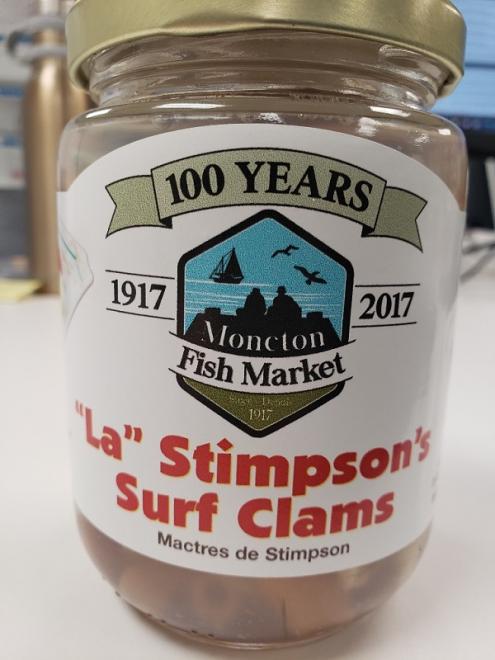
“La” Stimpson’s Surf Clams
Issue
Food » Microbial Contamination » Clostridium botulinum
What to do

Do not consume the recalled product

Moncton Fish Market brand "La" Stimpson's Surf Clams – 153 grams

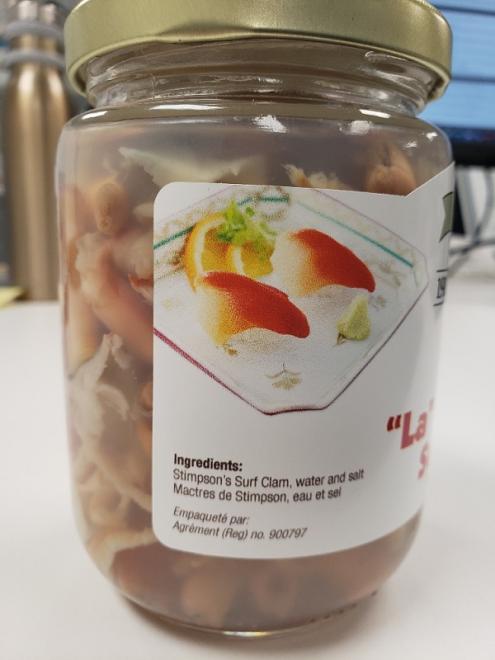
Moncton Fish Market brand "La" Stimpson's Surf Clams – 153 grams – ingredients

Issue

Moncton Fish Market Ltd. is recalling Moncton Fish Market brand “La” Stimpson’s Surf Clams that have been sold unrefrigerated from the marketplace because the product may permit the growth of Clostridium botulinum.

The recalled product has been sold at Moncton Fish Market, Moncton, New Brunswick.

What you should do

  • If you think you became sick from consuming a recalled product, call your doctor
  • Check to see if you have the recalled product in your home
  • Do not consume the recalled product
  • Recalled products should be thrown out or returned to the location where they were purchased

Food contaminated with Clostridium botulinum toxin may not look or smell spoiled but can still make you sick. Symptoms in adults can include facial paralysis or loss of facial expression, unreactive or fixed pupils, difficulty swallowing, drooping eyelids, blurred or double vision, difficulty speaking, including slurred speech, and a change in sound of voice, including hoarseness. Symptoms of foodborne botulism in children can include difficulty swallowing, slurred speech, generalized weakness and paralysis. In all cases, botulism does not cause a fever. In severe cases of illness, people may die.