Category Archives: Campylobacter

Research – Decontamination of Pathogenic and Spoilage Bacteria on Pork and Chicken Meat by Liquid Plasma Immersion

MDPI

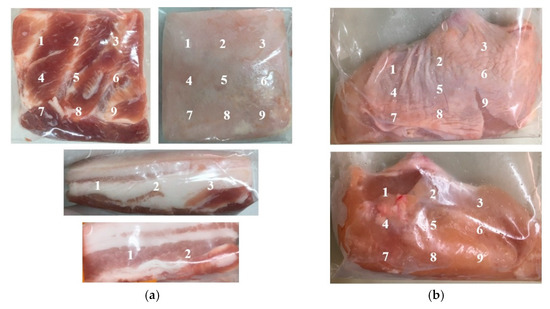
In this research, we aimed to reduce the bacterial loads of Salmonella Enteritidis, Salmonella Typhimurium, Escherichia coliCampylobacter jejuniStaphylococcus aureus, and Pseudomonas aeruginosa in pork and chicken meat with skin by applying cold plasma in a liquid state or liquid plasma. The results showed reductions in S. Enteritidis, S. Typhimurium, E. coli, and C. jejuni on the surface of pork and chicken meat after 15 min of liquid plasma treatment on days 0, 3, 7, and 10. However, the efficacy of the reduction in S. aureus was lower after day 3 of the experiment. Moreover, P. aeruginosa could not be inactivated under the same experimental conditions. The microbial decontamination with liquid plasma did not significantly reduce the microbial load, except for C. jejuni, compared with water immersion. When compared with a control group, the pH value and water activity of pork and chicken samples treated with liquid plasma were significantly different (p ≤ 0.05), with a downward trend that was similar to those of the control and water groups. Moreover, the redness (a*) and yellowness (b*) values (CIELAB) of the meat decreased. Although the liquid plasma group resulted in an increase in the lightness (L*) values of the pork samples, these values did not significantly change in the chicken samples. This study demonstrated the efficacy of liquid plasma at reducing S. Enteritidis, S. Typhimurium, E. coliC. jejuni, and S. aureus on the surface of pork and chicken meat during three days of storage at 4–6 °C with minimal undesirable meat characteristics. View Full-Text

Research – A bacteriological survey of fresh minced beef on sale at retail outlets in Scotland in 2019: three food-borne pathogens, hygiene process indicators and phenotypic antimicrobial resistance.

Journal of Food Protection

The health and economic burden of foodborne illness is high, with approximately 2.4 million cases occurring annually in the United Kingdom. A survey to understand the baseline microbial quality and prevalence of food-related hazards of fresh beef mince on retail sale could inform risk assessment, management and communication to ensure the safety of this commodity. In such a survey, a two-stage sampling design was used to reflect variations in population density and the market share of five categories of retail outlets in Scotland.  From January to December 2019, 1009 fresh minced beef samples were collected from 15 Geographic Areas. The microbial quality of each sample was assessed using Aerobic Colony Count (ACC) and generic E. coli count. Samples were cultured for Campylobacter and Salmonella and PCR was used to detect target genes (stx1 all variants, stx2 a-g, and rfbO157) for Shiga toxin-producing Escherichia coli (STEC). The presence of viable E. coli O157 and STEC in samples with a positive PCR signal was confirmed via culture and isolation. Phenotypic antimicrobial sensitivity patterns of cultured pathogens and 100 generic E. coli isolates were determined, mostly via disc diffusion. The median ACC and generic E. coli counts were 6.4 x 10⁵ (Inter-quartile range (IQR):6.9 x 10⁴ to 9.6 x 10⁶) and <10 cfu per gram (IQR:<10 to 10) of minced beef respectively. The prevalence was 0.1% (95% confidence interval C.I. 0 to 0.7%) for Campylobacter, 0.3% (95% C.I. 0 to 1%) for Salmonella, 22% (95% C.I. 20% to 25%) for PCR positive STEC and 4% (95% C.I. 2 to 5%) for culture positive STEC. The evidence for phenotypic antimicrobial resistance (AMR) detected did not give cause for concern, mainly occurring in a few generic E. coli isolates as single non-susceptibilities to first-line active substances. The low prevalence of pathogens and phenotypic AMR is encouraging but ongoing consumer food-safety education is necessary to mitigate the residual public health risk.

Research – Monitoring AMR in Campylobacter jejuni from Italy in the last 10 years (2011–2021): Microbiological and WGS data risk assessment

EFSA

Campylobacter jejuni is considered as the main pathogen in human food‐borne outbreaks worldwide. Over the past years, several studies have reported antimicrobial resistance (AMR) in C. jejuni strains. In Europe, the official monitoring of AMR comprises the testing of Campylobacter spp. from food‐producing animals because this microorganism is responsible for human infections and usually predominant in poultry. Food‐producing animals are considered to be a major source of campylobacteriosis through contamination of food products. Concerns are growing due to the current classification of C. jejuni by the WHO as a ‘high priority pathogen’ due to the emergence of resistance to multiple drugs such as those belonging to the fluoroquinolones, macrolides and other classes, which limits the treatment alternatives. Knowledge about the contributions of different food sources to gastrointestinal disease is fundamental to prioritise food safety interventions and to establish proper control strategies. Assessing the genetic diversity among Campylobacter species is essential to the understanding of their epidemiology and population structure. Using a population genetic approach and grouping the isolates into sequence types within different clonal complexes, it is possible to investigate the source of the human cases. The work programme was aimed for the fellow to assess the AMR of C. jejuni isolated from humans, poultry and birds from wild and urban Italian habitats. Given the public health concern represented by resistant pathogens in food‐producing animals and the paucity of data about this topic in Italy, the aim was to identify correlations between phenotypic and genotypic AMR and comparing the origin of the isolates. The work programme allowed the fellow to acquire knowledge, skills and competencies on the web‐based tools used by IZSAM to process the NGS data and perform bioinformatics analyses for the identification of epidemiological clusters, the study of AMR patterns in C. jejuni isolates, and the assessment of the human exposure to such AMR pathogens. Furthermore, the fellow became able to transfer the acquired knowledge through innovative web‐based didactical tools applied to WGS and clustering of specific food‐borne pathogens, with particular reference to C. jejuni. To achieve this objective, 2,734 C. jejuni strains isolated from domestic and wild animals and humans, during the period 2011–2021 were analysed. The resistance phenotypes of the isolates were determined using the microdilution method with EUCAST breakpoints, for the following antibiotics: nalidixic acid, ciprofloxacin, chloramphenicol, erythromycin, gentamicin, streptomycin, tetracycline. The data were complemented by WGS data for each strain, uploaded in the Italian information system for the collection and analysis of complete genome sequence of pathogens isolated from animal, food and environment (GENPAT) developed and maintained at IZSAM; information like clonal complex and sequence type to understand the phylogenetical distance between strains according to their origins were also considered. This work underlines that a better knowledge of the resistance levels of C. jejuni is necessary, and mandatory monitoring of Campylobacter species in the different animal productions is strongly suggested.

Research – What is Campylobacter gastroenteritis?

Medical News Today

See full article at the link above

Campylobacter gastroenteritis is a common intestinal infection that occurs due to Campylobacter bacteria.

According to the Centers for Disease Control and Prevention (CDC), Campylobacter bacteria are the most common bacterial cause of diarrheal illness, affecting 1.5 million people in the United States each year.

The bacteria may be present in the meat or milk of an animal or pass to water or produce through feces or contact with infected meat.

Campylobacter gastroenteritis can lead to symptoms such as:

The World Health Organization (WHO)states that infections are typically mild and will subside on their own. However, young children, older adults, and people with weakened immune systems have a higher risk of developing severe illness.

Causes

Campylobacter gastroenteritis occurs when a person comes into contact with Campylobacter bacteria.

The WHO notes that Campylobacter bacteria are present in many animals, including:

  • poultry
  • pigs
  • cattle
  • sheep
  • ostriches
  • shellfish

They can also be present in pets, such as cats and dogs.

The main route of exposure is through eating undercooked meat. When an animal is slaughtered, the bacteria from the feces can contaminate the meat.

People can also come into contact with the bacteria via:

  • raw or unpasteurized milk
  • contaminated water and ice
  • unwashed fruits and vegetables

Milk can become contaminated when Campylobacter bacteria are present in the udder. Fruits and vegetables can become contaminated if they come into contact with water or soil that contains animal feces.

Rarely, the condition is a result of exposure to contaminated water during recreation such as swimming. Lakes and streams can become contaminated with animal faeces.

UK – How to safely host a street party

FSA

Official Jubilee Flags Queen Elizabeth Platinum 2022 Official Merchandise

The Platinum Jubilee Weekend takes place from 2 June to 5 June with lots of Big Lunches also taking place during this time. The bank holiday weekend will be a big celebration with many people attending and organising parties or gatherings in their local communities.

Whether you are attending a community party or hosting one of your own, it is important to be aware of food safety and hygiene. Below are some practical tips and advice on best practice so that everyone can trust the food they’re eating.

Selling food at a street party

You do not need a food hygiene training certificate to make and sell food for charity events. However, you need to make sure that you handle food safely.


Handling party food

Warm weather and outdoor cooking are the perfect conditions for bacteria to grow and there are risks when preparing and serving chilled food in these conditions.

Following the 4Cs of food hygiene will help you prepare, make and store food safely. You can do this by:

  • cleaning effectively removes the bacteria on hands, equipment and surfaces. This helps to stop harmful bacteria and viruses from spreading onto food.
  • chilling your food below 8 degrees will stop or significantly slow the growth of bacteria. This temperature must be maintained and foods that need to be chilled like sandwich fillings should not be left out of the fridge for more than four hours.
  • cooking food correctly by following the guidance on time and temperature
  • avoiding cross-contamination which might lead to bacteria passing from raw foods to ready-to-eat foods via things like re-usable shopping bags, knives and chopping boards.
  • good personal hygiene is also essential when you’re preparing food. This will help ensure that bacteria you may have come into contact with isn’t passed to your friends, family and neighbours in their food.

Best practice

Here are some practical tips to help keep food you prepare and eat safe during your Jubilee celebrations:

  • wash your hands regularly with soap and water before food preparation and consumption
  • always wash fresh fruit and vegetables
  • keep raw and ready-to-eat foods apart
  • do not use food past its use-by date
  • always read any cooking instructions and make sure food is properly cooked before you serve it – it needs to be piping hot
  • ensure that food preparation areas are cleaned and sanitised before and after use and ensure equipment is washed in hot soapy water
  • plan ahead to keep your food cool until you’re ready to eat. Any foods which you would usually keep in the fridge at home also need to be kept cool on your picnic. This includes; any food with a use-by-date, cooked dishes, salads and dairy products
  • place these foods in a cool box or cool bag with ice or frozen gel packs. Distribute these throughout the box or bag, not all at the bottom. You can also use frozen drinks to help keep your cool box cold. Store cold food below 5 degrees to prevent bacteria from growing.

If food isn’t handled properly people are at risk of food poisoning from:

  • campylobacter – spreads through the cross-contamination from raw chicken
  • listeria – is most commonly associated with chilled, ready-to-eat foods like cured meats, pre-prepared sandwiches and salads
  • salmonella – is most often found in undercooked poultry, raw meat, eggs or unpasteurised milk
  • E.coli – it is often found on raw and undercooked meats

Read our Providing food at community and charity events for specific advice about making and serving cakes at community events.

Our picnic advice contains more tips on how to keep food cold and safe.

If you are hosting a BBQ then please read our BBQ food safety information.

Bear in mind that on hot days you need to be extra vigilant. 

RASFF Alert – Campylobacter – Pigeon Meat

RASFF

Campylobacter in pigeon from France in Germany

Research – Dutch survey finds a quarter of people wash chicken, despite expert advice

Food Safety News

A survey in the Netherlands has found more than a quarter of people wash raw chicken, which public health officials say increases the chances of spreading bacteria.

Results come from two surveys by the Netherlands Nutrition Centre (Voedingscentrum) with the Dutch population about safe food handling.

The first survey in May 2021 with 2,000 participants asked Dutch consumers about general food safety handling in the domestic kitchen. One of the questions was if they washed their chicken.

A second survey in November 2021 with 1,000 respondents was focused on safe handling of chicken. People were asked if they washed their chicken and more details about why and how. Both surveys revealed that more than 25 percent of consumers washed their chicken often or almost always.

Bacteria on chicken can cause food poisoning. Usually it is because of Campylobacter or Salmonella.

Washing raw poultry is not recommended, because of concerns about contaminating other foods and surfaces and increasing the risk of foodborne illness.

Research – The effectiveness and safety of high pressure food treatment

asca

Definition and applicable regulations

Type of food treated and processing conditions

Intrinsic and extrinsic factors of food that influence the effectiveness of high pressure treatment

Possible chemical and microbiological hazards associated with high pressure treatment

High pressure treatment as an alternative to pasteurization of milk

Efficacy of high pressure treatment for the control of Listeria monocytogenes in ready-to-eat foods

Research – Prevalence and levels of Campylobacter in broiler chicken batches and carcasses in Ireland in 2017–2018

Science Direct

Highlights

Provides valuable qualitative and quantitative data on Campylobacter in Irish Broilers.

Study demonstrates improvements and progress made in the Irish poultry industry.

Study provides indications of several factors on Campylobacter contamination rates.

Abstract

In 2008, an EU wide baseline survey of broilers revealed a high Campylobacter prevalence. To assist with industry-wide controls, updated data were required. The primary objective of this study was to establish up-to-date data on Campylobacter carriage and carcass contamination in Irish broilers. Monthly samples were collected from the three largest broiler processing plants in Ireland over a twelve-month period. Samples were taken from both first and final thin birds (partial and full depopulation) from 358 batches of broilers. From each batch, a composite sample of 10 caecal contents (n = 358) and 5 neck skins (n = 1790) were collected and numbers of Campylobacter in each sample were determined. Of the 1790 neck skin samples tested, 53% were Campylobacter positive. Campylobacter was detected in the caecal contents of 66% of all batches tested. Depopulation and/or age had a significant effect on Campylobacter prevalence with 67% of final thin broilers yielding Campylobacter-positive neck skin samples in contrast to 38% of first thin broilers that yielded positive neck skin samples (P ≤ 0.002). A significant seasonal variation was observed in the rate of Campylobacter-positive caecal samples with higher prevalence seen in July (85%) than the colder months of November (61%), December (50%), January (61%) March (57%) and April (59%). Neck skin samples were 7 times more likely to be Campylobacter positive if the caecal contents from the same batch were positive (odds ratio = 7.1; P ≤ 0.0001). The decrease in Campylobacter prevalence observed in neck skin and caecal contents demonstrates the improvements and progress made in reducing prevalences of this important enteropathogen in the Irish poultry industry since the 2008 EU baseline survey. It also provides further supporting data on the impact of thinning, the processing environment and season on Campylobacter prevalence.

Research – Observational Study of the Impact of a Food Safety Intervention on Consumer Poultry Washing

Journal of Food Protection

This study was conducted to test the effectiveness of a consumer poultry washing educational intervention that included video observation of meal preparation with participants who self-reported washing poultry. Treatment group participants received three e-mail messages containing information that the U.S. Department of Agriculture has used on social media sites (video and infographics) related to poultry preparation, including advising against washing chicken. Participants were observed cooking chicken thighs (inoculated with traceable nonpathogenic Escherichia coli strain DH5α) and preparing a salad to determine whether they washed the chicken and the extent of cross-contamination to the salad and areas of the kitchen. After meal preparation, participants responded to an interview about food handling behaviors, including questions about the intervention for treatment group participants. Three hundred people participated in the study (158 control, 142 treatment). The intervention effectively encouraged participants not to wash chicken before cooking; 93% of treatment group participants but only 39% of control group participants did not wash the chicken (P < 0.0001). The high levels of E. coli DH5α detected in the sink and on the salad lettuce suggest that microbes transferred to the sink from the chicken, packaging, or contaminated hands are a larger cause for concern than is splashing contaminated chicken fluids onto the counter. Among chicken washers, 26 and 30% of the lettuce from the prepared salad was contaminated for the control and treatment groups, respectively. For nonwashers, 31 and 15% of the lettuce was contaminated for the control and treatment groups, respectively. Hand-facilitated cross-contamination is suspected to be a factor in explaining this resulting lettuce cross-contamination. This study demonstrates the need to change the frame of “don’t wash your poultry” messaging to instead focus on preventing contamination of sinks and continuing to emphasize the importance of hand washing and cleaning and sanitizing surfaces.

HIGHLIGHTS
  • The intervention was effective for convincing participants to not wash chicken before cooking.
  • High levels of the bacterial tracer were detected in the sink and on the salad lettuce.
  • Messaging should focus on hand washing and cleaning and sanitizing surfaces.