Category Archives: Bacteria

Research – The effect of gamma irradiation on microbial load of purple basil (Ocimum bacilicum L.) leaves dried in different methods

Wiley Online

Abstract

The effect of different drying methods on microbial load of the purple basil leaves was studied with sunlight drying, convective drying at 50 °C, a microwave drying at 460 W and freeze‐drying. Microbial contamination control was evaluated using a gamma irradiation method at 10 kGy. Microbial analysis of total aerobic mesophilic bacteria and, yeast and molds count were performed. The results showed that the dried materials were contaminated with aerobic mesophilic bacteria which varied from 5.25 to 6.31 log cfu/g, and yeasts and molds 4.92–5.35 log cfu/g. The lower numbers of total mesophilic bacteria and yeasts and molds were counted in purple basil leaves dried by microwave and convective methods. According to the International standards, the dried purple basil leaves of the total aerobic mesophilic bacteria and yeasts and molds counts were unsatisfactory. No microorganisms were detected after gamma‐irradiation dose of 10 kGy.

Practical applications

Basil (Ocimum basilicum L.) is an aromatic and medicinal plant for cooking and seasoning, and it is commercialized in both fresh and dried forms. The leaves can be used as a spice in fresh or dried form for adding distinctive aroma and flavor in food or for medicinal purposes such as inflammations, colds, headaches, and cosmetics. Several drying methods have been applied for the basil leaves. However, to reduce microbial load, it is important to implement the gamma‐irradiation process. This study was done to investigate the microbial load and the effect of different methods of drying treatment (sunlight, convective, microwave, freeze‐drying, and gamma irradiation) on microbial load of dried purple basil leaves.

Research – Your Cutting Board Could Be Making You Sick

The Daily Meal iStock_000008493122Small

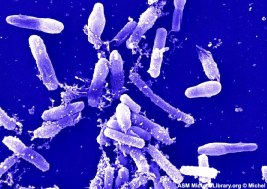
Of all the things in the kitchen that could be contaminated, your cutting board probably isn’t the first to come to mind. After all, you wash it after you use it! And it’s a flat surface — so wouldn’t you see any food that stuck behind? But if you don’t know what you’re doing, your cutting board could be exposing you and your family to harmful bacteria.

Research – What’s happening inside your body when you have food poisoning? A new study into Bacillus cereus has some clues

ABC Net

bacillus

You know the symptoms well enough. The clammy chill that washes over your body, the clenching in your stomach and then, finally, the dash to the bathroom, possibly accompanied by a split-second decision about which part of your body to aim at the toilet first.

But what’s happening inside your body when you have food poisoning?

Research published today has given us a slightly clearer idea, at least for one type of bacteria.

A team from the Australian National University looked at the way the body responds to the bacteria Bacillus cereus, which can cause food poisoning and sometimes lead to serious infections elsewhere in the body, including sepsis, pneumonia and meningitis.

They found a toxin secreted by the bacteria binds directly to cells in the human body and punches holes in the cells to kill them, triggering an immune response.

Research – Innate antimicrobial immunity in the skin: A protective barrier against bacteria, viruses, and fungi

PLOS One

The epidermis, the outermost layer of the skin, is a physical barrier against pathogens. However, breach of the skin barrier through wounding introduces a myriad of microbes to the site of injury. Upon disturbance of the epidermal barrier, the innate immune system and its effectors play a key role in protecting humans against cutaneous and systemic infection [1]. Major constituents of the innate immune system include phagocytic cells, such as macrophages, neutrophils, and dendritic cells, as well as innate leukocytes, such as natural killer (NK) cells, mast cells, basophils, and eosinophils. In addition, epidermal keratinocytes act as active innate immune cells. In response to sensing pathogen-associated molecular patterns (PAMPs) expressed by microbes and host danger molecules, innate immune receptors present on keratinocytes become activated, causing release of inflammatory cytokines and host antimicrobial molecules [2, 3].

Recognition of pathogens

The first step of any immune response is recognition of potential pathogens. Germline-encoded pattern recognition receptors (PRRs) recognize PAMPs present on microbes and damaged-associated molecular patterns (DAMPs) on host cells (Fig 1) [4]. The four primary groups of human PRRs are toll-like receptors (TLRs), nucleotide-binding oligomerization domain-like receptors (NLRs), retinoic acid-inducible gene 1 (RIG-I)-like helicase receptors (RLRs) and c-type lectin receptors (CLRs) [4]. Signaling through PRRs has long been known to be essential for activation of the innate immune response. For example, stimulation of TLR2 increases the immune response to pathogens and helps rescue the inflammatory response of immunosuppressed patients with sepsis [5]. Although PRRs are not as specific as immune effectors of the adaptive immune system, different PRRs have evolved to recognize different molecular patterns [6]. For example, TLR2, TLR6, and nucleotide-binding oligomerization domain-containing protein 2 (NOD2) appear to play an important role in host defense against staphylococcal aureus, whereas TLRs 2, 3, 7, 8, and 9 have been found to be activated by many viruses, including members of the herpesviruses, papillomaviruses, and poxviruses [7, 8]. CLRs and TLRs 2, 4, and 9 are thought to be primary receptors involved in recognition of fungal pathogens such as Candida albicans, and there are reports of specific PRR deficiencies in patients with chronic mucocutaneous infections [9, 10].

Research – Dodging antibiotic resistance by curbing bacterial evolution

Science Daily

Lowering mutation rates in harmful bacteria might be an as yet untried way to hinder the emergence of antimicrobial pathogens. One target for drug development might be a protein factor, DNA translocase Mfd, that enables bacteria to evolve rapidly by promoting mutations in many different bacterial species. This action speeds antibiotic resistance, including multi-drug resistance. Working on drugs to block Mfd and similar factors could be a revolutionary strategy to address the worldwide crisis of treatment-resistant infectious diseases

Research – Resistant bacteria: Can raw vegetables and salad pose a health risk?

Science Daily 


Salad is popular with people who want to maintain a balanced and healthy diet. Salad varieties are often offered for sale ready-cut and film-packaged. It is known that these types of fresh produce may be contaminated with bacteria that are relevant from the point of view of hygiene. A working group led by Professor Dr. Kornelia Smalla from the Julius Kühn Institute (JKI) has now shown that these bacteria may also include bacteria that are resistant to antibiotics.

“We have to get to the bottom of these findings,” said Professor Dr Georg Backhaus, President of the Julius Kühn Institute. Antimicrobial-resistant bacteria are known to occur in manure, sewage sludge, soil and bodies of water. “This worrying detection of these kinds of bacteria on plants is in line with similar findings for other foods,” adds Professor Dr Dr Andreas Hensel, President of the German Federal Institute for Risk Assessment (BfR). “We are now assessing as a matter of urgency what this finding means with regard to the health risk for consumers.”

RASFF Alert – Bacterial Contamination – Infant Formula

kswfoodworld food safety poisoning

RASFF-suspicion of bacterial contamination in infant formula from France in France

Research – Kitchen Towel As Risk Factor for Home Based Food Poisoning

Abstracts Online

Background: Cross contamination in the kitchen could contribute to home-based food poisoning. This study aimed at investigating the potential role of kitchen towels in cross contamination in the kitchen. Methods: A total of 100 kitchen towels were collected after one month of use. The bacteria were cultured and identified by standard biochemical tests. A questionnaire was also designed to investigate the potential risk factors which could affect the result. Results:  Bacterial growth was found in 49% of the kitchen towels and significantly increased by size of family, extended family and presence on children. Multipurpose towels had higher CFU than single use towels (1.31 x 10⁷ vs 6.60 x 10⁴; p<0.05) and humid towels had higher CFU than dry ones (4.8 x 10⁵ vs 0.5x 10⁵; p<0.05). The mean CFU from the towels was found to be 2.76 x 10⁵ and was significantly higher from the cotton towels (4.98 x 10⁵) compared to the nylon (1.64 x 10⁵) and mixture of both towels (1.89 x 10⁵). Out of the 49 samples which were positive for bacterial growth, 36.7% grew coliforms, 36.7% Enterococcus spp., 30.6% Pseudomonas spp., 28.6% grew Bacillus spp., 14.3% S. aureus, 4.1% Proteus spp., 2.0% coagulase negative Staphylococcus. Furthermore, S. aureus was isolated at higher rate from families of lower socio-economic status (p<0.05) and those with children (p<0.05). The risk of having coliforms was twice on humid towels than the dried ones. It was also noted that as the CFU increased, the detection rate of coliform, Enterococcus spp., Proteus spp. and Bacillus spp. also increased significantly. Furthermore, Enterococcus spp. and S. aureus were isolated at higher prevalence in bigger families (p<0.05). Diet was also found to be an important factor. Coliform and S. aureus were detected at significantly higher prevalence from families on non-vegetarian diets while a higher prevalence of Enterococcus species from the kitchen towels of vegetarian families. Conclusions: This study conclude that kitchen towels could be very important source bacterial contamination which could contribute to food poisoning. The multipurpose usage of kitchen towels should be discouraged.

Europe – European surveillance shows high levels of drug resistance in zoonotic bacteria

CIDRAP

A surveillance report today from European health and food safety agencies indicates that antibiotic resistance in zoonotic bacteria from humans, food, and animals on the continent remains at high levels, with notable levels of multidrug resistance in two common causes of foodborne illness in humans.

The report is based on 2016 data provided by 28 EU member states and jointly analyzed by the European Centre for Disease Prevention and Control (ECDC) and the European Food Safety Authority (EFSA). It addresses resistance in bacterial isolates of zoonotic Salmonella and Campylobacter from humans, food, and poultry, along with resistance levels and mechanisms in indicator Escherichia coli and methicillin-resistant Staphylococcus aureus (MRSA) in animals and food.

Zoonotic bacteria are organisms that are transmissible between animals and humans, either through direct exposure or through consumption of contaminated meat. The ECDC and EFSA have been collecting and analyzing data submitted by EU countries on these bacteria to monitor for levels of antibiotic resistance since 2013.

Research – Spores for thought: Study provides new insights into Clostridium spores and Bacteria shown to suppress their antibiotic-resistant cousins

Science Daily closta

Researchers have established how clostridia bacteria emerge from spores. This could help them understand how these bacteria germinate and go on to produce the deadly toxin responsible for botulism, a lethal form of food poisoning, or cause food spoilage.

Science Daily

Researchers studying a dangerous type of bacteria have discovered that the bacteria have the ability to block both their own growth and the growth of their antibiotic-resistant mutants. The discovery might lead to better ways to fight a class of bacteria that have contributed to a growing public health crisis by becoming increasingly resistant to antibiotic treatments.