Category Archives: Aspergillus Toxin

RASFF Alert – Animal Feed – Aflatoxin – Rice Protein

RASFF

Aflatoxin B1 in rice protein from Pakistan in Spain

Research – Recent Research on Fusarium Mycotoxins in Maize—A Review

MDPI

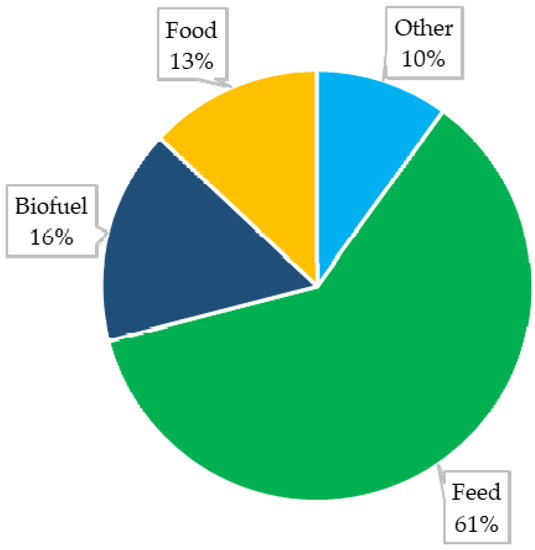
Maize (Zea mays L.) is one of the most susceptible crops to pathogenic fungal infections, and in particular to the Fusarium species. Secondary metabolites of Fusarium spp.—mycotoxins are not only phytotoxic, but also harmful to humans and animals. They can cause acute or chronic diseases with various toxic effects. The European Union member states apply standards and legal regulations on the permissible levels of mycotoxins in food and feed. This review summarises the most recent knowledge on the occurrence of toxic secondary metabolites of Fusarium in maize, taking into account modified forms of mycotoxins, the progress in research related to the health effects of consuming food or feed contaminated with mycotoxins, and also the development of biological methods for limiting and/or eliminating the presence of the same in the food chain and in compound feed. View Full-Text

Ireland – Recall of Specific Batches of Clearspring Organic Wholegrain Rice Cakes due to the Presence of Aflatoxin

FSAI

Friday, 28 October 2022

Summary
Category 2: For Information
Alert Notification: 2022.65
Product: Clearspring Organic Wholegrain Rice Cakes – Lightly Salted; pack size: 12 x 130g
Batch Code: R22176B, best before date: 26/06/2023;

R22181B, best before date: 01/07/2023;

Country Of Origin: Belgium

Message:

The above batches of Clearspring Organic Wholegrain Rice Cakes are being recalled due to an elevated level of aflatoxin B1 in the rice used to produce the batches.

Recall notices will be displayed at point-of-sale.

Clearspring ricecake

RASFF Alerts – Aflatoxin – Pistachio Kernels – Nutmeg

RASFF

Aflatoxins in pistachio kernels from Turkey in Germany

RASFF

Aflatoxins in nutmegs from Indonesia in Germany

RASFF Alert – Animal Feed – Aflatoxin B1- Peanut Kernels

RASFF

Maximum level exceedance of aflatoxin B1 in peanut kernels from Argentina in Germany

Research – Antifungal action of quaternary ammonium compounds against environmental molds isolated from food industries

Wiley Online

CDC Mould

Abstract

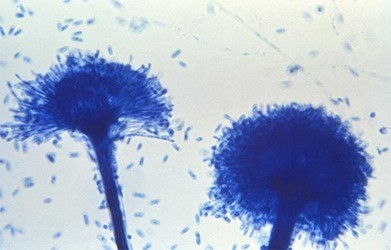
Molds are ubiquitously found microorganisms that are usually present as contaminants in food industrial environments. It has been shown that Cladosporium and Aspergillus genera are two of the most abundant and widely distributed in these locations because they are highly resistant species to sanitizing treatments. Hence, the search of antimicrobial compounds that are effective to these types of fungal contamination becomes relevant. The aim of this report was to evaluate the antifungal capacity of two commercial preparations made both with benzalkonium chloride (a first generation QAC) alone and with the addition of glutaraldehyde at different concentrations and contact times. A suspension-neutralization test was performed employing spores of five strains of both Aspergillus section Nigri and Cladosporium cladosporioides, all isolated from food industries environments. Results have shown that benzalkonium chloride preparation was successful in destroying Cladosporium spores at 5% (v/v) concentration (average 4D value of 9.1 min) but failed in neutralizing Aspergillus propagules at the same conditions. On the other hand, the commercial mixture made of benzalkonium chloride and glutaraldehyde was effective in the inactivation of all food spoilage fungi spores at 1% (v/v) concentration (average 4D value of 1.8 and 8.8 min for Cladosporium and Aspergillus strains, respectively).

Research – Impregnation of the French population by mycotoxins. National Biomonitoring Program, Esteban 2014-2016

Sante Publique

Mycotoxins are substances secreted by certain toxigenic strains of several species of molds (microscopic fungi) such as Aspergillus, Penicillium, Fusarium, Byssochlamys, Alternaria etc. which in particular contaminate cereals and plants before and or after harvest. 

The toxicity of mycotoxins depends on the species and the nature of the toxin. They are generally thermostable, resistant to transformation processes and can be found in many foodstuffs and be responsible for acute or chronic poisoning in humans or animals. 

Of the 300 to 400 known mycotoxins, about ten of them can cause animal or human pathologies: aflatoxins (AF), ochratoxin A (OTA), fumonisins deoxynivalenol (DON), T-2 and HT-2 toxins, trichotecenes (TC), zearalenone (ZEN) and patulins which contaminate fruits, especially apples. In 1993, the IARC (International Agency for Research on Cancer) classified aflatoxins in group 1, carcinogenic to humans; AFB1, considered one of the most potent natural genotoxic carcinogens, is classified in group 1 (IARC, 2002). 

The target organ is the liver. As for OTA, it is considered possibly carcinogenic for humans and classified in group 2B (1993); in humans as in animals, the kidney is the main target organ. OTA would also have immunotoxic and neurotoxic effects. Due to their harmful effects, exposure to mycotoxins must remain as low as possible to protect the population. L’ WHO encourages the monitoring of mycotoxin levels in food because they represent a risk for human and animal health. 

In France, data on the impregnation of the French population by mycotoxins are almost non-existent, with the exception of a study carried out in three French regions [1, 2]. The Esteban cross-sectional study (Health study on the environment, biomonitoring, physical activity and nutrition) made it possible to measure the levels of impregnation by aflatoxins and OTA of the population in mainland France aged 6 at 74 years old between April 2014 and March 2016.

The purpose of this note is to present the results of impregnation by AFs and OTA, and to analyze the determinants of exposure to OTA in adults . Aflatoxins B1, B2, G1, G2, M1 were not quantified, neither in children nor in adults. For OTA, the percentage of quantification was equal to 45.5% in children and 47.8% in adults. The geometric means of the levels of impregnation by the OTA were lower than the LOQ or not provided considering the important rate of censorship. 

The search for the determinants of exposure by OTA, essentially dietary, in adults showed an increase in impregnation with the consumption of processed meats. Not all associations could likely be identified due to small sample size. A future biomonitoring study could make it possible to deepen the search for determinants of the impregnations observed and to broaden the knowledge of the

Author: Oleko Amivi, Hoang Phan, Fillol Clémence, Gane Jessica, Saoudi Abdessattar, Zeghnoun Abdelkrim
Year of publication: 2022
Pages: 35 p.
Collection: Studies and Surveys

France – Thin savoury rectangular rice cakes 130g- Aflatoxin

Gov france

Identification information of the recalled product

  • Product category Feed
  • Product subcategory Cereals and baked goods
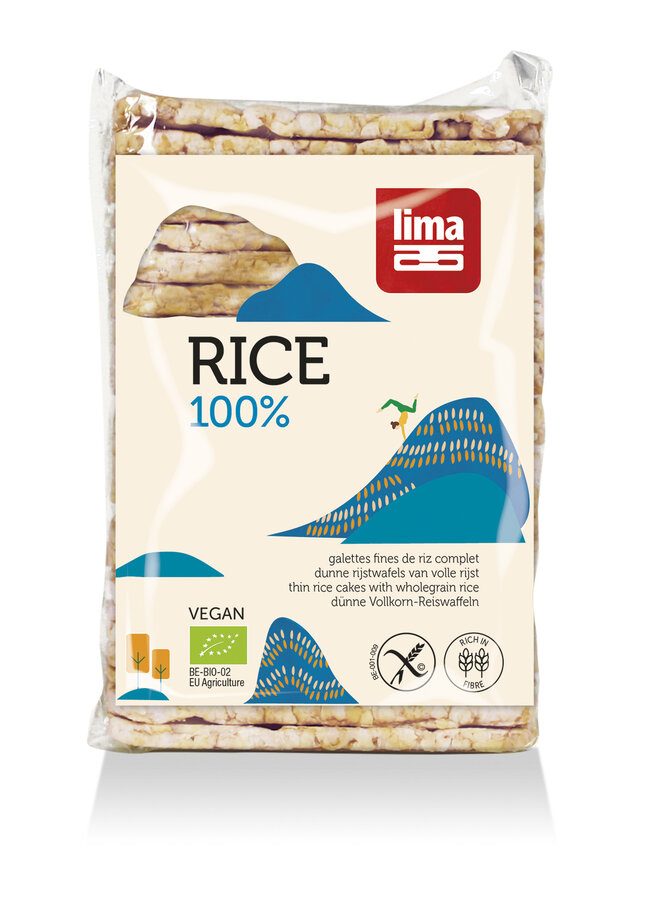
  • Product brand name Lima
  • Model names or references Thin savory rectangular rice cakes 130g
  • Identification of products
    GTIN Batch Date
    5411788044271 Batch R22182B Date of minimum durability 02/07/2023
  • Packagingplastic bag
  • Marketing start/end date From 12/10/2022 to 19/10/2022
  • Storage temperature Product to be stored at room temperature
  • Geographic area of ​​sale Whole France
  • Distributors Organic stores
  • List of points of saleListing_Lima_France.pdf

Practical information regarding the recall

  • Reason for recall The reason for the withdrawal of the goods is the presence of aflatoxins detected in the batch of rice used for the manufacture of the pancakes. Aflatoxins are toxins produced by molds.
  • Risks incurred by the consumer Aflatoxins

Belgium – Fine brown rice cakes (130g) from the Lima brand – Aflatoxin

AFSCA

Recall of Lima Bio Food BV
Product: Fine brown rice cakes (130g) from the Lima brand.
Problem: too high aflatoxin B1 content.


In agreement with the FASFC, Lima Bio Food BV is withdrawing the “Thin brown rice pancakes” (130g) of the Lima brand from sale and recalling them from consumers because of an excessively high content of aflatoxin B1. Lima Bio Food BV asks its customers not to consume this product and to return it to the point of sale where it was purchased, where it will be reimbursed.

Product description

– Product name: Fine brown rice cakes
– Brand: Lima
– Expiry date (BDD) (“Best before (or end)”): 02/07/2023
– Batch number: R22182B
– Sales period: from 09/14/2022 to 10/18/2022
– Type of packaging: plastic film
– Weight: 130g

The product was distributed through various points of sale, including Bio-Planet stores.

For any additional information , contact:

Mrs. Nathalie Feys, +32 50 72 86 86 or nathalie.feys@hain-celestial.eu .

Belgium – 4-grain pancakes (100g) from the Carrefour BIO brand sold in the GROCERY department

AFSCA

Recall from Carrefour
Product: 4-grain pancakes (100g) from the Carrefour BIO brand sold in the GROCERY department.
Problem: excessive Mycotoxin content (aflatoxin B1 and zearalenone).


Brussels, 18-10-2022 – Following an inspection and in order to guarantee consumer safety, the company CONTINENTAL BAKERIES HAUST is asking to withdraw from the market the “Galettes 4 cereals” (100 g) of the Carrefour Bio brand sold on the shelves. GROCERY of certain Carrefour stores in Belgium. This product is also being recalled from consumers.

Product Description :

Product: 4-grain pancakes
Brand: Carrefour BIO
EAN code: 3560070443291 Expiry
dates (BDD): 06/04/2023 and 06/03/2023
Batch numbers: H22154J and H22153J

All products have been withdrawn from sale. Some of these products were, however, marketed on the Belgian market before the withdrawal measure. It is therefore recommended that people who hold the product described above do not consume it and destroy it or bring it back to the point of sale where they will be reimbursed.

For any additional information , you can contact the Carrefour Belgium consumer service by dialing the free number 0800.9.10.11, from 8:30 a.m. to 8:00 p.m., Monday to Saturday.

CONTINENTAL BAKERIES HAUST apologizes to Carrefour customers for the inconvenience caused.