Monthly Archives: March 2021

Research – Exploring Listeria monocytogenes perceptions in small and medium sized food manufacturers: technical leaders’ perceptions of risk, control and responsibility

Science Direct

Due to its ability to colonise, grow and form in niches in food manufacturing environments, the management of Listeria monocytogenes can be complex, particularly for food manufacturing small and medium sized enterprises (SMEs). In addition to an effective food safety management system, the perceptions of risk, control and responsibility within a food manufacturing business are important influential factors associated with the management of L. monocytogenes. Research exploring managerial perspectives of L. monocytogenes in food manufacturer SMEs is lacking. Consequently, this study conducted in-depth interviews (n=10) with technical leaders from food manufacturing SMEs to ascertain factors that may influence listeria management, such as factors associated with cultural dimensions. Perceived risks associated with L. monocytogenes were related to business reputation and consumer health impacts, but such events were perceived to be unlikely. Technical leaders reported having clearly defined and well executed processes to ensure food safety; but for some, L. monocytogenes, as a single pathogen was seldom considered. Despite acknowledging that “everyone” had responsibility for ensuring control of the pathogen, technical leaders indicated that the ‘people’ attributes associated with organisational culture were difficult factors to control and manage. Trust in staff ability to assure food safety was widely discussed, with technical leaders acknowledging that food handlers may not necessarily have specific knowledge regarding L. monocytogenes. Some technical leaders perceived themselves as having the greatest levels of responsibility for L. monocytogenes. Overall, technical leaders perceived a medium level of risk, with high levels of control and high levels of responsibility for L. monocytogenes. Optimistic bias, illusion of invulnerability, illusion of control, and perceived attribution of responsibility are discussed, which may hinder implementation of effective listeria management in SME food manufacturing businesses. Consideration of specific pathogen risks in food manufacture in relation to food safety cultural dimensions may assist development of highly targeted and effective interventions.

Denmark -Catfish eggs are probably the cause of outbreaks of botulism

SSI

kswfoodworld

Studies of a number of foods have led to toxins from the botulism bacterium being found in catfish eggs. That batch of roe has been recalled.

In the past week, the Statens Serum Institut (SSI) has described an outbreak of botulism. It occurred after six people had eaten together at a private party in early March. SSI has now examined a number of leftovers from the food that the Danish Veterinary and Food Administration had collected in the home where the company was held. In an almost emptied glass with rockfish roe, SSI’s laboratory tests were able to detect toxin (toxin). However, did not find toxin in any of the other foods. Nor in two other glasses with catfish roe.

At the same time, studies show that three out of the five people who developed symptoms after joining the company had botulism. The two patients for whom it could not be confirmed simply had quite mild symptoms of botulism.

Italy – VASCHETTA ATM, SPICY SAUSAGE VASCHETTA ATM, SAUSAGE PASTA ATM -Salmonella

Salute

Brand : SALUMIFICIO COLETTI PIERINO & C. SNC – OSA COLETTI CORRADO

Name : VASCHETTA ATM, SPICY SAUSAGE VASCHETTA ATM, SAUSAGE PASTA ATM

Reason for reporting : Recall due to microbiological risk

Publication date : 22 March 2021

Documentation

Documentation

Italy – SAUSAGE MIGNON S / V, SPICY SAUSAGE S / V, SAUSAGE IN PASTA S / V -Salmonella

Salute

Brand : SALUMIFICIO COLETTI PIERINO & C. SNC – OSA COLETTI CORRADO

Name : SAUSAGE MIGNON S / V, SPICY SAUSAGE S / V, SAUSAGE IN PASTA S / V

Reason for reporting : Recall due to microbiological risk

Publication date : 22 March 2021

Documentation

Documentation

USA – Raw Milk Debate Returns To The Legislature

MTPR

HELENA — A bill gaining momentum at the Legislature would allow Montanans to sell food from their homes directly to consumers without any government oversight. It would also legalize the direct sale of raw milk.

Senate Bill 199, or the Montana Local Food Choice Act, includes a section that would make it possible for owners of small dairy herds to sell unpasteurized milk, a proposal that drew its own set of opponents with concerns about the risk of foodborne illness.

Research – UK – 2018 Shigella Outbreak – Coriander

Cambridge Org

In April 2018, Public Health England was notified of cases of Shigella sonnei who had eaten food from three different catering outlets in England. The outbreaks were initially investigated as separate events, but whole-genome sequencing (WGS) showed they were caused by the same strain. The investigation included analyses of epidemiological data, the food chain and microbiological examination of food samples. WGS was used to determine the phylogenetic relatedness and antimicrobial resistance profile of the outbreak strain. Ultimately, 33 cases were linked to this outbreak; the majority had eaten food from seven outlets specialising in Indian or Middle Eastern cuisine. Five outlets were linked to two or more cases, all of which used fresh coriander although a shared supplier was not identified. An investigation at one of the venues recorded that 86% of cases reported eating dishes with coriander as an ingredient or garnish. Four cases were admitted to hospital and one had evidence of treatment failure with ciprofloxacin. Phylogenetic analysis showed that the outbreak strain was part of a wider multidrug-resistant clade associated with travel to Pakistan. Poor hygiene practices during cultivation, distribution or preparation of fresh produce are likely contributing factors.

France – Product recall: Mini Mont d’Or and Mini Mont d’Or + Reflets de France brand ceramic – Listeria monocytogenes

Oulah

Product recall: Mini Mont d'Or and Mini Mont d'Or + Reflets de France brand ceramic

ENCOUNTERED PROBLEM

Possible contamination Listeria monocytogenes

PROPOSED SOLUTION

People who may have this product are asked not to consume it and to return it to the point of sale where it was purchased.

People who have consumed this product and who present with fever, isolated or accompanied by headaches, are invited to consult their attending physician, notifying him of this consumption.
Pregnant women should pay special attention to these symptoms, as well as immunocompromised people and the elderly. These symptoms may suggest listeriosis, a disease that can be serious and can take up to eight weeks to incubate.

FURTHER INFORMATION

▸ Mini Mont d’Or
• Lot: 3053
• DLC: 05/04/2021 and 06/04/2021
• Barcode: 3560070939114

▸ Mini Mont d’Or + ceramic
• Lot: 3053
• DLC: 04/01/2021 and 04/02/2021
• Barcode: 3560070939145

▸ Consumer service contact
For any additional information, you can contact the Carrefour consumer service by dialing N ° Cristal 09 69 39 7000 (non-surcharged call from a landline) from Monday to Saturday from 9 a.m. to 7 p.m.

▸ Source
https://www.carrefour.fr/

Canada – Public Health Notice: Outbreak of Salmonella infections linked to eggs

PHAC

This notice has been updated to reflect seven additional cases that have been reported in the ongoing outbreak investigation. There are now 64 Salmonella illnesses reported across two provinces. Canadians are advised to always follow safe food-handling tips if you are buying, cleaning, chilling, cooking and storing any type of eggs or egg-based foods.

The Public Health Agency of Canada (PHAC) is collaborating with provincial public health partners, the Canadian Food Inspection Agency (CFIA) and Health Canada to investigate an outbreak of Salmonella infections involving Newfoundland and Labrador, and Nova Scotia. The outbreak appears to be ongoing, as recent illnesses continue to be reported to PHAC.

Based on the investigation findings to date, exposure to eggs has been identified as a likely source of the outbreak. Many of the individuals who became sick reported consuming, preparing, cooking and baking at home with eggs. Some individuals reported exposure to eggs at an institution (including nursing homes and hospitals) where they resided or worked before becoming ill.

Eggs can sometimes be contaminated with Salmonella bacteria on the shell and inside the egg. The bacteria are most often transmitted to people when they improperly handle, eat or cook contaminated foods.

Illnesses can be prevented if proper safe food handing and cooking practices are followed. PHAC is not advising consumers to avoid eating properly cooked eggs, but this outbreak serves as a reminder that Canadians should always handle raw eggs carefully and cook eggs and egg-based foods to an internal temperature of at least 74°C (165°F) to ensure they are safe to eat.

PHAC is issuing this public health notice to inform Canadians of the investigation findings to date and to share important safe food handling practices to help prevent further Salmonella infections.

As the outbreak investigation is ongoing, it is possible that additional sources could be identified, and food recall warnings related to this outbreak may be issued. This public health notice will be updated as the investigation evolves.

Canada -CBC – B.C. boy permanently brain damaged after eating lettuce contaminated with E. coli – STEC

CBC

E. coli outbreaks used to mainly be linked to hamburgers, but the last decade has seen recall after recall of tainted romaine lettuce coming into Canada from the United States. At least seven people have died, and hundreds have been sickened or hospitalized in both countries.

Toddler Lucas Parker was one of them.

In the fall of 2018, his parents, Nathan Parker and Karla Terry of Richmond, B.C., took Lucas and his siblings to Disneyland, their first trip outside Canada. But what they couldn’t know at the time was that a few bites of romaine salad Lucas ate one night at a small California roadside restaurant would change their lives forever.

Soon after that dinner, an outbreak of E. coli O157: H7 contamination spread across both Canada and the United States — eventually leaving 35 people hospitalized.

Like most people who get sick from this strain of E. coli, Lucas, then two years old, didn’t show symptoms right away. When he started feeling unwell, the family headed out for the long drive home. By the time he was in a Canadian hospital, the E. coli had shut down one of his kidneys and led to two brain injuries. There are no current treatments for E. coli that can help alleviate infections or prevent complications.

Lucas can no longer walk, talk or see.

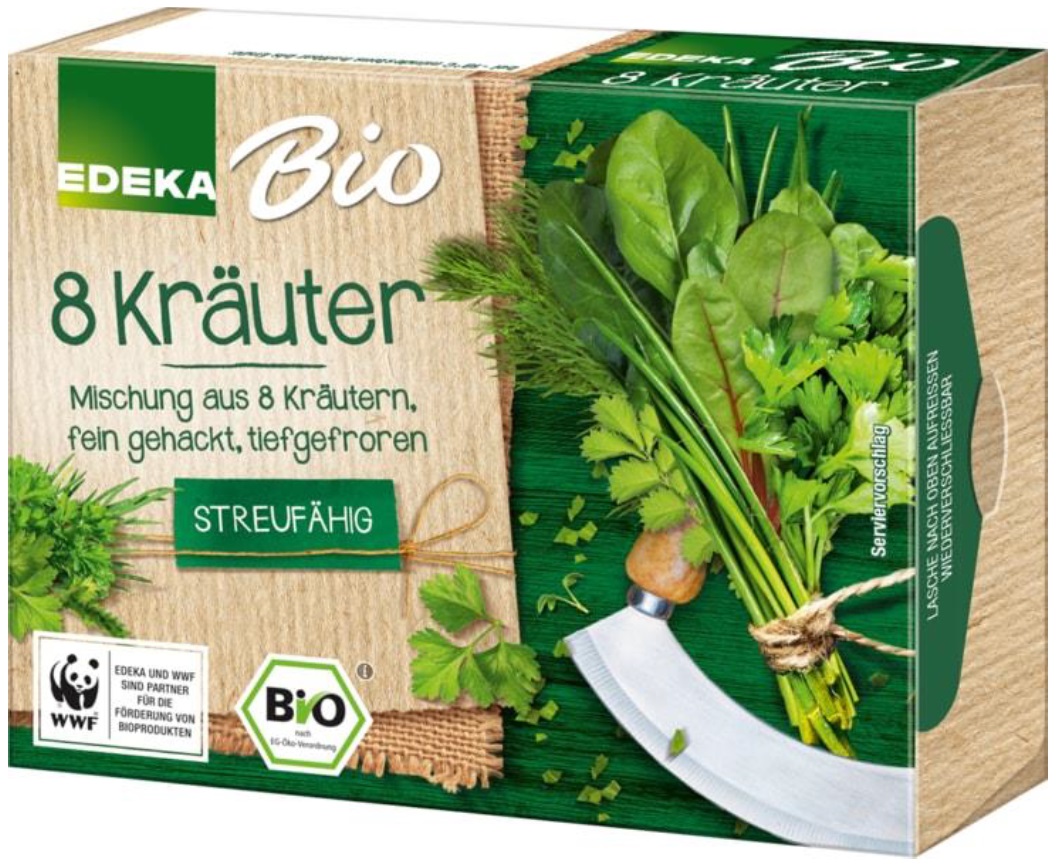
Germany – EDEKA Bio 8 herbs 50g, best before 01.2022 and 02.2022 BioBio 8 herb mixture 50g, best before 01.2022 and 02.2022, GutBio 8 herb mixture 50g, best before 21.01.2022 and best before 03.02.2022 – Salmonella

LMW

Warning type:Food
Date of first publication:March 19, 2021
Product name:

EDEKA Bio 8 herbs 50g, best before 01.2022 and 02.2022 BioBio 8 herb mixture 50g, best before 01.2022 and 02.2022, GutBio 8 herb mixture 50g, best before 21.01.2022 and best before 03.02.2022

Product pictures:

Bio-8-Kraeuter.png

net

Product picture Aldi.jpg

Aldi

Product picture EDEKA.jpg

EDEKA

Manufacturer (distributor):COPACK Tiefkühlkost Produktionsgesellschaft mbH Am Lunedeich 116 D – 27572 Bremerhaven
Reason for warning:

Salmonella was detected in the product as part of a planned sample.

Packaging Unit:see product name
Durability:see product name
Lot identification:

Aldi: C659694700, C659840300 // Netto C659530900, C659598300, C659694100, 659855100 // EDEKA C659598100, C659530800, C659687200, C659781800, C659973700, C660016300

Further information:

The products were sold nationwide through EDEKA, Marktkauf, Netto Marken-Discount, Aldi Süd and Aldi Nord. COPACK Tiefkühlkost Produktionsgesellschaft mbH and the trading companies concerned reacted immediately and, as a precaution, withdrew the relevant goods from sale.

Homepage of the manufacturer:

Contact to the responsible authorities:

Baden-Württemberg:poststelle@mlr.bwl.de

Bavaria:poststelle@lgl.bayern.de
Berlin:poststelle@senjustva.berlin.de
Brandenburg:Konsumenterschutz@Msgiv.Brandenburg.de
Bremen:Schnellwarnung@gesundheit.bremen.de
Hamburg:poststelle@justiz.hamburg.de
Hesse:Schnellwarnung@rpda.hessen.de
Mecklenburg-Western Pomerania:poststelle@lm.mv-regierung.de
Lower Saxony:poststelle@ml.niedersachsen.de
North Rhine-Westphalia:poststelle@mulnv.nrw.de
Rhineland-Palatinate:Poststelle.Referat22@lua.rlp.de
Saarland:poststelle-luv@lav.saarland.de
Saxony:poststelle@sms.sachsen.de
Saxony-Anhalt:poststelle@ms.sachsen-anhalt.de
Schleswig-Holstein:poststelle@jumi.landsh.de
Thuringia:LM-Ueberendung@tlv.thueringen.de
Press releases and information
title Attachment or web link
Consumer information Copack