Monthly Archives: February 2021

India – 40 fall sick due to food poisoning in Metpally

Telangana Today

Jagityal: At least 40 persons took ill after having dinner at a function in Peddapur of Metpally mandal late on Friday night.

Pilli Chinna Mallaiah threw a small party to celebrate construction of his house. The guest were served mutton curry and makka gudalu (maize). At least 40 of the 60 villagers who participated in the function developed symptoms of food poisoning like diarrhea and vomitings later in the night.

Korea – Food poisoning cases fall to record low

Korea Herald

The number of food poisoning cases last year was the lowest ever recorded as the COVID-19 pandemic forced cafeterias to close and increased an emphasis on personal hygiene, data showed Sunday.

According to the Ministry of Food and Drug Safety, the number of reported food poisoning cases reached 178, down 52 percent from five-year average of 343 cases since 2015.

The number of food poisoning patients reached 53 per million, down 40 percent from an average of 133 patients per million from 2015 to 2019. The ministry said both figures for 2020 are the lowest rates ever recorded since data was compiled in 2002.

The ongoing virus pandemic has played a big role in curbing infections, the ministry said, as the number of mass food poisoning outbreaks significantly dropped with closure of mass dining facilities in schools and offices.

USA – Food Evolution Recalls Ready-to-Eat Dip and Salad Products Containing Meat Produced Without Benefit of Inspection

FSIS USDA

Food Evolution, a Schiller Park, Ill. establishment, is recalling approximately 6,806 pounds of ready-to-eat (RTE) dip and salads products containing meat that were produced without the benefit of federal inspection, the U.S. Department of Agriculture’s Food Safety and Inspection Service (FSIS) announced today.

The RTE dip and salad items containing meat were produced on various dates from Nov. 9, 2020, through Jan. 29, 2021 and have “USE BY” dates through Feb. 6, 2021. The following products are subject to recall: [View Labels (PDF only)]

  • 31-oz. container containing “Taco Dip With Refried Beans, Chili, Sour Cream, Cheddar, Onions, Black Olives, Jalapenos, & Red Pepper thoughtfully handmade —fresh to you — Fresh, Fast, Gourmet.”
  • 18-oz. container containing “Taco Dip With Refried Beans, Chili, Sour Cream, Cheddar, Onions, Black Olives, Jalapenos, & Red Pepper thoughtfully handmade —fresh to you — Fresh, Fast, Gourmet.”
  • 7-oz. container containing “Tri-Colored Italian Style Rotini Pasta Salad with Salami thoughtfully handmade — fresh to you — Fresh, Fast, Gourmet.”
  • 8-oz. container containing “German Style Potato Salad with Bacon thoughtfully handmade — fresh to you — Fresh, Fast, Gourmet.”

The products subject to recall bear establishment number “EST. 34309” inside the USDA mark of inspection. These items were shipped to retail locations in Illinois.

The problem was discovered during routine FSIS verification tasks. FSIS personnel discovered that the establishment produced amenable product at an off-site facility without the benefit of federal inspection, then repackaged and labeled the products with the USDA mark of inspection at the federal establishment.

There have been no confirmed reports of adverse reactions due to consumption of these products. Anyone concerned about a reaction should contact a healthcare provider.

FSIS is concerned that some product may be in consumers’ refrigerators. Consumers who have purchased these products are urged not to consume them. These products should be thrown away or returned to the place of purchase.

FSIS routinely conducts recall effectiveness checks to verify recalling firms notify their customers of the recall and that steps are taken to make certain that the product is no longer available to consumers. When available, the retail distribution list will be posted on the FSIS website at www.fsis.usda.gov/recalls.

Consumers and members of the media with questions about the recall can contact Art Sezgin, President of Food Evolution, at (818) 837-7600.

Consumers with food safety questions can call the toll-free USDA Meat and Poultry Hotline at 1-888-MPHotline (1-888-674-6854) or live chat via Ask USDA from 10 a.m. to 6 p.m. (Eastern Time) Monday through Friday. Consumers can also browse food safety messages at Ask USDA or send a question via email to MPHotline@usda.gov. For consumers that need to report a problem with a meat, poultry, or egg product, the online Electronic Consumer Complaint Monitoring System can be accessed 24 hours a day at https://foodcomplaint.fsis.usda.gov/eCCF/.

USA – Mango Raspberry Cheesecake Smoothie Sour Ale Recalled For Safety

Food Poisoning Bulletin

Oakshire Brewing is voluntarily recalling the January 16, 2021 release of Theme From the Bottom Mango Raspberry Cheesecake Smoothie Sour Ale because there are visible signs of refermentation in some of the cans, making them bulge and they may burst. The beer does not meet Oakshire’s quality standards so they are issuing the recall.

USA – Feds plan to begin testing research program with romaine lettuce in Arizona

Food Safety News

The FDA is launching a new, temporary testing program for the romaine lettuce from commercial coolers in the Yuma, AZ, growing region. Romaine from the area has been linked to several foodborne illness outbreaks in recent years.

Samples will be tested for Shiga toxin-producing Escherichia coli (STEC) and Salmonella spp. as part of ongoing surveillance efforts following the spring 2018 multistate E. coli O157:H7 outbreak of foodborne illness. Since then there have been other outbreaks linked to romaine from the Yuma area and parts of California. Salmonella spp. also commonly causes foodborne illness outbreaks in the United States which have at times been linked to romaine lettuce consumption, according to a statement today from the Food and Drug Administration.

France – Product recall: Sélection du Fromager brand Reblochon – Listeria monocytogenes

Oulah

Product recall: Sélection du Fromager brand Reblochon

ENCOUNTERED PROBLEM

Presence of Listeria monocytogenes

PROPOSED SOLUTION

People who hold this product are asked not to consume it and to return it to the point of sale where it was purchased for reimbursement even without presentation of the receipt.

People who have consumed this product and who have a fever, isolated or accompanied by headaches, are invited to consult their doctor, notifying him of this consumption.
Pregnant women should pay special attention to these symptoms, as well as immunocompromised people and the elderly. These symptoms may suggest listeriosis, a disease that can be serious and can take up to eight weeks to incubate.

FURTHER INFORMATION

▸ Barcode
4052917134848

▸ Lot
001131612

▸ DLC
02/28/2021

▸ Marketing date
from 01/29/2021 to 02/04/2021

▸ LIDL supermarkets concerned
Click here

▸ Consumer service contact
The LIDL consumer service is at your disposal at the following telephone number 0 800 900 343.

▸ Source
https://www.lidl.fr/fr


Research – Risk of Bacillus cereus in Relation to Rice and Derivatives

MDPI

bacillus

Rice is a very popular food throughout the world and the basis of the diet of the citizens of many countries. It is used as a raw material for the preparation of many complex dishes in which different ingredients are involved. Rice, as a consequence of their cultivation, harvesting, and handling, is often contaminated with spores of Bacillus cereus, a ubiquitous microorganism found mainly in the soil. B. cereus can multiply under temperature conditions as low as 4 °C in foods that contain rice and have been cooked or subjected to treatments that do not produce commercial sterility. B. cereus produces diarrhoeal or emetic foodborne toxin when the consumer eats food in which a sufficient number of cells have grown. These circumstances mean that every year many outbreaks of intoxication or intestinal problems related to this microorganism are reported. This work is a review from the perspective of risk assessment of the risk posed by B. cereus to the health of consumers and of some control measures that can be used to mitigate such a risk. View Full-Text

Research – Legionellosis Caused by Non-Legionella pneumophila Species, with a Focus on Legionella longbeachae

MDPI

CDC legionella

 Although known as causes of community-acquired pneumonia and Pontiac fever, the global burden of infection caused by Legionella species other than Legionella pneumophila is under-recognised. Non-L. pneumophila legionellae have a worldwide distribution, although common testing strategies for legionellosis favour detection of L. pneumophila over other Legionella species, leading to an inherent diagnostic bias and under-detection of cases. When systematically tested for in Australia and New Zealand, L. longbeachae was shown to be a leading cause of community-acquired pneumonia. Exposure to potting soils and compost is a particular risk for infection from L. longbeachae, and L. longbeachae may be better adapted to soil and composting plant material than other Legionella species. It is possible that the high rate of L. longbeachae reported in Australia and New Zealand is related to the composition of commercial potting soils which, unlike European products, contain pine bark and sawdust. Genetic studies have demonstrated that the Legionella genomes are highly plastic, with areas of the chromosome showing high levels of recombination as well as horizontal gene transfer both within and between species via plasmids. This, combined with various secretion systems and extensive effector repertoires that enable the bacterium to hijack host cell functions and resources, is instrumental in shaping its pathogenesis, survival and growth. Prevention of legionellosis is hampered by surveillance systems that are compromised by ascertainment bias, which limits commitment to an effective public health response. Current prevention strategies in Australia and New Zealand are directed at individual gardeners who use potting soils and compost. This consists of advice to avoid aerosols generated by the use of potting soils and use masks and gloves, but there is little evidence that this is effective. There is a need to better understand the epidemiology of L. longbeachae and other Legionella species in order to develop effective treatment and preventative strategies globally.

Research – Researchers Are Screening Social Media to Help Identify Foodborne Illness

Very Well Health

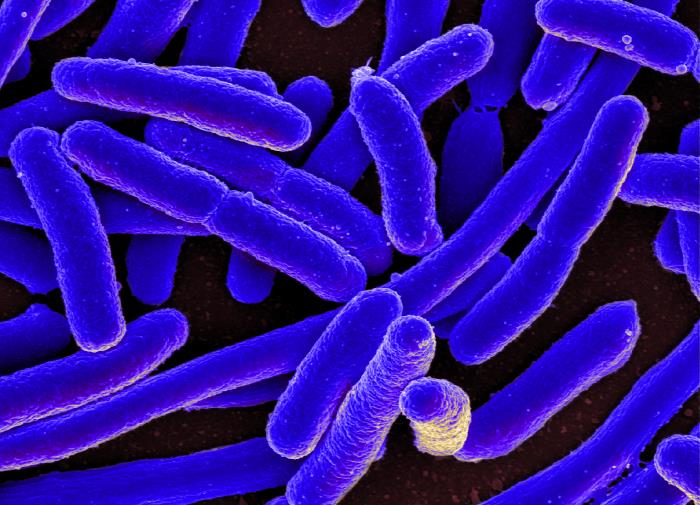
CDC E.coli

Consumer online posts and content can help identify food safety concerns, and possibly reduce the risk of a foodborne illness, according to new research.

USA – Super Bowl LV Toolkit to Prevent Foodborne Illness

FSIS USDA

Super Bowl Food Safety

Food Safety Playbook

This toolkit is designed to help you get started with your local Super Bowl Food Safety campaign. In this toolkit you will find the materials you can use to promote safe food handling behavior during the Super Bowl.

We have organized this material to help make your outreach informative, helpful and fun. Resources include:

  • Press Release – A general press release that can be personalized by your organization to email to local news outlets, radio, newspapers and blogs
  • Talking Points
  • Blog
  • Social Media – Suggested tweets and Facebook posts are included to help spread the word about food safety during Super Bowl
  • Infographics