Monthly Archives: November 2019

Research – Stability of Listeria monocytogenes in wheat flour during extended storage and isothermal treatment

Science Direct

Foodborne pathogens including Salmonella have been implicated in recent recalls of low-water activity (aw) foods, such as peanut butter, almond flour, wheat, flour and dry milk powder, and are primary concerns for the microbiological safety of dry food products. Although there are an increasing number of studies on Salmonella thermal resistance conducted in low-moisture foods, little information is available on Listeria monocytogenes thermal resistance in those products. This study evaluated the survival of L. monocytogenes in wheat flour during long-term storage as well as its thermal resistance in wheat flour equilibrated to aw 0.30, 0.45, and 0.60. L. monocytogenes survived in wheat flour at both aw 0.31 and 0.56 during 6 months of storage at room temperature, with populations decreasing about 2.52 and 6.27 logs at aw 0.31 and 0.56, respectively. Equilibration in low-aw flour enabled L. monocytogenes to become more resistant to thermal treatment. At treatment temperature between 70 and 80 °C, D-values increased with decreasing aw. For aw 0.30. 0.45, and 0.60 (measured at room temperature), respectively, D-value (in min) ranges for 70–80 °C were 37.10–7.08, 17.44–3.13, and 16.85–1.59. The z-values were 12.9, 14.2, and 9.9 °C for aw 0.30, 0.45, and 0.60, respectively. These data highlight the need for vigilance when processing dry foods, and provide valuable information for the industry to validate thermal processing for control of L. monocytogenes in low-moisture foods. This study also offers insight into the development of thermal inactivation strategies to control L. monocytogenes and other foodborne pathogens in foods with similar matrices.

USA -Outbreak Investigation of Cyclospora Illnesses Linked to Imported Fresh Basil, July 2019 – Final Update

FDA Cyclospora_LifeCycle201

November 19, 2019

In 2019 multiple outbreaks of cyclosporiasis were identified and found to be linked to different produce items, including imported fresh basil. On November 19, 2019, CDC issued a final update for the total number of domestically-acquired cases of Cyclospora in 2019, stating that 10% of the 2019 cases were linked to this outbreak associated with imported fresh basil.

Case Counts

Total Illnesses: 241
Hospitalizations: 6
Deaths: 0
Last illness onset: July 26, 2019
States with Cases: CT, FL, GA, IA, MA, MN, NY, OH, RI, SC, WI. Exposures occurred at restaurants in five states: FL, MN, NY, OH, WI

USA -Outbreak Investigation of lllnesses caused by E. coli O157:H7 November 2019

FDA

November 20, 2019

Recommendation

Consumers are advised not to eat Ready Pac Bistro® Chicken Caesar Salad, lot #255406963, UPC  0 77745 27249 8, “Best By” date Oct. 31, 2019, purchased from Sam’s Club stores in Maryland. State testing of unopened salad purchased by an ill person identified the presence of E. coli O157 in the romaine lettuce.  It should be noted that the “Best By” date was almost 3 weeks ago, so this product is not likely in stores. Consumers should not eat this specific product, regardless of where it was purchased.

Background

Chicken Caesar Salads

FDA, CDC and state health authorities are investigating an outbreak of illnesses caused by E. coli O157:H7  in the U.S.

According to the CDC, as of November 18, 2019, 17 people infected with the outbreak strain of E. coli O157:H7 have been reported from eight states. The case patients report that illnesses started on dates ranging from September 24, 2019 to November 8, 2019.

Two cases reported from Maryland have been linked to this outbreak by Whole Genome Sequencing (WGS), through analysis of clinical samples taken from those patients. The Maryland Department of Health identified E. coli O157 in an unopened package of Ready Pac Bistro® Chicken Caesar Salad collected from a ill person’s home in Maryland which was purchased from a Sam’s Club in that state. Preliminary information indicates that romaine lettuce used in the product that tested positive was harvested in mid-October and is no longer within current expiration dates. To date, the food sample has not yet been definitively linked to the Maryland cases or other E. coli O157 illnesses in the multi-state outbreak. WGS analysis is currently underway for this sample to determine if it is closely related genetically to the E. coli found in people in this outbreak.

As analysis is underway, FDA is tracing back the supply of the romaine lettuce in the Caesar salad. FDA has identified possible farms in Salinas, California. FDA is deploying investigators to the farms in question to determine the source and extent of the contamination. More information will be forthcoming as the investigation proceeds.

Although the ill people interviewed in Maryland reported eating Ready Pac Bistro® Chicken Caesar Salad, at this time, ill people in other states have not reported eating this particular salad. Therefore, exposure to this product alone does not fully explain other cases in the outbreak.

State and local public health officials are interviewing ill people to determine what they ate and other exposures of interest in the week before their illness started.

USA -Outbreak Investigation of Hepatitis A Potentially Linked to Fresh Conventional Blackberries from Fresh Thyme Farmers Market, Fall 2019

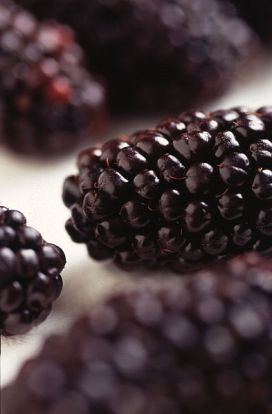
FDABlack_Butte_blackberry

November 20, 2019

The U.S. Food and Drug Administration (FDA), along with the Centers for Disease Control and Prevention (CDC), and state and local partners, are investigating a multistate outbreak of hepatitis A illnesses in Indiana, Nebraska, and Wisconsin potentially linked to fresh conventional (non-organic) blackberries from the grocery store, Fresh Thyme Farmers Market.

Based on the epidemiological information collected in the investigation thus far, ill patients reported consuming fresh conventional blackberries from Fresh Thyme Farmers Market stores in three states: Indiana, Nebraska, and Wisconsin.

However, traceback information to date shows that these berries came from a distribution center that ships fresh berries to Fresh Thyme Farmers Market stores in 11 states: IA, IL, IN, KY, MI, MO, MN, NE, OH, PA, and WI. As this investigation continues, the FDA will work with our federal and state partners to obtain additional information during the traceback investigation and will update this advisory as more information becomes available.

Recommendation

The FDA is urging consumers to not eat any fresh conventional blackberries if purchased between September 9 and September 30, 2019, from Fresh Thyme Farmers Market stores in the 11 states mentioned above. People who purchased the fresh blackberries and then froze those berries for later consumption should not eat these berries. They should be thrown away.

If consumers purchased fresh conventional blackberries from Fresh Thyme Farmers Market stores in the 11 states listed above between September 9-30, ate those berries in the last two weeks, and have not been vaccinated for the hepatitis A virus (HAV), they should consult with their healthcare professional to determine whether post exposure prophylaxis (PEP) is indicated. PEP is recommended for unvaccinated people who have been exposed to HAV in the last two weeks. Those with evidence of previous hepatitis A vaccination or previous hepatitis A infection do not require PEP.

Contact your healthcare provider if you think you may have become ill from eating these blackberries, or if you believe that you have eaten these berries in the last two weeks.

USA – P.F. Chang’s Worker with Hepatitis A

Food Poison Journal 

The Department of Health in Sarasota conducted an epidemiological investigation and determined a person working at P.F. Chang’s at 766 South Osprey in Sarasota from November 6-17 may have been infectious.

If you ate or drank at the restaurant between November 6-17, the Department of Health says the Hepatitis A vaccine may provide protection against the disease if given within two weeks after exposure.

USA- Romaine in the cross-hairs – FDA to test lettuce for pathogens

Food Poison Journal

The FDA is conducting a small, focused assignment to collect samples of raw agricultural commodity (RAC) romaine lettuce to test for Salmonella spp. and pathogenic Escherichia coli (also known as Shiga Toxin-producing E. coli or STEC), microbial hazards repeatedly linked to foodborne illnesses associated with romaine lettuce consumption. The assignment begins this month (November 2019) and is expected to last one year.

USA – MD E. coli O157:H7 Outbreak Linked to Ready Pac Chicken Caesar Salad

Food Poisoning Bulletin

A MD E. coli O157:H7 outbreak may be linked to Ready Pac Bistro® Bowl Chicken Caesar Salad that was purchased from several Sam’s Club locations in that state, according to the Maryland Health Department. Seven people are sick. One person has been hospitalized and no deaths have been reported.

The health department is recommending the consumers not eat Ready Pac Bistro® Bowl Chicken Caesar Salad. The lot number on the product is 255406963, and the best by date is October 31, 2019.

USA – As many as 20 possible E. coli cases in Wisconsin – lettuce a suspect

Food Poison Journal

According to press reports, the Wisconsin Department of Health Services is investigating what it calls a “significant increase” in the number of E. coli reports throughout the state.

Since November 13, officials say they are investigating 20 cases, three involving children. They say the cases are scattered across the state and are not isolated in any one region. The source remains a mystery.  However, officials are treating it as an outbreak.

USA -Quest Beef Cat Food Recalled For Possible Salmonella

Food Poisoning Bulletin

Go Raw, LLC is recalling its 2 pound frozen bags of Quest Beef Cat Food for possible Salmonella contamination. No illnesses have been reported to date in connection with this issue.

The Quest Beef Cat Food is sold in 2 pound bags, and has the UPC number UPC 6-91730-17101-8 with lot number N128. The Minnesota Department of Agriculture took a sample of the product and tested it for Salmonella; it tested positive.

The firm conducted its own test and it was negative. But, Salmonella may not be evenly distributed throughout the cat food, which is typical, which explains the discrepancy.

USA – Is Truong Phu Xanh Yellowfin Tuna Linked to Scombrotoxin Outbreak?

Food Poisoning Bulletin

The FDA has released a notice about their investigation of Scombrotoxin fish poisoning that is linked to yellowfin tuna. As a result of this investigation, the government has placed Truong Phu Xanh Company of Vietnam on Import Alert, so the FDA field staff can detain the product without physical examination. This fish cannot enter the US unless the importer proves it meets U.S. food safety standards.

FDA