USA – FDA – Core Outbreak Table

FDA

What’s New

  • For the outbreak of Listeria monocytogenes (reference #1057) in Ice Cream, the outbreak has ended, and FDA’s investigation has closed.
  • For the outbreak of E. coli (reference #1121) in a not yet identified food, the case count has increased from 10 to 11 cases.

Research – Microbial Control of Raw and Cold-Smoked Atlantic Salmon (Salmo salar) through a Microwave Plasma Treatment

MDPI

The control of the pathogenic load on foodstuffs is a key element in food safety. Particularly, seafood such as cold-smoked salmon is threatened by pathogens such as Salmonella sp. or Listeria monocytogenes. Despite strict existing hygiene procedures, the production industry constantly demands novel, reliable methods for microbial decontamination. Against that background, a microwave plasma-based decontamination technique via plasma-processed air (PPA) is presented. Thereby, the samples undergo two treatment steps, a pre-treatment step where PPA is produced when compressed air flows over a plasma torch, and a post-treatment step where the PPA acts on the samples. This publication embraces experiments that compare the total viable count (tvc) of bacteria found on PPA-treated raw (rs) and cold-smoked salmon (css) samples and their references. The tvc over the storage time is evaluated using a logistic growth model that reveals a PPA sensitivity for raw salmon (rs). A shelf-life prolongation of two days is determined. When cold-smoked salmon (css) is PPA-treated, the treatment reveals no further impact. When PPA-treated raw salmon (rs) is compared with PPA-untreated cold-smoked salmon (css), the PPA treatment appears as reliable as the cold-smoking process and retards the growth of cultivable bacteria in the same manner. The experiments are flanked by quality measurements such as color and texture measurements before and after the PPA treatment. Salmon samples, which undergo an overtreatment, solely show light changes such as a whitish surface flocculation. A relatively mild treatment as applied in the storage experiments has no further detected impact on the fish matrix.

Research – Campylobacter jejuni in Poultry: Pathogenesis and Control Strategies

MDPI

C. jejuni is the leading cause of human foodborne illness associated with poultry, beef, and pork consumption. C. jejuni is highly prevalent in commercial poultry farms, where horizontal transmission from the environment is considered to be the primary source of C. jejuni. As an enteric pathogen, C. jejuni expresses virulence factors regulated by a two-component system that mediates C. jejuni’s ability to survive in the host. C. jejuni survives and reproduces in the avian intestinal mucus. The avian intestinal mucus is highly sulfated and sialylated compared with the human mucus modulating C. jejuni pathogenicity into a near commensal bacteria in poultry. Birds are usually infected from two to four weeks of age and remain colonized until they reach market age. A small dose of C. jejuni (around 35 CFU/mL) is sufficient for successful bird colonization. In the U.S., where chickens are raised under antibiotic-free environments, additional strategies are required to reduce C. jejuni prevalence on broilers farms. Strict biosecurity measures can decrease C. jejuni prevalence by more than 50% in broilers at market age. Vaccination and probiotics, prebiotics, synbiotics, organic acids, bacteriophages, bacteriocins, and quorum sensing inhibitors supplementation can improve gut health and competitively exclude C. jejuni load in broilers. Most of the mentioned strategies showed promising results; however, they are not fully implemented in poultry production. Current knowledge on C. jejuni’s morphology, source of transmission, pathogenesis in poultry, and available preharvest strategies to decrease C. jejuni colonization in broilers are addressed in this review

Belgium – Marinated wild boar steak (300g) from the Belgian Quality brand -Salmonella

AFSCA

Aldi recall
Product: Marinated wild boar steak (300g) from the Belgian Quality brand.
Problem: Possible presence of Salmonella.


PRODUCT DESCRIPTION

Name: Marinated wild boar steak (300g)
Brand: Belgian Quality
Batch number 22297 with expiry date (DLC) 09/11/2022
Period of sale: from 29/10/2022 to 02/11/2022
EAN code : 2007030009926
Type of packaging: plastic tray
Points of sale: ALDI stores

NATURE OF THE PROBLEM

Possible presence of Salmonella in the article above.
ALDI has therefore decided to withdraw this product from the market and to recall it from consumers.

DESCRIPTION OF THE RISK

Possible symptoms of salmonella poisoning are: fever, abdominal cramps and diarrhea within 12 to 48 hours of eating the contaminated food. The risk of infection is higher in the elderly, children, pregnant women and immunocompromised people.

If you have consumed this product and if you have these types of symptoms, consult your doctor and inform him that you have consumed this product.

CONSUMER ADVICE

Please do not consume this product and return it to the store.
Returned products will be refunded (also without receipt).
For any additional information, you can contact ALDI via serviceclients@aldi.be.

Hong Kong – Food Focus – Histamine in Fish and Fish Products

CFS

Food Safety Focus (150th Issue, January 2019) – Food Safety Platform

 Histamine in Fish and Fish Products

Reported by Mr. Kenneth Yung, Research Officer,
Risk Assessment Section, Centre for Food Safety

Fish is an important part of many types of cuisine that we savour.  However, the consumption of fish and fish products containing high level of histamine may cause scombrotoxin fish poisoning (SFP), also called histamine poisoning.  In Hong Kong, the Centre for Health Protection of the Department of Health recorded a total of 26 local SFP cases, affecting 45 persons from 2009 to 2018.  In this article, we discuss how histamine is formed and the ways to control level of histamine in fish and fish products..
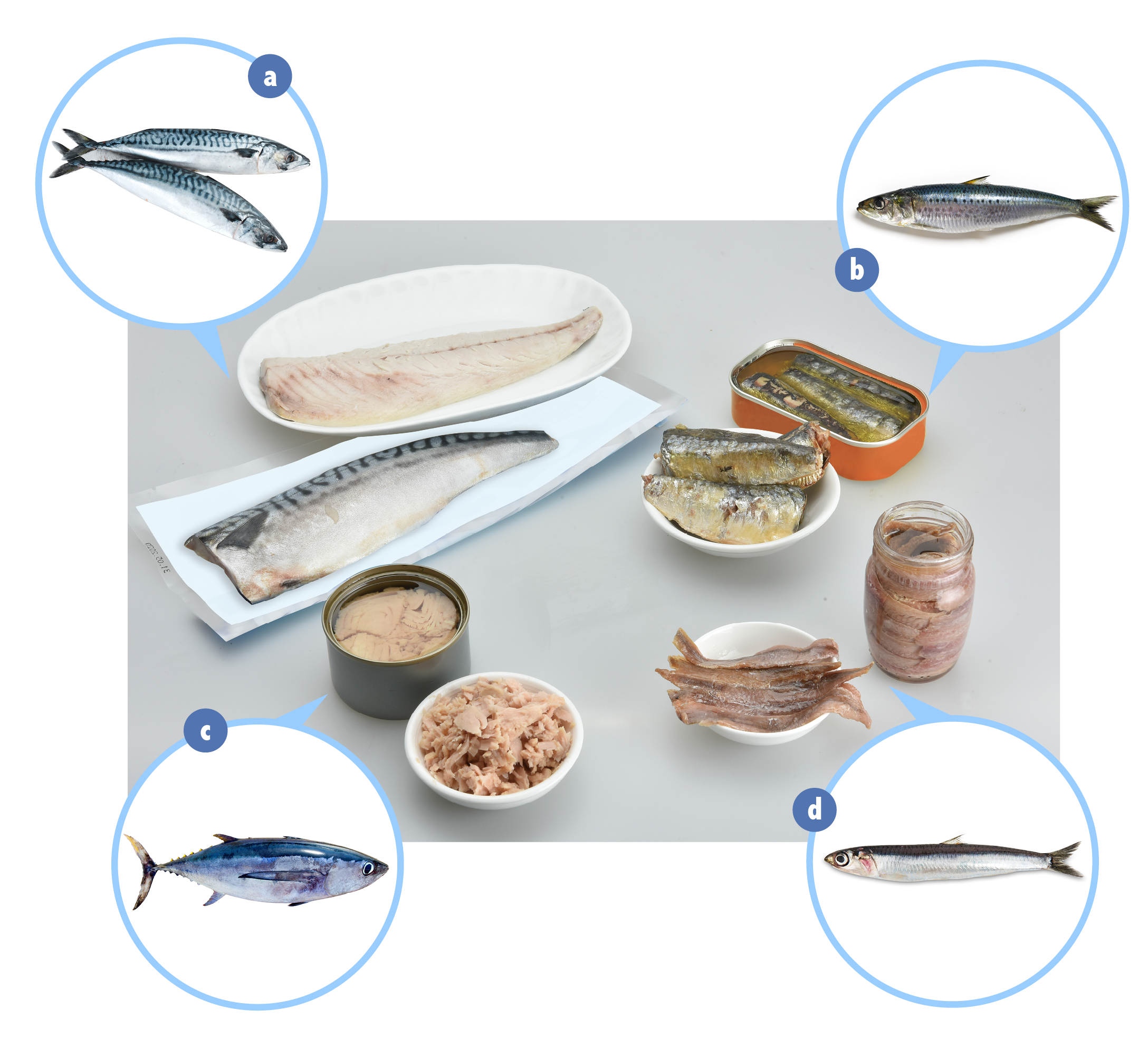
Examples of fish which contain elevated levels of naturally

Examples of fish which contain elevated levels of naturally occurring histidine: (a) mackerel, (b) sardine, (c) tuna and (d) anchovy.  Some of their respective products have also been found to contain high levels of histamine.

Formation of Histamine in Fish and Fish Products

Histamine is a toxic metabolite produced by histamine-producing bacteria during spoilage and fermentation of fish and fish products.  Many histamine-producing bacteria are part of the natural microflora of the skin, gills and gut of freshly caught fish.  Histidine decarboxylase (HDC) enzymes, synthesized by histamine-producing bacteria when they multiply, convert the amino acid histidine that are naturally present in fish into histamine.

The level of histamine in fish and fish products mainly depends on species of fish and time-temperature control. Certain fishes like mackerel, sardine, tuna and anchovy naturally contain high amount of histidine and have been associated with SFP cases in Hong Kong and/or other places.

Time and temperature control is the most effective method for ensuring food safety for fish species prone to histamine production.  In the absence of proper time-temperature control such as refrigeration and freezing, formation of histamine may occur at any point throughout the supply chain.  Previous study conducted jointly by the Food and Environmental Hygiene Department and the Consumer Council revealed that high levels of histamine (up to 2600 mg/kg) that can cause SFP were detected in opened canned fish samples that were left at room temperature for 24 hours.  However, histamine was not detected in samples that were kept at 2°C for up to 168 hours.

Health Effects of Histamine

SFP is caused by the ingestion of food containing high levels of histamine i.e. consuming a serving size of 250g fish or fish product with histamine level exceeding 200 mg/kg may cause symptoms in healthy individuals.  Symptoms of SFP include tingling and burning sensation around the mouth, facial flushing and sweating, nausea, vomiting, headache, palpitations, dizziness and rash.  Exacerbation of asthma and more serious cardiac manifestations were reported in more severe cases.  The onset of symptoms is within a few hours after consumption and these symptoms will normally disappear in 12 hours without long term effect.

Control of Histamine in Fish and Fish Products

High levels of histamine can build up in fish and fish products before any signs of spoilage (e.g. bad smell or taste) develop.  Therefore, measures for control of histamine should be taken along the food chain from harvest to consumption.

Care should be taken that the cold chain is maintained at or below 4°C along the supply chain, including points of transfer such as offloading of fish from the vessel and processing procedures.  Frozen fish and fish products should be kept at or below -18°C.  Transport vehicles or vessels should be adequately equipped to keep fish cold and pre-chilled before loading fish where applicable.  Adequate heat treatment (e.g. cooking, hot smoking) can kill histamine-producing bacteria and inactivate HDC enzymes, but cannot destroy pre-formed histamine.  Recommendations in the Code of Practice for Fish and Fishery Products (CAC/RCP 52-2003), issued by Codex Alimentarius Commission, should be observed to ensure food safety.
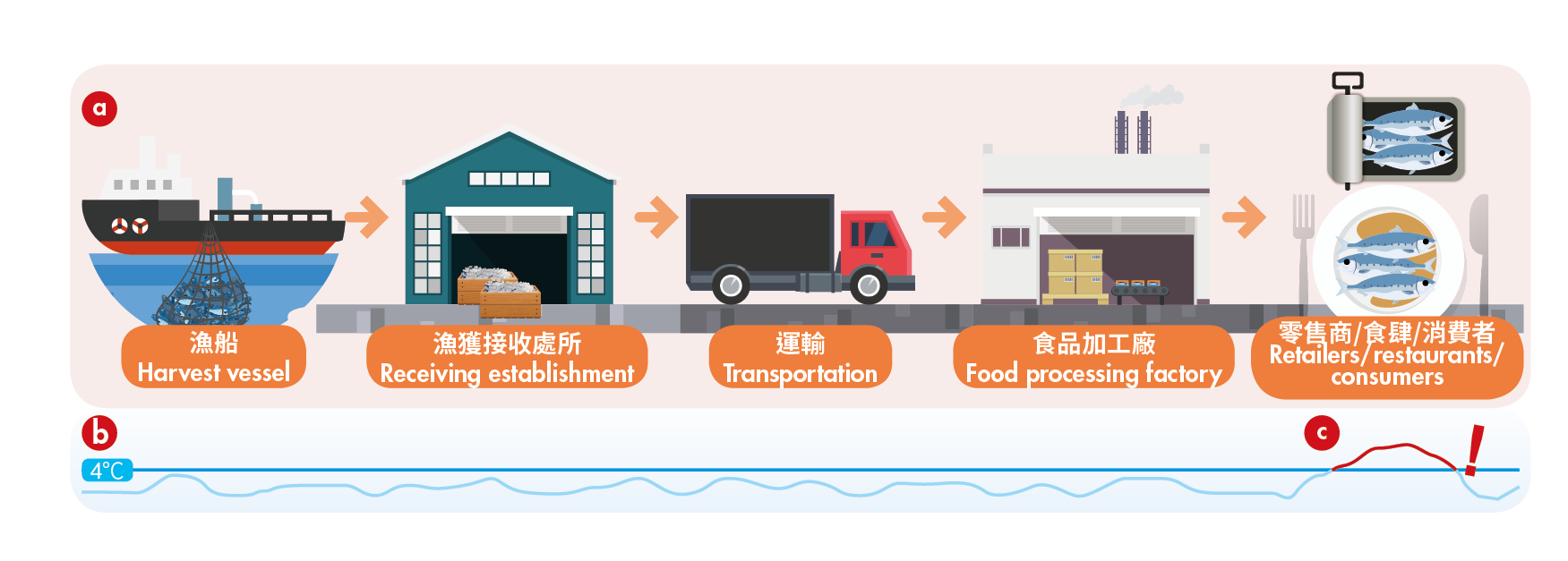
Food chain from harvest to consumption

(a) Cold chain should be maintained throughout the whole supply chain. (b) Refrigerated fish and fish products should be kept at or below 4°C. (c) The time which fish products are kept under ambient temperature should be minimised.

At the consumer level, fish should be chilled rapidly after purchase.  For pre-packaged fish and fish products, store according to the instructions of the manufacturer (e.g. keep refrigerated). If cooked fish and ready-to-eat fish products (e.g. tuna fish sandwiches and opened canned fish) are placed at room temperature all day long, they can be re-contaminated and histamine can form.  Therefore, if these foods are not being eaten immediately, they should be kept under refrigeration and be finished as soon as possible.

Luxembourg – RECALL: MARINATED WILD BOAR STEAK FROM THE BELGIAN QUALITY BRAND – Salmonella

SAP

Last name Marinated wild boar steak
Mark Belgian Quality
Unity 300g
bar code 2007030009926
Use-by date (DLC) 09/11/2022
Batch 22297

Danger  : Possible presence of salmonella

Salmonella can cause symptoms such as nausea, vomiting, abdominal cramps, diarrhea, fever and headache within 6 to 72 hours after consumption. These symptoms may be aggravated in young children, immunocompromised subjects and the elderly. People who have consumed these products and have these symptoms are invited to consult a doctor and report this consumption to him.

France – PANACHE TRAY – Listeria monocytogenes

Gov france

Identification information of the recalled product

  • Product category Feed
  • Product subcategory Meats
  • Product brand name GRILLO PARTY
  • Model names or references PANACHE TRAY
  • Identification of products
    GTIN Batch Date
    3700502704495 22297-5349 Use-by date 01/11/2022
  • Products ListTRAY.pdfAttachment
  • Marketing start/end date From 24/10/2022 to 01/11/2022
  • Storage temperature Product to be stored in the refrigerator
  • Health mark EN 13.097.003 EC
  • Geographic area of ​​sale Whole France
  • Distributors CARNIVOR
  • List of points of saleLIST_TRAY.pdf

Practical information regarding the recall

  • Reason for recall Presence of Listeria
  • Risks incurred by the consumer Listeria monocytogenes (causative agent of listeriosis)

France – MERGUEZ X6 – Listeria monocytogenes

Gov france

Identification information of the recalled product

  • Product category Feed
  • Product subcategory Meats
  • Product brand name GRILLO PARTY
  • Model names or references MERGUEZ X6
  • Identification of products
    GTIN Batch Date
    3700502793901 22297-5383 Use-by date 01/11/2022
  • Products ListList_merguez_x6.pdfAttachment
  • Packaging 300g tray
  • Marketing start/end date From 24/10/2022 to 01/11/2022
  • Storage temperature Product to be stored in the refrigerator
  • Health mark EN 13.097.003 EC
  • Geographic area of ​​sale Whole France
  • Distributors CARNIVOR MARITIMA CARREFOUR MARKET TOULON
  • List of points of saleLIST_MERGUEZ_X6.pdf

Practical information regarding the recall

  • Reason for recall presence of listeria
  • Risks incurred by the consumer Listeria monocytogenes (causative agent of listeriosis)

France – SALMON PAVE raised in Norway – Listeria monocytogenes

Gov france

Identification information of the recalled product

  • Product category Feed
  • Product subcategory Fishery and aquaculture products
  • Product brand name UNBRANDED
  • Model names or references packaged fresh salmon fillet
  • Identification of products
    GTIN Batch Date
    0245429000000 All gtins beginning with 0245429 are affected by this recall Use-by date 22/10/2022
  • Packaging packaged in a tray
  • Marketing start/end date From 19/10/2022 to 22/10/2022
  • Storage temperature Product to be stored in the refrigerator
  • Further information product marketed from 19.10.22 to 22.10.22
  • Geographic area of ​​saleLECLERC RIVERY
  • Distributors LECLERC RIVERY

Practical information regarding the recall

  • Reason for recall presence of listeria
  • Risks incurred by the consumer Listeria monocytogenes (causative agent of listeriosis)

France – SLICED CHICKEN CREAM MORELS – Salmonella

Gov france

Identification information of the recalled product

  • Product category Feed
  • Product subcategory Meats
  • Product brand name E.LECLERC ROQUES
  • Model names or references SLICED CHICKEN CREAM MORELS
  • Identification of products
    Batch Date
    Manufactured on 19/10/2022 Use-by date 23/10/2022
  • Packaging Sold in bulk at the traditional department
  • Marketing start/end date From 19/10/2022 to 22/10/2022
  • Storage temperature Product to be stored in the refrigerator
  • Further informationSold in the TRADITIONAL BUTCHER section of the E.LECLERC ROQUES store between 10/19 and 10/22/2022
  • Geographic area of ​​saleE.LECLERC ROQUES store
  • DistributorsE.LECLERC ROQUES store

Practical information regarding the recall

  • Reason for recall Presence of salmonella
  • Risks incurred by the consumer Salmonella spp (causative agent of salmonellosis)