Research – UK food microbiology lab notes less contact with the EU

Food Safety News

The United Kingdom leaving the European Union has resulted in reduced communication between UK and EU food networks, according to a new report.

The annual report covers work of the UK’s national reference laboratory (NRL) for food microbiology between April 2021 and March 2022.

The UK Health Security Agency (UKHSA) provides this service for the Food Standards Agency (FSA) for Listeria monocytogenes, coagulase-positive staphylococci, E. coli, Campylobacter, Salmonella and antimicrobial resistance.

Spain – New information on the presence of Listeria monocytogenes in cooked pork head meat

ACSA

pig's head meat cooked from the alert

In relation to the alert for the presence of Listeria monocytogenes in cooked pork head meat from Spain , the withdrawal is extended to another batch of the same product.

With this new information, the data of the product involved are:

Denomination: Special pig’s head

Brand: FRIAL

Lot: 2238402, with expiration date 12/14/2022.

Batch: 2238403, with expiration date 12/23/2022.

According to the information available, the distribution of the products has been in the Basque Country, Madrid, Castilla-La Mancha, Castilla y León, Extremadura, Cantabria and Galicia, although it is not ruled out that there is distribution to other autonomous communities.

With the information available there is NO record of any reported case associated with this alert.

The Spanish Agency for Food Safety and Nutrition has received this information from the autonomous community of Castilla-La Mancha and has transferred it to the competent authorities of the autonomous communities through the Coordinated System for the Rapid Exchange of Information (SCIRI) in order to that the withdrawal of the affected products from the marketing channels be verified.

As a precautionary measure, it is recommended that people who have the product indicated above in their homes refrain from consuming it and return it to the points of sale.

In the case of having consumed this product from the affected batches and presenting symptoms compatible with listeriosis (fever, headache, vomiting or diarrhea), it is recommended to go to a health center.

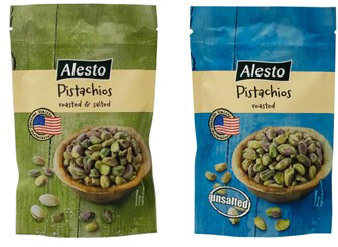
Belgium – Roasted pistachios – Roasted and salted pistachios from the Alesto brand – Ochratoxin A.

AFSCA

Recall of Carl Wilhelm Clasen GmbH
Product: Pistachios – “Pistazienkerne geroostet” (Roasted pistachios) and “Pistazienkerne geroostet & gesalzen” (Roasted and salted pistachios) from the Alesto brand.
Problem: too high content of Ochratoxin A.


In agreement with the FASFC, Carl Wilhelm Clasen GmbH withdraws Pistachios – “Pistazienkerne geroostet” (Roasted pistachios) (70g) and “Pistazienkerne geroostet & gesalzen” (Roasted and salted pistachios) (70g) from the sale and recalls them from consumers because of an excessively high Ochratoxin A content.

Lidl Belgium asks its customers not to consume these products and to return them to the point of sale where they were purchased. You will be reimbursed even without presenting the receipt.

Product description: Product

name Pistazienkerne geroostet
(Roasted pistachios) Pistazienkerne geroostet & gesalzen
(Roasted and salted pistachios)
Brand Alesto Alesto Use-by
dates (BDD) 25/03/2023 23/03/2023
Weight 70g 70g
Sales period From 5/07/2022 to 10/11/2022 inclusive From 5/07/2022 to 10/11/2022 inclusive
Type of packaging Plastic bag Plastic bag

USA – La Rosa Pasteurized Crabmeat Recalled For Defective Seal

Food Poisoning Bulletin

La Rosa Pasteurized Crabmeat is being recalled because the cans may have a defective seal, which could introduce pathogens into the product. This recall is posted on the FDA’s Enforcement Report page, which does not provide any information about possible adverse reactions. The recalling firm is River City Seafood International of Jacksonville, Florida.

Romania – Scandinavian style cod fishcakes – Listeria monocytogenes

ANSVSA

Jeka Fish recalls Sødergaarden Chifteluțe de cod, în stil scandinav / Scandinavian style cod fishcakes (340g; Use by 15.09.2022 and 25.11.2022) due to possible Listeria monocytogenes contamination.

Germany – K-Classic Pistachio Nuts Roasted & Unsalted 100g – Ochratoxin A

LMW

Alert type: Food
Date of first publication: 11/12/2022
Product name:

K-Classic Pistachio Nuts Roasted & Unsalted 100g

Manufacturer (distributor):

Carl Wilhelm Clasen GmbH Hans-Koch-Ring GmbH 21493 Schwarzenbek Sales by Kaufland

Reason for warning:

During routine tests, increased levels of the mold toxin ochratoxin A were found.

Packaging Unit: 100 g
Durability: 04/22/2023
Lot identification: 21029/220726001

Germany – Ginger ground (100 gr) (Zencefil) – Bacillus cereus

LMW


Alert type: Food
Date of first publication: 11/11/2022
Product name:

Ginger ground (100 gr) (Zencefil)

Product images:

product photo.jpg
Manufacturer (distributor):

Basak Tüketim ve Gida GmbH Marktstrasse 10 50968 Cologne

Reason for warning:

Increased levels of Bacillus cereus

Packaging Unit: 100 g
Durability: 06.2023
Lot identification: L4349M
Further information:

Reference is made to the attached consumer information.

Click to access R%FCckrufschreiben+(2).pdf

Austria – Alesto Pistachios Roasted, 70g and Alesto Pistachios Roasted & Salted, 70g – Ochratoxin A

AGES

AGES informs about a recall of the company Lidl Austria GmbH. The company recalled the products Alesto Pistachios Roasted, 70g and Alesto Pistachios Roasted & Salted, 70g on November 11th, 2022:
 © Lidl Austria GmbH
recall reason
Elevated ochratoxin A levels
Marketed by
Lidl Austria GmbH
Manufacturer
Carl Wilhelm Clasen GmbH
Expiry Date
03/25/2023
Batch number
30031/220622001, 30030/22062300

The manufacturer Carl Wilhelm Clasen GmbH is currently calling the products “Alesto Pistachios roasted, 70g” with the best before date March 25th, 2023 and lot number 30031/220622001 as well as “Alesto Pistachios roasted & salted, 70g” with the best before date March 23rd, 2023 and lot number 30030 /220623001 public back .
Only the federal states of Upper Austria, Salzburg, Tyrol and Vorarlberg are affected.

Elevated levels of ochratoxin A were detected in the products. Ochratoxin A is a mold toxin (mycotoxin) that can damage the kidneys if ingested over a long period of time. Customers should therefore pay attention to the recall and not consume the products under any circumstances.

For reasons of consistent consumer protection, Lidl Austria reacted immediately and removed the affected products from sale. The products can be returned in all Lidl branches. The purchase price will of course be refunded, even without presenting the receipt. Other products sold by Lidl Austria from the manufacturer Carl Wilhelm Clasen GmbH are not affected by the recall. The manufacturer Carl Wilhelm Clasen GmbH apologizes to all those affected for the inconvenience caused. This warning does not state that the hazard was caused by Lidl Austria.

If you have any questions, the Lidl Austria customer service is available on the toll-free number 0800/500 810 from Monday to Friday from 8 a.m. to 6 p.m. and on Saturday from 8 a.m. to 5 p.m.

original recall

Research – Looking at edible insects from a food safety perspective. Challenges and opportunities for the sector

FAO

The release of the pioneering FAO publication,
 
Edible insects. Future prospects for food and feed security in 2013 spurred considerable interest in insect farming . While insects have been part of the normal diets of many cultures in various regions through the centuries, the practice is not widespread in the Western world .
 
However, with growing concerns about the environmental effects of food production, sustainable agriculture is garnering increasing support within our food systems . This has led to an increased interest in using insects as an additional source of nutrition in human food and animal feed, propelling research activities as well as business opportunities worldwide .Until recently edible insects have been collected mainly from the wild but farming insects for human as well as animal consumption is now on the rise .
 
Their high fecundity, high feed conversion efficiency, and rapid growth rates make insects viable and attractive candidates for farming . In addition, they can be reared in small, modular spaces, making it feasible to raise them in rural as well as urban farm settings .The low carbon, water and ecological footprints associated with insect production, as compared to those of other livestock species, make them attractive from an environmental sustainability standpoint . In general, edible insects are a good source of protein, fatty acids, vitamins, and minerals, though the nutritional profile is insect species dependent .
 
This makes them a potential food source for healthy human diets .Insects can also be a nutritionally beneficial and sustainable source of feed for animals . These factors make insects a good prospect to help address food insecurity issues related to a rising global population, without simultaneously harming the environment .


However, the benefits of this emerging food source must be weighed against all possible challenges: for instance, any food safety issues that could pose health threats to consumers . As with other foods, edible insects can also be associated with a number of food safety hazards .
 
This publication covers some of the major food safety hazards that should be considered, including biological agents (bacterial, viral, fungal, parasitic) as well as chemical contaminants (pesticides, toxic metals, flame retardants) . Safe and successful insect production must include efforts to prevent, detect, identify and mitigate such food safety concerns . Food safety risks can be higher when insects are harvested from the wild and consumed raw .
 
Farming insects under controlled hygienic conditions and implementing sanitary processing techniques should reduce some hazards, such as microbiological contamination .An important area of food safety consideration is the quality and safety of the feed or substrates used for rearing insects . The use of raw materials that are alternative to conventional feed are being explored as potential substrates for mass production of insects .Some of these raw materials include food side streams such as food waste, agricultural by-products or manure from livestock farms .
 
The high nutritional content and low cost of such side streams provide a means to enforce circular economy in the process, in addition to further reducing the environmental footprint and economic costs associated with insect farming . However, as the nutrient content and food safety aspects of reared insects depend on the substrate, further studies and monitoring will be needed to determine the quality and safety of such side streams as well as the insects that are produced .Insects and crustaceans (shrimp, prawns, etc .) belong to the arthropod family . While allergic reactions to shellfish are well-known, the potential allergenic risks associated with consuming edible insects needs further investigation .
 
Individuals already allergic to crustaceans are particularly vulnerable to developing allergic reactions to edible insects, due to allergen cross-reactivity . The immune systems of shellfish-allergic individuals are sensitized to certain proteins from crustaceans .Recognition of similar proteins in insects upon consumption can trigger the immune system to initiate an allergic reaction .
 
In addition to cross-reactivity, there is also a risk associated with developing de-novosensitization to yet unidentified allergens from insects . Research in this area must be broadened to gain a better understanding of this risk .Other challenges facing this emerging sector are also discussed in the publication . These include the general absence of insect-specific regulations governing the production and trade of insects as food and feed, issues related to upscaling the production of insects, and overcoming the negative attitude associated with insect consumption among some consumers .


Research – The monitoring program for algal toxins in shellfish 2021

Mattilsynet

In general, less poisonous shells were detected during the covid-19 years 2020 and 2021 than in the three previous years. We cannot determine whether this is due to fewer samples or less blooms of toxic algal plankton.

In 2021, a total of 723 shell samples were taken and analyzed for various toxins; 384 samples from the Norwegian Food Safety Authority’s annual monitoring program (including the Mussel Alert) and 339 samples from the producers’ own control samples. 

The number of samples from the industry was somewhat fewer in 2021 because demand for shells was lower due to covid-19 with closed restaurants and hotels.

On the monitoring of algal toxins in shellfish

The Norwegian coast is monitored throughout the year for marine algal toxins in shells in connection with commercial harvesting and trade in addition to the Mussel Alert.

The shell samples are analyzed for both the fat-soluble toxins DSP (OA group), AZA, YTX and PTX and the water-soluble toxins with the neurotoxin PSP (STX group), and for the amnesia toxin ASP (DA group).

What did we investigate? Mostly mussels, but also some scallops, flat oysters, Pacific oysters, cockles, knife clams, O-clams, carpet clams, sand clams, circle clams, king snails and sea urchins
Time range: 2021
What were we looking for? The algae toxins DSP, YTX, PTX and AZA, PSP and ASP.
What did we find? Around 98 per cent of all submitted mussels were below the limit value for DSP (OA group).

For PSP (STX group) around 95 per cent were below the limit value, while around 99 per cent were below the limit value for ASP.

For the toxin groups YTX, PTX and AZA, all samples were below given limit values.

Mussels: Had the most detections of DSP and PSP above the limit value, but ASP was also detected above the limit value

Scallops : PSP and ASP were detected above the limit value

Flat oysters : PSP was detected above the limit value in Western Norway for a period in April

PSP : As in previous years, was mainly detected in the spring and early summer.

DSP : The detections above the limit value were distributed throughout the year from April to October with a peak in September. This is consistent with previous years where DSP mainly performs in late summer and autumn.