Research – Researchers discover way to disarm potentially deadly Listeria bacteria

UQ EDU

University of Queensland researchers have unlocked a way of fighting Listeria infections, which can cause severe illness in pregnant women and people with compromised immune systems.

During the study, researchers discovered a way to block Listeria from making the proteins that allow bacteria to survive and multiply in immune cells.

UQ Diamantina Institute’s Professor Antje Blumenthal said using a small, drug-like inhibitor has improved their understanding of the Achilles heel of Listeria.

“Listeria is found in the soil and sometimes in raw foods. Once ingested it can hide from the immune system and multiply inside immune cells,” Professor Blumenthal said.

“Instead of killing the bacteria, the immune cells are used by the bacteria to multiply and are often killed by Listeria growing inside them.

“Our study showed the bacteria could be cleared with a small drug-like inhibitor that targets the ‘master regulator’ of the proteins that help Listeria grow in immune cells. The inhibitor helped the immune cells survive infection and kill the bacteria.”

Until now, studies into the ‘master regulator’ – which controls critical proteins that make Listeria virulent ­­– have mostly been based on engineered bacteria, or mutated versions of these proteins.

“By using a drug-like inhibitor, we were able to use molecular imaging and infections studies to better understand what happens to Listeria when the bacteria cannot effectively grow inside immune cells and hide from immune defence mechanisms,” Professor Blumenthal said.

“We hope that our discovery, together with recent research into the master proteins’ molecular structure and functions, could guide the development of inhibitors and new drugs to treat Listeria infection.”

Listeria infection does not cause disease in most people, but can be deadly for the immunocompromised and is also a major health concern during pregnancy and can lead to miscarriage, stillbirth and premature birth.

“Our findings could also inform design of inhibitors against related proteins that are found in different bacteria,” Professor Blumenthal said.

The study has been published in the journal PLOS Pathogens (DOI: 10.1371/journal.ppat.1010166).

This study, led by researchers at The UQ Diamantina Institute, included collaborations with Umeå University, Sweden; UQ School of Chemistry and Molecular Biosciences; Australian Infectious Diseases Research Centre; Institute for Molecular Bioscience; Mater Research Institute; Telethon Kids Institute, University of Western Australia; Monash University; University of Melbourne at the Peter Doherty Institute for Infection and Immunity and Hudson Institute of Medical Research.

Media: PRofessor Antji Blumenthal, a.blumenthal@uq.edu.au; UQ Communications, Angie Trivisonno, med.media@uq.edu.au, +61 (0)7 3365 5118, +61 (0)436 368 746.

Canada – Certain Quality fast foods brand and Hygaard Fine Foods Ltd. brand sandwiches recalled due to Listeria monocytogenes

CFIA

Summary

Product
Certain sandwiches
Issue
Food » Microbial Contamination » Listeria
What to do

Do not consume the recalled products.

Quality fast foods: Turkey Bacon Sandwich on Stone Milled Wheat

Issue

HQ Fine Foods is recalling certain Quality fast foods brand and Hygaard Fine Foods Ltd. brand sandwiches from the marketplace due to possible Listeria monocytogenes contamination.

The recalled products have been sold nationally.

What you should do

  • If you think you became sick from consuming a recalled product, call your doctor
  • Check to see if you have the recalled products in your home
  • Do not consume the recalled products
  • Recalled products should be thrown out or returned to the location where they were purchased

Food contaminated with Listeria monocytogenes may not look or smell spoiled but can still make you sick. Symptoms can include vomiting, nausea, persistent fever, muscle aches, severe headache and neck stiffness. Pregnant women, the elderly and people with weakened immune systems are particularly at risk. Although infected pregnant women may experience only mild, flu-like symptoms, the infection can lead to premature delivery, infection of the newborn or even stillbirth. In severe cases of illness, people may die.

Cambodia – Mass food poisoning reported with more than 30 falling ill

Khmer Times

A joyful party ended in a hospital visit for 34 guests due to food poisoning.

The party took place on January 21 at a water treatment plant in Snom Prampi Village, Mak Prang Commune, Teuk Chhou District, Kampot.

According to the authorities at around 6 p.m. there were reports of mass food poisoning. The party was reportedly hosted by the water treatment plant. After the report came to the authorities, those suffering were sent to the hospital to be treated. A total of 34 people ended up in the emergency room.

Authorities said that 26 of the victims were admitted to Kampot Provincial Referral Hospital and eight other people were sent to a private clinic for treatment. As of January 22, all victims have recovered.

Malaysia -60+ Primary School Students Get Food Poisoning From School Food Programme

TRP

More than 60 students from a primary school in Taman Medan, Petaling Jaya got food poisoning and had to be admitted to Hospital Shah Alam last Thursday, according to Majoriti.

It is believed that the food provided by the school under the supplementary meal plan (RMT) is the cause of the food poisoning. Allegedly, all the students had eaten the food provided, and many later showed signs of food poisoning such as vomiting.

Students from Year 1 to Year 6, including those in the Special Education Integration Program (PPKI), who are part of the supplementary meal plan programme were affected.

Belgium – Flavored water “Still Lemon & Lime Flavored spring water” from the SuperValu brand – Mould/Mold

AFSCA

Recall by Stonemanor International ltd
Product: Flavored water “Still Lemon & Lime Flavored spring water” from the SuperValu brand.
Problem: possible presence of mould.


In consultation with the FASFC, the flavored water “Still Lemon & Lime Flavored spring water” of the SuperValu brand is withdrawn from sale and Stonemanor International ltd is recalling it from consumers due to the possible presence of mould.

Stonemanor International ltd asks its customers not to consume this product and to return it to the point of sale, for a full refund.

Product Description :

– Product name: Still Lemon & Lime Flavored spring water
– Brand: SuperValu
– Expiry date (BDD) : 06/30/2022 –
Batch number: L21255
– Sale period: from 27/9/21 to 21/1 /22
– Type of packaging: Plastic
bottles – Weight: 6x500ml

The product was distributed by:

Stonemanor, Waterloosesteenweg 41, 1640 Rhode-Saint-Genèse

For further information please contact: Ryan Pearce 023516352 / info@stonemanor.uk.com

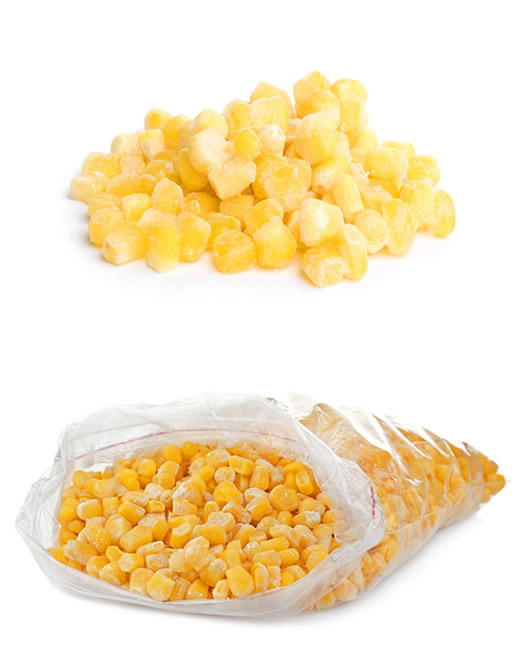
Canada – Public Health Notice: Outbreak of Salmonella infections linked to frozen whole kernel corn

PHAC

This notice has been updated to communicate the source of the outbreak and reflect 26 additional illnesses that have been reported in the ongoing outbreak investigation. There are now 110 Salmonella illnesses reported across 5 provinces. Based on the investigation findings to date, the outbreak is linked to Alasko brand frozen whole kernel corn.

The Public Health Agency of Canada (PHAC) is collaborating with provincial public health partners, the Canadian Food Inspection Agency (CFIA) and Health Canada to investigate an outbreak of Salmonella infections involving 5 provinces: British Columbia, Alberta, Saskatchewan, Manitoba and Ontario. The illnesses reported in Ontario were related to travel to Alberta and British Columbia.

Many of the individuals who became sick reported eating a variety of raw and cooked produce items before their illness. Initially, investigators identified that fresh avocados were reported by many cases before they became ill; however, more information was needed to confirm the source of the outbreak.

As part of the food safety investigation, the CFIA collected different food items from restaurants where ill people dined. Testing found the outbreak strain of Salmonella in an unopened package of Alasko brand frozen whole kernel corn. Traceback findings identified Alasko as the common brand of frozen corn consumed at various food service establishments by individuals who became sick. Based on the investigation findings to date, the outbreak is linked to Alasko brand frozen whole kernel corn.

The CFIA issued food recall warnings on December 14 and 19 for Alasko brand frozen whole kernel corn. The recalled products were distributed in British Columbia, Alberta, Saskatchewan, Manitoba and Quebec, and may have been distributed in other provinces and territories. This led to a secondary recall for Fraser Valley Meats brand frozen whole kernel corn on December 18. Several additional secondary recalls have been issued since then for products that were made using the recalled Alasko brand frozen whole kernel corn. More information on the recalled products are available online. The CFIA is continuing its food safety investigation, which may lead to the recall of other products. If other products are recalled, the CFIA will notify the public through updated food recall warnings.

The outbreak appears to be ongoing, as recent illnesses continue to be reported. Do not eat, use, sell, or serve any of the recalled corn or products made with the recalled corn. This advice applies to individuals, as well as retailers, distributors, manufacturers and food service establishments such as hotels, restaurants, cafeterias, hospitals and long-term care homes, across Canada.

This outbreak is an important reminder to Canadians and businesses that frozen vegetables can carry harmful germs that can lead to foodborne illness if not properly handled and cooked prior to consuming.

This public health notice will be updated as the investigation evolves.

Research – What Is Cyclospora?

Food Poisoning News

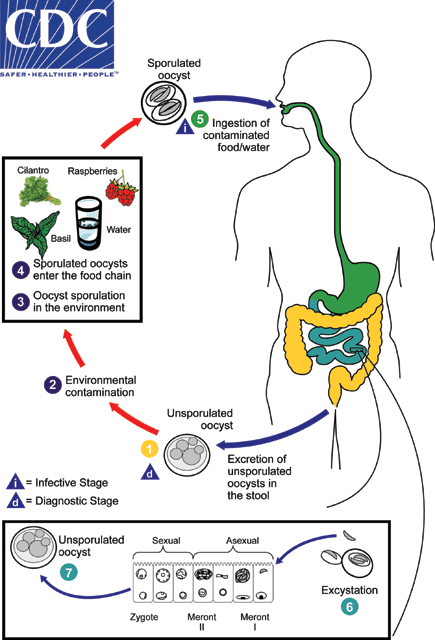
Cyclospora cayetanensis is a protozoan parasite that causes the diarrheal illness known as cyclosporiasis. People acquire this infection by consuming food or water contaminated with feces containing Cyclospora. Cyclosporiasis was not previously a reportable disease in the U.S., so its rise in prevalence is due in large part to the increased availability of tests that can detect Cyclospora. It is now a nationally notifiable disease, so physicians are required to report cases of this infection.

The first three cases of cyclosporiasis were reported in 1977 and 1978, but the parasite that was causing the illnesses could not at that time be identified as Cyclospora cayetanensis; it was not until 1979 that the correct identification was made.

Norway – Cyclospora, Toxoplasma and Cryptosporidium detected in berries sold in Norway

Fresh Plaza

water contamination

Cyclospora, toxoplasma and cryptosporidium have been detected in berries sold in Norway. Blueberries, strawberries and raspberries were tested for Echinococcus multilocularis, Toxoplasma gondii, Cyclospora cayetanensis and Cryptosporidium. Raspberries were the most contaminated, followed by strawberries and blueberries. Strawberries and raspberries were mainly tainted with Cryptosporidium, while blueberries were contaminated mostly with Cyclospora. Toxoplasma and Cyclospora were frequently found in raspberries, according to the study published in the journal Food Microbiology.

However, researchers said it was important to note that only DNA was detected, so there is no certainty that the intact, infective stages of parasites were present, and there is no information on viability.

In Norway, because of the short growing season, many berries come from abroad, with more than 13,000 tons imported in 2020. In total, 86 berry samples were from domestic fruit while others came from countries such as Peru, Morocco, Chile, Netherlands, Portugal and Poland.

Researchers said that while findings are cause for some degree of concern for Norwegian food safety authorities, encouraging consumers to wash berries before consumption could reduce the risk of infection.

Luxembourg – TERRINE WITH 2 SALMON FROM AUCHAN LE POISSONNIER – Listeria monocytogenes

SAP

The  company inputs Sea recalls the following product:

Last name 2 salmon terrine
Brand Auchan Le Poissonnier
Unity 2 x 75g
bar code 3254560146068
Use-by date (DLC) All DLC between 01/19/2022 and 01/30/2022 inclusive
Lot All lots from 2201301 to 2203101
Sale period from 01/11/2022 to 01/20/2022 inclusive

Danger  : Possible presence of Listeria monocytogenes

Listeria monocytogenes can cause fever, headache and gastroenteritis. Vulnerable people such as immunocompromised and elderly people and young children may present with neurological symptoms due to meningitis. Pregnant women should also be especially alert to these symptoms. Gastroenteritis can appear between a few hours and 3 days after consumption, while neurological symptoms can only appear after 3 months. People who have consumed these products and have these symptoms are invited to consult a doctor and report this consumption to him.

Sale in Luxembourg by: Auchan

Source of information: Auchan recall notification

Netherlands – Safety Warning Bulk Package Peeled Pumpkin Seeds Charif Food – Salmonella

NVWA

Safety Warning Bulk Packing Peeled Pumpkin Seeds Charif Food

Charif Food is recalling the bulk pack of peeled pumpkin seeds with an expiration date of 25-10-2022 with immediate effect. These pumpkin seeds may contain an excessive amount of salmonella.
Which product is it?
Bulk Pack of Peeled Pumpkin Seeds

  • Best before date 25-10-2022
  • Lot number K-2102NLD0033002 /144025-257

For more information, please contact Charif Food .

Sincerely

The Dutch Food and Consumer Product Safety Authority