Category Archives: Vibrio

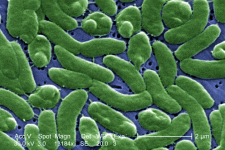
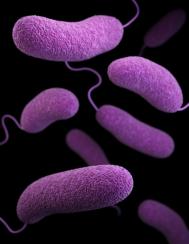
China – Durian grabbed from sunken vessel sicken 523 Guangxi villagers – Vibrio parahaemolyticus

The Standard

Food Illness

A total of 523 Chinese villagers suffered from food poisoning symptoms after eating durian from a capsized cargo ship in Guangxi on August 26, the local disease control center announced on Tuesday, the state media said.

A later investigation showed that they were infected with vibrio parahaemolyticus bacterium, which, when ingested, causes gastrointestinal illness in humans, and was probably caused by the durian becoming contaminated by sea water.
An announcement from the local government on August 27 said 101 of the villagers suffered from abdominal pains, diarrhea and vomiting while others only displayed mild symptoms. Nine people are currently in hospital,
Video clips circulating online showed the villagers rushing to the sea to try and recover durian floating on the sea water’s surface, after a cargo ship loaded with durian overturned around 200 meters away from the coast of Dongxing in Guangxi on August 26.
Local authorities tried to stop the villagers, but they still managed to recover some durian.
More common in the sea, vibrio parahaemolyticus bacterium is a microorganism that favors salty food, and is commonly found in food poisoning cases in coastal areas in the summer and autumn months, Guangxi Center for Disease Prevention and Control said.
It often lurks in fish, shrimp, crab, shellfish and other seafood, and occasionally spreads through salted products like pickles, seasoned meats and salted eggs. It is suspected the durian, soaked in sea water, could have been contaminated with the microorganism.
Experts said the incubation period for those infected with the bacterium ranges from 1 hour to 4 days, but lasts 10 hours in most cases. The symptoms resulting from its ingestion start quickly, and include chills, abdominal pains, nausea and vomiting, followed by fever, diarrhea, and watery or bloody stool.
Research – Predicting Cholera Risk in Yemen

Earth Observatory

CDC Vibrio

Image CDC

This story is adapted from our recent feature, Of Mosquitoes and Models: Tracking Disease by Satellite.

In 2017, Yemen experienced one of its worst cholera outbreaks on record. Following heavy rains, flooding, and mass movement of the population due to civil unrest, more than one million people were suspected of contracting cholera and at least 2,000 died. A few scientists saw it coming, and they are now working to make sure people are prepared for future cholera outbreaks in Yemen and around the world.

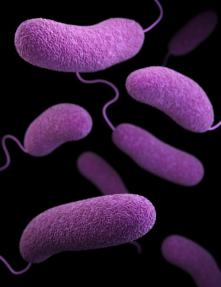
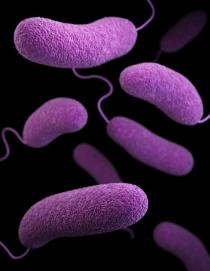
Cholera is a waterborne bacterial infection that can spread quickly through a population. The disease is primarily contracted by consuming water or food contaminated with the cholera bacteria, Vibrio cholerae. It causes uncontrollable diarrhea that, if left untreated, can result in dehydration or death.

A team of NASA-funded researchers has been using satellite and ground-based data to forecast the risk of cholera in Yemen and other countries. The map above shows the forecasted risk of cholera in Yemen from August 10 to September 6, 2020. It was created with the Cholera Prediction Modeling System, which incorporates NASA precipitation data, air temperature data from NASA’s MERRA-2 reanalysis product, and population data. The number of cholera cases could increase in coming weeks, influenced by heavy rains that usually fall in August, though researchers predict the outbreaks should be limited to a few hotspots unless there is a large population displacement.

Research – Synergistic antibacterial effect of nisin, ethylenediaminetetraacetic acid, and sulfite on native microflora of fresh white shrimp during ice storage

Wiley Online

This study aims to investigate the effectiveness of using nisin, ethylenediaminetetraacetic acid (EDTA), and sulfite alone or in combination in reducing Vibrio parahaemolyticus Salmonella enterica , and Pseudomonas fluorescens in broth and native microflora on raw Pacific white shrimp during ice storage. Nisin (50 ppm), EDTA (20 mM), alone or in combination were used to test on the growth of parahaemolyticus enterica , and fluorescens in broth. Nisin (50 ppm), EDTA (20 mM), sodium metabisulfite (1.25 and 0.625%), ice; alone or in combination were used on shrimps during 1°C storage for 10 days. Microbial and chemical changes were analyzed during shrimp storage. First, the combination of nisin and EDTA exhibited antibacterial effects against parahaemolyticus enterica , and fluorescens in broth. Second, in shrimp preservation, the combination of nisin, EDTA, and sulfite at a low dose of 0.625% exhibited higher antimicrobial activity than did a high dose of sulfite (1.25%). Based on aerobic bacteria counts, psychrotrophic bacteria, and TVB‐N, shrimp treatment with combination of nisin, EDTA, and low‐dose sulfite were still acceptable within 10 days of storage. Based on our findings, nisin and EDTA can be used to reduce uses of sulfite for shrimp preservation in the future.

Borneo – Alert in Brunei as Sabah reports 43 cholera cases

Borneo Bulletin 

According to the Ministry of Health (MoH), the Malaysian Ministry of Health has reported 43 cholera cases in several areas in Sabah since January 2020 until now.

Continuous monitoring by the MoH showed no cases of cholera detected in Brunei Darussalam. Cholera is an intestinal infection caused by the ‘vibrio cholera’ virus that spreads through contaminated food and water. The main symptom is diarrhoea. Other symptoms include vomiting and abdominal pain. Severe cholera infection can lead to dehydration and death, if left untreated.

Research – Genomic epidemiology of domestic and travel-associated Vibrio parahaemolyticus infections in the UK, 2008–2018

Science Direct

CDC Vibrio

Image CDC

Globally, V. parahaemolyticus is the most prevalent food-poisoning bacterium associated with seafood consumption. To date, the epidemiology of Vibrio parahaemolyticus infections in the UK has remained unexplored. Here we analysed archived V. parahaemolyticus strains isolated from domestic infections and travellers into the UK from 2008 to 2018 and who had submitted clinical samples to Public Health England (PHE)’s Gastrointestinal Bacteria Reference Unit. A total of 48 strains were retrieved from the PHE strain collection, confirmatory tested by PCR and analysed by genome-wide phylogeny using a global collection of genomes with representative strains from the major epidemic clones. Most reported infections entering the UK originated from travellers returning from Southeast Asia, however cases were also reported to have potentially originated from the USA, Cuba, India, Turkey, Caribbean, France, Slovenia and also within the UK, highlighting the wide geographical spread of infections. A large genetic diversity of V. parahaemolyticus strains was observed, with sequence type 3 (ST3; pandemic group) strains the most common sequence type (23 of the 48 analysed strains, 47.9%). The majority of strains were tdh positive (25/48, 71%), with 5 isolates positive for both haemolysin genes (tdh and trh), with 2 isolates trh positive only (5.7%). Six isolates did not possess either haemolysin gene. We demonstrate that whole genome sequencing can be effective to type certain human pathogens entering a traditionally considered “non-endemic” county and this was captured via passive epidemiological surveillance systems. Such approaches may potentially provide a useful snapshot of the diversity of a given pathogen group circulating worldwide.

Research – Effect of Ploidy on Vibrio parahaemolyticus and Vibrio vulnificus Levels in Cultured Oysters

JFP Vibrio_vulnificus_01

Vibrio parahaemolyticus and V. vulnificus are naturally occuring human pathogenic bacteria commonly found in estuarine environments where oysters are cultured. The use of triploid oysters has increased, due to their rapid growth rate and that they maintain a high quality throughout the year. Previous work suggested levels of Vibrio spp. may be lower in triploid oysters, as compared to diploids. Therfore, this study aimed to determine if there is a difference in the abundances of V. parahaemolyticus and V. vulnificus between half-sibling diploid and triploid oysters. In four trials, 100 individual oysters (either iced or temperature abused) were analyzed for V. parahaemolyticus and V. vulnificus using direct plating followed by colony hybridization. Mean levels of V. parahaemolyticus in iced and abused diploid oysters were 3.55 and 4.21 log CFU/g, respectively. Mean levels in iced and abused triploid oysters were 3.49 and 4.27 log CFU/g, respectively. Mean levels of V. vulnificus in iced and abused diploid oysters were 3.53 and 4.56 log CFU/g, respectively. Mean levels in iced and abused triploid oysters were 3.54 and 4.55 log CFU/g, respectively. The differences in Vibrio spp. abundances between diploid and triploid oysters was not significant (p>0.05). However, the differences across treatments were significant (p<0.05), with the exception of V. parahaemolyticus levels in trial 3 (p=0.83). Variation between individual oysters was also observed, with 12 of 808 measurements being outside of the 95 th percentile. This phenomenon of occasional statistical outliers (“hot” or “cold” oysters) has been previously described and supports the appropriateness of composite sampling to account for inherent animal variability. In summary, the data indicate that abundances of V. parahaemolyticus and V. vulnificus are not dependent on the ploidy of cultured oysters, but vary with the type of handling.


RASFF Alert – Vibrio cholerae – Cooked Whiteleg Peeled Shrimps

RASFF-Logo

RASFF – Vibrio cholerae (presence /25g) in cooked whiteleg peeled shrimps (Penaeus vannamei) from Vietnam in Denmark

New Zealand -Vibrio parahaemolyticus infections linked to raw mussels in New Zealand

Outbreak News Today

CDC Vibrio

Image CDC

In New Zealand, officials are encouraging the public to ensure they cook raw mussels thoroughly after an increase in cases of food poisoning associated with commercially grown mussels from the Coromandel area.

“Testing is being done to confirm the type of Vibrio parahaemolyticus that has caused this illness. New Zealand Food Safety has an ongoing survey program to test mussels and growing waters to help us understand why this occurred.

“Until we have more information, New Zealand Food Safety is reminding consumers to take care when handling, preparing and consuming mussels. Our advice to consumers who are pregnant or have low immunity is to avoid eating raw shellfish,” says Paul Dansted.

Denmark – Cooked giant prawns contaminated with vibrio cholerae

DVFA 

Nordic Seafood A / S recalls COOP giant prawns, cooked after the company itself found Vibrio cholerae in a sample of the product.

Recalled Foods , Published: June 22, 2020

Amended June 24, 2020

What food:
COOP prawns, cooked
See pictures of the front , rear and lot number
Weight: 300 g
Packing date: 18-03-2020, 19-03-2020 and 20-03-2020
Best before: 18-03-2022, 19-03-2022 and 20-03-2022
Lot number: TASE_20 / 15
EAN: 7340011454953

Sold at:
Kvickly, SuperBrugsen, LokalBrugsen and Facts.
Company recalling:
Nordic Seafood A / S
9850 Hirtshals

Cause:
The company’s own analyzes have found Vibrio cholerae in the product

Risk:
Vibrio cholerae is a sign of contamination and can cause vomiting and diarrhea.

Consumer Advice: The
Food Agency advises consumers to return the product to the store where it was purchased or to discard it.

New Zealand -Mussel warning after spike in food poisoning

New Zealand Herald 

A spike in cases of food poisoning has been linked to people consuming raw mussels from the Coromandel area.

New Zealand Food Safety is urging people to ensure they cook raw mussels thoroughly, as raw or undercooked mussels can make people sick.

Director of food regulation Paul Dansted said eating raw shellfish always carried a risk for food-borne illnesses.

“Cooking kills the marine micro organism Vibrio parahaemolyticus, which occurs naturally throughout the world,” he said.