MPI
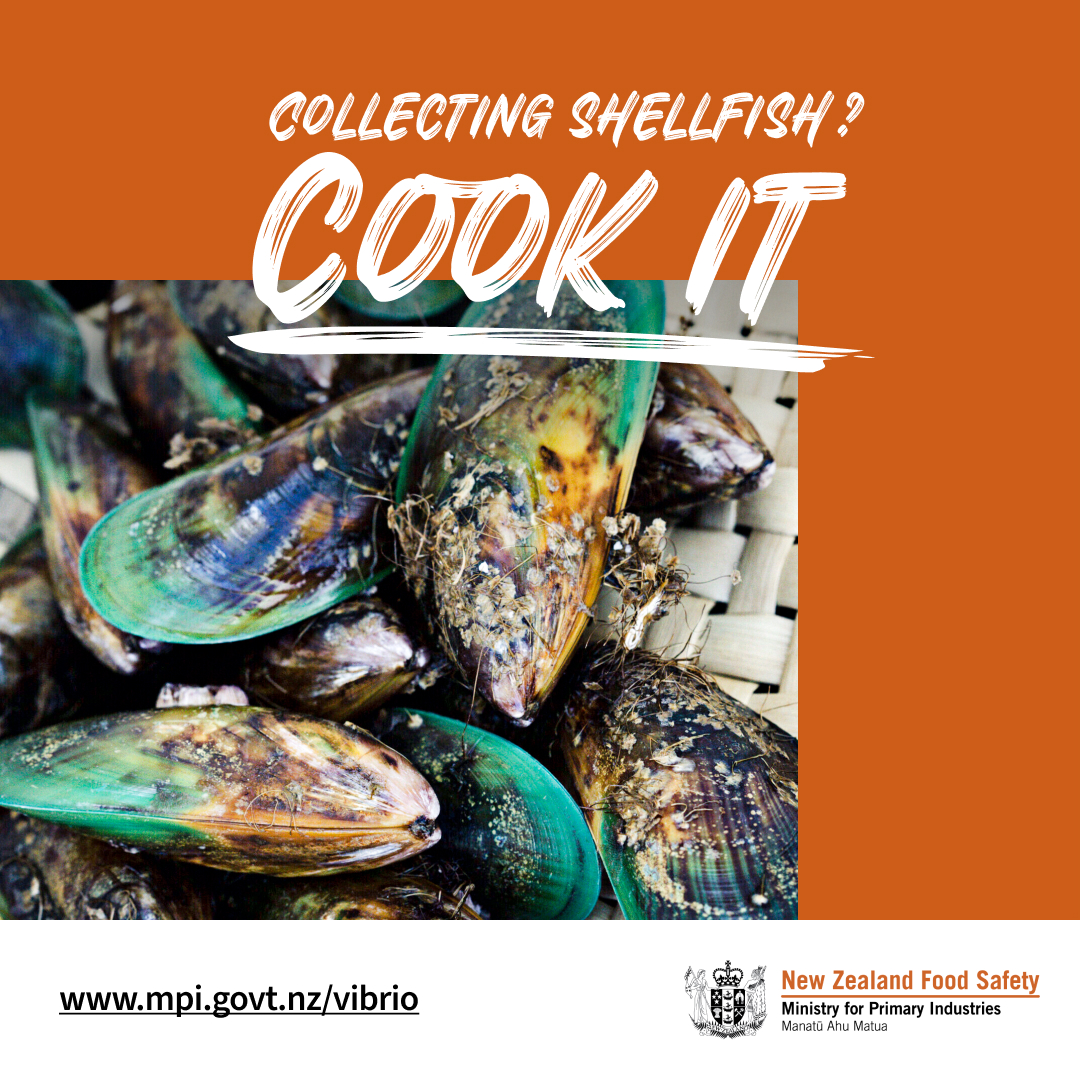
New Zealand Food Safety is calling on Kiwis to thoroughly cook the shellfish they collect this summer following an increase in cases of Vibrio parahaemolyticus illness in previous summer months.
Vibrio is a type of bacteria naturally living in the sea, and some strains can make people sick with gastroenteritis when consumed in raw or undercooked shellfish.
“Our message to those who want to eat raw or lightly cooked shellfish – like mussels, kina and pipi – is to be aware there are increased risks of illness and the simple precautions you can take to protect yourselves and your families,” says New Zealand Food Safety deputy director-general Vincent Arbuckle.
“We are starting to see more cases of illness from Vibrio parahaemolyticus. While we can’t definitively identify the cause, it is possibly because of rising sea temperatures, making it easier for bacteria to spread.
“So, as we gear up for summer, and enjoy time with family and friends over the holidays, we need to make sure to take extra care when collecting and preparing shellfish.
“In the most recent outbreak, there were 60 reported cases of Vibrio parahaemolyticus, between November 2021 and May 2022. Of particularly of concern is the high hospitalisation rate of almost 42%.
“It’s a notable increase in reported cases from previous years, with 24 cases reported earlier in 2021, 16 cases in 2020 and 23 cases in 2019. The reason for the increase is unclear at this stage – it could be caused by environmental change, increased testing and reporting, or a combination of these and other factors – but it is clear, that cooking your shellfish kills the bacteria that makes you sick.
Vibrio bacteria can cause illnesses like gastroenteritis – with symptoms including diarrhoea, abdominal cramps, nausea, vomiting and fever – blood poisoning and wound infections.
“It’s especially important for those with underlying health conditions, pregnant and older people, and younger children to avoid eating raw shellfish,” Mr Arbuckle said.
“The more people know how to collect, store, prepare and cook shellfish safely, the more they can look out for both themselves and others in our communities who may be more vulnerable.
“We want people to know there are easy, tasty ways to make the kai moana you collect safe for eating, so we’ve released a series of simple recipes, created by a community chef. These are available on the website to download and enjoy.
“On our own, we can’t control the changing environmental factors, but we can all help look after our whānau and reduce the risk of them falling sick from Vibrio by taking some simple precautions – and by spreading the word on safe ways to cook shellfish.”
What you can do to help keep your whānau safe:
- Don’t eat shellfish raw or undercooked. Cook shellfish thoroughly (until they open and are firm to the touch) or so they get to at least 65°C for 1 minute.
- Avoid gathering shellfish after heavy rainfall or if the water is unusually dirty.
- Keep shellfish alive and cool.
- Refrigerate your shellfish as soon as possible and, ideally, eat it on the day of collection or within 2 days.
- To avoid cross-contamination, keep hands and utensils clean to prepare raw shellfish, and keep raw shellfish separated from cooked or ready-to-eat products.
What to do if someone falls sick after eating shellfish:
- phone healthline on 0800 61 11 16, or
- seek medical attention immediately.
If possible, store and refrigerate any leftover shellfish for testing.
More information on Vibrio and shellfish food safety tips


 FoodWorld