Category Archives: Uncategorized

UK – Raw Treat Pet Food Ltd recalls Varieties of Frozen Raw Pet Food due to the presence of Salmonella

FSA

Raw Treat Pet Food Ltd is recalling batches of frozen raw pet food because Salmonella has been found in the products.

Product details

Beef

Pack size 500g
Batch code 1583
Best before date 2021-07-10
Best before 10/07/21
Lamb Tripe

Pack size 500g
Batch code 1590
Best before date 2021-07-09
Best before 09/07/21
Beef & Tripe

Pack size 500g
Batch code 15881590
Best before date 2021-07-09
Best before 09/07/21
Chicken & Tripe

Pack size 500g
Batch code 15601590
Best before date 2021-07-06
Best before 06/07/21
Venison

Pack size 500g
Batch code 1498 1498 1498
Best before 28/05/21 04/07/21 23/07/21
Duck

Pack size 500g
Batch code 1515 1515 1515 1515
Best before 02/07/21 06/07/21 12/07/21 22/07/21
Duck & Beef

Pack size 500g
Batch code 15151570 15151579 15151596
Best before 26/06/21 02/07/21 12/07/21
Duck & Lamb

Pack size 500g
Batch code 15151567 15151567 15151594
Best before 26/06/21 02/07/21 09/07/21
Duck & Tripe

Pack size 500g
Batch code 15151576 15151590
Best before 29/06/21 06/07/21

No other Raw Treat Pet Food Ltd products are known to be affected.

Risk statement

The presence of Salmonella in the products listed above. Salmonella is a bacterium that can cause illness in humans and animals. The product could therefore carry a potential risk, because of the presence of Salmonella, either through direct handling of the pet food, or indirectly, for example from pet feeding bowls, utensils or contact with the faeces of animals. In humans, symptoms caused by Salmonella usually include fever, diarrhoea and abdominal cramps. Infected animals may not necessarily display signs of illness, but symptoms can include diarrhoea.

Action taken by the company

Raw Treat Pet Food Ltd is recalling the above products from their customers. Point of sale notices will be displayed in all retail stores that are selling these products. These notices explain to customers why the products are being recalled and tell them what to do if they have bought the product. Please see the attached notices.

Our advice to consumers

If you have bought any of the above products do not use them. Instead, return them to the store from where they were bought for a full refund.

When handling and serving raw pet food it is always advised to clean utensils and feeding bowls after use and wash hands thoroughly after handling. Raw pet food should be stored separately from any food (especially ready to eat foods). Care should be taken when defrosting to avoid cross contamination of foods and surfaces.

UK – Listeria outbreak in English hospitals: update

Apologies for this being late but i have been on holiday 🙂

HPS

06 August 2019

Article: 53/3104

The Public Health England (PHE) team investigating cases of listeriosis linked to sandwiches and salads in NHS hospitals in England has confirmed that, since the last update on 26 June 2019, there has been another death, bringing to six the total number of deaths linked to this outbreak.

The individual who died was one of the nine previously confirmed cases. The individual is considered to have acquired listeriosis from Good Food Chain products while at Western Sussex Hospitals NHS Foundation Trust.

PHE continues to test all samples of listeria on an ongoing basis to check if they are linked to this outbreak. To date, thirty-four samples have been tested, with none linked to the outbreak.

There have been no new cases of listeriosis linked to this outbreak. Investigations are continuing and the public should be reassured that the risk continues to be low.

No cases have been reported in Scotland so far.

USA – Basil Cyclospora Outbreak Has Sickened 205 in 11 States

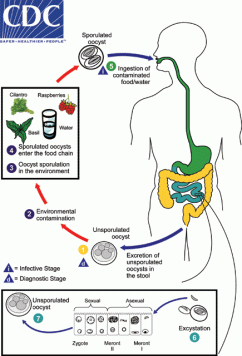
Food Poisoning Bulletin Cyclospora_LifeCycle201

The FDA has updated the basil cyclospora outbreak that has now sickened at least 205 people in 11 states. That’s an increase of 73 patients since the last update which was posted on July 25, 2019. Five people have been hospitalized because they are so sick. The basil in question is imported from Mexico by Siga Logistics de RL de CV from Morelos. That facility recalled basil on July 24, 2019.

Canada – Food Recall Warning – Rosemount brand cooked diced chicken meat recalled due to Listeria monocytogenes

CFIA CIFA

Recall details

Ottawa, August 18, 2019 – Rosemount Sales and Marketing is recalling Rosemount brand cooked diced chicken meat from the marketplace due to possible Listeria monocytogenes contamination. Consumers should not consume and distributors, retailers and food service establishments such as hotels, restaurants, cafeterias, hospitals and nursing homes should not sell or use the recalled products described below.

Recalled products

Common Name Size UPC Code(s) on Product
Cooked diced chicken meat 13 mm – ½” (#16305) 4.54 kg 2 06 20263 12454 7 PACKDATE: 01/21/19

USA -Outbreak of Listeria Infections Linked to Deli-Sliced Meats and Cheeses

Illustration with a microscope and text reading Investigation Notice

Posted April 17, 2019 at 4:30 PM ET

CDC and several states are investigating a multistate outbreak of Listeria infections linked to deli-sliced meats and cheeses. The U.S. Department of Agriculture’s Food Safety and Inspection Service and the U.S. Food and Drug Administration are monitoring the outbreak.

Latest Outbreak Information
Illustration of a megaphone.
At A Glance

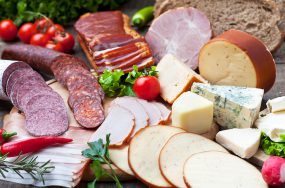
Photo of deli products.

  • A total of 8 people infected with the outbreak strain of Listeria monocytogenes have been reported from 4 states.
    • All 8 people have been hospitalized, and one death has been reported from Michigan.
  • Epidemiologic and laboratory evidence indicates that meats and cheeses sliced at deli counters might be contaminated with Listeria monocytogenes and could make people sick.
  • In interviews, ill people report eating different types and brands of products, including meats and cheeses, purchased from and sliced at deli counters in many different retail locations.
  • The outbreak strain has been identified in samples taken from meat sliced at a deli and from deli counters in multiple stores.
  • A single, common supplier of deli products has not been identified.
  • CDC is not advising that consumers avoid eating products prepared at delis, or that retailers stop selling deli-sliced products.
  • Retailers should clean and sanitize deli slicersExternal frequently and other areas where deli products are prepared, stored, or served to avoid cross contamination.
  • This outbreak is a reminder that people at higher risk for severe Listeria infection should handle deli-sliced meats and cheeses carefully to prevent illness. Pregnant women and their newborns, adults age 65 and older, and people with weakened immune systems are more likely to get sick with listeriosis.

Research – Preliminary Assessment of Visible, Near-Infrared, and Short-Wavelength–Infrared Spectroscopy with a Portable Instrument for the Detection of Staphylococcus aureus Biofilms on Surfaces

Journal of Food Protection

ABSTRACT

Bacterial biofilms constitute a major source of sanitary problems and economic losses in the food industry. Indeed, biofilm removal may require intense mechanical cleaning procedures or very high concentrations of disinfectants or both, which can be damaging to the environment and human health. This study assessed the efficacy of a technique based on spectroscopy in the visible, near-infrared, and short-wavelength infrared range for the quick detection of biofilms formed on polystyrene by the pathogenic bacterium Staphylococcus aureus. To do that, biofilms corresponding to three S. aureus strains, which differed in biofilm-forming ability and composition of the extracellular matrix, were allowed to develop for 5 or 24 h, representing an active formation stage and mature biofilms, respectively. Spectral analysis of the samples, corresponding to three biological replicates of each condition, was then performed by using a portable device. The results of these experiments showed that partial least-squares discriminant analysis of the spectral profile could discriminate between surfaces containing attached bacterial biomass and noninoculated ones. In this model, the two first principal components accounted for 39 and 19% of the variance and the estimated error rate stabilized after four components. Cross-validation accuracy of this assessment was 100%. This work lays the foundation for subsequent development of a spectroscopy-based protocol that allows biofilm detection on food industrial surfaces.

HIGHLIGHTS
  • A biofilm detection spectroscopy–based technique with a portable device was tested.

  • Staphylococcus aureus biofilms of different strengths were scanned with the device.

  • Spectral data showed correlation with crystal violet staining quantification results.

  • Data from spectral analysis was suitable for prediction of biofilm contamination.

Research – High-Intensity Light Pulses To Inactivate Salmonella Typhimurium on Mexican Chia (Salvia hispanica L.) Seeds

Journal of Food Protection

ABSTRACT

Chia seeds provide a suitable environment for microorganisms. However, it is difficult to disinfect these seeds with water and/or chemical disinfectant solutions because the mucilage in the seeds can absorb water and consequently form gels. High-intensity light pulses (HILP) is one of the most promising emerging technologies for inactivating microorganisms on surfaces, in clear liquids and beverages, and on solid foods. The aim of this work was to evaluate the effect of HILP on SalmonellaTyphimurium in culture medium (in vitro tests) and inoculated onto chia seeds (in vivo tests). HILP was effective against Salmonella Typhimurium under both conditions: 8 s of treatment (10.32 J/cm2) resulted in a 9-log reduction during in vitro tests, and 15 s of treatment (19.35 J/cm2) resulted in a 4-log reduction on the inoculated chia seeds. Salmonella Typhimurium inactivation kinetics were accurately described using the Weibull model (R2 > 0.939). These results indicate that the use of HILP for microbial inactivation on seeds could generate products suitable for human consumption.

HIGHLIGHTS
  • Decontamination of chia seeds is complex because of rapid formation of gel on the seeds.

  • HILP was effective against Salmonella Typhimurium in vitro and on chia seeds.

  • The Weibull model appropriately described Salmonella Typhimurium inactivation curves.

  • HILP is a promising emerging technology for eliminating pathogens from chia seeds.

Research – Occurrence of Escherichia coli O157:H7 in Pest Flies Captured in Leafy Greens Plots Grown Near a Beef Cattle Feedlot

Journal of Food Protection

ABSTRACT

Leafy greens are leading vehicles for Escherichia coli O157:H7 foodborne illness. Pest flies can harbor this pathogen and may disseminate it to produce. We determined the occurrence of E. coli O157:H7–positive flies in leafy greens planted up to 180 m from a cattle feedlot and assessed their relative risk to transmit this pathogen to leafy greens. The primary fly groups captured on sticky traps at the feedlot and leafy greens plots included house flies (Musca domestica L.), face flies (Musca autumnalisL.), stable flies (Stomoxys calcitrans L.), flesh flies (family Sarcophagidae), and blow flies (family Calliphoridae). E. coliO157:H7 carriage rates of house, face, flesh, and blow flies were similar (P > 0.05), ranging from 22.3 to 29.0 flies per 1,000 flies. In contrast, the carriage rate of stable flies was lower at 1.1 flies per 1,000 flies (P < 0.05). Differences in carriage rates are likely due to the uses of fresh bovine feces and manure by these different pest fly groups. E. coli O157:H7 carriage rates of total flies did not differ (P > 0.05) by distance (ranging from 0 to 180 m) from the feedlot. Most fly isolates were the same predominant pulsed-field gel electrophoresis types found in feedlot surface manure and leafy greens, suggesting a possible role for flies in transmitting E. coli O157:H7 to the leafy greens. However, further research is needed to clarify this role and to determine set-back distances between cattle production facilities and produce crops that will reduce the risk for pathogen contamination by challenging mechanisms like flies.

HIGHLIGHTS
  • E. coli O157:H7 was common in flies captured in leafy greens plots near a feedlot.

  • E. coli O157:H7 carriage rates of house, face, flesh, and blow flies were similar.

  • Stable flies had lower E. coli O157:H7 carriage than the other four fly groups.

  • E. coli O157:H7 carriage of total flies was not affected by distance up to 180 m.

  • Research is needed to determine risk for leafy green contamination by pest flies.

Research – Ultrasound treatment combined with fumaric acid for inactivating food-borne pathogens in apple juice and its mechanisms

Science Direct

Highlights

•

The combination of Ultrasound (US) and fumaric acid (FA) showed a synergistic bactericidal effect in apple juice.

•

US-FA combined treatment of apple juice did not affect quality.

•

Cell membrane damage was the main mechanism of US-FA synergistic lethal effect.

Abstract

The purpose of this study was to evaluate the synergistic bactericidal efficacy of combining ultrasound (US) and fumaric acid (FA) treatment against Escherichia coliO157:H7, Salmonella Typhimurium, and Listeria monocytogenes in apple juice and to identify the synergistic bactericidal mechanisms. Additionally, the effect of combination treatment on juice quality was determined by measuring the changes in color, pH, non-enzymatic browning index, and total phenolic content. A mixed cocktail of the three pathogens was inoculated into apple juice, followed by treatment with US (40 kHz) alone, FA (0.05, 0.1, and 0.15%) alone, and a combination of US and FA for 1, 2, 3, 4, and 5 min. Combined US and 0.15% FA treatment for 5 min achieved 5.67, 6.35, and 3.47 log reductions in E. coli O157:H7, S.Typhimurium, and L. monocytogenes, respectively, with the 1.55, 2.37, and 0.57 log CFU reductions attributed to the synergistic effect. Although the pH value slightly decreased as FA increased, there were no significant (P > 0.05) differences in color values, browning indices, and phenolic content between untreated and treated samples. To identify the mechanism of this synergistic bactericidal action, membrane integrity, malfunctions in the membrane efflux pump, and intracellular enzyme activity were measured. The analyses confirmed that damage to the cell envelope (membrane integrity and efflux pump) was strongly related to the synergistic microbial inactivation. These results suggest that simultaneous application of US treatment and FA is a novel method for ensuring the microbial safety of apple juice.

Research – Whole Genome Sequencing Characterization of Shiga Toxin–Producing Escherichia coli Isolated from Flour from Swiss Retail Markets

Journal of Food Protection

ABSTRACT

Shiga toxin–producing Escherichia coli (STEC) strains are often found in food and cause human infections. Although STEC O157:H7 is most often responsible for human disease, various non-O157 subtypes have caused individual human infections or outbreaks. The importance of STEC serogroup typing is decreasing while detection of virulence gene patterns has become more relevant. Whole genome sequencing (WGS) reveals the entire spectrum of pathogen information, such as toxin variant, serotype, sequence type, and virulence factors. Flour has not been considered as a vector for STEC; however, this product has been associated with several STEC outbreaks in the last decade. Flour is a natural product, and milling does not include a germ-reducing step. Flour is rarely eaten raw, but the risks associated with the consumption of unbaked dough are probably underestimated. The aim of this study was to determine the prevalence of STEC in flour samples (n = 93) collected from Swiss markets and to fully characterize the isolates by PCR assay and WGS. The prevalence of STEC in these flour samples was 10.8% as indicated by PCR, and a total of 10 STEC strains were isolated (two flour samples were positive for two STEC subtypes). We found one stx2-positve STEC isolate belonging to the classic serogroups frequently associated with outbreaks that could potentially cause severe disease. However, we also found several other common or less common STEC subtypes with diverse virulence patterns. Our results reveal the benefits of WGS as a characterization tool and that flour is a potentially and probably underestimated source for STEC infections in humans.

HIGHLIGHTS
  • Several STEC serotypes, including O26, were isolated from 8 (8.6%) of 93 flour samples.

  • STEC isolates from flour had a variety of virulence patterns.

  • Flour is a probably underestimated source of STEC infections in humans.

  • WGS for STEC characterization is more comprehensive than common serotyping.