Category Archives: Uncategorized

Norway – Norway norovirus outbreaks linked to seaweed salad from China

Food Safety News

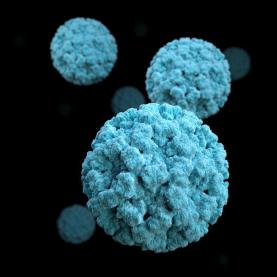
More than 100 people have fallen ill in Norway from norovirus likely in a frozen seaweed salad from China.

The first outbreak of norovirus suspected to be linked to the seaweed salad occurred in mid-June and the most recent was at the beginning of August. The implicated product was also shipped to Denmark.

“It is suspected that seaweed from China was the cause of more than 100 cases of gastroenteritis from at least 11 eateries in different areas of Norway. Most of the outbreaks were in June and July this year. Investigations are still ongoing. Norovirus was detected in patients from at least two of these eateries,” Guri Aanderud, senior adviser in the seafood section at the Norwegian Food Safety Authority (Mattilsynet) told Food Safety News.

CDC – Food Safety Education Month

CDC people at risk poster

September is National Food Safety Education Month. Learn how to be a food safety superhero! Take steps to help prevent food poisoning, and show others how to keep food safe.

Every year, an estimated 1 in 6 Americans (or 48 million people) get sick, 128,000 are hospitalized, and 3,000 die from eating contaminated food. Anyone can get sick from a foodborne illness (also called food poisoning). But some groups of people are more likely to get sick and to have a more serious illness. These groups are:

  • Children younger than 5
  • Adults aged 65 and older
  • People with health problems or who take medicines that lower the body’s ability to fight germs and sickness
  • Pregnant women

There are things you can do to protect yourself and your family. As you prepare and handle food, follow these four steps:

  • Clean: Wash your hands, utensils, and surfaces often when you cook.
  • Separate: Raw meat, poultry, seafood, and eggs can spread germs. Separate them from cooked food and fresh produce.
  • Cook: Use a food thermometer to make sure foods are cooked to an internal temperature that kills germs.
  • Chill: Refrigerate perishable foodsexternal icon and leftovers within two hours. Chill within one hour if it’s above 90°F.

Join us in sharing information about the four steps to food safety. Let’s make sure everyone knows how to protect themselves and their loved ones from food poisoning.

Food Safety Education Month Materials

New and Updated Resources

Information on Food Safety

USA – Hepatitis A in Food Worker at Cracker Barrel in Bridgeport, MI

Food Poisoning Bulletin

A food worker at the Cracker Barrel Restaurant and Old County Store at 6450 Dixie Highway in Bridgeport, Michigan has been diagnosed with hepatitis A, according to the Saginaw County Health Department. That person worked there from August 25 through August 28, 2019. Anyone who visited that facility during that time frame may have been exposed to the virus.

Research – Inactivation of Staphylococcus aureus Biofilms on Food Contact Surfaces by Superheated Steam Treatment

Journal of Food Protection Staph

ABSTRACT

The objective of this study was to compare the inactivation efficacy of saturated steam (SS) and superheated steam (SHS) on Staphylococcus aureus biofilms on food contact surfaces, including type 304 stainless steel coupons with No. 4 finish (STS No. 4), type 304 stainless steel coupons with 2B finish (STS 2B), high-density polyethylene (HDPE), and polypropylene (PP). In addition, the effects of the surface characteristics on the inactivation efficacy were evaluated. Biofilms were formed on each food contact coupon surface using a three-strain cocktail of S. aureus. Five-day-old biofilms on STS No. 4, STS 2B, HDPE, and PP coupons were treated with SS at 100°C and SHS at 125 and 150°C for 2, 4, 7, 10, 15, and 20 s. Among all coupon types, SHS was more effective than SS in inactivating the S. aureus biofilms. S. aureus biofilms on steel coupons were more susceptible to most SS and SHS treatments than the biofilms on plastic coupons. S. aureus biofilms on HDPE and PP coupons were reduced by 4.00 and 5.22 log CFU per coupon, respectively, after SS treatment (100°C) for 20 s. SS treatment for 20 s reduced the amount of S. aureus biofilm on STS No. 4 and STS 2B coupons to below the detection limit. With SHS treatment (150°C), S. aureus biofilms on HDPE and PP needed 15 s to be inactivated to below the detection limit, while steel coupons only needed 10 s. The results of this study suggest that SHS treatment has potential as a biofilm control intervention for the food industry.

HIGHLIGHTS
  • SHS was more effective than SS for inactivating biofilm cells of S. aureus.

  • Biofilms on steel coupons were more susceptible than those on plastic coupons.

  • The thermal conductivity of the coupon was an important factor in SHS treatment.

  • Biofilm; Saturated steam; Staphylococcus aureus; Superheated steam

Research -The combined effect of high pressure processing and dimethyl dicarbonate to inactivate foodborne pathogens in apple juice

Research Gate

Novel processing technologies can be used to improve both the microbiological safety and quality of food products. The application of high pressure processing (HPP) in combination with dimethyl dicarbonate (DMDC) represents a promising alternative to classical thermal technologies. This research work was undertaken to investigate the combined effect of HPP and DMDC, which was aimed at reaching over 5-log reduction in the reference pathogens Escherichia coli O157:H7, Salmonella enterica, and Listeria monocytogenes inoculated in apple juice. Different strains of each species were tested. The pressure (ranging from 100 to 600 MPa), dwell time (from 26 to 194 s), and DMDC (from 116 to 250 mg/L) were tested based on a central composite rotatable design. The dwell time, in the studied range, did not have a significant effect (p > 0.1) on the pathogens´ reduction. All treatments achieved a greater than 5-log reduction for E. coli O157:H7 and L. monocytogenes. The reductions for S. enterica were also greater than 5-log for almost all tested combinations. The results for S. enterica suggested that it is more resistant to HPP and DMDC compared with E. coli O157:H7 and L. monocytogenes. The findings of this study showed that DMDC at low concentrations can be added to apple juice to reduce the parameters conventionally applied in HPP. The combined use of HPP and DMDC was highly effective under the conditions of this study.

USA -Campylobacter Illness Associated with Bad Farms PA Raw Milk

Food Poison Bulletin


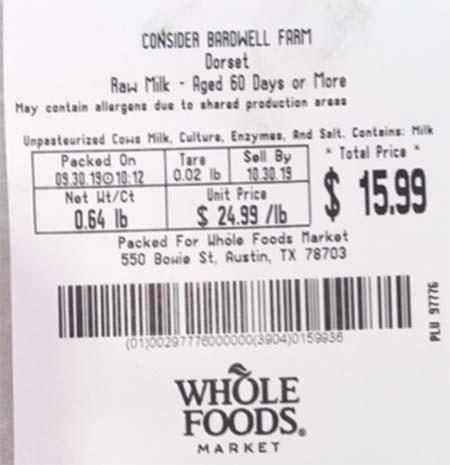
One person is sick with a Campylobacter infection after allegedly drinking raw whole milk from BAD FARMS in Kempton, Pennsylvania, according to news reports. That farm is located in Berks County, Pennsylvania. The milk has been recalled and removed from store shelves.

USA – 4 with Salmonella from Outpost Natural Food locations in Wisconsin

Food Poison Journal

The Wisconsin Department of Health Services (DHS) and local health departments are investigating an outbreak of salmonellosis linked to consuming food from Outpost Natural Food locations.

On August 23, 2019, the Wisconsin Department of Agriculture, Trade and Consumer Protection (DATCP) and the City of Milwaukee Health Department suspended meat and food processing at Outpost Natural Foods(link is external) located in Milwaukee at 2826 S. Kinnickinnic Ave. due to insanitary conditions. DATCP has suspended the cooperative’s meat establishment license and the City of Milwaukee has suspended the cooperative’s retail food processing activities.

Insanitary conditions were discovered during a routine inspection and ready-to-eat products tested positive for Salmonella.

USA – FDA alerts public about Listeria, Salmonella in some raw pet food

Food Safety News

Consumers should not feed their pets certain Aunt Jeni’s frozen raw pet foods because samples have tested positive for Listeria, which can cause life-threatening illness in humans. The food has also tested positive for Salmonella.

In a public alert this afternoon, the Food and Drug Administration said the implicated raw pet food poses a “serious threat” to human and animal health. People who handle the pet food can become infected. Cross contamination of countertops and other surfaces, as well as pet bowls and utensils, can also transfer the bacteria to people and pets. 

To determine whether they have the implicated pet food in their homes consumers should look for the following label information:

Aunt Jeni’s Home Made, Turkey Dinner Dog Food, 5 lb (2.3kg), lot 175199 JUL2020

Aunt Jeni’s Home Made, Chicken Dinner Dog Food, 5 lb (2.3kg), lot 1152013 JUL2020.

If you have any of the affected Aunt Jeni’s Home Made products, throw them away, the FDA alert says.

USA – Outbreaks of Salmonella Infections Linked to Backyard Poultry

CDC

Latest Outbreak Information
Illustration of a megaphone.
At A Glance
  • Reported Cases: 1003
  • States: 49
  • Hospitalizations: 175
  • Deaths: 2

Infographic with baby chickens on it reading Always wash your hands after handling live poultry.

  • Since the last update on July 19, 2019, illnesses in an additional 235 people and one state have been added to this investigation.
  • A total of 1003 people infected with the outbreak strains of Salmonella have been reported from 49 states.
    • Of 605 people with hospitalization information available, 175 (29%) have been hospitalized. Two deaths have been reported, one from Texas and one from Ohio.
    • Of 850 ill people with age information available, 192 (23%) are children younger than 5 years.
  • Epidemiologic and laboratory evidence indicate that contact with backyard poultry, such as chicks and ducklings, from multiple hatcheries are the likely source of these outbreaks.
    • In interviews, 343 (67%) of 511 ill people reported contact with chicks or ducklings.
    • People reported getting chicks and ducklings from several sources, including agricultural stores, websites, and hatcheries.
    • Six of the outbreak strains making people sick have been identified in samples collected from backyard poultry environments at people’s homes in California, Minnesota and Ohio and from poultry environments at retail stores in Michigan and Oregon.
  • Poultry can carry Salmonella germs that can make people sick. Backyard poultry owners should always follow steps to stay healthy around their poultry.

Spain – Spain Listeria outbreak: More than 200 cases, 3 deaths

Outbreak News Today

In a follow-up on the listeriosis outbreak in Spain associated with the consumption of roasted pork meat, Spanish health officials report (computer translated) an additional 29 cases, bringing the total to 204.

Andalusia, in southern Spain has reported the bulk of the cases with 197, with most of the cases in this community reported from Seville (162).

Of the patients confirmed in Andalusia, 58 percent presented symptoms compatible with acute gastroenteritis, 47% presented with fever, 10% (19) developed meningeal forms and four patients had sepsis.

Three fatalities have been reported to date–two people over 70 with serious comorbidities and a person over 90 years old.

In the rest of the Autonomous Communities, 4 laboratory confirmed cases have been registered (1 in Aragón, 1 in Castilla y León, 1 in Extremadura and 1 pregnant woman of 8 weeks in Madrid who lost the baby) and 3 cases confirmed by epidemiological link (1 in Extremadura and 2 in Aragon).