Category Archives: Uncategorized

Canada – Food Recall Warning – Certain The Deli-Shop brand Pâtés recalled due to Listeria monocytogenes

CFIA

The Deli-Shop: Country-style Pâté - Cognac -150 g

Recall details

Ottawa, August 30, 2019 – Les Spécialités Prodal (1975) Ltée is recalling certain The Deli-Shop brand Pâtés from the marketplace due to possible Listeria monocytogenes contamination. Consumers should not consume the recalled products described below.

Recalled products

Brand Name Common Name Size UPC Code(s) on Product
The Deli-Shop Country-style Pâté – Cognac 150 g 0 59749 95188 3 2019SE26
The Deli-Shop Country-style Pâté – Pepper 150 g 0 59749 95189 0 2019SE26
The Deli-Shop Country-style Pâté – Old Fashioned 150 g 0 59749 95187 6 2019SE26
The Deli-Shop Liver Pâté – Fine Herbs 150 g 0 59749 95191 3 2019SE26
The Deli-Shop Liver Pâté – Garlic 150 g 0 59749 95190 6 2019SE26
The Deli-Shop Liver Pâté – Old Fashioned 150 g 0 59749 95192 0 2019SE26

UK – Duck egg warning after Doncaster man dies of Salmonella

BBC News

The family of a man who died of salmonella has warned about eating duck eggs.

Niptoon Tavakoli’s family said he fell ill after consuming duck eggs bought at a village fair.

There has been a second case of salmonella involving someone who also said they ate duck eggs from the same farm – although this has not been confirmed as the source of infection.

The supplier of the eggs believes the salmonella came from elsewhere.

Mr Tavakoli’s sister-in-law Donna Martin said: “We just want to try and make people aware, if you buy duck eggs, please cook them thoroughly.

“We would never want another family to go through what we have.”

She “strongly believes” Mr Tavakoli, of Lindholme, Doncaster, contracted salmonella from duck eggs he bought at the Messingham Show in North Lincolnshire on Sunday 2 June.

USA – Mountain Mel’s Essential Goods, LLC Recalls The Milk Lady’s Herbal Tea Blend, Peaceful Baby Herbal Tea Blend, and Diges-teas Herbal Tea Blend, Because of Possible Health Risk – Salmonella

FDA

Mountain Mel’s Essential Goods, LLC of Welches, OR is recalling The Milk Lady’s Tea with LOT # ML6271950, Peaceful Baby Herbal Tea with LOT # PB781950, and Diges-Teas Herbal Tea with LOT # DT7619100, because it has the potential to be contaminated with Salmonella, an organism which can cause serious and sometimes fatal infections in young children, frail or elderly people, and others with weakened immune systems. Healthy persons infected with Salmonella often experience fever, diarrhea (which may be bloody), nausea, vomiting and abdominal pain. In rare circumstances, infection with Salmonellacan result in the organism getting into the bloodstream and producing more severe illnesses such as arterial infections (i.e., infected aneurysms), endocarditis and arthritis.

The Milk Lady’s, Peaceful Baby, and Diges-Teas were distributed in Oregon and Washington through New Seasons Market, and nationwide through Azure Standard, Mountainmels.com and Amazon.com. The affected tea products were distributed by Mountain Mel’s Essential Goods June 27, 2019 and July 20, 2019.

The Milk Lady’s Herbal Tea Blend, UPC 7 99632 05658 4, is packaged in a tall thin tin container with 2 oz of tea per tin, with a purple label. The LOT# of the recalled batch is # ML6271950. The LOT# can be located on the bottom of the tin package. The Best By Date of the Milk Lady’s Tea is listed as 7/2021.

Peaceful Baby Herbal Tea Blend, UPC 7 99632 05656 0, is packaged in a tall thin tin container with 2 oz of tea per tin, with a blue label. The LOT# of the recalled batch is #PB781950. The LOT# can be located on the bottom of the tin package. The Best By Date of the Peaceful Baby Tea is listed as 7/2021.

Diges-Teas Herbal Tea Blend, UPC 7 99632 05665 2, is packaged in a tall thin tin container with 2 oz of tea per tin, with a brown label. The LOT# of the recalled batch is #DT7619100. The LOT# can be located on the bottom of the tin package. The Best By Date of the Diges-Teas Herbal Tea is listed as 7/2021.

No illnesses have been reported to date.

This recall was initiated because the herbal teas were made with the recalled fennel seed whole that was supplied and recalled by Mountain Rose Herbs in Oregon. Mountain Mel’s Essential Goods has ceased production and distribution of this product as of July 20, 2019.

This recall is being made with the knowledge of the U.S. Food and Drug Administration.

Consumers who have purchased Mountain Mel’s The Milk Lady’s Tea with LOT # ML6271950, Peaceful Baby Herbal Tea with LOT # PB781950, and/or Diges-Teas Herbal Tea with LOT # DT7619100 are urged to take a photo of the product and lot label, email that to info@mountainmels.com for a full refund.

Consumers with further questions may contact Mountain Mel’s via email at info@mountainmels.com.

Research – Listeria monocytogenes in dairy plants in Southern Brazil: Occurrence, virulence potential, and genetic diversity

Wiley Online

Abstract

Listeria monocytogenes is a foodborne pathogen widely distributed in nature. The aims of this study were to evaluate the occurrence of Listeria spp. in three dairy plants located in Southern Brazil, and to characterize the Lmonocytogenes isolates according to serotypes, virulence genes, and PFGE. A total of 212 samples were collected, and 15 were positive for Listeria spp., of which seven were LmonocytogenesLmonocytogenes isolates harbored all the 11 virulence genes evaluated and belonged to the main virulent serotypes, indicating potential risks of listeriosis for consumers. The PFGE analysis indicated low genetic diversity among the isolates, and the same pulsotypes were detected in a 2‐month period, indicating persistence of Lmonocytogenes.

Practical applications

The study evaluated the occurrence of Listeria spp. in three dairy plants located in Southern Brazil, as well as characterized the L. monocytogenes isolates according to serotypes, virulence genes and PFGE. The presence of Listeria species indicated postprocessing contamination in the dairy plants and threat to public health. Furthermore, the isolates showed a low genetic diversity, since only two pulsotypes were identified, highlighting the strain’s persistence in the processing environment and/or the presence of clones in this region.

Supporting Information

Research – Changes detected in the genome sequences of Escherichia coli, Listeria monocytogenes, Vibrio parahaemolyticus, and Salmonella enterica after serial subculturing

Canadian Science Publishing

Whole genome sequencing (WGS) is rapidly replacing other molecular techniques for identifying and subtyping bacterial isolates. The resolution or discrimination offered by WGS is significantly higher than that offered by other molecular techniques, and WGS readily allows infrequent differences that occur between 2 closely related strains to be found. In this investigation, WGS was used to identify the changes that occurred in the genomes of 13 strains of bacterial foodborne pathogens after 100 serial subcultures. Pure cultures of Shiga-toxin-producing Escherichia coliSalmonella entericaListeria monocytogenes, and Vibrio parahaemolyticus were subcultured daily for 100 successive days. The 1st and 100th subcultures were whole-genome sequenced using short-read sequencing. Single nucleotide polymorphisms (SNPs) were identified between the 1st and final culture using 2 different approaches, and multilocus sequence typing of the whole genome was also performed to detect any changes at the allelic level. The number of observed genomic changes varied by strain, species, and the SNP caller used. This study provides insight into the genomic variation that can be detected using next-generation sequencing and analysis methods after repeated subculturing of 4 important bacterial pathogens.

Research – Assessment of the bioprotective potential of lactic acid bacteria against Listeria monocytogenes on vacuum-packed cold-smoked salmon stored at 8 °C.

Science Direct

Abstract

Smoked salmon is a highly appreciated delicatessen product. Nevertheless, this ready-to-eat (RTE) product is considered at risk for Listeria monocytogenes, due to both the prevalence and growth potential of this bacteria on the product. Biopreservation may be considered a mild and natural effective strategy for minimizing this risk. In this study, we evaluated the following three potential bioprotective lactic acid bacterial strains against L. monocytogenes in three smoked salmon types with different physicochemical characteristics, primarily fat, moisture, phenol and acid acetic content: two bacteriocin-like producers that were isolated from smoked salmon and identified as Lactobacillus curvatus and Carnobacterium maltaromaticum and a recognized bioprotective bacteriocin producer from meat origin, Lactobacillus sakei CTC494. L. sakei CTC494 inhibited the growth of L. monocytogenes after 21 days of storage at 8 °C in all the products tested, whereas L. curvatus CTC1742 only limited the growth of the pathogen (<2 log increase). The effectiveness of C. maltaromaticum CTC1741 was dependent on the product type; this strain limited the growth of the pathogen in only one smoked salmon type.

These results suggest that the meat-borne starter culture, L. sakei CTC494, may potentially be used as a bioprotective culture to improve the food safety of cold-smoked salmon.

Research -Adaptation to life in cattle may be driving E. coli to develop harmful features

Science Daily

A large-scale study of the genetic differences and similarities among E. coli bacteria from cattle and humans indicates that features causing food poisoning in humans may continuously be emerging in bacteria from cattle as a means to better adapt to their environment.

While E. coli bacteria are one of the most well-known causes of food poisoning, a wide variety of E. coli strains exists, many of which are harmless, permanent residents of our intestines. However, the ingestion of harmful strains of E. coli on contaminated food can lead to severe illness, vomiting, and diarrhea.

“To develop the most effective preventive measures, we need a deep understanding of the source and living conditions of the bacteria,” says Yoshitoshi Ogura, associate professor at Kyushu University’s Department of Bacteriology, who led the research.

“Although cattle have long been thought to be a main source of E. coli that cause food poisoning, why dangerous forms would keep appearing in cattle has been unclear.”

Ogura’s group, in collaboration with researchers across Japan and in France, Belgium, and the United States, set out to help answer this question by investigating the genetics of E. coli bacteria collected from cattle and humans in 21 countries spanning six continents.

“To date, there have been only a limited number of reports of the genome sequences of E. coli from cattle, so we needed to fill that gap,” comments Yoko Arimizu, first author on the paper in Genome Research announcing the new results.

While the largest number of samples was from Japan, strains from other regions exhibited characteristics that were well distributed among those from Japan, indicating a good diversity of the set of samples.

Based on the genetic features of the bacteria, the researchers could generally separate the different strains of E. coli into two groups, with one primarily consisting of bacteria collected from humans and the other of those from cattle.

Applying the same analysis to clinically obtained E. coli that are known to cause illness, the researchers found that most of the strains causing intestinal problems belonged to the group associated with cattle.

Furthermore, many of the samples from cattle exhibited features similar to those causing food poisoning, such as the production of Shiga toxin. While these features generally appear not to cause illness in cattle, their prevalence in the investigated samples suggests that such characteristics are beneficial for life in a cattle’s intestine.

“As long as there is pressure to maintain or strengthen these illness-producing characteristics to better adapt to living in a cattle’s intestine, new variants of E. coli that cause food poisoning are likely to continue appearing,” states Ogura.

The researchers speculate that these characteristics may help E. coli protect itself from bacteria-eating organisms present in cattle intestines, but more work is needed to identify the exact reason.

USA – Human Salmonella Illnesses linked to Pig Ears hits 143 in 25 States

Food Poison Journal kswfoodworld salmonella

As of August 26, 2019, a total of 143 people infected with the outbreak strains of Salmonella have been reported from 35 states. A list of the states and the number of cases in each can be found on the Map of Reported Cases page.

Illnesses started on dates ranging from June 10, 2015 to July 30, 2019. Ill people range in age from less than 1 year to 90 years, with a median age of 39 years. Sixty (46%) ill people are female. Of 110 ill people with information available, 33 (30%) have been hospitalized. No deaths have been reported.

USA – Listeria Warning: Consumers Advised to Avoid Unsealed Food from We Share Hope

Food Poison Journal

The Rhode Island Department of Health (RIDOH) is advising consumers to avoid eating food products that are not commercially sealed from We Share Hope of Warren and East Providence, RI because it has the potential to be contaminated with Listeria monocytogenes.

Various food products were distributed to soup kitchens and food pantries in Rhode Island and possibly other states or may have been purchased at the We Share Hope facility at 624 Main Street, Warren. No one should purchase or obtain food from the Warren or East Providence facilities until further notice. These products were distributed from a facility that previously had environmental samples that tested positive for Listeria monocytogenes. At this time, there have not been any reports of illnesses associated with these products.

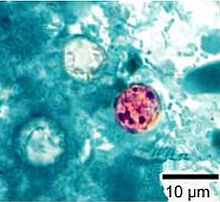
USA – “Cyclosporapocalypse” sickens 1,696 in 33 States in 2019

Food Poison Journal Cyclospora_LifeCycle201

The number of reported cases of domestically acquired cyclosporiasis has increased from the previous month and remains elevated in the United States since May 1, 2019.

As of August 28, 2019, 1,696 laboratory-confirmed cases of cyclosporiasis were reported to CDC by 33 states, District of Columbia and New York City in people who became ill since May 1, 2019 and who had no history of international travel during the 14-day period before illness onset.