Category Archives: Uncategorized

Research – Determination of Histamine in Japanese Spanish Mackerel (Scomberomorus niphonius) Meat Implicated in a Foodborne Poisoning

Journal of Food Protection

ABSTRACT

An incident of foodborne poisoning causing illness in seven victims due to ingestion of fried Japanese Spanish mackerel (JS mackerel; Scomberomorus niphonius) meat occurred in September 2014 in Hualien County, eastern Taiwan. Of the two suspected fish meats, one raw sample contained 3,318 ppm of histamine and one fried sample contained 1,906 ppm of histamine, levels which are greater than the potential hazard action level (500 ppm) in most illness cases. Given the allergy-like symptoms of the victims and the high histamine content in the suspected fish samples, this foodborne poisoning was strongly suspected to be caused by histamine intoxication. In addition, five histamine-producing bacterial strains isolated from suspected raw fish samples, capable of producing 152 to 1,020 ppm of histamine in Trypticase soy broth supplemented with 1.0% l-histidine, were identified as Hafnia alvei (one strain), Enterobacter aerogenes (two strains), Raoultella ornithinolytica (one strain), and Morganella morganii (one strain) by 16S rDNA sequencing with PCR amplification. Moreover, 12 raw fish samples and 39 fried fish samples from retail stores were collected and tested to determine the occurrence of histamine. Two of 12 commercial raw fish samples (16.7%) had histamine levels greater than the U.S. Food and Drug Administration guideline for decomposition of 50 ppm for scombroid fish or product or a combination of both. To our knowledge, this is the first report in Taiwan to demonstrate that the JS mackerel meat products could cause histamine intoxication.

HIGHLIGHTS
  • To our knowledge, this is the first report in Taiwan that JS mackerel causes histamine intoxication.

  • High histamine (>1,900 ppm) content found in both suspected fish samples.

  • Four prolific histamine-forming isolates produce >541 ppm of histamine in TSBH.

  • Higher levels of histamine, APC, TVBN, and coliforms found in some commercial fish samples.
China -168 kindergarteners hit by possible Salmonella

NCTY News

Doctors in Kunming, Southwest China‘s Yunnan Province join an exercise of emergent school food safety incidents with students. Photo: VCG

A total of 168 children were sent to hospital with possible Salmonella food poisoning in Dongguan, Guangdong Province prompting health authorities to shut down a kindergarten on Monday for two days.

One hundred and three people, including 99 children, remained in hospitals in the city and neighboring Shenzhen, according to statements released by the Dongguan Health Bureau.

Nobody died or was critically ill as of Sunday midnight, the bureau said.

Research – Your energy-efficient washing machine could be harbouring pathogens

Science Daily 

For the first time ever, investigators have identified a washing machine as a reservoir of multidrug-resistant pathogens. The pathogens, a single clone of Klebsiella oxytoca, were transmitted repeatedly to newborns in a neonatal intensive care unit at a German children’s hospital. The transmission was stopped only when the washing machine was removed from the hospital. The research is published this week in Applied and Environmental Microbiology, a journal of the American Society for Microbiology.

Spain -Owners of food company responsible for Spain’s worst ever listeriosis outbreak arrested for manslaughter

ELPAIS

The owners of the food company responsible for the worst-ever listeriosis outbreak in Spain were arrested on Wednesday for manslaughter. Since August, the outbreak has killed three people, caused seven miscarriages, and infected more than 200 people. The source of the bacterial infection was traced to a Seville-based company called Magrudis, which sold a contaminated pork loin product called carne mechada under the brand name La Mechá. Three more products produced by the company also tested positive for Listeria monocytogenes.

The owners of Magrudis, José Antonio Marín Pince and his two children Sandro and Mario, have been accused, to different degrees, of involuntary manslaughter, crimes against health and causing injury to a fetus.

Sweden – Cherry tomatoes may be lined to Salmonella outbreaks in Sweden

Barfblog cherry-tomato-pristine-variety

SVT reports people have been sick with diarrhea between August 29 and September 14 with Salmonella Typhimurium. Anders Enocksson, infection prevention consultant at Region Halland.

In all, 11 counties are affected. Most cases are in Halland together with Dalarna, Jönköping and Västra Götaland, which P4 Halland was the first to tell . The infected are in all age groups, but just over half are 60 years or older. There are slightly more women than men.

The source of infection is not yet known, but there is suspicion of tomatoes, and cherry tomatoes.

Canada -Various cooked diced chicken meat products recalled due to Listeria monocytogenes

CFIA

Recall details

Ottawa, September 27, 2019 – Industry is recalling various cooked diced chicken meat products from the marketplace due to possible Listeria monocytogenes contamination. Consumers should not consume and distributors, retailers and food service establishments such as hotels, restaurants, cafeterias, hospitals and nursing homes should not sell or use the recalled products described below.

Recalled products

Brand Name Common Name Size UPC Code(s) on Product
Tip Top Poultry, Inc. Cooked Chicken Meat, Natural Proportion (1/2″ Diced) (#15332) 13.64 kg 90763572153323 PACK DATE 07/29/19
Reuven International, Ltd. Cooked Chicken Meat (Diced) (#16307) 4.54 kg 90763572163070 PACK DATE 07/29/19
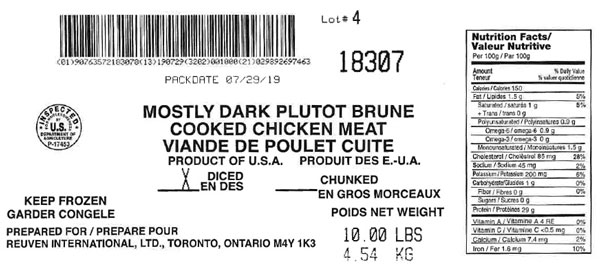
Reuven International, Ltd. Mostly Dark Cooked Chicken Meat (Diced) (#18307) 4.54 kg 90763572183078 PACK DATE 07/29/19
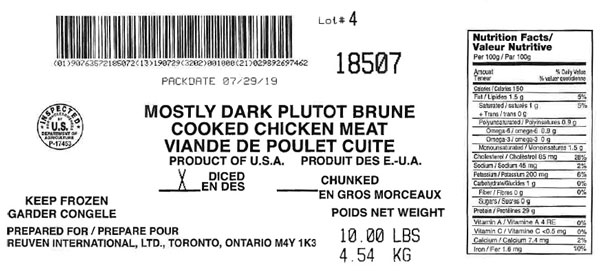
Reuven International, Ltd. Mostly Dark Cooked Chicken Meat (Diced) (#18507) 4.54 kg 90763572185072 PACK DATE 07/29/19
Sysco ½” Cooked Diced Chicken (#16385) 4.54 kg 000 74865 54485 6 PACK DATE 07/29/19
Sysco ½” Mostly Dark Cooked Diced Chicken (#18385) 4.54 kg 007 34730 08984 3 PACK DATE 07/29/19
AlimPlus Inc. Cooked Diced Chicken Meat – 13 mm – ½” (#16338) 4 kg 90763572163384 PACK DATE 07/29/19

What you should do

If you think you became sick from consuming a recalled product, call your doctor.

Check to see if you have the recalled products in your home. Recalled products should be thrown out or returned to the store where they were purchased.

Food contaminated with Listeria monocytogenes may not look or smell spoiled but can still make you sick. Symptoms can include vomiting, nausea, persistent fever, muscle aches, severe headache and neck stiffness. Pregnant women, the elderly and people with weakened immune systems are particularly at risk. Although infected pregnant women may experience only mild, flu-like symptoms, the infection can lead to premature delivery, infection of the newborn or even stillbirth. In severe cases of illness, people may die.

Background

This recall was triggered by Canadian Food Inspection Agency (CFIA) test results. The CFIA is conducting a food safety investigation, which may lead to the recall of other products. If other high-risk products are recalled, the CFIA will notify the public through updated Food Recall Warnings.

The CFIA is verifying that industry is removing the recalled products from the marketplace.

Illnesses

There have been no reported illnesses associated with the consumption of these products.

Product photos

Printer ready version of photos

  • Tip Top Poultry, Inc. Cooked Chicken Meat, Natural Proportion (1/2" Diced) (#15332) – 13.64 kg
  • Reuven International, Ltd. Cooked Chicken Meat (Diced) (#16307) – 4.54 kg
  • Reuven International Ltd., Mostly Dark Cooked Chicken Meat (Diced) (#18307) – 4.54 kg
  • Reuven International, Ltd. Mostly Dark Cooked Chicken Meat (Diced) (#18507) – 4.54 kg
  • Sysco ½" Cooked Diced Chicken (#16385) – 4.54 kg
  • Sysco ½" Mostly Dark Cooked Diced Chicken (#18385) – 4.54 kg

USA -FDA Cautions Pet Owners Not to Feed Performance Dog Raw Pet Food Due to Salmonella, Listeria monocytogenes

FDA

Fast Facts

  • The U.S. Food and Drug Administration (FDA) is cautioning pet owners not to feed their pets any Performance Dog frozen raw pet food after a sample tested positive for Salmonella and Listeria monocytogenes (L. mono).
  • Two samples of different finished products collected during an inspection of Bravo Packing, Inc., the manufacturer of Performance Dog raw pet food, tested positive for Salmonella and/or L. mono. One of the products sampled had not yet been distributed.
  • The product that entered the marketplace is Performance Dog raw pet food, lot code 072219, sold to customers frozen in two-pound pouches.  However, the FDA is cautioning about all Performance Dog frozen raw pet food produced on or after July 22, 2019 because the products do not have lot codes printed on retail packaging. If you have any Performance Dog product that you purchased after July 22, 2019, throw it away.
  • FDA is issuing this alert because Performance Dog raw pet food represents a serious threat to human and animal health. Because these products are sold and stored frozen, FDA is concerned that people may still have them in their possession.
  • Salmonella and L. mono can affect both human and animal health. People with symptoms of Salmonella or L. mono infection should consult their health care providers. Consult a veterinarian if your pet has symptoms of Salmonella or L. mono infection.

Canada -Metro brand deli trays recalled due to Listeria monocytogenes

CFIA

Recall details

Ottawa, September 27, 2019 – Metro Ontario Inc. is recalling Metro brand deli trays from the marketplace due to possible Listeria monocytogenes contamination. Consumers should not consume the recalled products described below.

Recalled products

Brand Name Common Name Size UPC Code(s) on Product
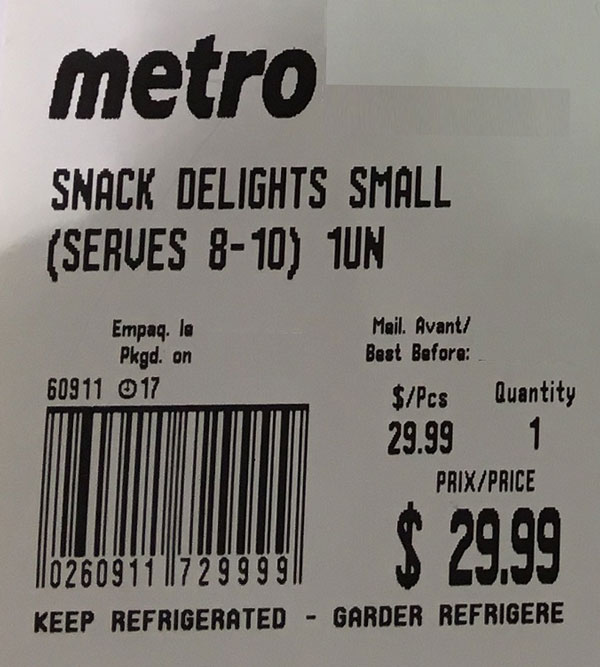
Metro Snack Delights Small (serves 8-10) 1un 1 count 0260911 729999 All Best Before dates up to and including 2019.SE28
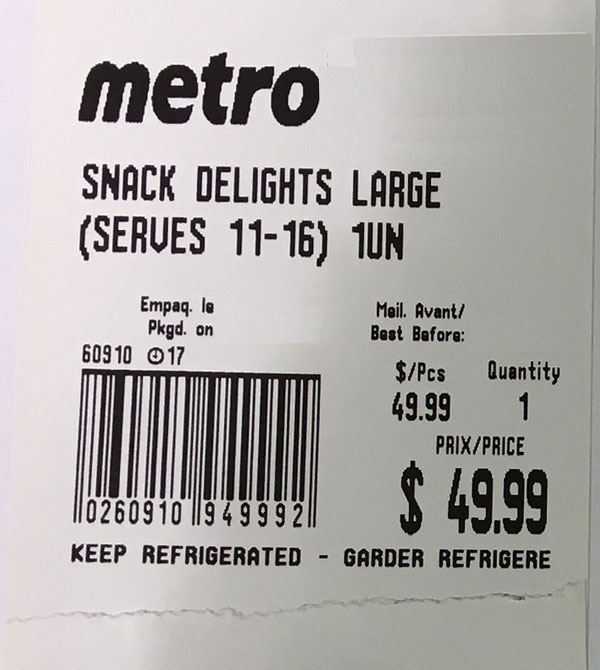
Metro Snack Delights Large (serves 11-16) 1un 1 count 0260910 949992 All Best Before dates up to and including 2019.SE28
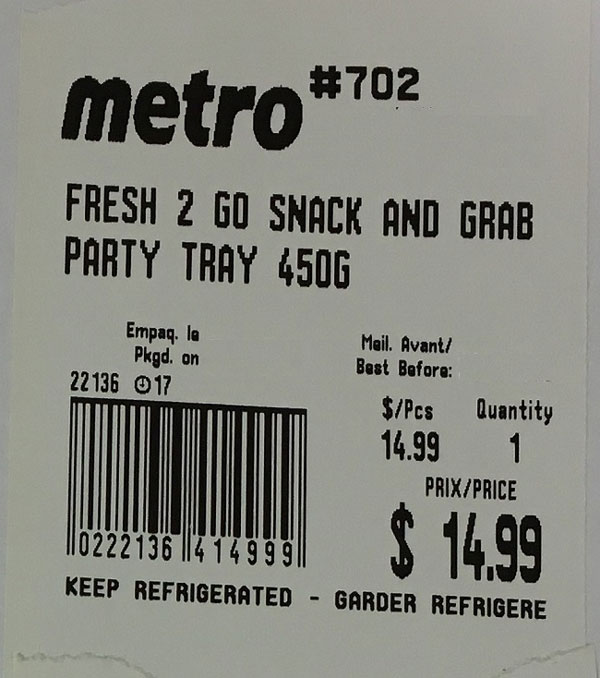
Metro Fresh 2 Go Snack and Grab Party Tray 450 g 1 count 0222136 414999 All Best Before dates up to and including 2019.OC02
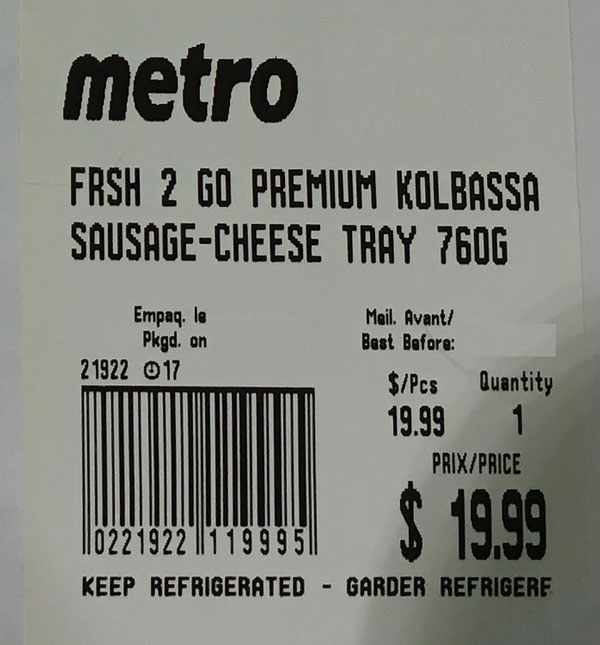
Metro Frsh 2 Go Premium Kolbassa Sausage-Cheese Tray 760 g 1 count 0221922 119995 All Best Before dates up to and including 2019.OC02

What you should do

If you think you became sick from consuming a recalled product, call your doctor.

Check to see if you have the recalled products in your home. Recalled products should be thrown out or returned to the store where they were purchased.

Food contaminated with Listeria monocytogenes may not look or smell spoiled but can still make you sick. Symptoms can include vomiting, nausea, persistent fever, muscle aches, severe headache and neck stiffness. Pregnant women, the elderly and people with weakened immune systems are particularly at risk. Although infected pregnant women may experience only mild, flu-like symptoms, the infection can lead to premature delivery, infection of the newborn or even stillbirth. In severe cases of illness, people may die.

Background

This recall was triggered by Canadian Food Inspection Agency (CFIA) test results. The CFIA is conducting a food safety investigation, which may lead to the recall of other products. If other high-risk products are recalled, the CFIA will notify the public through updated Food Recall Warnings.

The CFIA is verifying that industry is removing the recalled products from the marketplace.

Illnesses

There have been no reported illnesses associated with the consumption of these products.

Product photos

Printer ready version of photos

  • Metro Snack Delights Large – 1un
  • Metro Fresh 2 Go Snack and Grab Party Tray – 450 grams
  • Metro Snack Delights Small – 1un
  • Metro Frsh 2 Go Premium Kolbassa Sausage-Cheese Tray – 760 grams

Research – Effectiveness of Food Handler Training and Education Interventions: A Systematic Review and Meta-Analysis

Journal of Food Protection

ABSTRACT

Improper food handling among those working in retail and food service settings is a frequent contributor to foodborne illness outbreaks. Food safety training and education interventions are important strategies to improve the behaviors and behavioral precursors (e.g., knowledge and attitudes) of food handlers in these settings. We conducted a comprehensive systematic review to identify, characterize, and synthesize global studies in this area to determine the overall effectiveness of these interventions. The review focused on experimental studies with an independent control group. Review methods included structured search strategy, relevance screening of identified abstracts, characterization of relevant articles, risk of bias assessment, data extraction, meta-analysis of intervention effectiveness for four outcome categories (attitudes, knowledge, behavior, and food premise inspection scores), and a quality of evidence assessment. We identified 18 relevant randomized controlled trials (RCTs) and 29 nonrandomized trials. Among RCTs, 25 (64%) unique outcomes were rated as high risk of bias, primarily owing to concerns about outcome measurement methods, while 45 (98%) nonrandomized trial outcomes were rated as serious risk of bias, primarily because of concerns about confounding bias. High confidence was identified for the effect of training and education interventions to improve food handler knowledge outcomes in eight RCT studies (standardized mean difference = 0.92; 95% confidence interval: 0.03, 1.81; I2 = 86%). For all other outcomes, no significant effect was identified. In contrast, nonrandomized trials identified a statistically significant positive intervention effect for all outcome types, but confidence in these findings was very low due to possible confounding and other biases. Results indicate that food safety training and education interventions are effective to improve food handler knowledge, but more evidence is needed on strategies to improve behavior change.

HIGHLIGHTS
  • Food safety training and education interventions improve food handler knowledge.

  • There is low confidence that these interventions improve other food safety outcomes.

  • Risks of bias were present for most study outcomes.

  • Further research is needed on strategies that can change food handler behaviors.

USA – Whole Genome Sequencing Solves Cake Mix Salmonella Outbreak

Food Poisoning Bulletin

For the first time, whole genome sequencing solved a Salmonella outbreak associated with cake mix, according to a study published in the Center For Disease Control and Prevention’s Weekly Morbidity and Mortality Report. This cake mix Salmonella outbreak was associated with Duncan Hines products.

Whole Genome Sequencing Solves Cake Mix Salmonella Outbreak