Category Archives: Uncategorized

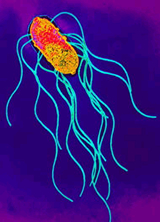
USA -Pet turtles linked to latest Salmonella outbreak

Outbreak News Today Salmonella kswfoodworld

Federal health officials report investigating a Salmonella Oranienburg outbreak  linked to contact with pet turtles.

To date, 21 people have been infected with the outbreak strain from 13 states, including seven requiring hospitalization.

No deaths have been reported.

Interviews with ill people indicate that contact with pet turtles is the likely source of this outbreak. The investigation is ongoing.

Research – EU – Cryptosporidiosis – Annual Epidemiological Report for 2017

ECDC crypto

Executive summary

Key facts

  • For 2017, 21 EU/EEA countries reported 11 449 cryptosporidiosis cases, of which 11 418 were confirmed.
  • The notification rate was 3.2 confirmed cases per 100 000 population.
  • Germany, the Netherlands and the United Kingdom (UK) accounted for 71% of all confirmed cases, with the United Kingdom alone accounting for 44%.
  • Most of the cases were reported in September 2017, following the seasonal pattern of previous years.
  • Children aged 0–4 years had the highest notification rate of 12.5 cases per 100 000 population.

Download

Thumbnail

Research -Highly virulent listeriosis pathogen discovered

Science Daily

The bacterium Listeria monocytogenes can cause listeriosis, a life-threatening infection in animals and humans. Contaminated food is a frequent source of infection. Elderly people, people with a weakened immune system and pregnant women are particularly at risk with a mortality rate of up to 30 per cent. An international research group led by the Institute of Medical Microbiology at the Justus Liebig University Giessen (JLU) has now discovered the most virulent representatives of this bacterial species to date. They were identified as the cause of serious diseases in sheep in a remote area of the Chinese province Jiangsu.

‘The detection of a completely new form of pathogenic Listeria monocytogenes in China highlights the need for international collaboration’, emphasises Prof. Dr Trinad Chakraborty, Director of the Institute of Medical Microbiology at the JLU and research scientist at the German Center for Infection Research (DZIF). ‘Only by combining resources and expertise can we rapidly identify newly emerging threats to food safety from highly virulent strains worldwide.’

After decoding the genome sequence of these bacteria, the scientists were able to determine the genetic basis for their hypervirulence. They identified the factors that enhance the ability of this Listeria strain to cause severe septic diseases. ‘These isolates are unique in the sense that they combine the virulence characteristics of various highly pathogenic Listeria species that infect animals or humans into a single strain’, says Prof. Chakraborty. ‘Since listeriosis is a food-borne infection, measures to identify such highly virulent strains are extremely urgent.’

Clinical symptoms of listeriosis include fever, blood poisoning (sepsis) and infections of the central nervous system, which can lead to lifelong sequelae. Infections during pregnancy can lead to premature birth, miscarriage or stillbirth. Both raw and processed foods can be contaminated by listeria, especially dairy products, meat, seafood and ready-to-eat products such as pre-packaged salads. Due to the extremely hazardous nature of listeriosis in humans, many countries have set up monitoring systems to quickly identify and recall contaminated food products. Since it can take up to 70 days for a listeria infection to manifest itself with severe symptoms, it can be very difficult to identify the source of contamination and initiate the food recall.

Currently, there are reported listeriosis outbreaks in Germany (Hesse), the Netherlands, Lithuania, Spain, Great Britain, Canada and the United States, posing a particular threat to vulnerable populations. Therefore, considerable efforts are now underway to identify the origin of these pathogens and prevent further outbreaks of listeriosis.


Story Source:

Materials provided by German Center for Infection Research. Note: Content may be edited for style and length.


Journal Reference:

  1. Yuelan Yin, Hao Yao, Swapnil Doijad, Suwei Kong, Yang Shen, Xuexue Cai, Weijun Tan, Yuting Wang, Youwei Feng, Zhiting Ling, Guoliang Wang, Yachen Hu, Kai Lian, Xinyu Sun, Yuliang Liu, Chuanbin Wang, Kuhua Jiao, Guoping Liu, Ruilong Song, Xiang Chen, Zhiming Pan, Martin J. Loessner, Trinad Chakraborty, Xin’an Jiao. A hybrid sub-lineage of Listeria monocytogenes comprising hypervirulent isolates. Nature Communications, 2019; 10 (1) DOI: 10.1038/s41467-019-12072-1

USA – Updated Food Recall Warning – Certain chicken products recalled due to Listeria monocytogenes

CFIA

The food recall warning issued on October 8, 2019 has been updated to include additional product and distribution information. This additional information was identified during the Canadian Food Inspection Agency’s (CFIA) food safety investigation.

Industry is recalling certain products containing diced chicken from the marketplace due to possible Listeria monocytogenes contamination of the diced chicken used to make these products. Consumers should not consume and distributors, retailers and food service establishments such as hotels, restaurants, cafeterias, hospitals and nursing homes should not sell or use the recalled products described below.

The following products have been sold as indicated in the table below:

Recalled products

Brand Name Common Name Size UPC Code(s) on Product Additional Info
Deli – icious Fresh Goods Chicken Salad Sandwich NA 02223003 Best Before:
OCT 9/19
Distribution
New Brunswick
Deli – icious Fresh Goods Chicken Wrap NA 02264000 Best Before:
OCT 10/19
Distribution
New Brunswick

Background

This recall was triggered by the CFIA’s surveillance activities following an investigation into a foodborne illness outbreak. The CFIA is conducting a food safety investigation, which may lead to the recall of other products. If other high-risk products are recalled, the CFIA will notify the public through updated Food Recall Warnings.

The CFIA is verifying that industry is removing the recalled products from the marketplace.

Illnesses

Imported diced chicken used in these products has been associated with an outbreak investigation, however, at this time, there have been no confirmed illnesses associated with the products identified in this Food Recall Warning.

Canada – Updated Food Recall Warning – Various raw beef and raw veal products recalled due to E. coli O157:H7

CFIA

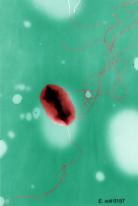
kswfoodworld E.coli O157

Image CDC


The food recall warning issued on October 7, 2019 has been updated to include additional product information. This additional information was identified during the Canadian Food Inspection Agency’s (CFIA) food safety investigation.

Industry is recalling various raw beef and raw veal products from the marketplace due to possible E. coli O157:H7 contamination. Consumers should not consume and distributors, retailers and food service establishments such as hotels, restaurants, cafeterias, hospitals and nursing homes should not sell or use the recalled products described in the link above.

Background

This recall was triggered by the CFIA’s inspection activities. The CFIA is conducting a food safety investigation, which may lead to the recall of other products. If other high-risk products are recalled, the CFIA will notify the public through updated Food Recall Warnings.

The CFIA is verifying that industry is removing the recalled products from the marketplace.

Illnesses

There have been no reported illnesses associated with the consumption of these products.


USA – Pork recalled over Listeria fears

Food Poison Journal

Fisher Packing Company, a Redkey, Ind. establishment, is recalling approximately 744 pounds of ready-to-eat (RTE) pork products that may be adulterated with Listeria monocytogenes, the U.S. Department of Agriculture’s Food Safety and Inspection Service (FSIS) announced yesterday.

USA – SALMONELLA TYPHIMURIUM OUTBREAK ASSOCIATED WITH RESTAURANT ‘A’ ELKO, NEVADA

Food Poison Journal

Between Friday, March 8, 2019 and Monday, March 11, 2019 OPHIE received 12 Salmonella positive laboratory reports from Hospital A in Elko. Case interviews were conducted to obtain symptomology, onset dates, potential exposures, incubation period and other information. EHS was notified of the increasing frequency of Salmonella reports. By 3:00 PM on March 11, 2019 five (5) interviews had been completed revealing that all five (5) cases had dined at Restaurant A in Elko and reported consuming “sunny side up” eggs. EHS inspectors were notified of the findings and subsequently inspected Restaurant A on the same day.

USA -Coconut product from The Philippines recalled for Salmonella

Food Safety News

Hayward, CA-based Global Commodities Corporation, has recalled one lot of Buenas Brand frozen grated coconut, a product of The Philippines.

California Department of Public Health testing found Salmonella may be contaminating the coconut product. Northern California retail locations received the coconut starting in February 2018.

Global Commodities ordered the recall in cooperation with the U.S. Food and Drug Administration (FDA). Here’s the identifying information for the recalled product:

PRODUCT NAME: GRATED COCONUT

BRAND NAME: BUENAS, DESCRIPTION: FROZEN GRATED COCONUT,

UPC: 4806514650443,

LOT NUMBER: 10BAAGA; 16 oz.

PACKAGING: PLASTIC BAG,

ORIGIN: PRODUCT OF THE PHILIPPINES.

Retailers should remove the recalled product from their shelves and return it to Global for property credit.

Salmonella is an organism that can cause severe and sometimes fatal infections especially in young children, frail or older adults, and others with weakened immune systems

USA – Lipari Foods Issues Recall of Ham & Cheese Wedge Sandwiches Due to Potential Contamination of Listeria Monocytogenes

FDA Premo Ham and Cheese Sandwich Wedge

Lipari Foods has issued a voluntary recall of Premo Ham & Cheese Wedge Sandwiches and Fresh Grab Ham & Cheese Wedge Sandwiches due to potential contamination of Listeria monocytogenes. Listeria monocytogenes is an organism, which can cause serious and sometimes fatal infections in young children, frail or elderly people, and others with weakened immune systems. Although healthy individuals may suffer only short-term symptoms such as high fever, severe headache, stiffness, nausea, abdominal pain and diarrhea, Listeria infection can cause miscarriages and stillbirths among pregnant women.

The product was distributed exclusively by Lipari Foods in Warren, Michigan to food service and retail stores throughout Florida, Iowa, Illinois, Indiana, Kentucky, Maryland, Michigan, Missouri, Ohio, Pennsylvania, Tennessee, West Virginia, and Wisconsin.

The affected product can be identified by:

Brand

Product

Lipari #

Pack / Size

Best By Date

Lot #

UPC

Premo Wedge Ham & Cheese On Wheat 915509 4 / 5 oz. 10/17/19 24201909 612510002001
Fresh Grab Wedge Ham & Cheese On Wheat 252646 56 / 5 oz. 10/17/19 24201909 612510002001

Lipari Foods is expanding its recall from 10/2/19 to include one lot of Ham & Cheese Wedge Sandwiches produced by JLM Manufacturing due to potential contamination of Listeria monocytogenes. The potential for contamination of this particular lot was brought to our attention during an FDA investigation of the previous recall. No illnesses have been reported to date in relation to this recall.

Malaysia – 21 still warded after food poisoning at Malay Dignity Congress

Malay Mail

SHAH ALAM, Oct 7 — Twenty One of the 197 university students who suffered food poisoning at the Malay Dignity Congress here yesterday are still being treated at hospitals.

Selangor Health director Datuk Dr. Khalid Ibrahim said 20 students were treated at Tuanku Ampuan Rahimah Hospital, Klang while another was in Serdang Hospital.

“The rest of the students were allowed to return home and they were in stable condition.

“Before this, the students were treated at the Emergency Department of Tuanku Rahimah Hospital in Klang, Shah Alam Hospital, Serdang Hospital and KPJ Selangor Specialist Hospital,” he said in a statement today.

He said initial investigations found the first case of food poisoning broke out at 10 am yesterday and the last case was reported at 3pm yesterday believed to be due to eating contaminated nasi lemak.