Category Archives: Uncategorized

Research – Effect of high hydrostatic pressure on Salmonella spp inactivation and meat-quality of frozen chicken breast

Science Direct

The aim of this study was to evaluate the effect of the pressure level and holding time on the Salmonella spp inactivation during HHP processing in frozen chicken breast fillets. Once identified the most effective process, meat quality (color and texture) was evaluated. Results showed that the treatments at 500 MPa for 1 min and 400 MPa for 5 min were enough to guarantee Salmonella spp inactivation in frozen chicken breast fillets. With respect to quality parameters, an extension of shelf life is expected with both treatments, as counts of indigenous microbiota were below the detectable level (<2 logs CFU/g). However, chromatic parameters and texture profile of the fillets treated with HHP suffered significant changes. Even so, the treatment of 500 MPa for 1 min was more effective at preserving chromatic parameters than treatment of 400 MPa for 5 min. The texture profile between fillets treated was not significantly different.
USA -Delaware Children Sickened in Tailor Cut Salmonella Javiana Outbreak

Food Poisoning Bulletin

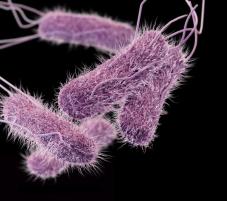
Salmonellaa

Image CDC

Delaware children sickened in Tailor Cut Salmonella Javiana outbreak. The Delaware Division of Public Health has confirmed that 26 schoolchildren in Delaware are ill after eating fruit provided by Tailor Cut Produce. The sick children live in New Castle County, and attended schools served by the Red Clay Consolidated School District, Colonial School District, and the Community Education Building in downtown Wilmington. DPH was not able to confirm school information for seven of these children, except that they live in New Castle County.

Hong Kong – Food Safety App

CFS Food Safety App

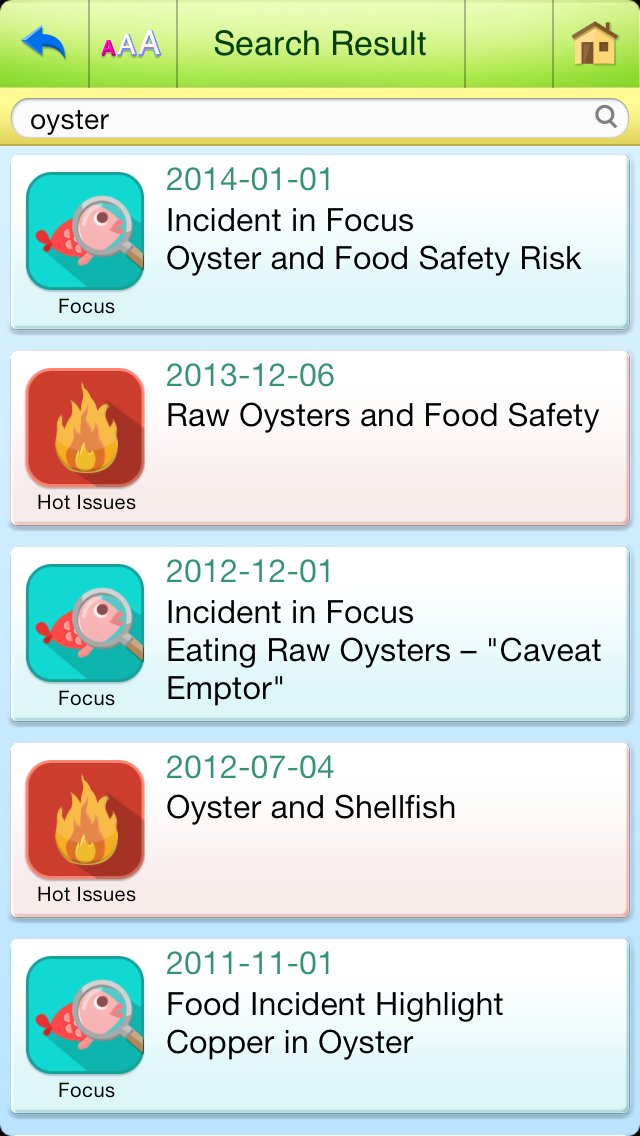
Food Safety App is developed by the Centre for Food Safety to provide mobile device users an easy access to food safety information.

Google play App Store

Features

  1. Obtain notifications of food alerts, food safety news and publications.
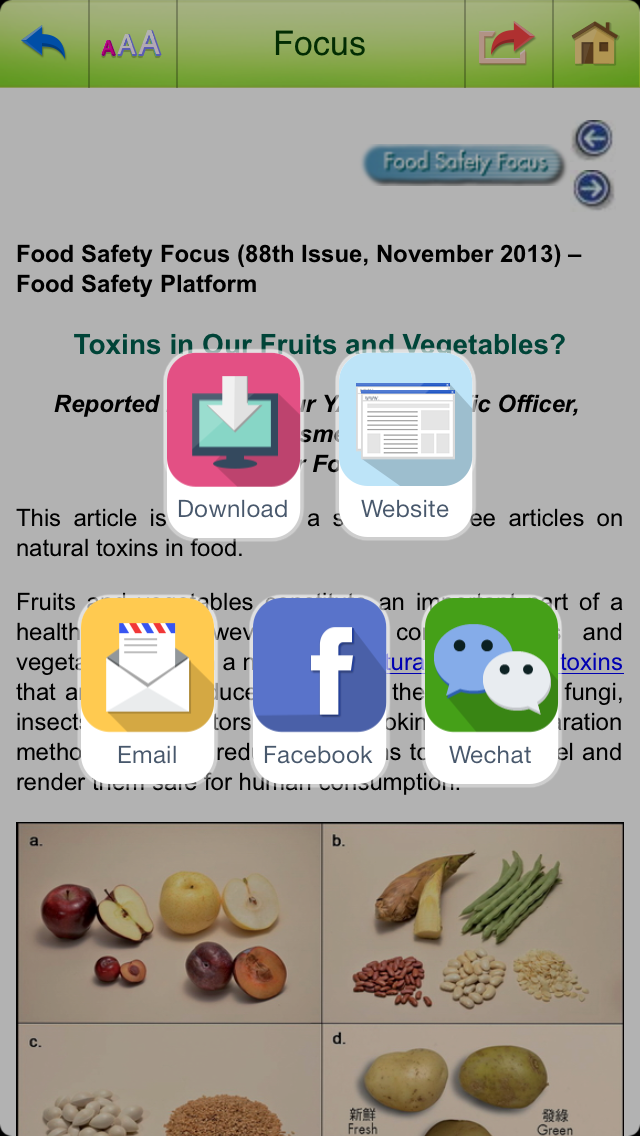
  2. Download food safety information to create user’s own archive.
  3. Retrieve food safety topics of interest by searching keywords.
  4. Share food safety information via email and online social media.

Screenshots

Home
Home
Menu
Menu
Search function
Search function
Download and Share
Download and Share

USA – Emesa Foods Recalls Premium Sesame Tahini Because of Possible Health Risk

FDA Photo 1, Product labeling

Emesa Foods, Taylor, MI is voluntarily recalling 23 cases and each case 6 containers of 800 gram of “Premium Sesame Tahini” because it has the potential to be contaminated with Salmonella, an organism which can cause serious and sometimes fatal infections in young children, frail or elderly people, and others with weakened immune systems. Healthy persons infected with Salmonella often experience fever, diarrhea, nausea, vomiting, and abdominal pain. In rare circumstances, infection with Salmonella can result in the organism getting into the bloodstream and producing more severe illnesses such as arterial infections (i.e., infected aneurysms), endocarditis, and arthritis.

The product was distributed in states of Michigan and Texas and is sold in 800 grams (28.2 Oz). Expiration dates (2/25/2021) are printed on the side of the container.

Product code, product description, UPC and expiration dates information:

Product Code

Product Description

UPC

Expiration Dates

29826 Premium Sesame Tahini 850005298267 02/25/2021

No illnesses have been reported to-date in connection with the Emesa Foods Tahini.

Hong Kong – French chilled smoked salmon suspected to be contaminated with Listeria monocytogenes

CFS Centre for Food Safety

Food Product Chilled smoked salmon
Product Name and Description Product name: Saumon Fume Ecosse T. Main Ficelle
Place of origin: France
Net weight: 1.8 kilograms per pack
Best-before date: December 31, 2019
Reason For Issuing Alert
  • The CFS received a notification from the Rapid Alert System for Food and Feed (RASFF) of the European Commission that the above-mentioned batch of the product might have been contaminated with Listeria monocytogenes and was being recalled.
  • Preliminary investigation found that the importer had imported some of the affected batch of the product, and some of the product had been distributed.
Action Taken by the Centre for Food Safety
  • The CFS immediately contacted the importer concerned for follow-up.
  • The importer has initiated a recall according to the CFS’ advice.
  • The CFS will alert the trade to the incident, and will continue to follow up and take appropriate action. Investigation is ongoing.
Advice to the Trade
  • Stop using or selling the product concerned immediately.
Advice to Consumers
  • Not to consume the affected batch of the product if they have bought any.
  • Listeria monocytogenes can be easily destroyed by cooking but can survive and multiply at refrigerator temperature. Most healthy individuals do not develop symptoms or only have mild symptoms like fever, muscle pain, headache, nausea, vomiting or diarrhoea when infected. However, severe complications such as septicaemia, meningitis or even death may occur in newborns, the elderly and those with a weaker immune system.
  • Although infected pregnant women may just experience mild symptoms generally, the infection of Listeria monocytogenes may cause miscarriage, infant death, preterm birth, or severe infection in newborns
  • Enquiries about the recall can be made to the importer’s hotline at 2612 2066 during office hours.

Research – Environmental persistence and virulence of Salmonella spp. isolated from a poultry slaughterhouse

Science Direct

Salmonella spp. is responsible for severe foodborne disease, and is one of the main agents involved in foodborne outbreaks worldwide. Contamination occurs mainly as a result of poultry and egg consumption since they can carry some serotypes pathogenic to humans. The aim of the study was to evaluate the persistence and pathogenic potential of Salmonella spp. (n = 40) isolated from poultry slaughterhouse mats, using adhesion and invasion assays, antimicrobial susceptibility by disc diffusion, and biofilm production as phenotypic tests and genotypic analyses. Polystyrene mats presented 3.2 times greater chance of isolating Salmonella than canvas mats. Besides, we observed resistance to tetracycline (17.5%), ampicillin (10%), cefotaxime (7.5%), trimethoprim-sulfamethoxazole (5%), and chloramphenicol (2.5%). All strains possessed the invA, sipB, sipD, ssaR, sifA, sitC, iroN, tolC, flgK, fljB, and flgL genes. The genes sopB and sipA were both present in 92.5% of the isolates, while sopD and spvB were observed in 90% and 32.5% of strains, respectively. All strains adhered to and invaded HeLa cells. Regarding biofilm production, 31 (77.5%) strains were able to produce biofilm on polystyrene microplates. Using PFGE, we detected the persistence of clones in the environment for up to 18 fromthe 20 weeks. The ability of these strains to produce a biofilm and thus persist in the environment and disperse through contact surfaces in the processing plant favors the contamination of food, aggravated by the pathogenic potential of these isolates demonstrated by their adhesion capacity, invasion and resistance to various antibiotic agents.

Research -Salmonella on Australian cage egg farms: observations from hatching to end of lay

Science Direct

Single-aged caged layer hen flocks were monitored for Salmonella over the course of their lifetime. Chicks from both flocks were Salmonella negative at hatch and remained negative during rearing. Pullets were transported to production farms at 15 weeks of age. Pre-population dust swabs collected from both production sheds had a high percentage of Salmonella positive samples (80 and 90%). Flocks were sampled at regular intervals until 70-72 weeks of age. The proportion of Salmonella positive samples and mean load detected on eggs was low on both farms. Analysis of dust samples revealed that Salmonella persisted in dust over 8 weeks. Dust total moisture content and water activity appears to influence bacterial persistence. On egg grading equipment, only suction cups prior to egg washing were Salmonella positive (mean proportion Salmonella positive samples 0.13 ± 0.07; mean load of 18.6 ± 12.31 MPN/ml). An egg washing experiment demonstrated that while washing reduced the total Salmonella load from eggshell surfaces, no effect was observed for shell pores. These results demonstrate that despite environmental contamination on farm, Salmonella contamination of eggs is low and is further minimized by washing.

Research – Prevalence and identification of Aspergillus and Penicillium species isolated from peanut kernels in central Myanmar

Wiley Online

Abstract

The objective of the present study was to conduct a survey to evaluate the postharvest handling of peanuts at farm level and to screen and identify the strains of Aspergillus and Penicillium species from peanut kernels in central Myanmar. A total of 640 samples from the stores of farmers, collectors, and wholesalers were collected and seeded for growth, isolation, and characterization of fungi. Out of 85 isolates, Aspergillus flavus (38), A. niger (20), A. terreus (15), and Penicillium citrinum (12) were identified and confirmed by molecular techniques including DNA sequencing using internal transcribed spacer (ITS5/4) and beta‐tubulin (Bt2a/2b) primer sets. The study indicates different factors associated with fungal contamination at farm level peanut storage and warrants an immediate attention of food safety regulatory authorities to design and implement strategies for postharvest handling and storage practice in developing countries to minimize fungal contamination.

Practical applications

In developing countries like Myanmar, there are lack of food safety practices and policies regarding the food storage, handling, and farmer education. The current study indicates the different storage methods for peanut kernels at farm level and their influence on prevalence of fungi. The study will give a deep insight to the policy makers to design food safety practices at farm level and educate the farmers to adopt the better practices to assure the consumer health and satisfaction in developing countries.

Canada -Salmonella outbreak linked to raw turkey and raw chicken rises to 126

Outbreak News Today

Officials with the Public Health Agency of Canada and the various provinces report continuing to  investigate an outbreak of Salmonella infections.

Based on the investigation findings to date, exposure to raw turkey and raw chicken products has been identified as the likely source of the outbreak.

As of December 18, 2019, there have been 126 confirmed cases of Salmonella Reading illness investigated in the following provinces and territories: British Columbia (31), Alberta (44), Saskatchewan (8), Manitoba (24), Ontario (8), Quebec (2), New Brunswick (1), Prince Edward Island (1), Northwest Territories (1), and Nunavut (6). Individuals became sick between April 2017 and November 2019. Thirty-eight individuals have been hospitalized. One individual has died.

USA – Investigation of E. coli O157:H7 Outbreak Linked to Romaine from Salinas, California, November 2019

FDA

Update

December 19, 2019

FDA continues to actively investigate the cause of this outbreak. An investigation team consisting of staff from FDA, CDC, the California Department of Public Health and the California Department of Food and Agriculture are attempting to identify any factors that could have led to contamination at a common farm identified by traceback. This investigation involves assessing and sampling soil, animal droppings, compost, water, and other potential environmental sources at the ranches of this grower. The samples and information collected during the farm investigations will be analyzed.

The Wisconsin Department of Health Services recently reported that they identified the outbreak strain of E. coli O157:H7 in an unopened bag of Fresh Express brand Leafy Green Romaine collected from an ill person’s home. The source of the romaine identified in the bag was Salinas, California. It was determined that one of the growers of this product also supplied romaine linked to other E. coli outbreaks that FDA is investigating.

These outbreaks are each caused by strains that are different from each other and different from the larger outbreak. One of the additional outbreaks, in Washington state, is potentially linked to romaine lettuce. The other outbreak, with cases in the U.S. and Canada, is linked to Fresh Express Sunflower Crisp Chopped Salad Kits.

Case Counts

Total Illnesses: 138
Hospitalizations: 72
Deaths: 0
Last illness onset: December 1, 2019
States with Cases:  AZ (3), CA (4), CO (6), FL (2), IA (1), ID (3), IL (10), MD (5), MI (1), MN (5), MT (1), NE (2), NJ (9), NC (2), NM (2), OH (12), OR (1), PA (17), SC (1), SD (1), TN (1), TX (6), VA (6), WA (4), WI (33)