Category Archives: Uncategorized

Australia – Green Co Ltd Choi’s Mushrooms — Enoki Mushrooms 300g – Listeria monocytogenes

FSANZ

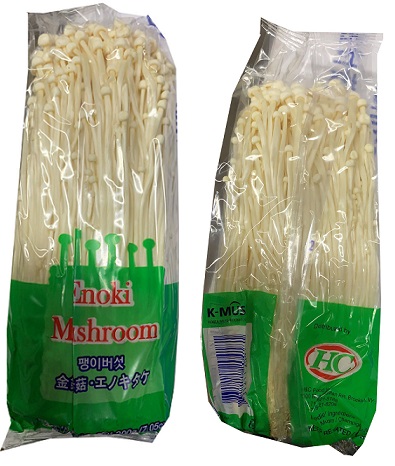
Green Co Ltd Choi’s Mushrooms — Enoki Mushrooms 300g

Photograph of enokimushrooms

Identifying features

Other
APN/EAN – 9336764000101

What are the defects?

The recall is due to microbial contamination (Listeria monocytogenes).

What are the hazards?

Listeria may cause illness in pregnant women and their unborn babies, the elderly and people with low immune systems.

What should consumers do?

Any consumers concerned about their health should seek medical advice and return the product to the place of purchase for a full refund.

For further information please contact Choi’s Mushrooms on ​02 9826 1532

Supplier
Choi’s Mushrooms
Traders who sold this product

Asian supermarkets and grocers

Where the product was sold
Australian Capital Territory
New South Wales
Queensland
South Australia
Victoria
Dates available for sale
  • 13 March 2020 – 10 April 2020

Recall advertisements and supporting documentation

Coordinating agency

Food Standards Australia New Zealand is the coordinating agency for this recall.

Product category

UK – Co-op recalls Sliced Pepperoni because of contamination with E. coli

FSA

Co-op is recalling Co-op Sliced Pepperoni because E. coli O157 has been found in the product.

Product details

Co-op Sliced Pepperoni

Pack size 70g
Use by 19 May 2020

Risk statement

The presence of Shiga toxin-producing E. coli in the product listed above.

Symptoms caused by this organism include diarrhoea, abdominal pain, bloody diarrhoea, and haemolytic uremic syndrome, a serious condition that can lead to kidney failure and can be fatal.

Action taken by the company

Co-op is recalling the above product. Point-of-sale notices will be displayed in all retail stores that are selling this product. These notices explain to customers why the product is being recalled and tell them what to do if they have bought the product. Please see the attached notice.

Our advice to consumers

If you have bought the above product, do not eat it. Instead contact 0800 0686 727 or customer.careline@coop.co.uk to arrange a refund. If customers are making an essential trip to the store from where it was bought, they can return the item in-store for a full refund.

Research – Metabolic diversity of the ‘big six’ of E. coli strains

Phys Org

NUS food scientists have discovered that the six major strains of Escherichia coli (E. coli) that cause foodborne illnesses have different metabolisms and tolerance towards acidic conditions.

Pathogenic E. coli are responsible for a number of foodborne disease outbreaks. Among the hundreds of E. coli serogroups (strains), pathogen E. coli O157:H7 is the most widely recognised due to the severity of the  it causes. Apart from E. coli O157, there are another six serogroups that are identified by the United States Food and Drug Administration as emerging pathogens commonly found in foodborne disease outbreaks. These are known as the “big six.” As part of food safety, it is important to be able to characterise these pathogens and understand their behaviour so that proper measures can be developed to keep them at bay.

Research – Reducing the risk of Salmonella re-contamination in feed

Poultry World

Deploying risk mitigation strategies across the feed-to-food production chain can help assure safe animal feed and poultry production. However, certain processes, such as the desiccation (drying out) of salmonella cells, can circumvent routine cleaning and hygiene practices.

During certain phases of feed production, salmonella cells may become dormant only to re-activate later in the production process. The inability to detect dormant salmonella cells may undermine routine hygiene checks and threaten feed safety. This risk demands strategies that go beyond hydrothermal treatment. Research has shown that preservation strategies, including the application of potent buffered and synergistic blends of organic acids and surfactants, can significantly reduce ­contamination risk during animal feed processing.

USA – Outbreak Investigation of Listeria monocytogenes: Enoki Mushrooms (March 2020)

FDA

Recommendation

Consumers should not eat and should check their refrigerators and throw away any recalled enoki mushrooms from Sun Hong Foods, Inc., Guan’s Mushroom Co., and H&C Food, Inc. because they may be contaminated with Listeria monocytogenes.

Restaurants and retailers should not sell or serve recalled enoki mushrooms distributed by Sun Hong Foods, Inc., Guan’s Mushroom Co., and H&C Food, Inc.

FDA recommends that anyone who received recalled products use extra vigilance in cleaning and sanitizing any surfaces and containers that may have come in contact with these products to reduce the risk of cross-contamination. Listeria can survive in refrigerated temperatures and can easily spread to other foods and surfaces.

At this time, high risk groups, including the elderly, people with weakened immune systems or chronic diseases, pregnant women and their newborn babies, should not eat enoki mushrooms from Korea (Republic of Korea), even if they were not part of the recalls.

Consumers, restaurants, retailers, and high risk groups should discard and not eat, sell, or serve enoki mushrooms if they cannot tell where they came from.

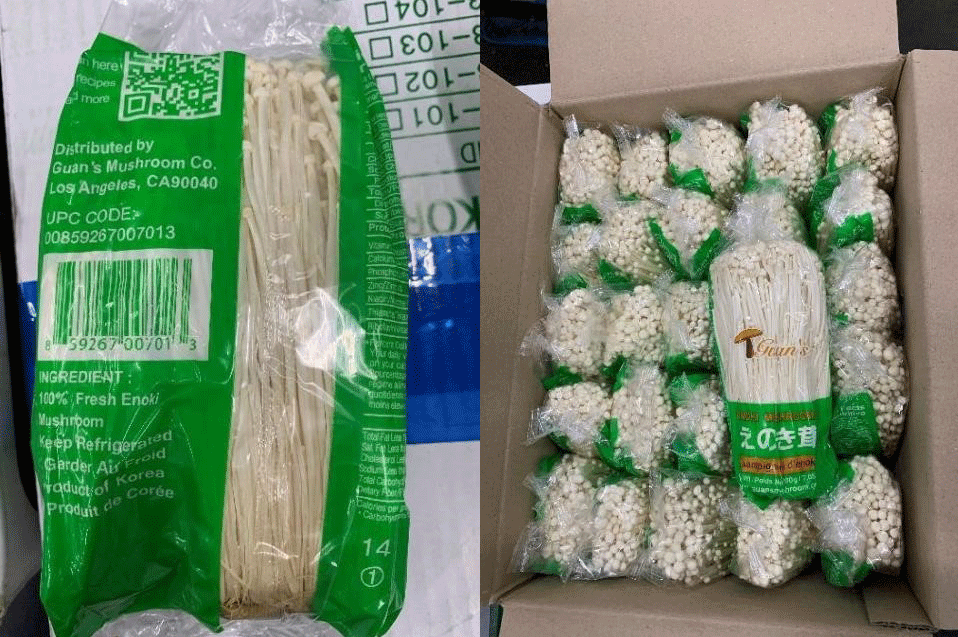
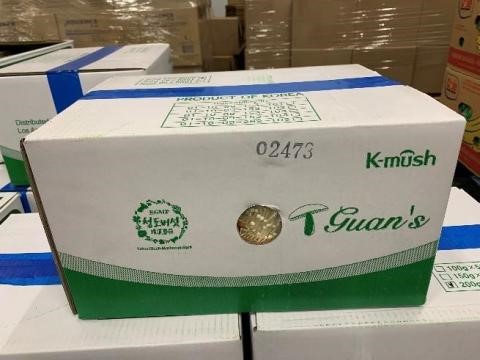
H&C Food Inc Enoki Mushrooms


Guan’s Mushroom Co.
Guan’s Mushroom Co.
Picture of enoki mushroom case
Sample Enoki Mushrooms Imported from Korea
Company Size UPC Code Retailers* Distribution*
Sun Hong Foods, Inc. 200 g/ 7.05 oz. 7 426852 625810 J&L Supermarket, Jusgo Supermarket, ZTao Market, New Sang Supermarket, Galleria Market, Distributors CA, FL, IL, OR, TX, WA
Guan’s Mushroom Co. 200 g/ 7.05 oz. 859267007013 Sold to Distributors and Wholesalers CA, NY, PA
H&C Food Inc. 200 g/ 7.05 oz. 831211204181 Great Wall Supermarket NY, MD, VA

*This includes confirmed distribution information from companies; products could have been further distributed and sent to additional retailers and states.

Update

FDA, CDC, and state and local partners are currently investigating a multistate outbreak of Listeria monocytogenes infections linked to enoki mushrooms. Enoki mushrooms are a long thin white mushroom, usually sold in clusters. They are especially popular in East Asian cuisine and are also known as enokitake, golden needle, futu, or lily mushrooms.

On April 7, 2020, H&C Foods Inc. recalled 200 g/7.05 oz packages of enoki mushrooms imported from Green Co. LTD of the Republic of Korea. FDA import samples of enoki mushrooms from Green Co. LTD tested positive for Listeria monocytogenes and on April 6, 2020, whole genome sequencing analysis determined that the Listeria monocytogenes found in the positive samples matched the outbreak strain. As a result, On April 7, 2020, Green Co. LTD was placed on Import Alert 99-23, which flags imported shipments from this firm for potential detention without physical examination. The FDA is encouraging the international community to consult the Import Alert.

The investigation is ongoing to determine the source of contamination and if additional products are linked to illness. Additional information will be provided as it becomes available.


Case Counts

Total Illnesses: 36
Hospitalizations: 30
Deaths: 4
Illness Onset Date Range: November 23, 2016 – December 13, 2019
States with Cases: AZ (2), CA (9), FL (2), HI (3), IN (1), KY (1), MA (2), MD (2), MI (1), MO (1), NC (1), NJ (1), NV (1), NY (4), RI (1), TN (1), VA (3)
Product Distribution*: CA, FL, IL, NY, MD, OR, PA, TX, VA, WA
*States with confirmed distribution; product could have been distributed further

Information – 10 Items Dirtier Than A Toilet Seat

World Atlas

If someone asked you to name a place or an item that you think has a lot of germs, a toilet seat would probably be one of the first things that come to mind, right? You would not be wrong either, toilet seats do contain a large number of germs and bacteria.

However, there are many things that are dirtier than toilet seats, some of which might surprise you. We have collected a list of 10 items that contain more germs than you were probably aware of, but all of these can and should be cleaned, so there is no reason to worry too much about them.

USA – Warning letters cite artisanal smokehouse and bakery for Listeria

Food Safety News

CATSMO LLC, Wallkill, NY
Markus Draxler, CEO
In a March 25 warning letter the FDA described a Nov. 18 – Dec. 12, 2019, inspection at CATSMO LLC in Wallkill, NY. Inspectors found that the company has serious violations of the seafood Hazard Analysis and Critical Control Point (HACCP). The FDA also collected environmental samples and found the presence of Listeria monocytogenes.

Cafe Valley Bakery, LLC, Phoenix, AZ
Brian Owens, CEO
In a March 18 warning letter the FDA described a Nov. 5 – Dec. 17, 2019, inspection at Cafe Valley Bakery LLC in Phoenix, AZ. Inspectors found that the company has serious violations of the Current Good Manufacturing Practice, Hazard Analysis, and Risk-Based Preventive Controls for Human Food regulation. Additionally, the FDA collected environmental samples from various areas in the processing facility and analysis of the environmental swabs found the presence of Listeria monocytogenes.

Afganistan – Afghan Authorities Say 26 Police Officers Poisoned In Laghman Province

Urdu Point

Police in Afghanistan had 26 of its officers sustain food poisoning after consuming lunch in the eastern Laghman province, the provincial governor‘s spokesman Asadullah Dawlatzai told Sputnik on Saturday.

According to the spokesman, the police are now probing the food contractor, and an investigation is underway to determine how officers were poisoned.

Research – Now metal surfaces can be instant bacteria killers

Science Daily

Bacterial pathogens can live on surfaces for days. What if frequently touched surfaces such as doorknobs could instantly kill them off?

Purdue University engineers have created a laser treatment method that could potentially turn any metal surface into a rapid bacteria killer — just by giving the metal’s surface a different texture.

In a study published in the journal Advanced Materials Interfaces, the researchers demonstrated that this technique allows the surface of copper to immediately kill off superbugs such as MRSA.

“Copper has been used as an antimicrobial material for centuries. But it typically takes hours for native copper surfaces to kill off bacteria,” said Rahim Rahimi, a Purdue assistant professor of materials engineering.

“We developed a one-step laser-texturing technique that effectively enhances the bacteria-killing properties of copper’s surface.”

The technique is not yet tailored to killing viruses such as the one responsible for the COVID-19 pandemic, which are much smaller than bacteria.

Research – Salmonella Dublin Threat May Be Growing

Dairy Herd

Salmonella kswfoodworld

Image CDC

Salmonella is a common and bothersome disease organism in livestock production. But the species Salmonella Dublin is of particular concern.

Cattle are the host species for S. Dublin, which is highly contagious and difficult to treat. On dairy farms, it is most likely to cause severe clinical disease in calves. It also is classified as a zoonotic disease, meaning it can be transferred from animals to humans through consumption of raw milk and undercooked meat (and accidentally ingested faeces and saliva) from infected animals.

Michigan State University Veterinary and Extension educators Angel Abuelo and Faith Cullens recently published a new bulletin on Salmonella Dublin in dairy calves. They noted that this particular strain of Salmonella has typically been thought of as a problem primarily on dairies in the western United States, but it is gaining a foothold in the Midwest and Northeast. For example, from 2015 to 2019, S. Dublin represented 20.8% of all Salmonella species isolates in bovine samples at Michigan State’s veterinary diagnostic laboratory.