
In England and Wales, Public Health England (PHE) applies whole genome sequencing (WGS) to cultures of Listeria monocytogenes recovered from human cases of listeriosis, foods and food production environments. Following the routine inspection of a small retailer in February and March 2016, two unopened packs of cooked chicken produced by the same manufacturer were contaminated with L. monocytogenes at levels of 340 and 20 CFU/g. A public recall of this product was issued in March 2016. Early in 2017, a <5 single nucleotide polymorphism (SNP) single linkage cluster was detected between the L. monocytogenes from the two cooked chicken products and cultures from five cases of human listeriosis in England and Scotland with onsets of illness between March 2016 and February 2017. Epidemiological data provided further supportive evidence that this cluster was an outbreak linked to a manufacturer of cooked chicken, who’s products were supplied to the small retailer that initiated the outbreak investigation. Unrelated to this outbreak, 34 L. monocytogenes recovered from routine food monitoring of 2,007 samples of cooked chicken during 2013 to 2017 were analysed by WGS. Previously undetected <5 SNP single linkage clusters were identified between cultures from cooked chicken and with those from two clusters and two sporadic cases of human listeriosis which were consistent with foodborne transmission. This analysis identified linkage of L. monocytogenes clusters within specific food chains more readily than traditional manual tracing. Linking of data associated with L. monocytogenes cultures from cases of listeriosis with those from unrelated food testing is a unique source of information for communicable disease risk assessment, epidemiological studies, disease prevention and control. This report provides further evidence which should act as a reminder of the association between cooked chicken consumption and human listeriosis.
Category Archives: Uncategorized
Research – Listeria monocytogenes in Cooked Chicken: Detection of an Outbreak in the UK (2016-2017) and Analysis of L. monocytogenes from Unrelated Monitoring of Foods (2013-2017)
Posted in Uncategorized
Research – Evasion of Plant Innate Defense Response by Salmonella on Lettuce
To establish host association, the innate immune system, which is one of the first lines of defense against infectious disease, must be circumvented. Plants encounter enteric foodborne bacterial pathogens under both pre- and post-harvest conditions. Human enteric foodborne pathogens can use plants as temporary hosts. This unique interaction may result in recalls and illness outbreaks associated with raw agricultural commodities. The purpose of this study was to determine if Salmonella enterica Typhimurium applied to lettuce leaves can suppress the innate stomatal defense in lettuce and utilization of UD1022 as a biocontrol against this ingression. Lettuce leaves were spot inoculated with S. Typhimurium wild type and its mutants. Bacterial culture and confocal microscopy analysis of stomatal apertures were used to support findings of differences in S. Typhimurium mutants compared to wild type. The persistence and internalization of these strains on lettuce was compared over a 7-day trial. S. Typhimurium may bypass the innate stomatal closure defense response in lettuce. Interestingly, a few key T3SS components in S. Typhimurium were involved in overriding stomatal defense response in lettuce for ingression. We also show that the T3SS in S. Typhimurium plays a critical role in persistence of S. Typhimurium in planta. Salmonella populations were significantly reduced in all UD1022 groups by day 7 with the exception of fliB and invA mutants. Salmonella internalization was not detected in plants after UD1022 treatment and had significantly higher stomatal closure rates (aperture width = 2.34 μm) by day 1 compared to controls (8.5 μm). S. Typhimurium SPI1 and SPI2 mutants showed inability to reopen stomates in lettuce suggesting the involvement of key T3SS components in suppression of innate response in plants. These findings impact issues of contamination related to plant performance and innate defense responses for plants.
Research -New study shows link between animal operation and orchard contamination
One in every five air samples in almond orchards adjacent to a poultry operation tested positive for E. coli during a two-year study published recently.
“Microorganisms Move a Short Distance into an Almond Orchard from an Adjacent Upwind Poultry Operation” comes as romaine growers continue to study the impact of a 100,000-head cattle feed lot adjacent to Arizona growing fields.
Lettuce growers from regions in California are also looking at implications of having animal operations in the areas near food crops. The Food and Drug Administration recently posted a conclusion that animal operations were the likely cause behind romaine E. coli outbreaks in 2018-19.
The almond research, published in the peer-reviewed journal Applied and Environmental Microbiology,
USA – Unidentified Salmonella Newport Outbreak Sickens 125 in 15 States
An unidentified Salmonella Newport outbreak has sickened at least 125 people in 15 states, according to the Centers for Disease Control and Prevention (CDC). Twenty-four people have been hospitalized because they are so sick. This is the way foodborne illness outbreaks sometimes start; the government publicizes it, and more people come forward who may have information that helps solve it.
Posted in food bourne outbreak, food contamination, Food Hygiene, Food Illness, Food Inspections, Food Micro Blog, Food Microbiology, Food Microbiology Blog, Food Microbiology Testing, Food Pathogen, Food Poisoning, food recall, Food Safety, Food Safety Alert, Food Testing, foodborne outbreak, foodbourne outbreak, outbreak, Poisoning, Salmonella, Uncategorized
Vietnam – Over 100 workers hospitalised because of food poisoning
At 7 pm on July 20, Dong Nai General Hospital received dozens of patients who are workers of Great Kingdom Company at Giang Dien Industrial Park, Trang Bom District. The patients suffered from dizziness and nausea. According to the workers, they had symptoms after dinner and starting the extra shift.
All workers are in stable condition. The doctors are still checking their condition, carrying out ultrasound tests and intravenous infusion to find the most suitable treatment.
Luong Ngoc Hoi, deputy director of Great Kingdom Company, said, “The dinner for 1,600 workers from two factories was held at 4 pm at our cafeteria. There were fried fish, boiled eggs, cabbage, spinach and sponge gourd.But after dinner, the workers at one factory showed symptoms of food poisoning. We sent 50 of them to Shing Mark Hospital and 50 to Dong Nai General Hospital.”
The cause of the poisoning is still being investigated. Dtinews/Tienphong
Ireland – Withdrawal of a Batch of Symbio Ekologiczne Platki Jaglane Millet Flakes Due to the Presence of Elevated Ochratoxin A
| Summary | |
|---|---|
| Category 2: | For Information |
| Alert Notification: | 2020.40 |
| Product: | Symbio Ekologiczne Płatki Jaglane (Millet Flakes); pack size: 250g |
| Batch Code: | 10.2020 (3003); best before date: 31/10/2020 |
| Country Of Origin: | Ukraine |
Message:
Elevated Ochratoxin A was detected in the above batch of Symbio Ekologiczne Płatki Jaglane millet flakes. Ochratoxin A is a toxin which is produced by fungi growing on the plant material. The implicated batch is being withdrawn from the market.
.png)
Research -Evaluation of Public Health Risk for Escherichia coli O157:H7 in Cilantro
This study sought to model the growth and die-off of Escherichia coli (E. coli) O157:H7 along the cilantro supply chain from farm-to-fork to investigate its risk to public health. Contributing factors included in the model were on farm contamination from irrigation water and soil, solar radiation, harvesting, and transportation and storage times and temperatures. The developed risk model estimated the microbiological risks associated with E. coli O157:H7 in cilantro and determined parameters with the most effect on the final concentration per serving for future mitigation strategies. Results showed a similar decrease in the E. coli O157:H7 (median values) concentrations along the supply chain for cilantro grown in both winter and summer weather conditions. With an estimated 0.1% prevalence of E. coli O157:H7 contamination for cilantro post-harvest used for illustration, the model predicted the probability of illness from consuming fresh cilantro as very low with fewer than two illnesses per every one billion servings of cilantro (1.6 x 10⁻⁹; 95th percentile). Although rare, 3.7% and 1.6% of scenarios run in this model for summer and winter grown cilantro, respectively, result in over 10 cases per year in the United States. This is reflected in real life where illnesses from cilantro are seen rarely but outbreaks have occurred. Sensitivity analysis and scenario testing demonstrated that ensuring clean and high quality irrigation water and preventing temperature abuse during transportation from farm to retail, are key to reducing overall risk of illness.
Posted in Contaminated water, E.coli, E.coli O157, E.coli O157:H7, Food Micro Blog, Food Microbiology, Food Microbiology Blog, Food Microbiology Research, Food Microbiology Testing, microbial contamination, Microbiology, Research, STEC, STEC E.coli, Uncategorized, Water, water microbiology, Water Safety
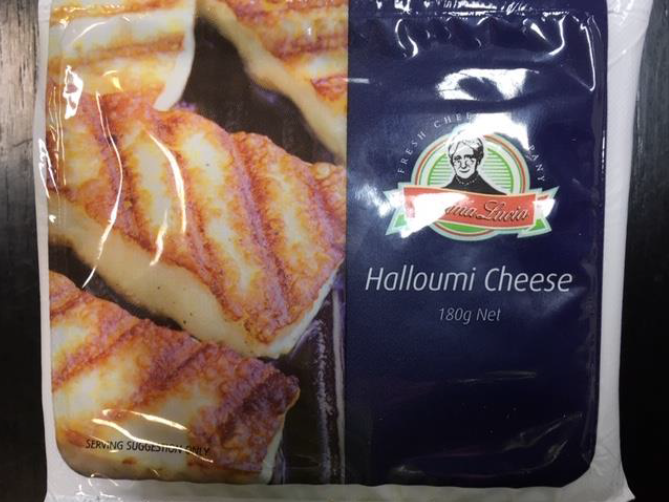
New Zealand – Mamma Lucia brand Halloumi Cheese – E.coli
| Product identification | |
|---|---|
| Product type | Cheese |
| Name of product (size) | Mamma Lucia brand Halloumi Cheese (180g) |
| Batch marking | 20139 |
| Date marking | Use by 14 11 20 |
| Package size and description | The product is sold in a 180g plastic package. |
| Distribution | The product is imported from Australia.
The affected product has only been sold at Mediterranean Foods Trattoria & Deli, 42 Constable Street, Newtown, Wellington. |
| Notes | This recall does not affect any other Mamma Lucia brand products. |
Consumer advice
Customers are asked to check the batch and date mark printed on the product packaging.
Affected product should not be consumed. There have been no reports of associated illness, however if you have consumed any of this product and have any concerns about your health, seek medical advice.
Customers should return the product to their retailer for a full refund.
Escherichia coli (E. coli) is a bacterium that normally lives in the intestines of people and other warm-blooded animals. Although most strains of E. coli are harmless, some types can cause serious illness with severe diarrhoea and stomach cramps.
Who to contact
If you have questions, contact Mediterranean Foods (Wgtn) Limited:
- Phone: 021 750 211
- Address: 30 Landfill Road, Owhiro Bay, Wellington.
Posted in E.coli, food contamination, food handler, Food Hygiene, Food Inspections, Food Micro Blog, Food Microbiology, Food Microbiology Blog, Food Microbiology Research, Food Microbiology Testing, Food Pathogen, Food Poisoning, food recall, Food Safety, Food Safety Alert, Food Testing, Food Toxin, MPI, Uncategorized
UK -Cardiff City Road restaurant found infested with salmonella-carrying cockroaches
A popular City Road café in the Welsh capital was closed down after around 100 cockroaches were discovered in the kitchen and dining area.
The insects were found at Mr Tikka on City Road in Roath, Cardiff, when council officers carried out an unannounced routine inspection on May 7 of last year.
When officers arrived, the owner, Rubi Begum, was seen sweeping two live insects off the counter and white powder – believed to be an insecticide – was on the kitchen floor.
More insects, including German cockroaches, which pose a significant health risk, were later discovered in the kitchen and dining area where customers were eating.
Posted in bacterial contamination, cross contamination, food contamination, Food Hygiene, Food Inspections, Food Micro Blog, Food Microbiology, Food Microbiology Blog, Food Microbiology Research, Food Microbiology Testing, Food Pathogen, Food Safety, Food Spoilage, Food Testing, microbial contamination, Research, Salmonella, Uncategorized
Research – Raw is risky: Why salads are the biggest source of food poisoning and what to do to avoid it
Brian Adam of Intallght writes just over a year ago, the United States saw the largest outbreak of E. coli since 2006; affecting at least 98 people in more than 20 states. The origin wa bagged romaine lettuce. Unfortunately, this is not an isolated case. Vegetables and fresh fruit have become a real headache for food safety experts.
Today in the United States, fresh vegetables are the largest source of food poisoning. In Europe, the figures are not so pristine, but the bacteria and viruses associated with this type of food also are to blame for the vast majority of poisonings. We are facing a real danger for food safety: salads.


