Category Archives: Toxin

Namibia -Fisheries Warns Against Poisonous Oyster, Mussel -DSP

All Africa

THE FISHERIES ministry has cautioned the general public not to consume oysters and mussels originating from the Walvis Bay Aquaculture Production Area 1.

This caution comes after recent biotoxins tests done on oyster and mussel samples on aquaculture in the said area found the presence of Diarrhetic Shellfish Poisoning (DSP) at a level higher than the permissible level in these samples.

The sampling and testing were facilitated by the Namibian Standards Institution (NSI) as part of the National Shellfish Sanitation Programme.

A media release issued by the ministry yesterday warned that it is therefore unsafe to consume oysters and mussels until further notice.

Members of the public should take note that marine biotoxins are not destroyed by cooking or freezing.

Earlier this year in May, the ministry had issued another caution against the consumption of the same seafood. In 2016, the ministry noted in a separate incident that the poisoning was only temporary and that the oysters and mussels could be consumed when laboratory results indicate a lower level of the harmful substances.
New Zealand -Amended shellfish biotoxin warning for the Kenepuru and inner Pelorus Sound

MPI

The Ministry for Primary Industries today reduced the area subject to a public health warning against collecting shellfish in the Kenepuru and inner Pelorus Sound.  The warning now includes only Nydia Bay in the inner Pelorus Sound.

Routine tests on shellfish samples taken from this region still show levels of Paralytic Shellfish Poisoning (PSP) toxins above the safe limit of 0.8 mg/kg set by MPI. Anyone eating shellfish from this area is potentially at risk of illness.

USA – Red tide in Southwest Florida – Karenia brevis

File:Karenia brevis.jpgOutbreak News Today 

In an update on the red tide in Southwest Florida, the Fish and Wildlife Conservation Commission says bloom of the Florida red tide organism, Karenia brevis, persists in the area.

Fish kills have been reported over the past week in multiple locations in Manatee County, in Sarasota County, in Charlotte County, in Lee County, and in and offshore of Collier County.

Respiratory irritation was reported over the past week in numerous places along Florida’s west coast.

The National Ocean Service says while many people call these blooms ‘red tides,’ scientists prefer the term harmful algal bloom. One of the best known HABs in the nation occurs nearly every summer along Florida’s Gulf Coast. Red tides have been documented along Florida’s gulf coast since the 1840’s.

This bloom, like many HABs, is caused by microscopic algae that produce toxins that kill fish and make shellfish dangerous to eat. The toxins may also make the surrounding air difficult to breathe. As the name suggests, the bloom of algae often turns the water red.

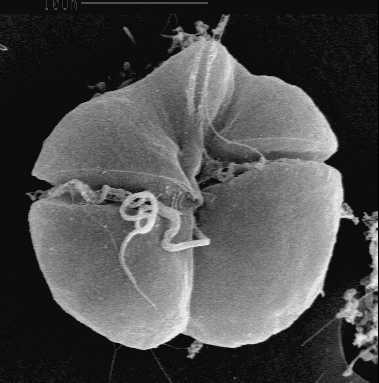
Karenia brevis was named for Dr. Karen A. Steidinger in 2001, and was previously known as Gymnodinium breve and Ptychodiscus brevis. Karenia brevis is a marine dinoflagellate common in Gulf of Mexico waters, and is the organism responsible for the “tides” (coastal infestations) termed red tides that affect Gulf coasts—of Florida and Texas in the U.S., and nearby coasts of Mexico. It is the source organism for various toxins found present during such “tides”, including the eponymously named brevetoxins.

New Zealand – Further shellfish biotoxin alerts

MPI

The Ministry for Primary Industries (MPI) today issued a public health warning against collecting shellfish in the entire Bay of Islands, extending to the outer heads between Cape Wiwiki to Cape Brett.

MPI also extended the public health warning against collecting shellfish on the west coast of the North Island in the Taranaki, Waikato, Wanganui, Manawatu, and Horowhenua regions. The warning now extends from the mouth of Port Waikato southward to the Manawatu River at Foxton Beach. The alert also includes Aotea and Kawhia Harbours but not Port Waikato itself.

Routine tests on shellfish samples taken from the Bay of Islands region have shown levels of Paralytic Shellfish Poisoning (PSP) toxins above the safe limit of 0.8 mg/kg set by MPI. Anyone eating shellfish from this area is potentially at risk of illness.

Warnings are also in place for the Kenepuru and Pelorus Sounds, Akaroa Harbour, and the West Coast of the North Island.

Mussels, oysters, tuatua, pipi, toheroa, cockles, scallops, catseyes, kina (sea urchin) and all other bivalve shellfish should not be eaten.

Note, cooking shellfish does not remove the toxin.

Map of Bay of Islands

USA -Record ‘Red Tide’ Of Toxic Algae Is Killing Wildlife In Florida – Humans Affected as Well

Huffington Post

toxic algae bloom sweeping Florida’s southwest coast is being described as the worst in more than a decade, with the so-called red tide blanketing beaches in dead fish and killing sharks, manatees and endangered sea turtles.

The aggressive overgrowth, which occurs each year but intensifies with high temperatures, pollution and stagnant water, has become unusually strong since emerging in October, and has stretched into the longest outbreak since 2006, according to state wildlife officials.


According to Treasure Coast Newspapers, 15 people were recently treated at Martin Health System emergency rooms in Stuart over two days for symptoms consistent with algae toxins after coming in contact with the St. Lucie River, which is near West Palm Beach and Lake Okeechobee.

Inhaling, touching or ingesting the algae through contaminated water can cause respiratory illness, abdominal pain, vomiting, and neurologic effects, according to the Centers for Disease Control and Prevention. Eating contaminated fish or shellfish also can cause illness.

Hong Kong – Not to consume prepackaged ginger powder contaminated with Aflatoxins

CFS

Issue Date 5.7.2018
Source of Information Centre for Food Safety (CFS)
Food Product A batch of prepackaged ginger powder manufactured in India
Product Name and Description Product name: Organic Ginger Powder

Brand: SpiceBox

Place of origin: India

Distributor: SpiceBox Organics Limited

Net weight: 50 grams per pack

Best-before date: March 30, 2019

Reason For Issuing Alert
  • The CFS collected the above-mentioned sample from a shop in the Mid-levels for testing under its routine Food Surveillance Programme. The results showed that it contained aflatoxins at a level of 20 micrograms (µg) per kilogram. Under the Harmful Substances in Food Regulation (Cap 132 AF), the maximum permitted concentration for aflatoxins in food (except for peanuts or peanut products) is 15µg/kg.
  • The World Health Organization (WHO)’s International Agency for Research on Cancer classified naturally occurring aflatoxins as carcinogenic to humans, and the Joint Food and Agriculture Organization/WHO Expert Committee on Food Additives advised that intake of aflatoxins should be reduced to levels as low as reasonably possible although no health-based guidance value has been set. Aflatoxins can lead to liver cancer after long-term ingestion, and the risk for hepatitis B carriers is relatively high.
Action Taken by the Centre for Food Safety
  • The CFS has informed the vendor concerned of the irregularity and the vendor has removed from shelves and stopped sale of the affected product according to the CFS’ instructions. Should there be sufficient evidence, prosecution will be instituted. The Centre is also tracing the source and distribution of the affected product.
  • The CFS will alert the trade, continue to follow up on the incident and take appropriate action.
Advice to the Trade
  • Stop using or selling the affected product immediately if they possess it.
Advice to Consumers
  • Stop consuming the affected batch of the product if they bought it.
  • To avoid excessive intake of mycotoxins, people should maintain a balanced and varied diet to minimise the risk from a small range of food items, and to avoid consuming food that looks mouldy or damaged.

New Zealand – Do not eat or collect shellfish from Akaroa Harbour – DSP

MPI

The Ministry for Primary Industries (MPI) today issued a public health warning advising the public not to collect or consume shellfish harvested for the entire Akaroa Harbour in Canterbury.

Routine tests on shellfish samples taken from Akaroa Harbour have shown levels of diarrhetic shellfish toxins above the safe limit of 0.16 mg/kg set by MPI.  Anyone eating shellfish from this area is potentially at risk of illness.

Ongoing testing will continue and we’ll let you know if the situation changes.

Mussels, oysters, tuatua, pipi, toheroa, cockles, scallops, catseyes, kina (sea urchin) and all other bivalve shellfish should not be eaten.

Note, cooking shellfish does not remove the toxin.

Pāua, crab and crayfish may still be eaten if the gut has been completely removed prior to cooking, as toxins accumulate in the gut. If the gut is not removed its contents could contaminate the meat during the cooking process.

Symptoms typically appear within half an hour of ingestion and last for about 24 hours. Symptoms may include:

  • diarrhoea
  • vomiting
  • nausea
  • abdominal cramps

If anyone becomes ill after eating shellfish from an area where a public health warning has been issued phone Healthline for advice on 0800 61 11 16, or seek medical attention immediately. You are also advised to contact your nearest public health unit and keep any leftover shellfish in case it can be tested.

Note, commercially harvested shellfish – sold in shops and supermarkets, or exported – is subject to strict water and flesh monitoring programmes by MPI to ensure they are safe to eat.

Find out more

Research – A new toxin discovered in Cholera bacteria

Science Daily 


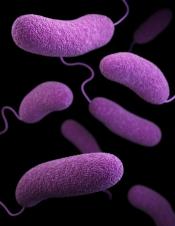
The bacterium Vibrio cholerae was discovered more than 150 years ago but remains as one of the main causes of bacterial infectious disease globally, especially in low-income nations where it occurs endemic, and outbreaks of cholera disease can lead to major epidemics.

In addition to causing cholera disease characterized by very severe watery diarrhea, different variants of V. cholerae can cause, for example, wound infections and infections in the ear canal (ear inflammation). If the infection is reaching the bloodstream, it can lead to blood poisoning. Such variants of Vibrio bacteria are common in brackish water, but can be found both in freshwater and saltwater and are also present in such environments in our country.

Scientists from Umeå University have now discovered and characterised the structure and function of a so far unknown Vibrio toxin. A team led by Professor Sun Nyunt Wai at Department of Molecular Biology and MIMS used the worm Caenorhabditis elegans as a predatory host for the bacteria and identified by molecular genetic analysis the V. cholerae genes required for production and release of the new protein toxin, now called MakA.

“In addition to the toxicity of MakA demonstrated with C. elegans, our studies revealed that upon infection of Zebrafish the toxin caused damage in particular to the intestinal system,” explains Sun Nyunt Wai.

Sun Nyunt Wai lrSun Nyunt Wai and her colleagues were also curious about the details of the bacterial release mechanism of the newly discovered toxin from V. cholerae.

Research- Occurrence of Toxigenic Fungi and Mycotoxins on Root Herbs from Chinese Markets

Journal of Food Protection Aspergillus

Herbs derived from roots, leaves, flowers, or fruits of plants are unavoidably contaminated with fungi and mycotoxins during growth, harvest, and storage, thereby posing a health threat to humans. Especially, root herbs (RHs) are more easily contaminated with fungi and mycotoxins because the roots are in direct contact with the soil. Here, we investigated the occurrence of fungi, aflatoxins (AFs), and ochratoxin A (OTA) in eight RHs that are used as medicines, beverages, dietary supplements, and functional foods in China and other countries. Morphological observation and MultiGeneBlast (β-tubulin and calmodulin) were used to identify the potentially toxigenic fungi. Of the 48 samples tested, all were contaminated by fungi, and 1,844 isolates belonging to 25 genera were detected. The genera Aspergillus and Penicillium, which contain potentially toxigenic fungal species, represented a frequency of 10 and 25%, respectively. Thirty-three isolates of Aspergillus flavus, Aspergillus parasiticus, Aspergillus niger, and Penicillium polonicum were arbitrarily selected for analysis of their toxigenic potential. Five of 13 isolates of A. flavus and 1 isolate of A. parasiticus produced AFs, whereas OTA production was not detected for any of the isolates of A. niger and P. polonicum. The occurrence of AFs and OTA in the 48 samples of eight RHs was tested by ultraperformance liquid chromatography–tandem mass spectrometry; 37.50% of samples from six RHs were contaminated with AFs and 16.67% of samples from four RHs were contaminated with OTA. Seven (14.58%) and four (8.33%) samples of ginseng, polygala, and liquorice exceeded the permissible limits of aflatoxin B1 and AFs, respectively. Because ginseng, polygala, and liquorice are widely used as herbs, dietary supplements, and functional foods, the high frequency of AF contamination of these herbs indicated by our current study warrant attention to raise public awareness.

UK – FSA – Consultation on Virus

FSA Virusds

The Advisory Committee on the Microbiological Safety of Food (ACMSF) is a scientific advisory committee that provides the FSA with independent expert advice. This helps the FSA ensure that policy development and consumer advice in relation to the microbiological safety of food are based upon sound science and relevant practical experience and expertise. The Committee’s terms of reference are to assess the risk to humans from microorganisms that are used or occur in or on food and to advise the FSA on any matters relating to the microbiological safety of food.

Since the publication of the 1998 ACMSF report on foodborne viral infections, with the exception of minor risk assessment work carried out on hepatitis E and avian influenza, no formal review has been carried out on foodborne viruses.

At the March 2010 ACMSF meeting the FSA asked the Committee to consider whether it was timely to carry out a review of foodborne viral infections, assessing the risk to consumers and highlighting any research and surveillance gaps.

The Committee agreed that an ad hoc group should be set up to revisit the issue of foodborne viruses in light of the significant developments in this area, so that an updated risk profile could be produced based on the findings.

The group met 13 times from November 2010 to July 2013 to assess the extent of viral foodborne infection in the UK.

The group considered information on all foodborne viruses including new and emerging viral pathogens and identified that the most important viruses associated with foodborne infection were norovirus, hepatitis A virus, and hepatitis E virus. These viruses are the focus of the group’s report, which concentrates mainly on viral foodborne infection in the UK. The report also gives consideration of two recent comprehensive reviews of viruses in food that have been published by WHO (2008) and EFSA (2011). The report provides key information that will be used to inform Risk Assessments and Risk Management on foodborne viruses across government.

The group’s draft report has now been approved by the full Committee and is attached for comment.