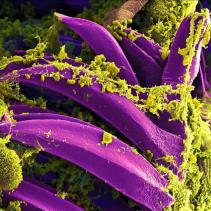
RASFF-shigatoxin-producing Escherichia coli (stx1+, stx2+, eae+ /25g) and high count of Escherichia coli (140 CFU/g) in camembert cheese from France in Germany

RASFF-shigatoxin-producing Escherichia coli (stx1+, stx2+, eae+ /25g) and high count of Escherichia coli (140 CFU/g) in camembert cheese from France in Germany
The CDC is examining trends of foodborne illness outbreaks for 2017 and describes changes in incidence since 2006 in its Morbidity and Mortality Weekly Report (MMWR) for March 23, 2018. Foodborne illness is a substantial health burden in the Untied States. In 2017, there were 24,484 infections, 5,677 hospitalizations, and 122 deaths attributed to food borne illness.
Despite ongoing food safety measures in the United States, foodborne illness continues to be a substantial health burden. The 10 U.S. sites of the Foodborne Diseases Active Surveillance Network (FoodNet)* monitor cases of laboratory-diagnosed infections caused by nine pathogens transmitted commonly through food. This report summarizes preliminary 2017 data and describes changes in incidence since 2006. In 2017, FoodNet reported 24,484 infections, 5,677 hospitalizations, and 122 deaths. Compared with 2014–2016, the 2017 incidence of infections with Campylobacter, Listeria, non-O157 Shiga toxin–producing Escherichia coli (STEC), Yersinia, Vibrio, and Cyclospora increased. The increased incidences of pathogens for which testing was previously limited might have resulted from the increased use and sensitivity of culture-independent diagnostic tests (CIDTs), which can improve incidence estimates (1). Compared with 2006–2008, the 2017 incidence of infections with Salmonella serotypes Typhimurium and Heidelberg decreased, and the incidence of serotypes Javiana, Infantis, and Thompson increased. New regulatory requirements that include enhanced testing of poultry products for Salmonella† might have contributed to the decreases. The incidence of STEC O157 infections during 2017 also decreased compared with 2006–2008, which parallels reductions in isolations from ground beef.§ The declines in two Salmonella serotypes and STEC O157 infections provide supportive evidence that targeted control measures are effective. The marked increases in infections caused by some Salmonella serotypes provide an opportunity to investigate food and nonfood sources of infection and to design specific interventions.

RASFF-shigatoxin-producing Escherichia coli (130 CFU/g) in soft cheese from France in Norway

RASFF-shigatoxin-producing Escherichia coli (O174: H21 /25g) in chilled beef from Argentina in Germany
Posted in E.coli, O174, RASFF, STEC, Uncategorized
FSIS considers raw, non-intact beef products or the components of these products found to have six Shiga toxin-producing Escherichia coli (STEC) to be adulterated, in addition to E. coli O157:H7. (Refer to the Federal Register notice Shiga Toxin-Producing Escherichia coli in Certain Raw Beef Products | PDF). These six non-O157 STECs are O26, O45, O103, O111, O121, and O145.
On June 4, 2012, FSIS began verification testing for these non-O157 STEC in domestic and imported beef manufacturing trimmings from cattle slaughtered on or after June 4, 2012. Beef manufacturing trimmings collected from cattle slaughtered before June 4, 2012, or that contain other components such as cheek meat are analyzed for E. coli O157:H7 only.
Posted in E.coli O157, STEC, Uncategorized

RASFF – Salmonella spp. (presence /25g) and high count of Enterobacteriaceae (1.5*10² CFU/g) in dog chew from Thailand in Spain
RASFF – aflatoxins (B1 = 1937; Tot. = 2569 µg/kg – ppb) in popcorn from Argentina in Italy
RASFF -norovirus in frozen blanched clams (Meretrix Lyrata) from Vietnam in Spain
RASFF -shigatoxin-producing Escherichia coli (stx+ ; eae+ /25g) in raw milk from Belgium in Belgium
Posted in Aflatoxin, Animal Feed, Bacteria, E.coli, Eurofins Laboratories, Food Hygiene, Food Inspections, Food Microbiology, Food Safety, Food Safety Alert, Food Testing, Food Virus, Hygiene, Microbiology, Mycotoxin, Norovirus, Pathogen, RASFF, Raw Milk, Recall, Salmonella, STEC
Tagged enterobacteriaceae, escherichia coli, Meretrix lyrata, rasff, salmonella spp

RASFF -too high count of Escherichia coli (400 MPN/100g) in live mussels (Mytilus galloprovincialis) from Greece in Italy
RASFF -too high count of Escherichia coli (16.000 MPN/100g) in chilled clams (Tapes philippinarum) from Italy
RASFF – shigatoxin-producing Escherichia coli (STEC present in 12/15 samples) in frozen boneless beef meat from Argentina in Germany

RASFF -Listeria monocytogenes (510 CFU/g) in raw milk cheese from Italy in Austria
RASFF – Listeria monocytogenes in chilled spicy tuna salad from Belgium
RASFF -shigatoxin-producing Escherichia coli in boneless beef meat (Bos taurus) from Brazil in the Netherlands
RASFF -too high count of Escherichia coli (490 MPN/100g) in live razor clams from Ireland
RASFF -coagulase-positive Staphylococcus (400 000 /g) in raw ham from Spain in France
Posted in Bacteria, E.coli, Food Hygiene, Food Inspections, Food Micro Blog, Food Microbiology, Food Safety, Food Safety Alert, Food Testing, Hygiene, Listeria, Listeria monocytogenes, Miscarriage, Pathogen, RASFF, Recall, Staphylococcus aureus, STEC
Tagged Austria RASFF, escherichia coli, Listeria monocytogenes, rasff, raw milk cheese

RASFF -shigatoxin-producing Escherichia coli in frozen bovine meat from Brazil in Italy
RASFF-shigatoxin-producing Escherichia coli (presence /25g) in chilled beef (Bos taurus) from Brazil in the Netherlands
RASFF-shigatoxin-producing Escherichia coli (STEC stx+; STEC eae + /25g) in chilled beef shoulder from Belgium
RASFF-shigatoxin-producing Escherichia coli (presence /25g) in Roquefort cheese from France in Belgium
RASFF-shigatoxin-producing Escherichia coli in vacuum packed sliced salami from Italy
RASFF-high count of Escherichia coli (between 490 and 2400 MPN/100g) in frozen baby clam meat (Venus spp.) from Turkey in Greece
PFP Enterprises, a Fort Worth, Texas, establishment, is recalling approximately 15,865 pounds of beef products because they may be contaminated with E. coli O103, E. coli O111, E. coli O121, E. coli O145, E. coli O26 and E. coliO45, the U.S. Department of Agriculture’s Food Safety and Inspection Service (FSIS) announced today.
FSIS personnel became aware of the problem during a Food Safety Assessment when they discovered that beef trim tested presumptive positive for multiple non-O157 Shiga toxin-producing E. coli (STEC) strains through the company’s testing program. The company inadvertently did not carry the test out to confirmation, and not all affected product was held.
Posted in Bacteria, E.coli, E.coli O103, E.coli O104, E.coli O121, E.coli O145, E.coli O157, E.coli O26, Food Hygiene, Food Inspections, Food Micro Blog, Food Microbiology, Food Safety, Food Safety Alert, Food Testing, FSIS, Hygiene, Microbiology, Pathogen, Recall, STEC, Toxin
Tagged beef products, E. coli, Food Safety Assessment, fsis, U.S. Department of Agriculture’s Food Safety and Inspection Service