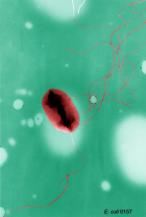
Category Archives: STEC E.coli

Research – Inactivation of Shiga Toxin-Producing Escherichia coli and Listeria monocytogenes Within Plant Versus Beef Burgers in Response to High Pressure Processing

JFP

kswfoodworld E.coli O157

Image CDC

We evaluated high pressure processing to lower levels of Shiga toxin-producing Escherichia coli (STEC) and Listeria monocytogenes inoculated into samples of plant or beef burgers. Multi-strain cocktails of STEC and L. monocytogenes were separately inoculated (ca. 7.0 log CFU/g) into plant burgers or ground beef. Refrigerated (i.e., 4°C) or frozen (i.e., -20°C) samples (25-g each) were subsequently exposed to 350 MPa for up to 9 or 18 min or 600 MPa for up to 4.5 or 12 min, respectively. When refrigerated plant or beef burger samples were treated at 350 MPa for up to 9 min, levels of STEC were reduced by ca. 0.7 to 1.3 log CFU/g. However, when refrigerated plant or beef burger samples were treated at 350 MPa for up to 9 min, levels of L. monocytogenes remained relatively unchanged (ca. ≤0.3 log CFU/g decrease) in plant burger samples, but were reduced by ca. 0.3 to 2.0 log CFU/g in ground beef. When refrigerated plant or beef burger samples were treated at 600 MPa for up to 4.5 min, levels of STEC and L. monocytogenes were reduced by ca. 0.7 to 4.1 and ca. 0.3 to 5.6 log CFU/g, respectively. Similarly, when frozen plant and beef burger samples were treated at 350 MPa up to 18 min, reductions of ca. 1.7 to 3.6 and ca. 0.6 to 3.6 log CFU/g in STEC and L. monocytogenes numbers, respectively, were observed. Exposure of frozen plant or beef burger samples to 600 MPa for up to 12 min resulted in reductions of ca. 2.4 to 4.4 log and ca. 1.8 to 3.4 log CFU/g in levels of STEC and L. monocytogenes, respectively. Via empirical observation, pressurization did not adversely affect the color of plant burger samples, whereas appreciable changes in color were observed in pressurized ground beef. These data confirm that time and pressure levels already validated for control of STEC and L. monocytogenes in ground beef will likely be equally effective towards these same pathogens in plant burgers without causing untoward effects on product color.

RASFF Alert – STEC E.coli – Organic Raw Milk Goats Cheese – Soft Cheese – Raw Milk Goats Cheese

RASFF-Logo

RASFF – shigatoxin-producing Escherichia coli (Stx1-, Stx2+, eae+, O103) in organic raw milk goat’s cheese from Belgium in Belgium

RASFF – shigatoxin-producing Escherichia coli (stx1+ stx2+ eae+ /25g) in soft cheese from Italy in the Netherlands

RASFF – shigatoxin-producing Escherichia coli (stx2a+ and stx2d+ /25g) in goat cheese with raw milk from France in Switzerland


RASFF Alert – STEC E.coli – Chilled Boneless Beef

RASFF-Logo

RASFF – shigatoxin-producing Escherichia coli (presence /25g) in chilled bonless beef from Argentina in Germany

USA – WARNING LETTER Sprouts Unlimited Inc MARCS-CMS 603883 — FEBRUARY 21, 2020 – E.coli O103

FDA

Dear Mr. Beach:

The U.S. Food and Drug Administration (FDA) inspected your sprouting operation located at 799 51st Street, Marion, Iowa, from December 31, 2019, to January 9, 2020.  FDA conducted this inspection because sprouts grown at your operation were linked by the state of Iowa Department of Inspections and Appeals, Department of Public Health, and the (b)(4) to an outbreak of human infections with Shiga toxin-producing Escherichia coli O103 (E. coli O103) in the state of Iowa.  This outbreak sickened 22 people between November 21 and December 14, 2019.  Shiga toxin-producing E. coli is a pathogenic bacterium that can cause serious illness in humans, including diarrhea, often with bloody stools.  Although most healthy adults can recover completely within a week, some people can develop a form of kidney failure called hemolytic uremic syndrome (HUS).  HUS is most likely to occur in young children and the elderly.  This condition can lead to serious kidney damage and death.

USA – Outbreak Investigation of E. coli O103: Clover Sprouts (February 2020)

FDA

February 26, 2020

Case Counts

Total Illnesses: 14
Hospitalizations: 0
Deaths: 0
Last illness onset: February 11, 2020
States with Cases: IA (3), IL (6), MO (1), TX (1), UT (3)

Recommendation

FDA, along with CDC and state and local partners, are investigating an outbreak of 14 illnesses caused by E. coli O103 in Iowa, Illinois, Missouri, Texas and Utah. CDC is reporting that the epidemiologic evidence indicates that clover sprouts from Jimmy John’s restaurants are a likely source of this outbreak.

The CDC is recommending that consumers who have recently eaten clover sprouts on a sandwich from Jimmy John’s restaurants and who are experiencing symptoms of E. coli infection, such as severe stomach cramps, diarrhea, fever, nausea, and/or vomiting, should contact their doctor and report their illness to their local health department. If consumers have a leftover sandwich with clover sprouts from Jimmy John’s, do not eat it and throw it away.

Generally, it is recommended that children, the elderly, pregnant women, and persons with weakened immune systems should avoid eating raw sprouts of any kind.

Jimmy John’s LLC reported that all of its restaurants stopped serving clover sprouts on February 24, 2020. At this time, clover sprouts should not be available at Jimmy John’s.

FDA has activated a team to coordinate this outbreak investigation. This team is currently collecting records and initiating a traceback investigation to determine the source of the clover sprouts. Authorities are investigating whether implicated sprouts have been distributed elsewhere and will continue monitoring for additional illnesses.

Background

On February 21, 2020, the FDA issued a warning letter to Jimmy John’s Franchise LLC for engaging in a pattern of receiving and offering for sale adulterated fresh produce, specifically clover sprouts and cucumbers. On February 24, 2020, Jimmy John’s reported to FDA that they had removed sprouts from their restaurants.

The warning letter lays out evidence from five outbreaks, including recent outbreaks in the state of Iowa during November and December 2019, of human infections with Escherichia coli O103, a Shiga toxin producing Escherichia coli (STEC) linked to sprouts.

These 14 illnesses are new and are not associated with the outbreaks mentioned in the Jimmy Johns warning letter. FDA will continue its investigation and provide updates as more information becomes available.

RASFF Alert – STEC E.coli – Organic Leak Seeds for Sprouting

RASFF-Logo

RASFF – enteropathogenic Escherichia coli (stx- eae+ /25g) in organic leek seeds for sprouting from China, via Italy in Norway

UK – STEC increase for England and Wales in 2018

Food Safety News

More than 1,500 confirmed Shiga toxin-producing E. coli (STEC) infections were reported in England and Wales in 2018 and five people died, according to Public Health England data.

A total of 1,553 confirmed cases included 607 laboratory-confirmed cases of STEC serogroup O157 and 612 infections where a non-O157 serogroup was isolated. In 2017, 948 confirmed cases of STEC were reported.

For 334 cases, samples tested positive by Polymerase Chain Reaction (PCR) for Shiga toxin (stx) genes, but STEC was not cultured with more than 300 of these in England.

Four STEC outbreaks caused by O157 affecting 55 people were investigated in 2018. It was not possible to find the vehicle and/or source of infection for the two largest and national outbreaks were a foodborne source was suspected. In one of these, 26 people were ill with 10 needing hospital treatment. In the other, 17 people were sick and four were hospitalised. The other two smaller outbreaks involved a petting farm and an outdoor event.

RASFF Alert – STEC E.coli – Chilled Bovine Carcass

RASFF-Logo

RASFF – shigatoxin-producing Escherichia coli (stx1+, stx2+, eae+ /25g) in chilled bovine carcass from Belgium in Belgium

Research -Evaluation of the Efficacy of Three Direct Fed Microbial Cocktails To Reduce Fecal Shedding of Escherichia coli O157:H7 in Naturally Colonized Cattle and Fecal Shedding and Peripheral Lymph Node Carriage of Salmonella in Experimentally Infected Cattle

Journal of Food Protection

ABSTRACT

Two experiments were conducted to evaluate the feeding of direct fed microbials (DFMs) on fecal shedding of Escherichia coli O157:H7 in naturally infected cattle (experiment I) and on Salmonella in the feces and peripheral lymph nodes (PLNs) of experimentally infected cattle (experiment II). Thirty cattle, 10 per treatment, were used in each experiment. Treatments in experiment I consisted of a control (lactose carrier only); DFM1, a 1:1 ratio of Enterococcus faecium and Lactobacillus animalis; and DFM2, a 1:1 ratio of Lactobacillus acidophilus and Pediococcus acidilactici. In Experiment II, DFM1 was replaced with DFM3, a 1:2 ratio of Lactobacillus reuteri and other Lactobacillus strains. Additives were mixed in water and applied as a top-dressing to each pen’s daily ration for 50 days. Approximately half-way through each experiment, the DFM concentration was doubled for the remainder of the study. Fecal samples were collected throughout experiment I and cultured for E. coli O157:H7. Cattle in experiment II were inoculated intradermally with Salmonella Montevideo on days 32, 37, and 42 and then necropsied on days 49 and 50 (five cattle per treatment on each day). Innate immune function was assessed on days 29, 49, and 50. In experiment I, fecal concentration and prevalence of E. coli O157:H7 were not different (P > 0.10) nor was there an effect (P = 0.95) on the percentage of super shedders (cattle shedding ≥3.0 log CFU/g of feces). In experiment II, no treatment differences (P > 0.05) were observed for Salmonella in the PLNs except for the inguinal nodes, which had a significantly lower Salmonella prevalence in DFM-supplemented cattle than in the controls. Immune function, as measured by monocyte nitric oxide production and neutrophil oxidative burst, was decreased (P < 0.05) in the DFM treatment groups. Although results of this research indicate little to no effect of these DFMs on E. coli O157:H7 or Salmonella in cattle, an increase in the duration of administration to that similar to what is used for commercial cattle might elicit treatment differences.

HIGHLIGHTS
  • Direct fed microbials were evaluated for pathogen mitigation in cattle.

  • No treatment effects on fecal shedding of E. coli O157:H7 were observed.

  • DFM treatment reduced Salmonella in only one the four lymph node types examined.

  • Under these experimental conditions, short-term feeding of DFMs failed to mitigate pathogens.


USA – Statement on the Salinas-linked romaine lettuce E. coli O157:H7 outbreak and status update on investigation

FDA

The U.S. Food and Drug Administration, along with the U.S. Centers for Disease Control and Prevention and state and local partners, previously reported on Dec. 12 that public health experts were tracking three separate outbreaks linked to romaine lettuce caused by three different strains of E. coli O157:H7. We also reported that, through the FDA’s traceback investigation, we were able to identify a common grower between each of these outbreaks in Salinas, California based on available supply chain information.

Today, the FDA is providing an update on the status of the E. coli O157:H7 illnesses linked to romaine lettuce, along with recent findings based on our investigation of fields linked to a common grower, which was identified in our traceback. It should be noted that romaine from this grower does not explain all of the illnesses seen in these outbreaks.

Outbreaks declared over, consumer advisory lifted

The FDA is lifting the consumer advisory to avoid romaine lettuce from Salinas as the growing season for this region is over, and there is no longer a need for consumers to avoid it. There is also no need to avoid other produce products from Salinas.

The FDA and CDC have been tracking two multi-state romaine lettuce outbreaks. Today, federal health officials are declaring both multi-state romaine lettuce outbreaks over. One of the outbreaks sickened 167 people in 27 states. The other outbreak, linked to Fresh Express salad kits, sickened 10 people in five states.

There was also a third outbreak in Washington State that sickened 11 people. This outbreak has also been declared over.

The last reported illness onset date for all the outbreaks was Dec. 21. Based on this information, it appears that our Nov. 22 advisory to not eat romaine from Salinas played an important role in preventing illnesses and containing this outbreak because it prompted the removal of romaine lettuce from Salinas from the marketplace and warned consumers to throw away romaine from that growing region.

Common grower, multiple fields investigated

The FDA traceback investigation for these outbreaks required investigators to go through hundreds of supply chain records to find a commonality to a single grower with multiple fields. We were able to narrow this down further to at least 10 fields in the lower Salinas Valley.

Investigators from the FDA, CDC, the California Department of Food and Agriculture and the California Department of Public Health, visited several of these fields and took a variety of samples from water, soil and compost. So far, sample results have come back negative for all of the three outbreak strains of E. coli O157:H7. However, we did find a strain of E. coli that is unrelated to any illnesses in a soil sample taken near a run-off point in a buffer zone between a field where product was harvested and where cattle are known to occasionally graze. This could be an important clue that will be further examined as our investigation continues. However, this clue does not explain the illnesses seen in these outbreaks.

Our investigation is ongoing, and we are doing everything possible to find the source or sources of contamination. The investigation into how this contamination occurred is important, so romaine growers can implement measures that will prevent future contamination and illnesses.

The FDA is planning to conduct an additional, in-depth, root-cause investigation. The investigation will further characterize how contamination might have occurred and will inform what preventive controls are needed to prevent future outbreaks. Once complete, we plan to issue a prompt report and share lessons learned, so that growers can implement best practices to protect consumers from contaminated produce.

Investigation will inform future prevention

As we mentioned in our last update, it is important to remember that millions of servings of fresh leafy greens are safely eaten every day by consumers, although the repeat nature of these outbreaks linked to leafy greens – and more specifically to romaine lettuce – remains a concern.

We are doing our part by continuing our sampling assignment to monitor for pathogens in romaine lettuce across the nation. Industry can and must do their part too. Everyone across the romaine supply chain must do everything possible to fully understand why and how these outbreaks keep happening and continue to aggressively implement preventive measures to further protect consumers.

Outbreaks illustrate need to stay focused on prevention

It’s critical that all stakeholders, including growers, processors, distributors and retailers, stay laser-focused on prevention to help bend the curve of foodborne illness. We understand the importance of food safety, and we know there’s a human face to every foodborne illness.

The FDA remains committed to doing everything we can to prevent outbreaks, working with fellow regulators and the food industry to identify and address causes and keep consumers aware of potential risks.

Rest assured that we are working hard every day to try to prevent foodborne illness. We also know that food safety is a shared responsibility. It involves food producers, distributors, manufacturers, retailers and certainly regulatory officials at the federal, state, local, territorial and tribal levels. That’s why we work directly with our partners on things such as training and inspections. We also work closely with industry, so they understand our requirements and are educated on the latest scientific standards and good agricultural practices. Working together, we have and will continue to advance food safety.

A New Era of Smarter Food Safety

While we will always place emphasis on prevention, being able to promptly respond to an outbreak when it occurs is a critical part of our food safety mission.

As public health agencies have gotten better at detecting foodborne illnesses, our ability to trace back to the source of contaminated foods that may have caused the illnesses has lagged, due in part to the lack of modernized food traceability capabilities.

As part of the FDA’s New Era of Smarter Food Safety initiative, we plan to use advances in technology to improve our ability to track and trace products through the supply chain. We’ll be launching a New Era of Smarter Food Safety Blueprint in early 2020 that will outline how we will advance our work in this area. This blueprint will help consumers get information more quickly, enabling people to better protect themselves and their families.

We look forward to continuing our work with growers, processors, distributors and retailers in our shared efforts to protect consumers, and we will continue to provide updated information as it becomes available.

The FDA, an agency within the U.S. Department of Health and Human Services, protects the public health by assuring the safety, effectiveness, and security of human and veterinary drugs, vaccines and other biological products for human use, and medical devices. The agency also is responsible for the safety and security of our nation’s food supply, cosmetics, dietary supplements, products that give off electronic radiation, and for regulating tobacco products.