Category Archives: Staphylococcal Toxin

Korea – Food Poisoning Bacteria Detected in Orion’s Custard Snack; FDA Halts Sales, Orders Recall

Business Korea

The Food and Drug Administration announced on Jan. 3 that it is currently suspending sales and recalling the Orion food company’s popular “Custard” snack after detecting food poisoning bacteria in the product. Custard is considered to be one of Orion’s signature products alongside Choco Pies.

According to the FDA, Staphylococcus aureus, the detected bacterium, secretes toxins in food, causing symptoms like vomiting and diarrhea. A “non-compliant” judgment is issued if even one of five samples tests positive for this bacterium during inspections.

The manufacturing date of the affected product is Dec. 22, 2023, with an expiration date of June 21, 2024. The product is a 276 g package containing 12 snacks weighing 23 g each. It was found that a total of 1,318.2 kg of this product had been shipped from Orion’s 4th Cheongju factory.

An Orion representative stated, “We immediately took recall measures upon receiving the results of our self-administered quality inspection. Most of the products targeted for recall have already been collected, and we plan to complete the recall by tomorrow.”

출처 : Businesskorea(https://www.businesskorea.co.kr)
RASFF Alert – Staphylococcus –

RASFF

Detection of staphylococci on cheese from France in Belgium, Spain, Ukraine, UK

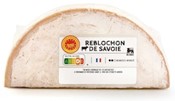
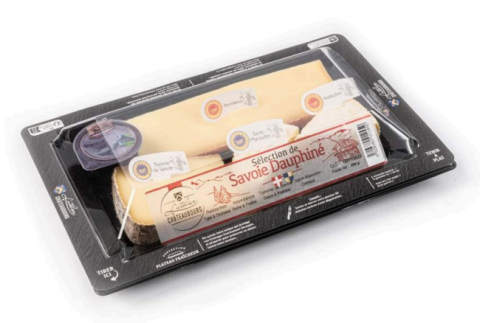
Luxembourg – Selection of Savoie Dauphiné from the L’Atelier de CHATEAUBOURG brand – Reblochon de Savoie from the Delhaize brand – Staphylococcus aureus.

SAP

The following product is recalled in Luxembourg:

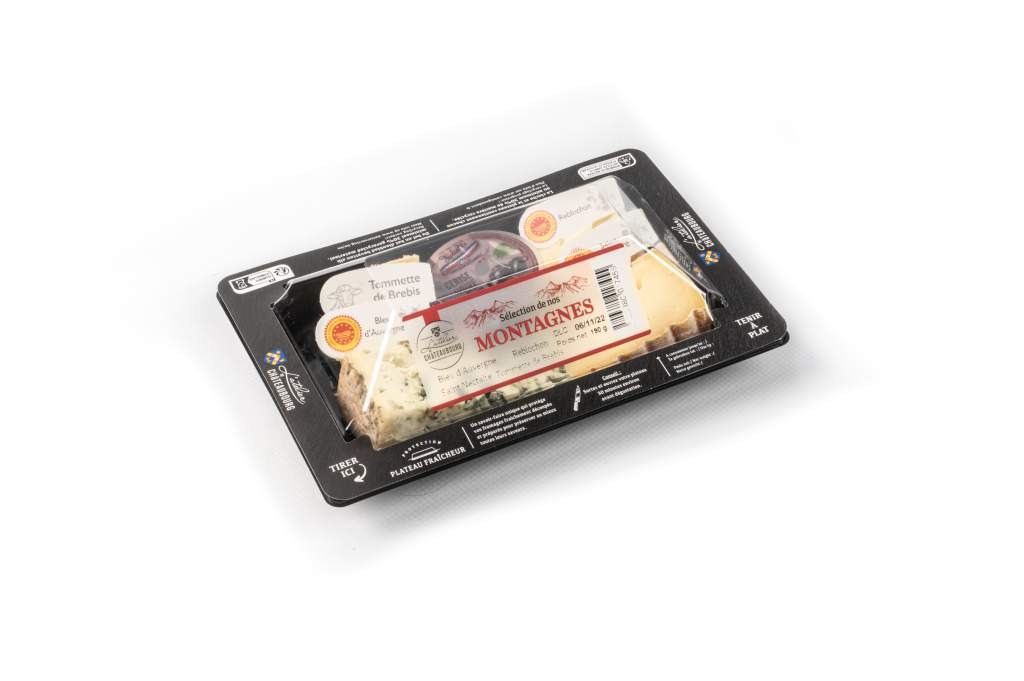
Name Selection of Savoie Dauphiné
Brand The CHATEAUBOURG Workshop
Unit 260g
Barcode 3529380012450
Date-bound batch (DLC/DDM) 001379892 – 12/31/2023;

001381855 – 01/05/2024;

001381899 – 06/01/2024;

001383025 – 01/08/2024;

001383647 – 01/10/2024

Sales period from 07/12/2023 to 18/12/2023

Danger : Possible presence of Staphylococci

Staphylococcus aureus can cause symptoms that usually include nausea, abdominal cramps, vomiting and diarrhea. In more severe cases, dehydration, headache, muscle cramps, and transient changes in blood pressure and pulse rate may occur. The illness is relatively mild and usually lasts only a few hours to a day; however, in some cases the illness is severe enough to require hospitalization.

The product can be distributed by different points of sale in Luxembourg.

SAP

The following product is recalled in Luxembourg:

Name Reblochon from Savoie
Brand Delhaize
Barcode 2218190000009
Use-by date (DLC) 12/19/2023; 12/21/2023; 12/26/2023; 12/28/2023
Batch 307475; 307482; 307485; 314492
Sales period 11/29/2023 to 12/16/2023

Danger: Presence of Staphylococci

Staphylococcus aureus can cause symptoms that usually include nausea, abdominal cramps, vomiting and diarrhea. In more severe cases, dehydration, headache, muscle cramps, and transient changes in blood pressure and pulse rate may occur. The illness is relatively mild and usually lasts only a few hours to a day; however, in some cases the illness is severe enough to require hospitalization.

The products can be distributed by different points of sale in Luxembourg.

Source of information: Recall notification

France – Cheese selections – Staphylococcal Enterotoxins

Gov France

Product category
Food
Product subcategory
Milk and dairy products
Product brand name
The CHATEAUBOURG Workshop
Model names or references
Savoie Dauphiné Selection
Product identification
GTIN Batch Date
3529380012450 001379892 Use-by date 12/31/2023
3529380012450 001381855 Use-by date 05/01/2024
3529380012450 001381899 Use-by date 06/01/2024
3529380012450 001383025 Use-by date 01/08/2024
3529380012450 001383706 Use-by date 01/11/2024
3529380012450 001383647 Use-by date 01/10/2024
Start/end date of marketing
Of 05/12/2023 At 16/12/2023
Storage temperature
Product to keep in the refrigerator
Health mark
FR 35.068.004 CE
Geographical sales area
Whole France
Distributors
AUCHAN, CARREFOUR, CASINO, GOOD EATING, INTERMARCHE, LECLERC, SYSTEM U

Gov France

Product category
Food
Product subcategory
Milk and dairy products
Product brand name
The CHATEAUBOURG Workshop
Model names or references
Selection of our Mountains
Product identification
GTIN Batch Date
3529380017455 001379845 Use-by date 12/30/2023
3529380017455 001379884 Use-by date 12/31/2023
Start/end date of marketing
Of 05/12/2023 At 12/12/2023
Storage temperature
Product to keep in the refrigerator
Health mark
FR 35.068.004 CE
Geographical sales area
Whole France
Distributors
AUCHAN, CARREFOUR, INTERMARCHE, LECLERC, SYSTEM U

Research – Sweet and sour synergy: exploring the antibacterial and antibiofilm activity of acetic acid and vinegar combined with medical-grade honeys

Microbiology Society

ABSTRACT

, a combination of honey and vinegar, has been used as a remedy for wounds and infections in historical and traditional medical settings. While honey is now clinically used to treat infected wounds, this use of a complex, raw natural product (NP) mixture is unusual in modern western medicine. Research into the antimicrobial activity of NPs more usually focuses on finding a single active compound. The acetic acid in vinegar is known to have antibacterial activity at low concentrations and is in clinical use to treat burn wound infections. Here, we investigated the potential for synergistic activity of different compounds present in a complex ingredient used in historical medicine (vinegar) and in an ingredient mixture (). We conducted a systematic review to investigate published evidence for antimicrobial effects of vinegars against human pathogenic bacteria and fungi. No published studies have explicitly compared the activity of vinegar with that of a comparable concentration of acetic acid. We then characterized selected vinegars by HPLC and assessed the antibacterial and antibiofilm activity of the vinegars and acetic acid, alone and in combination with medical-grade honeys, against and . We found that some vinegars have antibacterial activity that exceeds that predicted by their acetic acid content alone, but that this depends on the bacterial species being investigated and the growth conditions (media type, planktonic vs. biofilm). Pomegranate vinegars may be particularly interesting candidates for further study. We also conclude that there is potential for acetic acid, and some vinegars, to show synergistic antibiofilm activity with manuka honey.

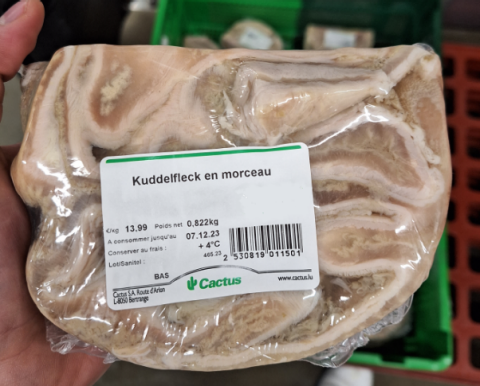
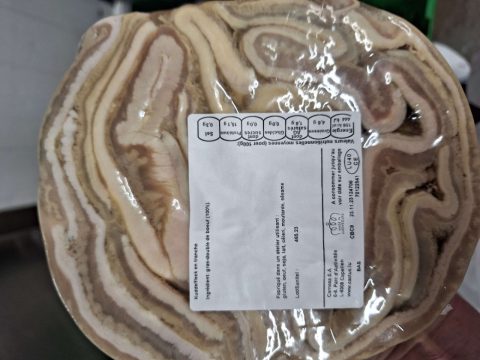
Luxembourg – Kuddelfleck from the Cactus brand – Listeria monocytogenes, Escherichia coli and Staphylococci

SAP

Name; Kuddelfleck in pieces

Brand; Cactus

Use-by date (DLC); 07/12/2023

Batch; 465.23

Sales period; 11/24/23 to 11/27/2023

Name Sliced ​​Kuddelfleck
Brand Cactus
Use-by date (DLC) 07/12/23
Batch 465.23
Sales period 11/24/23 to 11/27/2023

Danger  : Presence of Listeria monocytogenes , Escherichia coli and Staphylococci

Listeria monocytogenes can cause fever, headache and gastroenteritis. Vulnerable people such as the immunocompromised and elderly and young children may experience neurological symptoms due to meningitis. Pregnant women should also be particularly attentive to these symptoms. Gastroenteritis can appear between a few hours and 3 days after consumption, while neurological symptoms can only appear after 3 months. People who have consumed these products and present these symptoms are invited to consult a doctor and report this consumption.

Among  Escherichia coli , some can cause food poisoning which can occur within a week after consumption and result in gastrointestinal disorders often accompanied by cramps. These symptoms may be aggravated in young children, immunocompromised individuals and the elderly. People who have consumed these products and present these symptoms are invited to consult a doctor and report this consumption.

Staphylococcus aureus can cause symptoms that usually include nausea, abdominal cramps, vomiting and diarrhea. In more severe cases, dehydration, headache, muscle cramps, and transient changes in blood pressure and pulse rate may occur. The illness is relatively mild and usually lasts only a few hours to a day; however, in some cases the illness is severe enough to require hospitalization.

Norway – Coop Norge SA and Goman Vest are recalling Coop Suksesskake small 500g, due to the content of harmful bacteria – Staphylococcus

Matportalen

Coop Norge SA recalls Coop Success Cake small 500g. The product is marked with lot numbers 563452 and 563462. The reason is that coagulase-positive staphylococci have been detected through routine analysis samples. The product is sold at OBS Lagunen, OBS Sartor, OBS Vestkanten, OBS Horisont and Coop Mega Nordås.

The product can be dangerous to health and should therefore not be eaten. The consumer can return the product with the specified lot number to the store for a refund, or throw it away.

The lot consists of 17 cakes, of which 12 pieces have been sold to consumers.

Contact
Coop: Harald Kristiansen, communications manager: harald.kristiansen@coop.no

Hong Kong – Kindergarten teacher and 10 kids affected in suspected food poisoning cluster

The Standard HK

The Centre for Health Protection is now investigating a suspected food poisoning cluster affecting 10 children and a female teacher who have consumed steamed rice with pumpkin and diced pork.

The cluster involved eight boys and two girls, aged 3 to 5, and a female teacher, who developed abdominal pain and diarrhea about 5.5 to 15 hours after having lunch at a kindergarten in Eastern District on Wednesday.

One of them sought medical advice and none required hospitalization. All the kids and the teacher are in stable conditions.

Initial investigation of the CHP revealed that the affected persons had consumed common food and the food concerned was steamed rice with pumpkin and diced pork.

The poisoning might have been caused by Bacillus cereus or Clostridium perfringens; the CHP noted.

“The personnel from the Centre for Food Safety of the Food and Environmental Hygiene Department have conducted an investigation at the concerned premises. The CHP’s investigation is ongoing,” it said.

Quebec – Notice not to consume La Cloche cendrée cheese prepared and sold by the company Fromagerie du Vieux St-François – Staphylococcus aureus

Quebec

The Ministry of Agriculture, Fisheries and Food (MAPAQ), in collaboration with the company Fromagerie du Vieux St-François, located at 4740, boulevard des Mille- Îles, in Laval, is warning the population not to consume the product indicated in the table below, because this food is likely to contain the bacteria Staphylococcus aureus .

Product name

Formats

Target lot

“The Ashen Bell”

200g

274 – Best before 12122023

The product which is the subject of this warning was offered for sale at the establishment designated above. It came in white packaging with a black label on it. It was sold refrigerated.

The operator is recalling the product in question. He agreed with MAPAQ to broadcast this warning as a precautionary measure. People who have this product in their possession are advised not to consume it. They must return it to the establishment where they purchased it or throw it away.

Even if the affected product does not show signs of spoilage or suspicious odor, its consumption may represent a health risk.

Food poisoning by staphylococci is characterized by a sudden onset of nausea, vomiting, abdominal pain, cramps and diarrhea. Usually, symptoms appear 30 minutes to 8 hours after eating contaminated food and disappear after 24 hours.

It should be noted that no cases of illness associated with the consumption of this food have been reported to MAPAQ to date.

Research – Cooked rice safety: A review of status and potential of radiative pasteurization

Wiley Online

Abstract

Microbial contamination in cooked rice-based foods poses a global concern due to rice’s widespread consumption. This review aims to consolidate information on harmful microorganisms associated with such foods from various countries and their adverse effects on consumers. Additionally, it explores the reported causes of microbial contamination in cooked rice-based dishes and proposes an intervention strategy for safer consumption. The findings highlight that ready-to-eat cooked rice-based foods may harbor unsafe levels of microorganisms like Bacillus cereus, Staphylococcus aureus, and Aspergillus spp. A recommended solution is the application of microwave pasteurization. This method involves cooking rice in pasteurized packaging, minimizing human contact, and effectively controlling harmful microorganisms. Microwave pasteurization emerges as a promising approach to ensure the safe consumption of cooked rice-based foods by reducing microbial contamination levels.