Category Archives: shellfish toxin

FDA Advises Restaurants and Retailers Not to Serve or Sell and Consumers Not to Eat Certain Whole, Live Scallops Believed to Be Harvested from a Prohibited Area in Massachusetts and Distributed by Intershell International Corp (MA 7802 SP)

FDA

Audience

  • Restaurants and food retailers in Illinois (IL), Massachusetts (MA), New Jersey (NJ), New York (NY), and Pennsylvania (PA) that have recently purchased certain Intershell International Corp (MA 7802 SP) whole, live scallops that were received from an unlicensed harvester, believed to be harvested from prohibited waters in MA and incorrectly labeled as harvest location FED 514, with harvest dates 12/26/23, 12/27/23 and 01/01/24.
  • Consumers in IL, MA, NJ, NY, and PA who have recently purchased or consumed certain Intershell International Corp (MA 7802 SP) whole, live scallops, that were received from an unlicensed harvester, believed to be harvested from prohibited waters in MA and incorrectly labeled as harvest location FED 514, with harvest dates 12/26/23, 12/27/23 and 01/01/24.

Product

Certain whole, live scallops that were received from an unlicensed harvester, believed to be harvested from prohibited waters in MA and incorrectly labeled as harvest location FED 514, with harvest dates 12/26/23, 12/27/23 and 01/01/24 that were distributed to IL, MA, NJ, NY, and PA. It is possible that these scallops may have been distributed to other states as well.

Purpose

The US Food and Drug Administration (FDA) is advising consumers not to eat, and restaurants and food retailers not to sell, and to dispose of certain Intershell International Corp (MA 7802 SP) whole, live scallops that were received from an unlicensed harvester, believed to be harvested from prohibited waters in MA and incorrectly labeled as harvest location FED 514, with harvest dates 12/26/23, 12/27/23 and 01/01/24 because they may be contaminated. The scallops were directly distributed to distributors and retailers in IL, MA, NJ, NY, and PA and may have been distributed further from these states.

Scallops harvested from prohibited waters may be contaminated with human pathogens, toxic elements or poisonous or deleterious substances and can cause illness if consumed.

New Zealand – Public health warning: shellfish biotoxin alert for Waiheke Island

MPI

New Zealand Food Safety is advising the public not to collect or consume shellfish gathered from some southern beaches on Waiheke Island due to the possible presence of biotoxins.

“An algae-like organism called Okeania spp has been detected on beaches at Surfdale and Blackpool on the southern side of Waiheke Island,” says New Zealand Food Safety deputy director-general Vincent Arbuckle

Okeania spp is a cyanobacteria that forms dark-coloured mats of slimy material when it washes up on the beach. As these cynobacterial mats decompose, they turn into a stinky sludge. It can also produce a toxin called Lyngbyatoxin-A, which can cause skin and eye irritation and respiratory issues.

“Samples of the mats were collected by Auckland Council for testing, which has confirmed the presence of Okeania spp and Lyngbyatoxin-A.

“Because of the potential health risks, New Zealand Food Safety is advising the public not to consume shellfish from Surfdale and Blackpool beaches, as well as to avoid coming into contact with the cyanobacterial mats.

“Affected shellfish include bivalve shellfish such as mussels, oysters, tuatua, pipi, toheroa, cockles, and scallops, as well as pūpū (cat’s eyes), Cook’s turban and kina (sea urchin).

“The risks of this toxin contaminating shellfish is unknown, so this warning is precautionary until we can find out more. It’s important to note that cooking shellfish will not destroy biotoxins.

“At this stage, finfish are not included in this public health warning, but we advise people to gut the fish and discard the liver before cooking.”

New Zealand Food Safety has had no notifications of associated illness.

If anyone becomes ill after eating shellfish from an area where a public health warning has been issued, phone Healthline for advice on 0800 61 11 16, or seek medical attention. You are also advised to contact your nearest public health unit and keep any leftover shellfish for testing.

“New Zealand Food Safety is keeping an eye on the situation and will notify the public of any changes,” says Mr Arbuckle.

Commercially harvested shellfish – sold in shops and supermarkets or exported – is subject to strict water and flesh monitoring programmes by New Zealand Food Safety to ensure they are safe to eat.

RASFF Alert- Shellfish Biotoxin – Okadaic Acid Dinophysis Toxin – DSP – Clams

RASFF

Elevated levels of okadaic acid and dinophysis toxin in coquinas from Portugal in Spain

New Zealand – Kawhia- Shellfish Toxin Alert – PSP

MPI

Reason for alert Paralytic Shellfish Poisoning (PSP)

Date warning issued Media release: 6 December 2023
Affected area The warning extends from Papanui Point, just south of Raglan, to Tirua Point, which is just south of Marokopa. The warning also includes Kawhia and Aotea harbours.
Shellfish affected Mussels, oysters, tuatua, pipi, toheroa, cockles and scallops, as well as pūpū (cat’s eyes), Cook’s turban and kina (sea urchin).

Note, cooking shellfish does not remove the toxin.

Pāua, crab and crayfish may still be eaten if the gut has been completely removed prior to cooking, as toxins accumulate in the gut. If the gut is not removed its contents could contaminate the meat during the cooking process. Finfish are not affected by this warning.

New Zealand – Public health warning: shellfish biotoxin alert for East Coast of North Island further extended

MPI

New Zealand Food Safety is extending its advisory to the public not to collect or consume shellfish gathered from the East Coast of the North Island due to the presence of paralytic shellfish toxins.

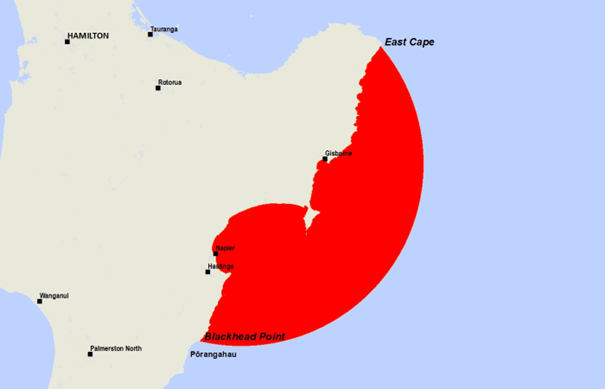
“We have extended the existing warning north to now span from Cape Runaway all the way south to Blackhead Point, which is just north of Pōrangahau. Follow-up tests on mussels from Hicks Bay Beach showed levels of paralytic shellfish toxins three times the safe limit,” says New Zealand Food Safety deputy director-general Vincent Arbuckle.

“Please do not gather and eat shellfish from this area because anyone doing so could get sick. Affected shellfish include bivalve shellfish such as mussels, oysters, tuatua, pipi, toheroa, cockles, and scallops, as well as pūpū (cat’s eyes), Cook’s turban and kina (sea urchin).

“We are monitoring an algal bloom off the East Coast, which is spreading. This type of algae produces a dangerous toxin and when shellfish filter-feed, these toxins can accumulate in their gut and flesh. Generally, the more algae there are in the water, the more toxic the shellfish get.

“Cooking the shellfish does not remove the toxin, so shellfish from this area should not be eaten.”

Symptoms of paralytic shellfish poisoning usually appear within 10 minutes to 3 hours of eating and may include:

  • numbness and a tingling (prickly feeling) around the mouth, face, hands, and feet
  • difficulty swallowing or breathing
  • dizziness and headache
  • nausea and vomiting
  • diarrhoea
  • paralysis and respiratory failure and, in severe cases, death.

Pāua, crab, and crayfish may still be eaten if the gut has been completely removed prior to cooking, as toxins accumulate in the gut. If the gut is not removed, its contents could contaminate the meat during the cooking process.

Finfish are not affected by this public health warning, but we advise gutting the fish and discarding the liver before cooking.

New Zealand Food Safety has had no notifications of associated illness.

If anyone becomes ill after eating shellfish from an area where a public health warning has been issued, phone Healthline for advice on 0800 61 11 16, or seek medical attention immediately. You are also advised to contact your nearest public health unit and keep any leftover shellfish in case it can be tested.

“We are monitoring shellfish in the region and will notify the public of any changes to the situation,” says Mr Arbuckle.

Commercially harvested shellfish – sold in shops and supermarkets or exported – is subject to strict water and flesh monitoring programmes by New Zealand Food Safety to ensure they are safe to eat.

New Zealand – Shellfish Biotoxin Alert


North Island warnings

East Cape

Reason for alert

Paralytic Shellfish Poisoning (PSP)

Date warning issued

Media release: 17 November 2023 (further extended)

Media release: 10 November 2023 (extended)

Media release: 12 October 2023

Affected area

The affected area now extends from East Cape to Blackhead Point, just north of Porangahau

Shellfish affected

Mussels, oysters, tuatua, pipi, toheroa, cockles, scallops, catseyes, kina (sea urchin) and all other bivalve shellfish.

Note, cooking shellfish does not remove the toxin.

Pāua, crab and crayfish may still be eaten if the gut has been completely removed prior to cooking, as toxins accumulate in the gut. If the gut is not removed its contents could contaminate the meat during the cooking process.

Symptoms

Symptoms typically appear between 10 minutes and 3 hours after ingestion and may include:

  • numbness and a tingling (prickly feeling) around the mouth, face, and extremities (hands and feet)
  • difficulty swallowing or breathing
  • dizziness
  • headache
  • nausea
  • vomiting
  • diarrhoea
  • paralysis and respiratory failure and in severe cases, death.

Other information

Paralytic shellfish toxins have been detected in shellfish at levels over the safe limit of 0.8mg/kg set by New Zealand Food Safety. Ongoing testing will continue and any changes will be communicated accordingly.

Map of the affected area

Map showing the area covered by the shellfish biotoxin alert extends from East Cape all the way south to Blackhead Point, just north of Pōrangahau.

Research – The study supports the view that shellfish outbreaks are under-reported

Food Safety News

A pilot study in France has pointed to a significant under-reporting of shellfish-related foodborne outbreaks.

The objectives of the research were to quantify and describe the health impact of shellfish-related outbreaks as well as the circumstances of occurrence in Brittany, with the end goal of reducing their frequency.

An online questionnaire looked at shellfish consumption between November 2021 and April 2022, the practice of shore fishing, and the occurrence of shellfish outbreaks over the past five years.

A total of 438 responses were received between May and July 2022. Most respondents were women, the median age was 46, and 21 percent practiced shore fishing. From November 2021 to April 2022, 93 percent of participants reported having eaten shellfish. Almost two-thirds ate shellfish raw and cooked, while a quarter only ate cooked shellfish. Scallops and mussels were the most consumed, but oysters were the top raw type of shellfish eaten.

Irish seafood agency reveals critical incidents and controls in 2022

Lexblog

The Irish agency responsible for seafood controls has revealed alleged illness from shellfish and detection of pathogens in products in its 2022 annual report.

The Sea-Fisheries Protection Authority (SFPA) is tasked with ensuring seafood safety for consumers up to retail and verifying seafood trade.

2022 was described as a challenging year for Ireland’s seafood sector with continuing repercussions from Brexit, the fallout from the Russian invasion of Ukraine, the impact of COVID-19 in export markets, and the energy and cost-of-living crises.

Sea-Fisheries Protection Officers (SFPOs) carried out 1,958 food safety official controls across 2,323 premises. This included inspections of approved establishments, sampling, vessel hygiene checks, and certification for a consignment of food exported to another country. A total of 1,249 samples were taken, the majority being food items.

SFPA responded to 74 incidents relating to concerns about the safety or quality of food which required examination because of public health risks.

Twenty-three incidents were reports of alleged illness following consumption of live bivalve mollusks, particularly oysters. Six were due to detecting Listeria monocytogenes in fishery products, and five were suspected Norovirus in shellfish with no reports of illness.

New Zealand – Public health warning: shellfish biotoxin alert for Northland and East Cape

MPI

New Zealand Food Safety is advising the public not to collect or consume shellfish gathered from the Northland east coast because of paralytic shellfish toxins.

In addition, it has extended an existing shellfish biotoxin warning from Cape Kidnappers right up to East Cape.

“Routine tests on mussels from Houhora have shown levels of paralytic shellfish toxins over the safe limit,” says New Zealand Food Safety deputy director-general Vincent Arbuckle.

The warning extends from Cape Karikari north to Kokota (the Sandspit), just south of Parengarenga Harbour.

The current warning in Hawkes Bay has now been extended to extend from Cape Kidnappers right up to East Cape. Levels of paralytic shellfish toxins are increasing and the latest results from Tolaga Bay mussels have risen dramatically and are now 11 times over the safe limit.

As algal blooms increase in size, the levels of toxins in shellfish can reach higher levels.

“Please do not gather and eat shellfish from these affected areas because anyone doing so could get seriously sick.”

“Cooking the shellfish does not remove the toxin, so shellfish from these areas should not be eaten.”

Symptoms of paralytic shellfish poisoning usually appear within 10 minutes to 3 hours of eating and may include:

  • numbness and a tingling (prickly feeling) around the mouth, face, hands, and feet
  • difficulty swallowing or breathing
  • dizziness and headache
  • nausea and vomiting
  • diarrhoea
  • paralysis and respiratory failure and, in severe cases, death.

Pāua, crab and crayfish may still be eaten if the gut has been completely removed prior to cooking, as toxins accumulate in the gut. If the gut is not removed, its contents could contaminate the meat during the cooking process.

New Zealand Food Safety has had no notifications of associated illness.

If anyone becomes ill after eating shellfish from an area where a public health warning has been issued, phone Healthline for advice on 0800 61 11 16, or seek medical attention immediately. You are also advised to contact your nearest public health unit and keep any leftover shellfish in case it can be tested.

“New Zealand Food Safety is monitoring shellfish in the region and will notify the public of any changes to the situation,” says Mr Arbuckle.

Commercially harvested shellfish – sold in shops and supermarkets or exported – is subject to strict water and flesh monitoring programmes by New Zealand Food Safety to ensure they are safe to eat.

New Zealand – Do not collect or eat shellfish from areas where shellfish biotoxin warnings have been issued – Hawke Bay – PSP

MPI

Hawke Bay

Reason for alert Paralytic Shellfish Poisoning (PSP)

Date warning issued Media release: 1 November 2023
Affected area Hawke Bay: Cape Kidnappers to Mohaka River.
Shellfish affected Mussels, oysters, tuatua, pipi, toheroa, cockles, scallops, catseyes, kina (sea urchin) and all other bivalve shellfish.

Note, cooking shellfish does not remove the toxin.

Pāua, crab and crayfish may still be eaten if the gut has been completely removed prior to cooking, as toxins accumulate in the gut. If the gut is not removed its contents could contaminate the meat during the cooking process.

Symptoms Symptoms typically appear between 10 minutes and 3 hours after ingestion and may include:

  • numbness and a tingling (prickly feeling) around the mouth, face, and extremities (hands and feet)
  • difficulty swallowing or breathing
  • dizziness
  • headache
  • nausea
  • vomiting
  • diarrhoea
  • paralysis and respiratory failure and in severe cases, death.
Other information Paralytic shellfish toxins have been detected in shellfish at levels over the safe limit of 0.8mg/kg set by New Zealand Food Safety. Ongoing testing will continue and any changes will be communicated accordingly.