Category Archives: Salmonella

UK – P & B Foods recalls Heera Chilli Powder Extra Hot because of the presence of Salmonella

FSA

P & B Foods Ltd is recalling Heera Chilli Powder Extra Hot because salmonella has been found in the product.

Product details

Heera Chilli Powder Extra Hot

Pack size 6 x 1kg
Batch code PB9446M/4
Best before end: April 2021

No other P & B Foods Ltd products are known to be affected.

Risk statement

The presence of salmonella in the product listed above. Symptoms caused by salmonella usually include fever, diarrhoea and abdominal cramps.

Action taken by the company

P & B Foods Ltd is recalling the above product. Point of sale notices will be displayed in all retail stores that are selling this product. These notices explain to customers why the product is being recalled and tell them what to do if they have bought the product. Please see the attached notice.

RASFF Alerts – Animal Feed Salmonella – Processed Animal Protein – Rapeseed Meal -Raw Pet Food

RASFF-Logo

RASFF – Salmonella enterica ser. Brandenburg (presence /25g) in processed animal protein from the Netherlands in Belgium

RASFF – Salmonella (presence /25g) in rapeseed meal from Germany in Germany

RASFF – Salmonella (presence /25g) in raw pet food from Germany in Germany

USA – Outbreak of Salmonella Infections Linked to Karawan brand Tahini

CDC

This outbreak appears to be over, but recalled tahini products have a long shelf life and may still be in people’s homes. Consumers unaware of the recall could continue to eat these products and potentially get sick. Visit the FDA websiteexternal iconfor a full list of recalled products.

Final Outbreak Information
Illustration of a megaphone.
  • As of June 26, 2019, this outbreak appears to be over.
  • A total of 6 people infected with the outbreak strain of Salmonella Concord were reported from 3 states.
    • Illnesses started on dates ranging from March 9, 2019, to May 2, 2019.
    • One hospitalization and no deaths were reported.
  • Epidemiologic, traceback, and laboratory evidence indicated that Karawan brand tahini products were the likely source of this outbreak.
  • Do not eat, sell, or serve recalled tahini that is labeled as Karawan Tahini, El-Karawan Tahin,i or SoCo Tahini. Do not eat, sell, or serve products made with recalled tahini, such as hummus.
  • This outbreak was not related to another recent multistate outbreak of Salmonella Concord infections linked to tahini. Ill people in the previous outbreak were infected with a different outbreak strain of Salmonella Concord.

Information – FDA issues new draft guidance to improve the safety of seeds for sprouting

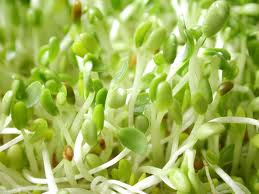
FDA alfalfa

“Over the past 22 years, the FDA has investigated 50 reported outbreaks of foodborne illness associated with contaminated sprouts. Together, these outbreaks resulted in more than an estimated 2,600 cases of illness. Last year, there were two reported outbreaks associated with sprouts, resulting in more than an estimated 100 illnesses. Studies indicate that contaminated seed is the likely source of most sprout-related outbreaks, as this commodity is inherently more susceptible to these issues because they are grown in warm and humid conditions that are favorable for bacteria like Salmonella, Listeria and E. coli,” said FDA Deputy Commissioner for Food Policy and Response Frank Yiannas. “The FDA is committed to taking swift action to respond to outbreaks related to sprouts and keep our food supply safe, but we also know that measures to prevent issues from happening in the first place are an important element of protecting consumers. By studying outbreaks related to sprouts over the years, we have been able to recommend changes in the industry to help lower the incidence of sprout-related outbreaks. Today’s new draft guidance is another critical step, like the Sprout Safety Alliance or sprout-specific requirements of the Produce Safety Rule, the agency is taking to prevent illnesses related to sprouts.”

The U.S. Food and Drug Administration today released a proposed draft guidance, “Reducing Microbial Food Safety Hazards in the Production of Seed for Sprouting,” intended to make the sprout seed industry (seed growers, conditioners, packers, holders, suppliers, and distributors) aware of the agency’s serious concerns with the continuing outbreaks of foodborne illness associated with the consumption of raw and lightly-cooked sprouts.

Incorporating aspects of the Codex Code of Hygienic Practice for Fresh Fruits and Vegetables Annex II, Annex for Sprout Production; the International Sprout Growers Association-Institute for Food Safety and Health’s “U.S. Sprout Production Best Practices”; and Good Agricultural Practices, the FDA’s draft guidance issued today provides the agency’s recommendations to firms throughout the production chain of seed for sprouting. It states that if a grower, holder, conditioner, or distributor reasonably believes that its seeds are expected to be used for sprouting, we recommend that the grower, holder, conditioner, or distributor take steps that are reasonably necessary to prevent those seeds from becoming contaminated. We also recommend that firms throughout the supply chain – from seed production and distribution through sprouting – review their current operations related to seeds for sprouting.

During the 60-day comment period for this draft guidance, stakeholders will be able to provide comments on the draft provisions. For more information on this guidance, as well as instructions on how to submit your comments, please visit Draft Guidance for Industry: Reducing Microbial Food Safety Hazards in the Production of Seed for Sprouting.


Research – Occurrence and Levels of Salmonella, Enterohemorrhagic Escherichia coli, and Listeria in Raw Wheat

Journal of Food Protection

ABSTRACT

Wheat flour has been implicated in several outbreaks of foodborne illness in recent years, yet little information is available regarding microbial pathogens in wheat and wheat flour. Information about microbial pathogens in wheat is needed to develop effective methods to prevent foodborne illnesses caused by wheat products. From 2012 to 2014, we conducted a baseline study to determine the prevalence and levels of pathogens in wheat samples taken before milling. A total of 5,176 wheat samples were tested for enterohemorrhagic Escherichia coli (EHEC), Salmonella spp., Listeria spp., and L. monocytogenes. Positive samples were assayed for most probable numbers (MPNs), and isolates were fingerprinted by pulsed-field gel electrophoresis (PFGE). The rate of detection of each pathogen tested was as follows: Salmonella was in 1.23% of the samples (average level of 0.110 MPN/g), EHECs occurred in 0.44% of the samples (0.039 MPN/g), and Listeria spp. occurred in 0.08% of samples (0.020 MPN/g), but L. monocytogenes was not detected. The PFGE assessment found a high diversity for all organisms. All EHEC PFGE patterns (22 of 22) were unique, and 39 of 47 Salmonella patterns (83%) were unique. These results indicate a diverse background of naturally occurring organisms. These findings suggest that the microbial contamination is coming from diverse sources and provide no evidence in support of a specific pathogen load. Altogether, our surveillance study shows that contamination of wheat with pathogens is clearly evident and poses a foodborne illness risk.

HIGHLIGHTS
  • Prevalence of Salmonella and E. coli in raw wheat emphasizes the need to cook wheat products.

  • 3,891 grain samples were tested for E. coli and Salmonella; 1,285 were tested for Listeria.

  • Of wheat berries sampled, 0.44% were positive for E. coli and 1.23% were positive for Salmonella.

  • Salmonella diversity was high, indicating various animal sources that are difficult to prevent.

  • Cooking wheat products is the best preventative measure against foodborne illness from wheat.

RASFF Alerts – Salmonella – Poultry Meat Burger – Chicken Breast Fillet – Black Pepper – Sesame Seeds – Chicken Meat- Chicken Liver – Betel Leaves -Cumin Seeds – Turkey Boneless Leg – Chicken Meat Preparation – MSM Chicken Meat

RASFF-Logo

RASFF – Salmonella (present /25g) in chilled poultry meat burger from Belgium in Belgium

RASFF – Salmonella (presence /25g) in chicken breast fillet from Poland in Poland

RASFF – Salmonella (present /25g) in black pepper from Brazil in Germany

RASFF – Salmonella enterica ser. Javiana (presence /25g), Salmonella enterica ser. Rubislaw (presence /25g) and Salmonella enterica ser. San Diego (presence /25g) in black pepper from Brazil in Germany

RASFF – Salmonella (presence /25g) in organic sesame seeds from Uganda in the Netherlands

RASFF – Salmonella (in 1 out of 5 samples /25g) in organic sesame seeds from Uganda in the Netherlands

RASFF – Salmonella enterica ser. Enteritidis (in 2 out of 5 samples /25g) in chilled chicken meat and chicken liver from Poland in Poland

RASFF – Salmonella (presence /10g) in pathogenic micro-organisms in from Belgium in Belgium

RASFF – Salmonella (in 2 out of 5 samples /25g) and high count of Escherichia coli (up to 29000 CFU/g) in betel leaves from Malaysia in the UK

RASFF – Salmonella (presence /10g) in frozen salted chicken meat preparation from Belgium in Belgium

RASFF – Salmonella (presence /25g) in cumin seeds from Syria in Spain

RASFF – Salmonella enterica ser. Infantis (present /10g) in frozen mechanically separated (MSM) chicken meat from Lithuania, with raw material from Poland in Lithuania

RASFF – Salmonella enterica ser. Derby (presence /25g) in turkey boneless leg steak without skin, vacuum packed from Poland in the Czech Republic

RASFF Alerts – Animal Feed – Salmonella – Rape Seed Meal – Mixed Meat Meal – Soy Feed Material

RASFF-Logo

RASFF – Salmonella enterica ser. Kottbus (presence /25g) in rape seed meal from Germany in Finland

RASFF – Salmonella enterica ser. Typhimurium (presence /25g) in mixed meat meal from the Netherlands in the Netherlands

RASFF – Salmonella (presence /25g) in soy feed material from Hungary in Poland

UK – Salmonella cases in UK from food on cruise ships confirmed with WGS

Food Safety News

The United Kingdom has reported 24 cases of Salmonella linked to travel on cruise ships.

Salmonella Enteritidis cases are from cruise ships visiting destinations in the Eastern Mediterranean and Middle East. The outbreak was detected through whole genome sequencing (WGS) analysis. They have sampling dates from May 6 to 21, 2019. Five other cases have sample dates ranging from 2014 to 2018.

Of the 24 cases in 2019, 12 are female and the median age is 64 years with a range of 40 to 84 years old. The most commonly reported cruise ship destinations are Croatia, Corfu, Greece, Israel, Italy, Jordan, Montenegro and Oman.

A total of 717 Salmonella infections were reported from April 29 to June 2 in England and Wales compared to 367 from April 1 to 28, according to Public Health England figures.

Investigations to date indicate there is more than one cruise holiday associated with the outbreak. Patients for whom information is available said they ate all meals on the cruise ship with many spending the entire incubation period on board.

Research -Study finds pathogen issues with ready-to-eat salad and sprouts

Food Safety News

A study by German researchers has raised concerns on the microbiological quality of ready-to-eat salad mixes and fresh sprouts.

The three-year research project by the Max Rubner Institute also found the microbiological quality of cucumbers, carrots and mushrooms was good. Mixed lettuce received a good to medium result and herbs were rated as medium.

The focus was on Listeria, Salmonella, E. coli, Staphylococcus aureus and Bacillus cereus.

Researchers said the microbiological quality of ready-to-eat (RTE) mixed salads was “inadequate” as 7 of 116 samples, or 6 percent, were contaminated with human pathogenic bacteria. This figure was 2.5 percent for lettuce, 1.3 percent for carrots, 1.2 percent for mushrooms, 1.1 percent for sprouts and zero for herbs and cucumbers.

The team sampled a total of 600 products sold in northern and southern Germany including 115 samples of herbs, 40 cucumbers, 79 carrots, 80 types of lettuce, 116 RTE salads, 81 edible mushrooms, and 89 samples of sprouts in the project from 2015 to 2018.

Australia – The Egg Basket the seventh company to recall eggs due to Salmonella contamination

Weekly Times Now


FOUR brands of eggs in NSW are the latest to issue a recall due to a salmonella enteritidis contamination.

Wholesale company The Egg Basket conducted a recall of Country Fresh Eggs, Just Eggs, Chefs Choice Free Range and Chefs Choice Cage Free eggs on Friday.

The eggs were sold directly from the business in Kemps Creek and at Flemington Markets in NSW and can be identified by use-by dates of 14 June, 20 June, 24 June, 29 June, 5 July, 9 July or by the stamp eb24449 on the shell.