Category Archives: Salmonella

RASFF Alerts – Salmonella – Black Pepper – Salted Chicken Half Breast – Organic Pork and Veal Sausage – Pine Nuts – Chicken Wings – Chicken Cutlets – Chicken Legs – Chicken Fillets

RASFF-Logo

RASFF – Salmonella enterica ser. Javiana (presence /25g) and Salmonella enterica ser. München (presence /25g) in black pepper from Brazil in Germany

RASFF – Salmonella enterica ser. Javiana (presence /25g) in black pepper from Brazil in Germany

RASFF – Salmonella (present /25g) in frozen salted chicken half breasts from Brazil in the Netherlands

RASFF – Salmonella enterica ser. Matadi (presence /25g) and Salmonella enterica ser. Saintpaul (presence /25g) in black pepper from Brazil in Germany

RASFF – Salmonella enterica ser. Abaetetuba (presence /25g), Salmonella enterica ser. Bredeney (presence /25g) and Salmonella enterica ser. Münster (presence /25g) in black pepper from Brazil in Germany

RASFF – Salmonella II 42:r:- (presence /25g) and Salmonella enterica ser. Gaminara (presence /25g) in black pepper from Brazil in Germany

RASFF – Salmonella enterica ser. Gaminara (presence /25g), Salmonella enterica ser. Minnesota (presence /25g), Salmonella enterica ser. Poona (presence /25g) and Salmonella enterica ser. Saintpaul (presence /25g) in black pepper from Brazil in Germany

RASFF – Salmonella (in 2 out of 5 samples /10g) in chilled organic pork and veal sausage (chipolata) from Belgium in Belgium

RASFF – Salmonella (present /25g) in pine nuts from Turkey in Italy

RASFF – Salmonella enterica ser. Infantis (in 1 out of 5 samples /25g) in chilled chicken wings from Poland in the Czech Republic

RASFF – Salmonella enterica ser. Enteritidis (present /25g) in frozen chicken cutlets from Poland in France

RASFF – Salmonella enterica ser. Morehead (present /25g) and Salmonella enterica ser. Oranienburg (present /25g) in black pepper from Brazil in Germany

RASFF – Salmonella enterica ser. Enteritidis and Salmonella enterica ser. Kottbus in frozen chicken legs from Poland in Bulgaria

RASFF – Salmonella enterica ser. Enteritidis (presence /25g) in frozen chicken fillets from Poland in France

RASFF Alert – Foodborne Outbreak – Salmonella – Eggs

RASFF-Logo

RASFF – foodborne outbreak suspected to be caused by Salmonella enterica ser. Enteritidis in organic eggs from Italy in France


RASFF Alerts – Animal Feed – Salmonella – Sunflower Seed Pellets – Soy Pellets – Fish Meal

RASFF-Logo

RASFF – Salmonella enterica ser. Senftenberg (presence /25g) in sunflower seed pellets from Ukraine, via the Netherlands in Belgium

RASFF – Salmonella enterica ser. Senftenberg (present /25g) in soy pellets from Italy in Belgium

RASFF – Salmonella enterica ser. Ohio (presence /25g) in fish meal from Denmark in Belgium

Europe – Officials raise concerns over safety of Polish poultry products – Salmonella

Wattagnet

An increasing number of food safety alerts linked to Salmonella in poultry have been issued in Poland, according to the report. This has led to the establishment of official sampling procedures in poultry slaughterhouses. The auditors noted that these systems have been revealing higher rates of Salmonella detection than the companies’ own checking systems.


Bulgaria – Chicken meat infected with Salmonella from Poland

Poultry Med

At least 100 tons of chicken infected with salmonella has reached the Bulgarian market. Some of the meat, imported from Poland, has been seized and so far there are no reporters of consumers infected with salmonella. Poland is the major producer of poultry meat in the European Union. the majority of poultry meat exports are directed to the internal EU market.
This is not the first time that poultry products imported from Poland are contaminated with Salmonella. Salmonella has been detected in 16 tons of poultry imported to the Czech Republic from Poland in April-May 2019.
In 2018 The EU has reported  almost 1,500 people sickened by Salmonella linked to Polish eggs in an outbreak that has lasted more than six years and affected 18 countries.

Australia – Australian Salmonella outbreak grows; bush fires threaten food safety

Food Safety News

kswfoodworld Salmonella

Image CDC

Nearly 90 people are part of a Salmonella outbreak across Australia after eating a particular brand of frozen microwave meals.

A total of 84 people in New South Wales (NSW), Queensland, South Australia, Western Australia and the Australian Capital Territory (ACT) reported eating Core Powerfoods products before becoming sick.

The number of people ill in the Salmonella Weltevreden outbreak previously stood at 46.

Core Ingredients issued a recall in October. Products were available for sale at IGAs and Coles stores nationally, independent retailers in NSW, ACT, Queensland, Victoria, South Australia, Western Australia and the Northern Territory and some Woolworths metro stores in Victoria.

Research -Enumeration and Survival of Salmonella enterica in Live Oyster Shellstock Harvested from Canadian Waters

Journal of Food Protection

ABSTRACT

Since 2015, 11 recalls of live oyster shellstock have been issued in Canada due to the presence of Salmonella enterica. Six of those recalls took place in 2018. To understand this increase, fundamental information is needed on the relationship between S. enterica and oysters. The aims of this study were to address important data gaps concerning the levels of Salmonella in naturally contaminated oysters and the ability of this pathogen to survive in live oyster shellstock. Enumeration data were evaluated for five oyster and clam samples collected from the east coast of Canada from 2015 to 2018. The reported levels were <0.0015 to 0.064 most probable number per g of oyster tissue. The S. enterica isolates recovered from these animals belonged to serovars Typhimurium, Infantis, Enteritidis, and I 4,5:i:−. Filter feeding by the oysters was exploited to assess the Salmonella accumulation that would occur following a natural contamination event. Detectable levels of the pathogen were observed after 30 min of exposure and began to plateau at 60 min. A survival study in live oyster shellstock indicated that after 4 days of storage at ambient temperatures, the Salmonella level declined slightly from 4.3 to 3.7 log CFU/g. These data indicate that the levels of Salmonella found in naturally contaminated oysters are low and are not expected to increase between the point of harvest and the point of consumption. The changing ecology of shellfish environments requires continued monitoring and testing to safeguard public health. The data presented here will be useful for the evaluation and design of sampling plans and risk management approaches for the control of Salmonella in live oyster shellstock.

HIGHLIGHTS
  • Salmonella levels in naturally contaminated clams and oysters were <0.1 to 6.4 MPN/100 g.

  • Salmonella was detected in oysters after 30 min of exposure.

  • Salmonella did not grow in live oyster shellstock.

  • Salmonella was able to survive for at least 7 days in live oyster shellstock.

Denmark – Several ill in Danish Salmonella outbreak ate undercooked sausage

Food Safety News

kswfoodworld salmonella

Image CDC


Several people part of a Salmonella outbreak in Denmark tasted or ate raw or undercooked sausage, according to a recently published study.

In November 2018, an outbreak of monophasic Salmonella Typhimurium was detected. It sickened at least 49 people across the country.

A traditional form of raw Danish pork sausage called medister sausage was believed to be the source of illnesses. Product samples were negative for Salmonella and investigations at the production site did not reveal the source of contamination. Medister sausage is often served in the late autumn months and Christmas season. It is a long, thick sausage made from ground pork, seasoned and stuffed into casings.

Due to a control program, Salmonella Enteritidis is all but eliminated in Danish broiler poultry and egg production but Salmonella Typhimurium still exists in pigs and pork.

USA – Outbreak of Salmonella Infections Linked to Ground Beef Final Update

CDC

Final Outbreak Information
Illustration of a clipboard with check marks on it.
  • As of December 30, 2019, this outbreak appears to be over.
  • Thirteen people infected with the outbreak strain of Salmonella Dublin were reported from eight states.
    • Illnesses started on dates ranging from August 8, 2019, to October 22, 2019.
    • Nine hospitalizations were reported, including one death reported from California.
  • Epidemiologic, traceback, and laboratory evidence indicated that contaminated ground beef was the likely source of this outbreak.
  • On November 15, 2019, Central Valley Meat Co. in Hanford, Calif., recalledexternal icon 34,222 pounds of ground beef products that may have been contaminated with Salmonella Dublin.
    • A single, common supplier of ground beef that accounts for all of the illnesses was not identified.

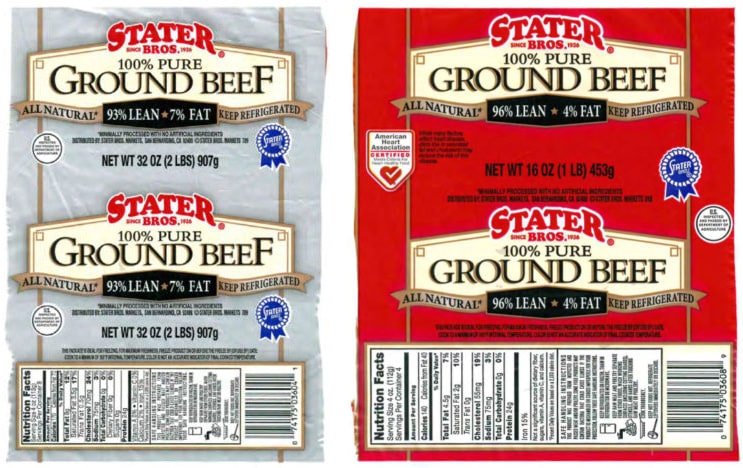
Photo of packaging.

Research – Evaluation of Bactericidal Effects of Phenyllactic Acid on Escherichia coli O157:H7 and Salmonella Typhimurium on Beef Meat

Journal of Food Protection 

ABSTRACT

Bactericidal effects of various concentrations of phenyllactic acid on Shiga toxin–producing Escherichia coli (STEC), including E. coli O157:H7, O26:H11, O103:H2, and O121:H19, and on Salmonella Typhimurium DT104 in pure culture and microplates assays were studied. Beef cuts were surface sprayed with phenyllactic acid or lactic acid for inactivation of E. coli O157:H7 and Salmonella Typhimurium. The 1.5% phenyllactic acid inactivated all inoculated E. coli O157:H7, O26:H11, O103:H2, and O121:H19 and Salmonella Typhimurium DT104 (>6-log reduction) within 1 min of contact at 21°C, whereas 1.5% lactic acid did not result in microbial reduction. Microplate assays (for STEC and Salmonella Typhimurium DT104 at 10 to 100 CFU per well) indicated that concentrations of 0.25% phenyllactic acid or 0.25% lactic acid inhibited the growth of STEC and Salmonella Typhimurium DT104 incubated at 37°C for 24 h. Treatment of beef with 1.5% lactic acid or 1.5% phenyllactic acid reduced E. coli O157:H7 by 0.22 and 0.38 log CFU/cm2, respectively, within 5 min and reduced Salmonella Typhimurium DT104 by 0.12 and 0.86 log CFU/cm2, respectively. When meat treated with 1.5% phenyllactic acid was frozen at −20°C, inactivation of E. coli O157 and Salmonella Typhimurium DT104 was enhanced by 1.06 and 1.46 log CFU/cm2, respectively. Thus, treatment of beef with 1.5% phenyllactic acid significantly reduced the population of E. coli O157:H7 and Salmonella.

HIGHLIGHTS
  • Phenyllactic acid at 1.5% killed STEC and Salmonella (>6-log reduction) within 1 min.

  • The MIC of lactic and phenyllactic acids was 0.25%.

  • The bactericidal effect of phenyllactic acid on beef was enhanced by freezing.