Salmonella (presence /25g) in dogchews from Poland in Germany
Salmonella (presence /25g) in rapeseed meal from Poland in Germany
Salmonella enterica ser. Agona in rapeseed meal from Belgium in Belgium

Salmonella (presence /25g) in dogchews from Poland in Germany
Salmonella (presence /25g) in rapeseed meal from Poland in Germany
Salmonella enterica ser. Agona in rapeseed meal from Belgium in Belgium
Salmonella enterica subspecies I (ssp 1) is the leading cause of hospitalizations and deaths due to known bacterial foodborne pathogens in the United States and is frequently implicated in foodborne disease outbreaks associated with spices and nuts. However, the underlying mechanisms of this association have not been fully elucidated. In this study, we evaluated the influence of storage temperature (4 or 25°C), relative humidity (20 or 60%), and food surface characteristics on the attachment and survival of five individual strains representing S. enterica ssp 1 serovars Typhimurium, Montevideo, Braenderup, Mbandaka, and Enteritidis on raw in-shell black peppercorns, almonds, and hazelnuts. We observed a direct correlation between the food surface roughness and S. enterica ssp 1 attachment, and detected significant inter-strain difference in survival on the shell surface under various storage conditions. A combination of low relative humidity (20%) and ambient storage temperature (25°C) resulted in the most significant reduction of S. enterica on shell surfaces (p < 0.05). To identify genes potentially associated with S. enterica attachment and survival on shell surfaces, we inoculated a library of 120,000 random transposon insertion mutants of an S. Enteritidis strain on almond shells, and screened for mutant survival after 1, 3, 7, and 14 days of storage at 20% relative humidity and 25°C. Mutants in 155 S. Enteritidis genes which are involved in carbohydrate metabolic pathways, aerobic and anaerobic respiration, inner membrane transport, and glutamine synthesis displayed significant selection on almond shells (p < 0.05). Findings of this study suggest that various food attributes, environmental factors, and an unexpectedly complex metabolic and regulatory network in S. enterica ssp 1 collectively contribute to the bacterial attachment and survival on low moisture shell surface, providing new data for the future development of knowledge-based intervention strategies.
The FDA, along with CDC and state and local partners, investigated a multistate outbreak of Salmonella Stanley infections linked to wood ear mushrooms imported by Wismettac Asian Foods, Inc. of Santa Fe Springs, CA. Wood ear mushrooms are a dried mushroom, also commonly labelled or referred to as Kikurage, Dried Black Fungus, Dried Fungus, or Mu’er/Mu Er/Mu-Err.
Wismettac Asian Foods, Inc. acted quickly upon being notified of the positive test result and recalled all wood ear mushrooms within shelf life on September 23, 2020.
Wood ear mushrooms imported by Wismettac Asian Foods, Inc. were only sold to restaurants and were not available directly to consumers. Although these items have been recalled, restaurants that received recalled products should use extra vigilance in cleaning and sanitizing any surfaces that may have come in contact with the recalled product, to reduce the risk of cross contamination. All recalled product should be thrown out.
November 4, 2020
As of November 4, 2020, the CDC declared that this outbreak is over.
General Food Safety Tips for Dried Mushrooms
Dried mushrooms, that have not been recalled due to potential contamination, should always be reconstituted using boiling water to kill any pathogens. This advice does not apply to recalled products, which should be thrown out.
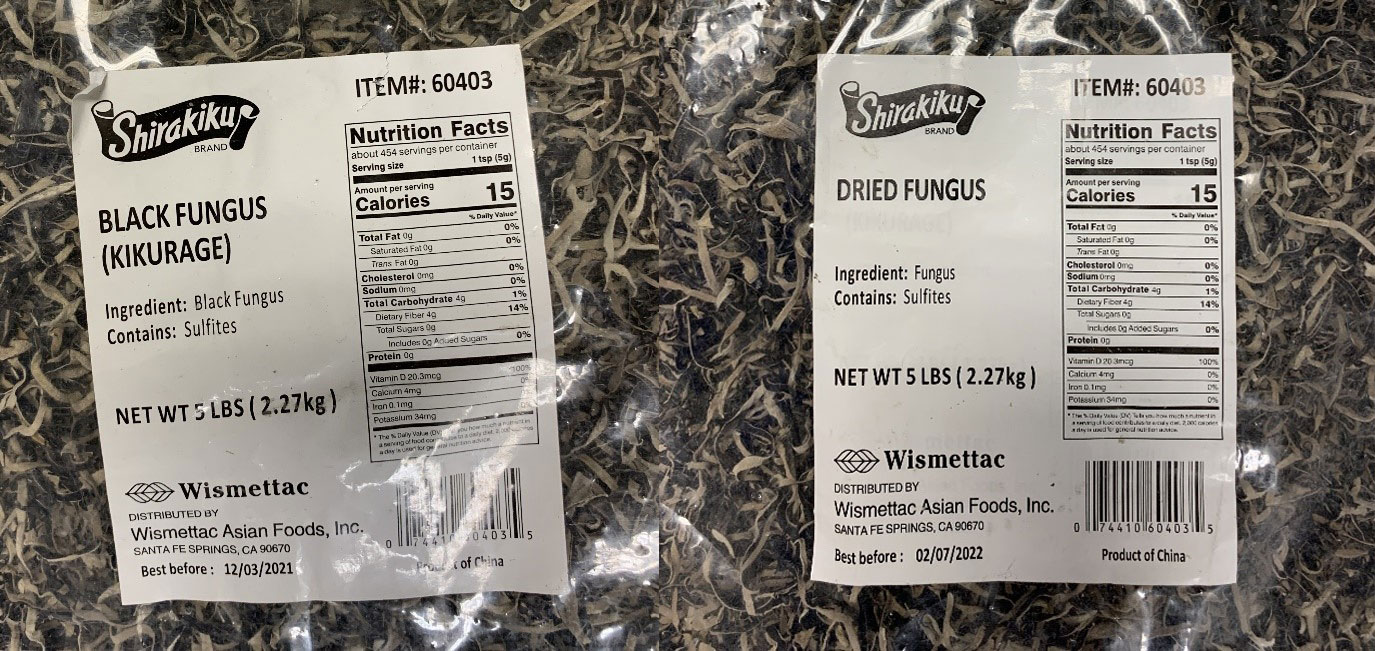
On September 23, 2020, Wismettac Asian Foods, Inc. recalled Shirakiku brand imported dried fungus. This product was labeled as Shirakiku brand Black Fungus (Kikurage) with UPC Code 00074410604305, imported from China. Product was distributed in six packs of five-pound bags to restaurants in AR, CA, CO, CT, DE, DC, FL, GA, HI, IA, IL, IN, LA, MA, MD, MI, MN, MO, MS, NC, NV, NJ, NY, OH, OR, PA, SC, TN, TX, VA, WA, and WI.
Posted in Bacteria, bacterial contamination, FDA, food bourne outbreak, food contamination, food handler, Food Hygiene, Food Illness, Food Inspections, Food Micro Blog, Food Microbiology, Food Microbiology Blog, Food Microbiology Testing, Food Pathogen, Food Poisoning, food recall, Food Safety, Food Safety Alert, Food Testing, foodborne outbreak, foodbourne outbreak, outbreak, Salmonella
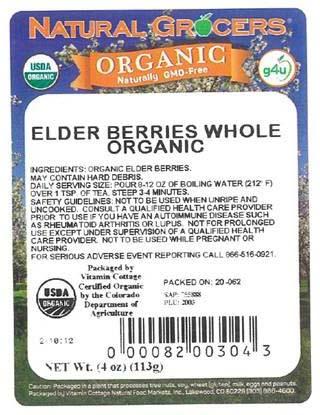
Vitamin Cottage Natural Food Markets, Inc., a Lakewood, Colorado-based natural grocery retailer, is voluntarily recalling Natural Grocers Brand 4-ounce Organic Whole Elderberries after being notified by its supplier of the potential presence of Salmonella. Salmonellais an organism which can cause serious and sometimes fatal infections in young children, frail or elderly people, and others with weakened immune systems. Healthy persons infected with Salmonella often experience fever, diarrhea, nausea, vomiting and abdominal pain. If you are experiencing these symptoms, and believe you may have been exposed to Salmonella, please report to a medical provider.
To date, the company has received no reports of illness or injury but is acting out of an abundance of caution to voluntarily recall any of the potentially affected product in the marketplace.
After initially certifying that this product had tested negative for Salmonella and was fit for human consumption, our supplier subsequently notified the company of the potential presence of Salmonella in specific lots of organic elderberries.
Consumers who may have purchased this product are advised to discontinue use immediately and discard or return the product for credit or refund. The recalled product is packaged in clear plastic bags weighing 4-ounces and bearing the “Natural Grocers” label. Only packages bearing the following pack dates are being recalled at this time: 20-216, 20-225, 20-246, 20-265, & 20-281.
|
UPC Code |
Description |
Packed on Dates |
|---|---|---|
| 000082003043 | Org Whole Elderberries 4 oz | 20-216, 20-225, 20-246, 20-265 & 20-281 |
The product was distributed to 159 Natural Grocers stores located in Arkansas, Arizona, Colorado, Iowa, Idaho, Kansas, Louisiana, Minnesota, Missouri, Montana, Nebraska, Nevada, New Mexico, North Dakota, Oklahoma, Oregon, Texas, Utah, Washington and Wyoming. Consumers can find the specific locations of Natural Grocers’ stores in those states at: https://www.naturalgrocers.com/store-directoryExternal Link Disclaimer
Consumers with questions may contact the company by calling Customer Service at 303-986-4600, ext. 80801, Monday through Friday 8:00 a.m. to 5:00 p.m. (MST).
Recall date:October 30, 2020Reason for recall:
Microbiological – Salmonella Hazard
classification:Class 2Company / Firm:Migahid & Elsawi Co. Ltd.Distribution:
OntarioExtent of the distribution:Consumer
Migahid & Elsawi Co. Ltd. is recalling Alwatania brand Halva Extra from the marketplace due to Salmonella. Consumers should not consume the recalled products described below.
| Brand | Product | Size | UPC | Codes |
|---|---|---|---|---|
| Alwatania | Halva Extra | 450 g | 6 224007 246337 | PRO : 20/05/2019 EXP : 19/05/2021 |
If you think you became sick from consuming a recalled product, call your doctor.
Check to see if you have the recalled product in your home. Recalled products should be thrown out or returned to the store where they were purchased.
The FSA is issuing precautionary advice to consumers who have purchased a specific batch of British Lion eggs which may be contaminated with salmonella.
Affected eggs can be identified by the batch code and the best before date stamped on the eggshell.
The eggs affected are sold in stores listed below in England and Wales only, and are in batch 1UK15270.
This update includes the original products identified and additional products, sold at additional retail stores.
In the city of Sarnia in Southwestern Ontario, Canada, officials with Lambton Public Health (LPH) report investigating an outbreak of Salmonella infection in people who recently ate at the Barakat restaurant.
As of Friday, LPH has received laboratory confirmation of four cases related to this outbreak. The department is currently following up with several others who have reported becoming ill after eating at this restaurant.
The investigation into the source of this outbreak is ongoing. The owners of the restaurant are cooperating with Lambton Public Health and have voluntarily closed while LPH ensures there is no on-going risk of illness.
Members of the public who ate at the Barakat restaurant between October 21st and October 29th and became ill with symptoms of Salmonella infection (diarrhea, fever, stomach cramps, vomiting) are advised to:
Posted in food bourne outbreak, food contamination, Food Hygiene, Food Illness, Food Inspections, Food Micro Blog, Food Microbiology, Food Microbiology Blog, Food Microbiology Testing, Food Pathogen, Food Poisoning, food recall, Food Safety, Food Safety Alert, Food Testing, foodborne outbreak, foodbourne outbreak, outbreak, Salmonella

 FoodWorld