Category Archives: Salmonella

France – Product recall: Unbranded Vegetable Stuffing – Salmonella

Oulah

Product recall: Unbranded Vegetable Stuffing

ENCOUNTERED PROBLEM

Presence of salmonella

PROPOSED SOLUTION

Those in possession of this product are asked not to consume it and to return it to the point of sale where it was purchased.

Foodborne illness caused by salmonella results in gastrointestinal disturbances, diarrhea, vomiting and abdominal pain, often accompanied by fever; these symptoms may be more severe in young children, immunocompromised individuals and the elderly. The incubation period can range from 6 to 72 hours.
People who have consumed the products mentioned below and who have these symptoms are invited to consult their doctor, notifying him of this consumption.

FURTHER INFORMATION

▸ Barcode
0298313000000


▸ DLC
between 04/27/2021 and 05/01/2021


▸ Start date / End of marketing
From 04/27/2021 to 05/01/2021


TRIE-CHATEAU geographic sales area


Leclerc distributors


▸ Consumer service contact
0344497575


▸ Source
SOCIETE TRIDIS LECLERC Trie-Château
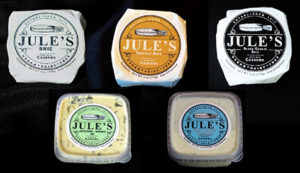
USA – Salmonella Duisburg and Salmonella Urbana outbreak linked to Jule’s cashew brie

Food Poison Journal

Seven sick in California, Tennessee and Florida

As of May 7, 2021, seven people infected with the outbreak strains of Salmonella Duisburg and Salmonella Urbana have been reported from three states. Illnesses started on dates ranging from January 31, 2021, to April 8, 2021.

Sick people range in age from 23 to 72 years, with a median age of 26, and 57% are female. Three people have been hospitalized, and no deaths have been reported.

The true number of sick people in an outbreak is likely much higher than the number reported, and the outbreak may not be limited to the states with known illnesses. This is because many people recover without medical care and are not tested for Salmonella. In addition, recent illnesses may not yet be reported as it usually takes 2 to 4 weeks to determine if a sick person is part of an outbreak.

Research – In-Plant Validation of Novel On-Site Ozone Generation Technology (Bio-Safe) Compared to Lactic Acid Beef Carcasses and Trim Using Natural Microbiota and Salmonella and E. coli O157:H7 Surrogate Enumeration

MDPI

The purpose of this study was to evaluate the antimicrobial efficacy of an aqueous ozone (Bio-Safe) treatment andtech lactic acid solutions on natural microbiota and E. coli O157:H7 and Salmonella surrogates on beef carcasses and trim in a commercial beef processing plant. For every repetition, 40 carcass and 40 trim swabs (500 cm2) were collected. Samples were taken using EZ-ReachTM swabs, and plated into aerobic plate count (APC), coliform, and E. coli PetrifilmTM for enumeration. In addition, a five-strain cocktail (MP-26) of E. coli surrogates was inoculated onto trim. For every trim surrogate repetition, 30 trim pieces were sampled after attachment and after ozone intervention. Samples were diluted and counts were determined using the TEMPO® system for E. coli enumeration. Ozone and lactic acid interventions significantly reduced (p < 0.003) bacterial counts in carcasses and trim samples. Moreover, lactic acid further reduced APC and coliforms in trim samples compared to ozone intervention (p < 0.009). In the surrogate trials, ozone significantly reduced (p < 0.001) surrogate concentration. Historical data from the plant revealed a reduction (p < 0.001) of presumptive E. coli O157:H7 in trim after a full year of ozone intervention implementation. The novel technology for ozone generation and application as an antimicrobial can become an alternative option that may also act synergistically with existing interventions, minimizing the risk of pathogens such as Salmonella and E. coli O157:H7. View Full-Text

Research -Genome sequencing reveals how salmonella carves out a niche in pork production

Phys Org

Salmonella kswfoodworld

Variants of concern (VOCs) and variants of interest (VOIs) have become familiar terms due to the current pandemic, but variants of familiar pathogens such as salmonella also present a threat to human and animal health.

To better understand the different threats these variants pose, a collaboration led by Professor Rob Kingsley from the Quadram Institute and Professor Mark Stevens from the Roslin Institute working with scientists from the Earlham Institute has focused on common variants of  present in  in the UK. Their findings, published recently in the journal Communications Biology, has shown that despite being extremely closely related, variants can have very different effects on the health of the pig and also on the risks they pose to .

Salmonella Typhimurium is one of the most common types of salmonella. It is a major cause of human gastroenteritis, notably from consuming undercooked pork products or as a result of cross-contamination of foods consumed raw. This bacterial pathogen is also a concern to the pork industry as it can affect the health, productivity and welfare of pigs. Salmonella Typhimurium is relatively common in pig herds globally, and processes implemented in abattoirs are designed to prevent contamination of meat destined for the food chain.

RASFF Alerts – Salmonella – Raw Milk Goats Cheese – Chicken Meat Preparation – Psyllium Husk Powder

RASFF

Salmonella spp in raw milk goat’s cheese from France in Germany, Hong Kong, Singapore, UK and Luxembourg

RASFF

Salmonella in chicken meat preparation from Belgium in France and the Netherlands

RASFF

Salmonella in psyllium husk powder from India in Denmark

RASFF Alerts – Animal Feed – Salmonella – Fish Meal – Supplementary Feed for Dogs

RASFF

Salmonella spp. in fish meal from Mauritania in Spain

RASFF

Salmonella Typhimurium in supplementary feed for dogs from Germany in Austria and Luxembourg

France – Product recall: Novoviande brand minced meat – Salmonella

Oulah

Product recall: Novoviande brand minced meat

ENCOUNTERED PROBLEM

Presence of salmonella

PROPOSED SOLUTION

Those in possession of this product are asked not to consume it and to return it to the point of sale where it was purchased.

Food poisoning caused by salmonella results in sudden onset gastrointestinal disorders (diarrhea, vomiting) often accompanied by fever and headaches which generally occur 6 to 72 hours after consumption of the contaminated products. These symptoms may be more pronounced in young children, pregnant women, immunocompromised individuals and the elderly. People who have consumed these products and who present these symptoms are invited to consult their doctor, notifying him of this consumption. In the absence of symptoms within 7 days after consuming the affected products, there is no need to worry and consult a doctor. If the product must undergo cooking before consumption: cooking the products through the core (hard-boiled eggs, pastries,

FURTHER INFORMATION

▸ Names of models or references
Minced meat at the customer’s request and sold in the traditional butcher’s section


▸ Lot
260421


▸ DLC
04/29/2021


▸ Start date / End of marketing
04/26/2021


▸ Health mark


▸ Geographical sales area
SEINE-SAINT-DENIS (93)


▸ Distributors
Novoviande Grand Frais Villepinte


▸ Consumer service contact
The Quality service is available to consumers to answer their questions by telephone number: “07.60.75.12.80” or by email: servicequalite@novoviande.fr


▸ Source
VILLEPINTE CDV

France – Product recall: Organic tigernuts flour 1kg from La Noix Tigrée – Salmonella

Oulah

Product recall: Organic tigernuts flour 1kg from La Noix Tigrée

ENCOUNTERED PROBLEM

Suspicion of contamination with salmonella

PROPOSED SOLUTION

Those in possession of this product are asked not to consume it and to return it to the point of sale where it was purchased.

Foodborne illness caused by salmonella results in gastrointestinal disturbances, diarrhea, vomiting and abdominal pain, often accompanied by fever; these symptoms may be more severe in young children, immunocompromised individuals and the elderly. The incubation period can range from 6 to 72 hours.
People who have consumed the products mentioned below and who have these symptoms are invited to consult their doctor, notifying him of this consumption.

FURTHER INFORMATION

▸ Barcode
3770006789397


▸ Lot
• from 714201207 to 714210220
• from 718201207 to 718210220


▸ DLC
09/30/2021


▸ Start date / End of marketing
From 12/09/2020 to 02/28/2021


▸ Distributors
lanoixtigree.fr


▸ Contact
customer service 0982323214


▸ Source
La Noix Tigrée

France – Product recall: LA FERME DE SAINT PANCRACE raw milk goat cheese – Salmonella

Oulah

Product recall: LA FERME DE SAINT PANCRACE raw milk goat cheese

ENCOUNTERED PROBLEM

Presence of salmonella

PROPOSED SOLUTION

Those in possession of this product are asked not to consume it and to return it to the point of sale where it was purchased.

Foodborne illness caused by salmonella results in gastrointestinal disturbances, diarrhea, vomiting and abdominal pain, often accompanied by fever; these symptoms may be more severe in young children, immunocompromised individuals and the elderly. The incubation period can range from 6 to 72 hours.
People who have consumed the products mentioned below and who have these symptoms are invited to consult their doctor by notifying him of this consumption.

FURTHER INFORMATION

▸ Names of models or references
• fresh
cheeses • young and semi-dry
cheeses
• tommes • picodons


▸ Lot of
cheeses from 03/28/2021 to 04/27/2021


▸ Start / end date of marketing
From 03/29/2021 to 04/26/2021


▸ Health mark
FR-26-346-082-CE


▸ Distributors
Ets janier


▸ Consumer service contact
0760172627


▸ Source
LA FERME DE SAINT PANCRACE

RASFF Alerts – Salmonella -Sesame Seeds – Ground Onions – Chicken Neck Skin – Sausage – Chilled Beef Trimmings – MDM – Polish Chicken

RASFF

salmonella (presente in 25g) in semi di sesamo dalla Nigeria//salmonella in sesame seeds from Nigeria in Italy

RASFF

Salmonella spp. und überhöhter Gehalt an Blei in gemahlenen Zwiebeln aus Indien /// Salmonella spp. and increased lead content in ground onions from India in Germany

RASFF

Salmonella Enteritidis in chicken neck skin from Poland in the Czech Republic

RASFF

Salmonella Enteritidis in sausage from Poland in the UK

RASFF

Salmonella Dublin in chilled beef trimmings in Sweden, Finland and Denmark

RASFF

Salmonella Enteritidis in chicken neck skin from Poland in the Netherlands and Czech Republic

RASFF

Salmonella Infantis in chicken MDM from Poland in Bulgaria

RASFF

Salmonella Enteritidis in chicken elements from Poland in Germany and the UK