Category Archives: Salmonella

France – Ravioli du dauphiné IGP LABEL ROUGE 240 gr – Salmonella

Gov france

Identification information of the recalled product

  • Product category Food
  • Product subcategory Prepared meals and snacks
  • Product brand name Local product
  • Model names or references Ravioli du dauphiné IGP LABEL ROUGE 240 gr
  • Identification of products
    GTIN Lot Dated
    3701002405455 All lots Use-by date 04/02/2022
    3701002405455 All lots Use-by date 31/01/2022
    3701002405455 All lots Use-by date 30/01/2022
  • Marketing start/end date From 07/01/2022 to 24/01/2022
  • Storage temperature Product to be stored in the refrigerator
  • Health markFR.26.281.031.CE
  • Geographic area of ​​sale Whole France
  • Distributors Grand Fresh, Fresh

Practical information regarding the recall

  • Reason for recall Possible presence of Salmonella
  • Risks incurred by the consumer Salmonella spp (causative agent of salmonellosis)

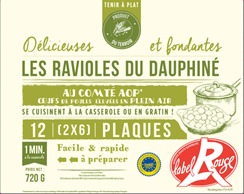
France – Ravioli du dauphiné IGP LABEL ROUGE 720 gr – Salmonella

Gov france

Identification information of the recalled product

  • Product category Food
  • Product subcategory Prepared meals and snacks
  • Product brand name Local product
  • Model names or references Ravioli du dauphiné IGP LABEL ROUGE 720 gr
  • Identification of products
    GTIN Lot Dated
    3701002405462 All lots Use-by date 30/01/2022
    3701002405462 All lots Use-by date 31/01/2022
    3701002405462 All lots Use-by date 02/01/2022
    3701002405462 All lots Use-by date 04/02/2022
  • Marketing start/end date From 07/01/2022 to 24/01/2022
  • Storage temperature Product to be stored in the refrigerator
  • Health markFR.26.281.031.CE
  • Geographic area of ​​sale Whole France
  • Distributors Grand Fresh, Fresh

Practical information regarding the recall

  • Reason for recall Possible presence of Salmonella
  • Risks incurred by the consumer Salmonella spp (causative agent of salmonellosis)

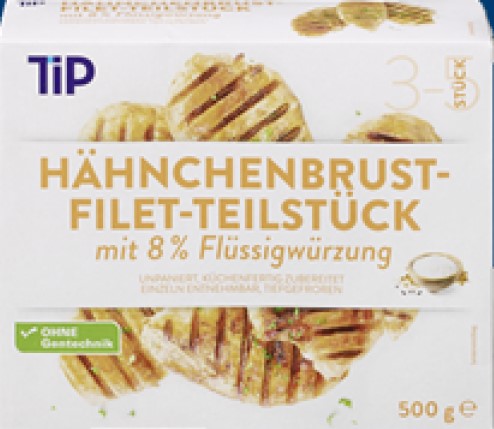
Germany – TiP chicken breast fillet with 8% liquid seasoning, unbreaded, 500 g, deep-frozen – Salmonella

LMW

Alert type: Food
Date of first publication: 01/24/2022
Product name:

TiP chicken breast fillet with 8% liquid seasoning, unbreaded, 500 g, deep-frozen

Product images:

TiP product image.jpg

Customer information real GmbH

Manufacturer (distributor):

real GmbH, Metro-Str. 1, 40235 Dusseldorf

Reason for warning:

Salmonella was found in a single sample as part of a routine check.

Packaging Unit: 500g
Durability: 09/10/2022
Lot identification: Batch: 049501003431
Further information:

Please refer to the attached customer information for further information.

Click to access 10_040_Kundeninformation_%D6FFENTLICHER_R%DCCKRUF_TiP_TK_H%E4hnchenbrustfilet_gew%FCrzt_500g.pdf

Canada – Public Health Notice: Outbreak of Salmonella infections linked to frozen whole kernel corn

PHAC

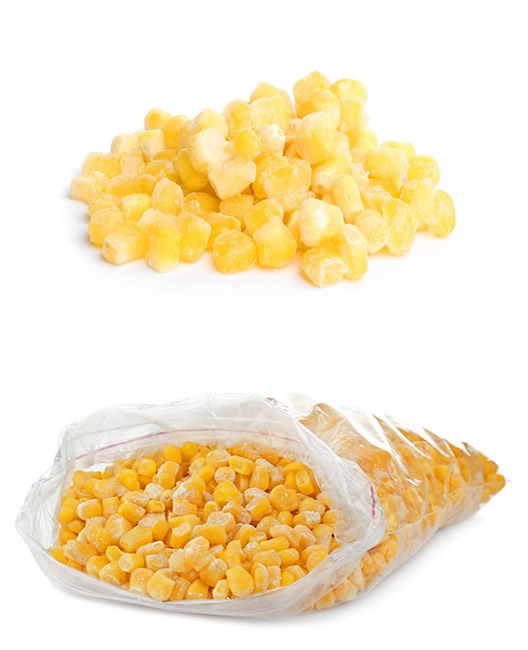
This notice has been updated to communicate the source of the outbreak and reflect 26 additional illnesses that have been reported in the ongoing outbreak investigation. There are now 110 Salmonella illnesses reported across 5 provinces. Based on the investigation findings to date, the outbreak is linked to Alasko brand frozen whole kernel corn.

The Public Health Agency of Canada (PHAC) is collaborating with provincial public health partners, the Canadian Food Inspection Agency (CFIA) and Health Canada to investigate an outbreak of Salmonella infections involving 5 provinces: British Columbia, Alberta, Saskatchewan, Manitoba and Ontario. The illnesses reported in Ontario were related to travel to Alberta and British Columbia.

Many of the individuals who became sick reported eating a variety of raw and cooked produce items before their illness. Initially, investigators identified that fresh avocados were reported by many cases before they became ill; however, more information was needed to confirm the source of the outbreak.

As part of the food safety investigation, the CFIA collected different food items from restaurants where ill people dined. Testing found the outbreak strain of Salmonella in an unopened package of Alasko brand frozen whole kernel corn. Traceback findings identified Alasko as the common brand of frozen corn consumed at various food service establishments by individuals who became sick. Based on the investigation findings to date, the outbreak is linked to Alasko brand frozen whole kernel corn.

The CFIA issued food recall warnings on December 14 and 19 for Alasko brand frozen whole kernel corn. The recalled products were distributed in British Columbia, Alberta, Saskatchewan, Manitoba and Quebec, and may have been distributed in other provinces and territories. This led to a secondary recall for Fraser Valley Meats brand frozen whole kernel corn on December 18. Several additional secondary recalls have been issued since then for products that were made using the recalled Alasko brand frozen whole kernel corn. More information on the recalled products are available online. The CFIA is continuing its food safety investigation, which may lead to the recall of other products. If other products are recalled, the CFIA will notify the public through updated food recall warnings.

The outbreak appears to be ongoing, as recent illnesses continue to be reported. Do not eat, use, sell, or serve any of the recalled corn or products made with the recalled corn. This advice applies to individuals, as well as retailers, distributors, manufacturers and food service establishments such as hotels, restaurants, cafeterias, hospitals and long-term care homes, across Canada.

This outbreak is an important reminder to Canadians and businesses that frozen vegetables can carry harmful germs that can lead to foodborne illness if not properly handled and cooked prior to consuming.

This public health notice will be updated as the investigation evolves.

Netherlands – Safety Warning Bulk Package Peeled Pumpkin Seeds Charif Food – Salmonella

NVWA

Safety Warning Bulk Packing Peeled Pumpkin Seeds Charif Food

Charif Food is recalling the bulk pack of peeled pumpkin seeds with an expiration date of 25-10-2022 with immediate effect. These pumpkin seeds may contain an excessive amount of salmonella.
Which product is it?
Bulk Pack of Peeled Pumpkin Seeds

  • Best before date 25-10-2022
  • Lot number K-2102NLD0033002 /144025-257

For more information, please contact Charif Food .

Sincerely

The Dutch Food and Consumer Product Safety Authority

Belgium – Tupelo farm brand chicken sausages 1 kg (frozen) – Salmonella

AFSCA

Aldi recall
Product: Tupelo farm brand chicken sausages 1 kg (frozen).
Problem: Presence of Salmonella.

ALDI has therefore decided, in consultation with the FASFC, to withdraw this product from the market and to recall it from consumers.

Other ALDI products are not affected by this product recall.

PRODUCT DESCRIPTION

Name: Chicken sausages 1 kg – frozen
EAN code: 270 0883 6
Brand: Tupelo farm
Type of packaging: plastic bag
Batch code: 212234168
Expiry date: 05/11/2023
Points of sale: ALDI stores

DESCRIPTION OF THE RISK

Possible symptoms of salmonella poisoning are: fever, abdominal cramps and diarrhea within 12 to 48 hours of eating the contaminated food. The risk of infection is higher in the elderly, children, pregnant women and immunocompromised people.

People who have consumed these products and who have this type of symptom are invited to consult their doctor without delay, notifying him of this consumption.

CONSUMER ADVICE

Please do not consume these products and return them to the store.
Returned products will be refunded (also without receipt).
For further information, you can contact ALDI viaserviceclients@aldi.be .

Germany – Organic nettle seeds 250g – Salmonella

LMW

Alert type: Food
Date of first publication: 01/21/2022
Product name:

Organic nettle seeds 250g

Product images:

Nettle seed photo.JPG

Company Vita-Natura

Manufacturer (distributor): Vita Natura GmbH & Co.KG Pützchens Chaussee 60 / Hall 1 D-53227 Bonn
Reason for warning:

A salmonella contamination cannot be ruled out.

Packaging Unit: 250 g
Durability: 08/31/2024
Lot identification: Al21K1
Further information:

Research – Probiotic Lactobacilli Do Not Protect Chickens against Salmonella Enteritidis Infection by Competitive Exclusion in the Intestinal Tract but in Feed, Outside the Chicken Host

MDPI

Lactobacilli are commonly used as probiotics in poultry to improve production parameters and to increase chicken resistance to enteric infections. However, lactobacilli do not efficiently colonise the chicken intestinal tract, and also, their anti-infection effect in vivo is sometimes questionable. In this study, we therefore evaluated the potential of a mixture of four Lactobacillus species (L. salivariusL. reuteriL. ingluviei and L. alvi) for the protection of chickens against Salmonella Enteritidis infection. Whenever the chickens were inoculated by lactobacilli and S. Enteritidis separately, there was no protective effect of lactobacilli. This means that when lactobacilli and S. Enteritidis are exposed to each other as late as in the crop of chickens, lactobacilli did not influence chicken resistance to S. Enteritidis at all. The only positive effect was recorded when the mixture of lactobacilli and S. Enteritidis was used for the inoculation of feed and the feed was anaerobically fermented for 1 to 5 days. In this case, chickens fed such a diet remained S. Enteritidis negative. In vitro experiments showed that the protective effect was caused by acidification of feed down to pH 4.6 due to lactobacilli fermentation and was associated with S. Enteritidis inactivation. The probiotic effect of lactobacilli was thus expressed in the feed, outside the chicken host. View Full-Text

USA – Alaska says raw milk consumption a possible fatal risk but may make it legal

Food Safety News

Until now, when it came to raw milk, the state of Alaska was looking out for the public health of its residents. An easy to find fact sheet on the state’s website by the state veterinarian says:

“Raw milk may contain food-borne pathogens. These pathogens may be shed into the milk directly from the animal or enter the milk from the environment. These pathogens present a health threat to consumers of raw milk.”

The Alaska Division of Public Health and the Alaska Department of Environmental Conservation publish “Raw Milk Facts” on the state portal. “Raw milk has been recognized as a source of disease for over 100 years,” it says.

It explains the risks this way: “Unpasteurized milk can contain bacteria such as E. coli, Campylobacter, Listeria, and Salmonella. 

“While some people exposed to these bacteria do not develop any symptoms, others may develop short-term nausea, vomiting, diarrhea, fever, and cramps.

“Illnesses can last a week or longer, and some people even develop severe, long-term consequences resulting in kidney failure or paralysis. These infections are particularly serious in very young, very old, or those who have impaired immune systems. 

“They can even be fatal.”

France – ANSES – A partnership to better fight against bacteria in food processing workshops

ANSES

The presence of Listeria and Salmonella bacteria in food processing workshops poses several problems: these bacteria that are pathogenic for humans are capable of persisting for a long time in the environment and of resisting treatment with biocidal products. The Actia Fastypers Joint Technological Unit (UMT) has just been created by the Ministry of Agriculture for five years, in order to work on these issues. It brings together research teams (Anses, Inrae) and agro-industrial technical institutes (Actalia – dairy sector and the Pork Institute (IFIP)).

Salmonella and Listeria are two bacteria of animal origin, responsible for illnesses in humans and transmitted by food. They can persist for several months in natural and agricultural environments, as well as in food processing workshops. In addition, some strains may be resistant to treatment with disinfection products. The work of the UMT Actia Fastypers aims on the one hand to understand the mechanisms by which these bacteria manage to adapt and persist in the external environment, including in agri-food workshops, and on the other hand to develop tools to characterize and detectthese persistent bacterial strains. This work will be carried out jointly in the pork sector and the milk sector.

Two ANSES teams involved

Two ANSES units will be involved in the UMT: the Salmonella and Listeria unit of the Food Safety Laboratory and the Antibiotics, Biocides, Residues and Resistance Unit of the Fougères Laboratory. The first will provide its expertise in the genomic characterization of strains, in order to identify which genotype is associated with the characteristics studied (resistance to heavy metals, persistence in the environment, virulence, etc.). The second will study the adaptation and resistance of bacteria to the biocidal cleaning products used. This work will be linked to the joint technological network Chlean, devoted to the hygiene of equipment in the food industry, in which the two laboratories are already involved.

Development of detection tools

The goal of the UMT is to develop tools that can be used routinely by producers and food manufacturers to identify the strains of bacteria present at the different stages of food production, from breeding to finished products. ” It’s about optimizing and simplifying the tools we have for research, to enable technical institutes to identify both the virulence and persistence capacity of strains simply by harvesting bacteria from surfaces. using sampling swabs. », explains Sophie Roussel, co-host of the UMT and scientist of the food safety laboratory. These analyzes aim toadapt the cleaning and disinfection process to the characteristics of the bacterial strains likely to be found in agro-industrial environments, for example by using the most effective disinfectant products against the bacteria present in these factories.