Category Archives: Salmonella

Research – Introduction to the Special Issue: Microbiological Safety and Quality of Foods

MDPI

Recent shifts in food production, processing and distribution, linked to the globalization of the food trade and the need to meet new consumers habits, are continuously challenging global food systems. Every effort is being made to ensure healthy and safe, food that is crucial to guarantee public health and wellbeing.
Despite the advancements in food safety management, foodborne diseases (FBD) still remain an important problem worldwide, with a significant negative impact on human health and countries’ economies and development. It has been determined that food unsafe for consumption causes 600 million cases of FBD every year, and 25% of all foods produced globally are lost due to microbial spoilage. Serious outbreaks have occurred, involving both developing and industrialized countries, showing how food safety is a transnational challenge and that a strong joint commitment between food safety authorities is needed.
Despite this awareness, the full extent of the impact of food contamination is still unknown. Foodborne contaminants are numerous, including viruses and bacteria, parasites, chemicals, toxins and allergens that cause a wide range of conditions. Globally, FBD caused by bacteria are more common than those caused by viruses and parasites. [1]. Moreover, between one-third and one-half of all human infectious diseases have a zoonotic origin. Among bacteria, Campylobacter, followed by Salmonella, are the major etiological agents of FBD, while, among viruses, norovirus is the foremost enteric pathogen of foodborne disease worldwide [2].
The most common foodborne parasites instead are protozoa such as Cryptosporidium spp., Giardia intestinalis and Toxoplasma gondii; roundworms such as Trichinella spp. and Anisakis spp.; and tapeworms such as Diphyllobothrium spp. and Taenia spp. [3]. In particular, Anisakiasis is an emerging zoonosis caused by the fish parasitic nematode Anisakis. Humans are accidental hosts that become infected by eating raw or undercooked fish that contain viable Anisakis spp. larvae.
The major determinants for the incidence of FBD are unsafe raw food, abused temperature, inadequate storage, improper handling, undercooking and cross contamination [4]. Food from animal sources, fresh produce and ready-to-eat (RTE) foods are the most at risk. In particular, RTE foods are an emerging issue concerning food safety. Furthermore, they have been demonstrated to contain antimicrobial-resistant strains. Since these products are consumed without any further treatment, they could serve as a vector for the spread of antibiotic-resistant microorganisms, posing a significant threat to public health [5].
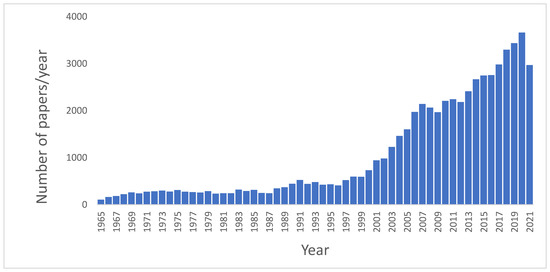
The importance of these topics is documented by the increasing number of papers published related to Food Safety. In a basic search using PubMed database, from 1945 to 2021, selecting as the search topic “Microbiological food safety”, a total of 54,210 results were obtained.
Although the first articles concerning microbiological food safety date from 1946, and since then a dozen articles appear in the following years, it is not until 1965 that a significant number of articles are published every year. Figure 1 shows the evolution of the number of papers per year (from 1965 to 2021) published regarding Microbiological food safety. As can be seen in this figure, approximately 80% of these papers have been published in the last 20 years, and the number continues to rise, revealing an increasing and ever-present interest towards the topic addressed in this Special Issue.
Foods 11 00673 g001 550

Sweden – Salmonella in meat sick 15 in Sweden

Europe Cities

Disease In Food

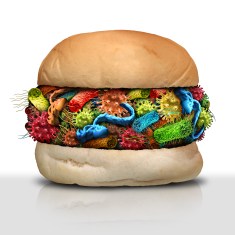
More than a dozen people recently fell ill in Sweden with Salmonella infections after eating poorly cooked burgers.

An outbreak with 15 cases of salmonellosis after a lunch at a hotel restaurant was investigated by the local food authority and the regional public health authority in Jämtland Härjedalen.

The Salmonella Enteritidis outbreak occurred among students and teachers from Fjällgymnasiet high school during a ski competition in northern Sweden.

Based on information from 11 patients, the first date for disease onset was January 28 and the last was February 4. The age range was 17 to 57 years with a median age of 19. Ten of the patients were men and one was female, all were from northern Sweden.

All the sick had a common meal where they ate ground (minced) burgers. Some of those who ate lunch reported that the burgers were clearly poorly cooked.

After finding Salmonella in samples of minced meat, further tracing of the batch of frozen beef and pork involved was carried out by local authorities, revealing that it came from Poland.

Salmonella was found in three of six meat samples but there is no ongoing risk of people getting sick as the batch involved was only distributed to restaurants and has now been withdrawn.

USA – Vadilal Industries (USA) Recalls “Custard Apple Pulp” Because of Possible Health Risk – Salmonella

FDA

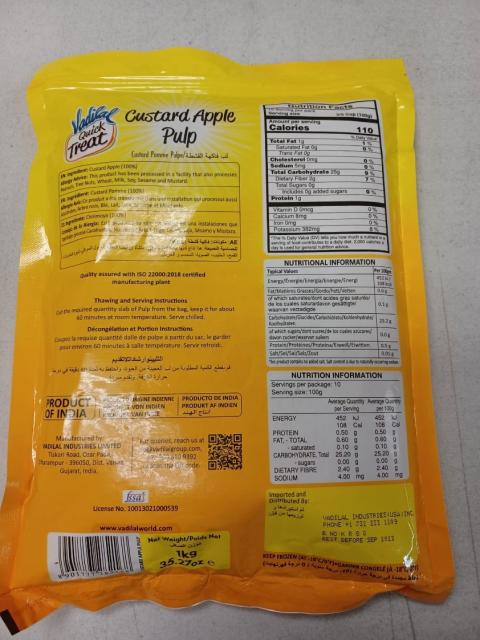
Vadilal Custard Apple Pulp packet, back label

Summary

Company Announcement Date:
FDA Publish Date:
Product Type:
Food & Beverages
Reason for Announcement:
Salmonella
Company Name:
Vadilal Industries Inc.
Brand Name:
Vadilal
Product Description:
frozen custard apple pulp

Company Announcement

Vadilal Industries (USA) Inc. of Newark, NJ is voluntarily recalling two batches of frozen Custard Apple Pulp because it has the potential to be contaminated with Salmonella, an organism which can cause serious and sometimes fatal infections in young children, frail or elderly people, and others with weakened immune systems. Healthy persons infected with Salmonella often experience fever, diarrhea (which may be bloody), nausea, vomiting and abdominal pain. In rare circumstances, infection with Salmonella can result in the organism getting into the bloodstream and producing more severe illnesses such as arterial infections (i.e., infected aneurysms), endocarditis and arthritis.

The product was distributed nationwide through retail stores and is sold in 35.27-ounce packets. The packets are labeled as “Custard Apple Pulp” and the batch codes are printed on the back of the packet. The product code, description, lot code, UPC and Best Before information are noted below.

Product Code Product Description & Size Batch /lot code UPC Best Before
FPEP44302 Custard Apple Pulp KWHO, KRQO 8901777282168 September 2023

The recall was initiated after FDA received a single complaint reporting 5 illnesses and FDA sampling revealed the presence of Salmonella in the product.

Consumers who have purchased Custard Apple Pulp with these batch codes should discontinue use or return it to the store of purchase for a full refund. Retailers that may have further distributed the recalled lot codes should share this notice with their customers.

Customers with questions may contact the Vadilal Industries at +1 732-333-1209 Monday to Friday from 9:00 AM to 5:00 PM (EST).

Company Contact Information

Vadilal Industries (USA)
7323331209
ib@vadilalgroup.com


Company Contact Information

Consumers:
Vadilal Industries
 +1-732-333-1209

New Zealand – Vadilal Quick Treat brand frozen Custard Apple Pulp (1kg) – Salmonella

MPI

25 February 2022: MZ Holdings Ltd is recalling a specific batch of its Vadilal Quick Treat brand frozen Custard Apple Pulp due to the possible presence of Salmonella.

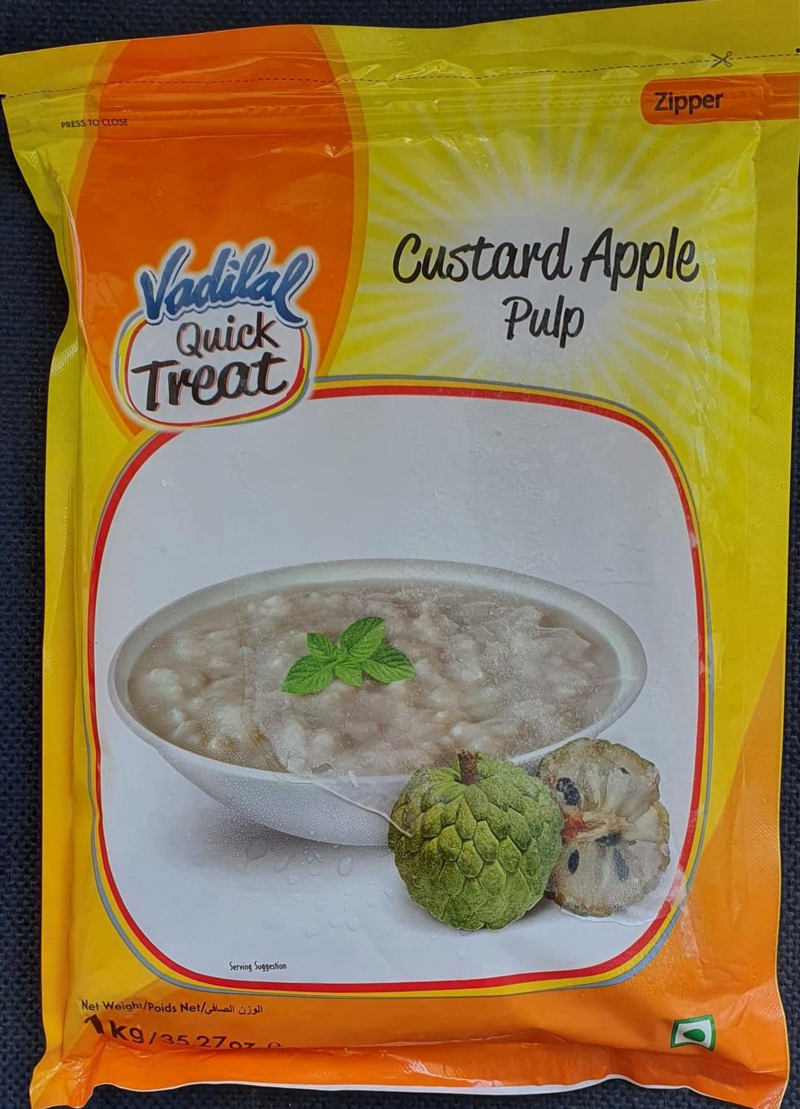
Vadilal Quick Treat brand frozen Custard Apple Pulp (1kg)

Product identification
Product type Frozen fruit pulp
Name of product (size) Vadilal Quick Treat brand Custard Apple Pulp (1kg)
Batch marking KWHO
Date marking Best Before: 21/SEP/2023
Package size and description The product is sold in a 1kg plastic packaging.
Distribution The product is imported from India.

The product is sold at the following stores in Auckland:

  • Arjun Supermarket, 5 Rankin Avenue, New Lynn
  • Om Sai Foods & Spices, 3A/7 Reeves Road, Pakuranga
  • Saffron Foods Henderson, 214 Universal Drive, Henderson
  • Top In Town Food City, 583 Sandringham Road, Sandringham
  • Yogiji’s Food Mart, 26 Carr Road, Three Kings
  • Yogiji’s Food Mart, 7/251 Lincoln Road, Henderson
Notes This recall does not affect any other Vadilal Quick Treat brand products, or any other products imported by MZ Holdings Ltd.

Consumer advice

Customers are asked to check the batch and date mark printed on the back of the product packaging, and for further information refer to the recall notice – U.S. Food & Drug Administration 

Affected product should not be consumed. There have been 5 associated illnesses in the United States of America and no reports of associated illness in New Zealand. If you have consumed any of this product and have any concerns about your health, seek medical advice.

Customers should return the product to their retailer for a full refund.

RASFF Alerts – Foodborne outbreak suspected to be caused by infant formulae from the United States – Salmonella Newport – Cronobacter

RASFF

Foodborne outbreak suspected to be caused by infant formulae from the United States in Croatia, Ireland, Italy, Netherlands, Slovenia , Spain

RASFF Alerts – Salmonella – Polish Chicken Products – Black Pepper – Oat Bars – Frozen Minced Meat – Chicken Thigh Fillets – Pistachio Cream

RASFF

Salmonella in minced chicken from the Netherlands in Belgium

RASFF

Salmonella in Brazilian pepper black(further processing) in the Netherlands

RASFF

Salmonella in Brazil black pepper in the Netherlands

RASFF

Salmonella enterica ser. Enteritidis in frozen chicken breast fillets from Poland in France

RASFF

Salmonella spp in oat bars from the United Kingdom in Austria, Croatia, Czech Republic, France, Germany, Luxembourg, Netherlands, Spain and Switzerland

RASFF

Salmonella in frozen minced meat from Poland in Sweden

RASFF

Salmonella Enteritidis in organic chicken thigh fillets from Italy in Belgium, Germany, Ireland and Netherlands

RASFF

Salmonella entreritidis in poultry meat from Poland in Slovenia and Czech Republic

RASFF

Meat, chicken element, offal, carcass – Salmonella enteritidis from Poland in Lithuania and Latvia

RASFF

Salmonella spp. in pistachio cream from the Netherlands in Germany

RASFF

Poultry carcasses, elements of poultry meat, poultry offal – Salmonella enteritidis from Poland in Belgium, Bulgaria, Czech Republic, Germany, Hungary, Italy and Netherlands

RASFF Alerts – Animal Feed – Salmonella – Soybean Flour – Cat 3 Frozen Chicken Meat

RASFF

Salmonella in soybean meal from Germany in Germany, Poland and Switzerland

RASFF

Salmonella infantis in frozen chicken meat cat 3 from Netherlands in Italy

Italy – Similac – Elecare – Salmonella – Cronobacter

Salute

Brand : Similac

Name : Elecare

Reason for reporting : Recall due to microbiological risk

Publication date : 24 February 2022

Click to access C_17_PubblicazioneRichiami_1660_azione_itemAzione0_files_itemFiles0_fileAzione.pdf

UK – FSA issues advice after Elecare Similac and Alimentum Similac infant formula recall

FSA

The FSA has issued advice to parents after infant formula producer Abbott took the precautionary step of recalling various batches of Elecare Similac and Alimentum Similac powdered formula. This is because of the possible presence of Salmonella and Cronobacter sakazakii.

Both Elecare Similac and Alimentum Similac products are used for special medical purposes to feed babies and are ordinarily used under medical supervision. The company has contacted all stores and pharmacies supplying these products to inform them of the recall.

We will be working with partner agencies to monitor any reports of illnesses.

Our advice to parents

Anyone who has purchased or been prescribed any of the products included in the recall should not feed it to their baby and should return it to the place where they got it from.

IMPORTANT

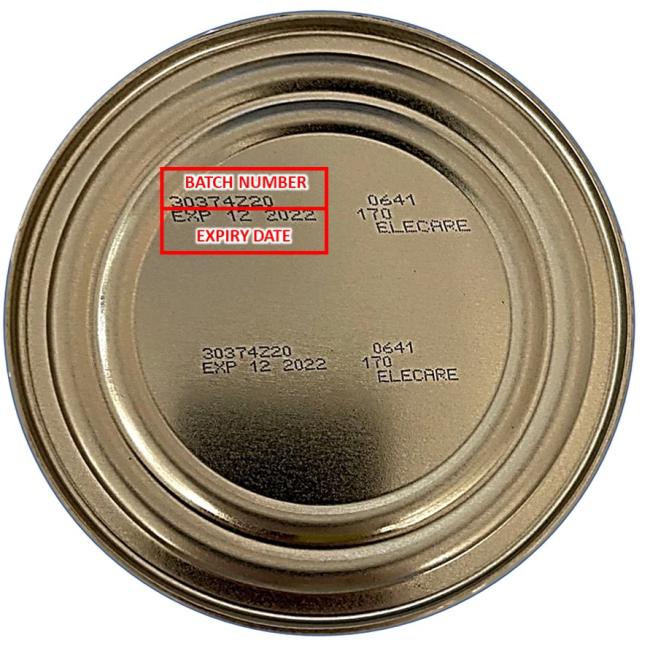
Details of the batch and date code can be found on the base of the can.

A full list of batches included in this recall is available on our recall alert.

For any additional questions about how to return the product, please contact Abbott on 01795 580303.

If you have purchased this product but the batch numbers are different from those specified in this recall alert, no action is needed, and you can continue to feed your baby as normal.

The location of batch codes and best-before dates on the base of recalled cans of Elecare Similac and Alimentum Similac. This batch 30374Z20, best before December 2022 is included in the recall.

The location of batch codes and best-before dates on the base of recalled cans of Elecare Similac and Alimentum Similac. This batch 30374Z20, best before December 2022 is included in the recall.

Anyone who has already used some or all of an affected batch should closely watch for any symptoms caused by Salmonella and Cronobacter sakazakii, which usually include fever, diarrhoea, abdominal cramps irritability and poor feeding.

If your baby has any of these symptoms, you should contact your doctor, midwife or pharmacist for advice. If your baby is well and does not show any symptoms, you do not need to do anything or get any treatment.

Parents or guardians who have purchased or been prescribed any of the products included in our recall should talk to their doctor, midwife or pharmacist about alternative product options.

Our advice to distributors

Abbott has contacted all the businesses to which it supplied these products to advise them of the recall, to immediately discontinue use of the product and recommend a suitable, alternative feeding solution for parents.

It is important that all distributors follow our advice not to supply this product to parents. The Medicines and Healthcare Products Regulatory Agency (Opens in a new window)has helped to share our recall notice with healthcare providers.

Further actions

We have been working with online platforms to remove from sale any products included in the recall. We are aware that a small number of products remain listed for sale and are working to ensure these are taken down.

We will continue to monitor the possible risk posed by the affected products. Any further updates will be posted on this website.

Netherlands – Safety warning Similac Elecare from Abbott BV – Salmonella and Cronobacter

NVWA

Safety warning Similac Elecare from Abbott BV

Abbot BV warns against Similac Elecare 400g can. As a precaution, Abbot BV is recalling the products after four complaints from US consumers related to Cronobacter sakazakii or Salmonella Newport in infants who ingested products from its Sturgis, Michigan plant.

See the Abbot Nutrition NL website

Which products are involved?

  • Similac Elecare, 400g can
  • Best before September 2022
  • Batch number on the can 27930Z20

Yours sincerely

The Dutch Food and Consumer Product Safety Authority