A multistate outbreak of Salmonella Typhimurium (reference #1137) has been added to the table. The Nebraska Department of Health and Human Services and the Nebraska Department of Agriculture issued an advisory regarding illnesses in their state. Preliminary information gathered by state partners indicates that patients consumed alfalfa sprouts prior to becoming ill. FDA’s investigation is underway to confirm the product causing illnesses and additional information will be provided when it becomes available.
The Nebraska Department of Health and Human Services (DHHS), in collaboration with the Nebraska Department of Agriculture, Douglas County Health Department, Sarpy/Cass Health Department, and Three Rivers Public Health Department, is investigating a cluster of gastrointestinal illnesses caused by the bacteria Salmonella Typhimurium.
As of December 23, 2022, 12 individuals reported consuming alfalfa sprouts between December 4–15, either at local restaurants or in their homes after purchasing from local grocery stores. DHHS recommends the public avoid eating alfalfa sprouts while the investigation continues. More information will be shared as details become available.
If you have been sick with diarrhea after eating alfalfa sprouts, please contact your local health department immediately (https://dhhs.ne.gov/Pages/local-health-departments.aspx), and call your doctor if you need medical attention.
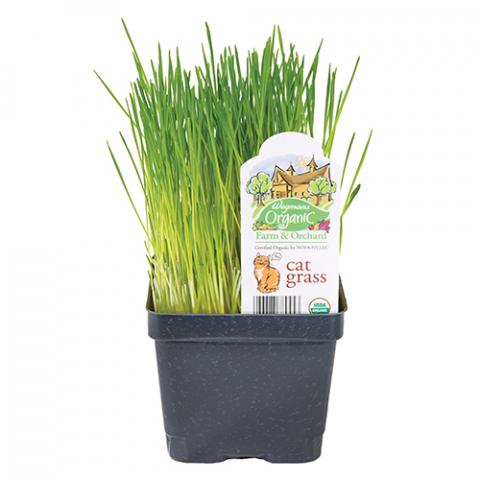
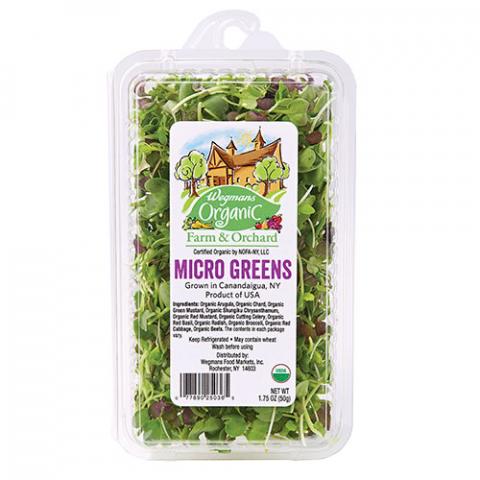
ROCHESTER, NY – Wegmans Food Markets, Inc. is issuing a voluntarily recall on its products containing micro greens, sweet pea leaves, and cat grass because they have the potential to be contaminated with Salmonella, an organism which can cause serious and sometimes fatal infections in young children, frail or elderly people, and others with weakened immune systems. Healthy persons infected with Salmonella often experience fever, diarrhea (which may be bloody), nausea, vomiting and abdominal pain. In rare circumstances, infection with Salmonella can result in the organism getting into the bloodstream and producing more severe illnesses such as arterial infections (i.e., infected aneurysms), endocarditis and arthritis.
The affected products were sold at various Wegmans stores in NY, PA, MA, NJ, VA, MD & NC. A full list of potentially affected items can be found on the recall page of Wegmans.comExternal Link Disclaimer and are highlighted below.
Product
Size
UPC
Dates
Wegmans Organic Farm & Orchard Micro Greens
1.75 oz
UPC 77890-25036
Use by dates: 12/17/22
and 12/24/22
Wegmans Organic Baby Kale & Baby Spinach with Sweet Pea Leaves
5 oz
UPC 77890-52377
Use by date: 12/20/22
Wegmans Organic Farm & Orchard Cat Grass
1 EA
UPC 77890-50938
Sold since: 10/25/22
We are voluntarily recalling these products because some of the soil they were grown in, supplied to Wegmans Organic Farm by bio365 of Ithaca, New York, tested positive for Salmonella by the supplier. This is out of an abundance of caution. No illnesses have been associated with this recall.
Wegmans is placing automated phone calls to alert customers who purchased these products using Shoppers Club cards.
Customers should return these products to the service desk for a full refund. Those with questions may contact Wegmans Food Markets 1-855-934-3663 Monday through Friday from 8:00 a.m. – 7:00 p.m. or Saturday and Sunday from 8:00 a.m. – 5:00 p.m. Please note that due to the holiday our Customer Care Center will close at 4:30 pm on 12/24/22 and reopen at 8:00 am on 12/26/22.
In 2017, 47,652 notifications of enteric diseases potentially related to food were received by state and territory health departments in Australia. Consistent with previous years, the majority of all notified infections were either campylobacteriosis (n = 28,432; 60%) or salmonellosis (n = 16,416; 34%). A total of 206 gastrointestinal outbreaks, including 179 foodborne outbreaks, were reported in 2017. The remaining 27 outbreaks were due to environmental or probable environmental transmission (22 outbreaks), animal-to person or probable animal-to-person transmission (three outbreaks), and waterborne or probable waterborne transmission (two outbreaks). Foodborne outbreaks affected 2,130 people resulting in at least 290 hospital admissions and five deaths. Eggs continue to be a source of Salmonella Typhimurium infection across the country, with 49 egg-related outbreaks affecting at least 746 people reported across six jurisdictions in 2017.
Tofu whey wastewater (TWW) is a by-product of the tofu production process, and contains high amounts of organic products and Lactobacillus ap. However, no studies have been reported on whether naturally fermented TWW can be used as a beneficial additive for poultry production. This study analyzed the main nutritional components and microbial flora of naturally fermented TWW from rural tofu processing plants and their effect on chick production performance, role in modulating the biochemical and immune parameters, and protection against Salmonella enteritidis (S. enteritidis) infection. It was observed that the average pH of TWW was 4.08; therefore, the total viable count was 3.00 × 10⁹ CFU/mL and the abundance of Lactobacillus was 92.50%. Moreover, TWW supplementation increased the total weight gain and feed intake, reduced the feed/gain ratio, increased the length and relative weight of the gut, and reduced the colonization and excretion of S. enteritidis in chickens. Additionally, TWW decreased oxidative damage and pro-inflammatory cytokine secretion caused by S. enteritidis infection. In addition, TWW supplementation ensured the structure of the intestine remained relatively intact in S. enteritidis-infected chicken. Furthermore, TWW markedly promoted the intestinal barrier integrity and up-regulated the relative abundance of Lactobacillus, counteracting the changes in gut microbiota caused by S. enteritidis infection in chicken. In conclusion, our data demonstrated that TWW could be used as a beneficial addition to poultry production, providing a research basis for the further development of TWW as a health care application in in food-producing animal.