Category Archives: Salmonella

Germany -Meat of wild game animals should become safer

BFR

European network aims to further reduce health risks

Game meat, including those of red deer, wild boar, or pheasant, is among the foods with the smallest ecological footprint. These animals grow up in the wild, feeding on what na-ture provides, which also means that they can be exposed to various environmental con-taminants. Furthermore, wild animals can serve as carriers of zoonotic pathogens. The Eu-ropean network ‘Safety in the Game Meat Chain’ that will be established over the next four years under the leadership of the German Federal Institute for Risk Assessment (BfR),and promotes the exchange of knowledge regarding the health risks associated with game meat obtained through hunting for consumers. ‘Our goal is to make this valuable animal-derived food as safe as possible both in Europe and worldwide,’ says BfR President Professor Dr.Dr. Andreas Hensel. ‘We aim to minimize both chemical and microbial risks as much as possi-ble.’ The growing network currently includes 29 countries, encompassing not only EU member states but also non-EU countries, including those in the Western Balkans, Turkey, the United Kingdom, the United States, New Zealand, and Australia.

Over a four-year period, the five working groups of the network will focus on hunting and processing, game meat trade networks and the supply chain, as well as various biological and chemical hazards. To accomplish this, research activities from national level will be compiled and evaluated. Stakeholder groups from academia, industry, governmental institutions, and final consumers will receive ongoing updates on the new findings.

A central aim of the network is direct collaboration with stakeholder groups to translate knowledge into actions along the entire production chain, “from forest to fork” . The focus lies not only on undesirable substances from the environment (environmental con-taminants), but also on preventing or reducing the input of heavy metals, especially lead, from hunting ammunition. The biological hazards range from parasites such as Trichinella larvae, which can be transmitted to humans through the consumption of game meat, all the way to bacterial zoonotic agents including Salmonella and verotoxigenic Escherichia coli (VTEC), as well as viruses like hepatitis E (HEV) in wild boars.

Risks of both chemical and microbial origin that may arise during processing and trade of game meat, potentially contaminating the end product, will also be assessed. The goal is to disseminate scientific knowledge gained through the network from various regions and to align long-term food safety standards across borders.

The network also aims to gather insights into different hunting and training practices as well as national legal regulations and standards on meat inspection and hygiene for game meat in each country. The safety standards for cross-border trade in wild products are intended to be enhanced and harmonized. Additionally, the network places emphasis on educating con-sumers about the risks associated with and safe handling of game meat. Ultimately, this can support the consumer’s confidence in game meat products.

‘Safety in the Game Meat Chain’ is founded by the European Cooperation in Science and Technology (COST).

Useful links

SafeGameMeat COST Action (CA22166):
https://www.cost.eu/actions/CA22166/

Further information from the BfR website on game meat (in German)

SALMONELLA MODULATES METABOLISM DURING GROWTH UNDER CONDITIONS THAT INDUCE EXPRESSION OF VIRULENCE GENES.

SBGR Web

Salmonella enterica serovar Typhimurium (S. Typhimurium) is a facultative pathogen that uses complex mechanisms to invade and proliferate within mammalian host cells. To investigate possible contributions of metabolic processes to virulence in S. Typhimurium grown under conditions known to induce expression of virulence genes, we used a metabolomics-driven systems biology approach coupled with genome-scale modeling. First, we identified distinct metabolite profiles associated with bacteria grown in either rich or virulence-inducing media and report the most comprehensive coverage of the S. Typhimurium metabolome to date. Second, we applied an omics-informed genome-scale modeling analysis of the functional consequences of adaptive alterations in S. Typhimurium metabolism during growth under our conditions. Modeling efforts highlighted a decreased cellular capability to both produce and utilize intracellular amino acids during stationary phase culture in virulence conditions, despite significant abundance increases for these molecules as observed by our metabolomics measurements. Furthermore, analyses of omics data in the context of the metabolic model indicated rewiring of the metabolic network to support pathways associated with virulence. For example, cellular concentrations of polyamines were perturbed, as well as the predicted capacity for secretion and uptake.

Research – Why Are Cantaloupes Prone to Salmonella Contamination?

Very Well Health

Cantaloupes could be contaminated with Salmonella while they’re growing, or during harvest and handling, according to Teresa Bergholz, PhD, an associate professor of food science and human nutrition at Michigan State University.

Melons are grown close to the ground, and it’s possible that cantaloupes are exposed to bacteria from soil, animals, or the water used for irrigation.

“The ‘netted’ surface of the cantaloupe can facilitate microbes attaching to the surface, and can make it more difficult to remove microbes once they are present,” Bergholz told Verywell in an email.

Bergholz added that contaminated cantaloupes could also come in contact with other cantaloupes during processing and spread the pathogen further.

Estonia sees infections rise but outbreaks fall

Food Safety News

The number of foodborne infections went up in Estonia in 2022 but outbreaks declined, according to the latest figures.

Results of 2022 zoonosis monitoring revealed that Salmonella was mainly detected in chicken and chicken meat products, said the Agriculture and Food Board in Estonia.

Samples taken from animals, food and feed showed the proportion of non-compliant Salmonella samples from food slightly increased, Campylobacter was detected only twice, and the rate of Listeria monocytogenes positives decreased compared to 2021.

Five outbreaks occurred, down from eight in 2021. In 2022, 18 people fell ill and nine needed hospital treatment. Two incidents had six cases each and were from Salmonella Napoli and Salmonella Enteritidis. Three outbreaks had two cases each and were caused by Salmonella Typhimurium, Salmonella Enteritidis, and Salmonella Minnesota.

USA- FDA -Core Investigation Table

FDA

What’s New

  • A new outbreak of Salmonella Thompson (ref #1190) linked to a not yet identified product has been added to the table. FDA’s investigation is ongoing.
  • For the outbreak of Salmonella Newport (ref #1179) the outbreak has ended, but the FDA investigation is still ongoing.
  • For the outbreak of Cryptosporidium (ref #1174), the outbreak has ended, and the FDA investigation has closed.
  • For the two outbreaks of Cyclospora cayetanensis (reference #1163 and #1159), both outbreaks have ended, and the FDA investigations have closed.
Date
Posted
Ref Pathogen
or
Cause of
Illness
Product(s)
Linked to
Illnesses

(if any)
Total
Case
Count

Status
10/4/

2023

1190 Salmonella
Thompson
Not Yet
Identified
64 Active
8/30/

2023

1179 Salmonella
Newport
Not Yet
Identified
11 Active
8/9/

2023

1172 Listeria
monocytogenes
Ice Cream See
Advisory
Active

Belgium – “Pennywafels” from the Jumbo brand – Salmonella

AFSCA

Recall of Jumbo
Product: “Pennywafels” from the Jumbo brand
Nature of the problem: possible presence of Salmonella.

In agreement with the FASFC, Jumbo is withdrawing the product “Pennywafels” from the Jumbo brand – with DDM 01-06-2024 – and recalling it from consumers due to the possible presence of Salmonella.

Jumbo asks its customers not to consume this product and to return it to the point of sale where it was purchased, where they will be refunded.

Product description Product

name: Jumbo Pennywafels
Brand: Jumbo
EAN on the label: 8718452584406
Expiry date (Best before): 01-06-2024
Batch numbers: 3261 / 3264 and 3268
Sale period: from 19-09-2023 as of 04-10-2023
Nature of packaging: plastic packaging
Weight: 150 g

The product was sold via Jumbo subsidiaries in Belgium.

For more information , customers can contact customer service at 0800 – 98998 or Jumbo.com. Our apologies for any inconvenience caused.

Netherlands – Helwa Penny waffles – Salmonella

NVWA

Safety warning Helwa Penny waffles (alert)

Various supermarkets warn against Helwa Penny Waffles. The bacterium Salmonella may be present in Helwa Penny Waffles. Eating it can pose a health risk, especially in pregnant women, young children, the elderly and people with a weakened immune system. Do not eat the product.
See the NVWA website . This contains links to the safety warnings of the relevant supermarkets.

Which product is it?

Vomar

  • Helwa Penny Waffles
  • Production code:  3261/3262/3263
  • Barcode: 8710476806069
  • Best before (THT): 01-06-2024

Nettorama

  • Helwa Penny waffles 150 grams
  • Production code: 3262
  • Best before (THT): 01-06-2024

Hoogvliet

  • Helwa Penny Waffles 
  • Production code: 3261
  • Barcode: 8712200945761
  • Best before (THT): 01-06-2024

Coop

  • Helwa Penny waffles 150 grams
  • Production code: 3263
  • Barcode: 8710476806069
  • Best before (THT): 01-06-2024

Yours sincerely

The Dutch Food and Consumer Product Safety Authority

Canada – Fresh Start Foods brand Cantaloupe recalled due to Salmonella

CFIA

Cantaloupe
Issue
Food – Microbial Contamination – Salmonella
What to do

Do not use, sell, serve or distribute the affected product.

Audience
Retail
Distribution
Alberta
British Columbia

Fresh Start Foods brand Cantaloupe recalled due to Salmonella.

Canada – Kandy brand Cantaloupe recalled due to Salmonella

CFIA

Product
Cantaloupe
Issue
Food – Microbial Contamination – Salmonella
What to do

Do not use, sell, serve or distribute the affected product.

Audience
Hotels, restaurants and institutions
Distribution
British Columbia
Manitoba
Ontario
Saskatchewan

Kandy brand Cantaloupe recalled due to Salmonella.

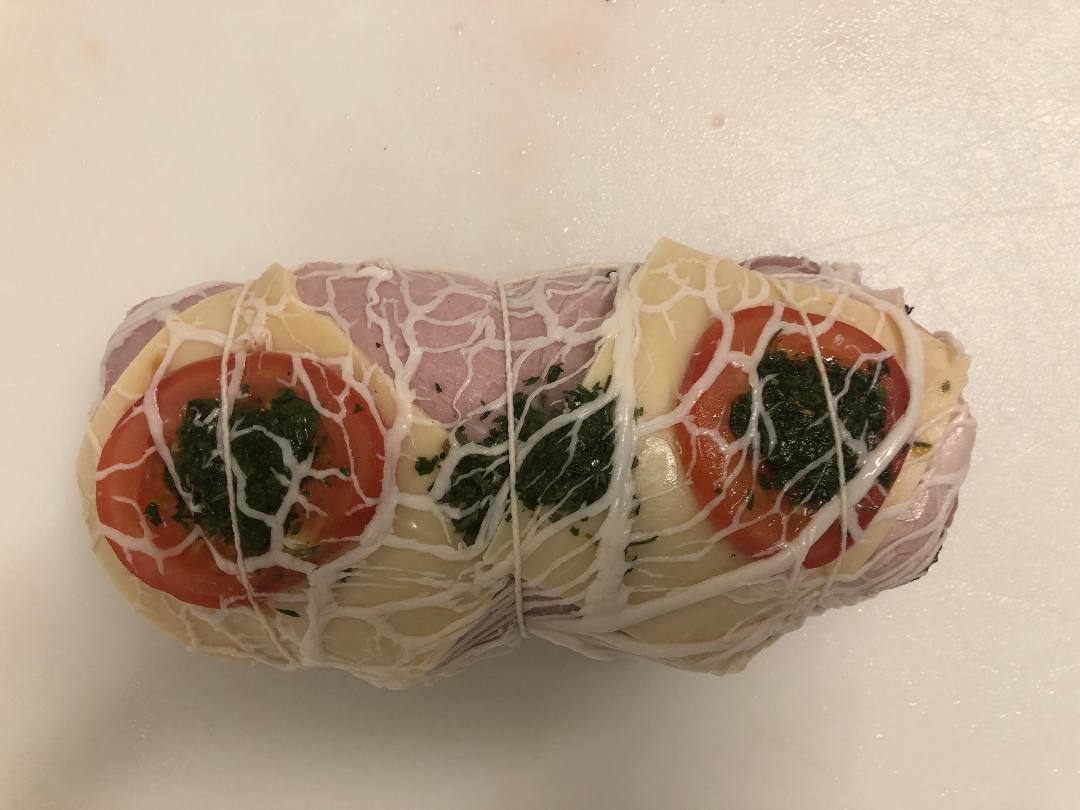
France – Orloff-style roast pork sold by the cut in the butcher’s section – Salmonella

Gov france

  • Product category Food
  • Product subcategory Meats
  • Product brand name unbranded
  • Model names or references Orloff-style roast pork
  • Product identification
    GTIN Batch Date
    13336461700468 32691186 – 32691187 Use-by date 04/10/2023
  • Packaging sold by the cut
  • Start/end date of marketing From 09/27/2023 to 10/04/2023
  • Storage temperature Product to keep in the refrigerator
  • Geographical sales area Whole France
  • Distributors Carrefour Market TERDEGHEM Carrefour Contact RIMOGNE