Category Archives: Research

Research – Effect of Ploidy on Vibrio parahaemolyticus and Vibrio vulnificus Levels in Cultured Oysters

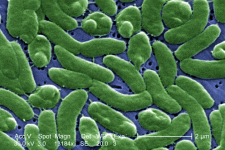
JFP Vibrio_vulnificus_01

Vibrio parahaemolyticus and V. vulnificus are naturally occuring human pathogenic bacteria commonly found in estuarine environments where oysters are cultured. The use of triploid oysters has increased, due to their rapid growth rate and that they maintain a high quality throughout the year. Previous work suggested levels of Vibrio spp. may be lower in triploid oysters, as compared to diploids. Therfore, this study aimed to determine if there is a difference in the abundances of V. parahaemolyticus and V. vulnificus between half-sibling diploid and triploid oysters. In four trials, 100 individual oysters (either iced or temperature abused) were analyzed for V. parahaemolyticus and V. vulnificus using direct plating followed by colony hybridization. Mean levels of V. parahaemolyticus in iced and abused diploid oysters were 3.55 and 4.21 log CFU/g, respectively. Mean levels in iced and abused triploid oysters were 3.49 and 4.27 log CFU/g, respectively. Mean levels of V. vulnificus in iced and abused diploid oysters were 3.53 and 4.56 log CFU/g, respectively. Mean levels in iced and abused triploid oysters were 3.54 and 4.55 log CFU/g, respectively. The differences in Vibrio spp. abundances between diploid and triploid oysters was not significant (p>0.05). However, the differences across treatments were significant (p<0.05), with the exception of V. parahaemolyticus levels in trial 3 (p=0.83). Variation between individual oysters was also observed, with 12 of 808 measurements being outside of the 95 th percentile. This phenomenon of occasional statistical outliers (“hot” or “cold” oysters) has been previously described and supports the appropriateness of composite sampling to account for inherent animal variability. In summary, the data indicate that abundances of V. parahaemolyticus and V. vulnificus are not dependent on the ploidy of cultured oysters, but vary with the type of handling.

 

Research – Project to look at 2019 Spanish Listeria outbreak

Food Safety News Listeria cdc

Andalusian authorities have allocated €100,000 (U.S. $113,000) for research to learn from the region’s Listeria outbreak in 2019. The project will focus on the epidemiological, microbiological and clinical analysis of the listeriosis outbreak, according to the Ministry of Health and Families in Andalusia.

The outbreak from “La Mecha” brand chilled roasted pork produced by Magrudis affected more than 200 people. During the health alert between mid-August and mid-October three people died and there were five abortions.

Research – Microbiological Quality of Cooked Chicken: Results of Monitoring in England (2013-17)

JFP

Results from monitoring of the microbiological quality of 2,721 samples of ready-to-eat cooked chicken collected between 2013 to 2017 in England were reviewed: 70% of samples were from retail, catering or manufacture and 30% were imported and collected at English ports. Samples were tested for a range of bacterial pathogens and indicator organisms. Six samples (<1%) had unsatisfactory levels of pathogens which were potentially injurious to health. Neither Salmonella nor Campylobacter were recovered from any sample. Two samples from catering settings contained either an unsatisfactory level of Bacillus cereus (5 x 10 6 CFU/g) or an unsatisfactory level of coagulase positive staphylococci (1.6 x 10 4 CFU/g). Listeria monocytogenes was recovered from 36 samples (one at manufacture, 26 at catering and nine at retail) and in four instances, unsatisfactory levels (≥10 2 CFU/g) were detected (three samples collected at catering and one at retail). For L. monocytogenes there were no significant differences between the rates of contamination with between the samples collected from ports, manufacture, retail supermarkets and other retailers (p = 0.288). There were no differences between the rates of contamination for other potential pathogens detected between samples from different settings. The prevalence of hygiene indicators ( Escherichia coli , Enterobacteriaceae and Aerobic Colony Counts) at import was significantly lower than in samples collected from manufacturers, retail or catering (p < 0.01). Samples collected from catering gave poorer results than all other settings. Regardless of the stage in the food chain, samples from Thailand and from other non-EU countries were of significantly better microbiological quality with respect to indicator organisms than those from the UK or from other EU countries (p = <0.001).

Research – Scientists uncover Campylobacter’s swimming tactics

Food Safety News

campy2

Image CDC

Researchers have found out how Campylobacter can swim faster in stickier liquids, such as in human guts.

Findings could help scientists halt the foodborne bacteria, because they show how the shape of its body and components that help it swim are all dependent on each other to work. This means any disruption to one part could stop the bacteria from getting through the body and into the gut.

Research – Optimization on antimicrobial effects of surfactin against Bacillus cereus spore

JFP

Abstract :The purpose of this study was to establish a three-variable bactericidal model of temperature, time, and concentration to determine the optimal conditions for Bacillus cereus  spore inactivation by surfactin. In order to obtain the binary regression equation of the inactivated spore model, a total of 17 simulations were performed using response surface methodology. The experimental results showed that the three factors each had a discernible but non-equal impact on the inactivation response value. Multiple regression analysis of experimental results using Design-Expert software yielded as the following equation: Optimal inactivation of spores was achieved by treatment with surfactin at a concentration of 4 mg/ml for 40 h at 53 °C, with the response value reaching 1.8. The spores were treated with surfactin under these conditions; the microstructural changes of spores were observed by scanning electron microscopy. We found that the structures of the outer wall of the spores were damaged, while the spores in the control sample showed no visible damage.

Research – Survival and Virulence of Listeria monocytogenes During Storage on Chocolate Liquor, Corn Flakes, and Dry-Roasted, Shelled Pistachios at 4ºC and 23ºC

JFP

The survival and virulence of Listeria monocytogenes was assessed during storage on three low-moisture foods (LMFs), chocolate liquor, corn flakes and shelled, dry-roasted pistachios (a w 0.18, 0.27, 0.20). The LMFs were inoculated with a 4-strain cocktail of L. monocytogenes at 8 log CFU/g, dried, equilibrated and then stored at 4°C, 25–81% relative humidity (RH) and 23°C, 30–35% RH for at least 336 days. At 4°C, L. monocytogenes remained stable on the LMFs for at least 336 days. At 23°C, L. monocytogenes levels declined on the chocolate liquor, corn flakes and pistachios at initial rates of 0.84, 0.88 and 0.32 log CFU/g/month, respectively. After 8 months at 23°C, L. monocytogenes concentrations on the chocolate liquor and corn flakes decreased to below the limit of detection (i.e., 0.48 log CFU/g). Relative populations of each strain were assessed before (i.e., day 0) and after 6 and 12 months of storage at 23°C and 4°C, respectively. Generally, a decline in the relative abundance of the serotype 1/2a strain was observed during storage, coupled with the relative increase of other strains, depending on the LMF and storage temperature. The total viable populations of L. monocytogenes quantified by PMAxx-qPCR after 12-plus months of storage at 4°C were significantly higher than that obtained by plating on TSA-YE by 1.8 to 3.7 logs. Decreases in the culturable population of L. monocytogenes during storage on the LMFs were the result of both cellular inactivation and transition to a viable-but-non-culturable state. The surviving cells, specifically after long-term storage at 4°C on the chocolate liquor and pistachios, remained infectious and capable of intracellular replication in Caco-2 enterocytes. These results have great relevance for predictive modeling used in microbial health risk assessments and support the addition of LMFs to food safety questionnaires conducted during listeriosis outbreaks.

Research – Thermal Resistance of Foodborne Pathogens and Enterococcus faecium NRRL B-2354 on Inoculated Pistachios

JFP

ABSTRACT

Process control validations require knowledge of the resistance of the pathogen(s) of concern to the target treatment and, in some cases, the relative resistance of surrogate organisms. Selected strains of Escherichia coli O157:H7 (five strains), Listeria monocytogenes (five strains), and Salmonella enterica (five strains) as well as Salmonella Enteritidis phage type (PT) 30 and nonpathogenic Enterococcus faecium NRRL B-2354 were inoculated separately (as individual strains) onto inshell pistachios. The thermal tolerance of each strain was compared via treatment of inoculated pistachios to hot oil (121°C) or hot water (80°C) for 1 min. Survivor curves in hot oil or hot water (0.5 to 6 min, n = 6 to 15) were determined for one or two of the most resistant strains of each pathogen, as well as E. faecium NRRL B-2354 and Salmonella Enteritidis PT 30, and the Weibull model was fit to the data. A pilot-scale air-impingement oven was used to compare the thermal tolerance of E. faecium NRRL B-2354 and Salmonella Enteritidis PT 30 on pistachios with or without a brining pretreatment and at either dry (no steam) or 30% humidity (v/v) oven conditions. No significant difference in the time to a 4-log reduction in hot oil or hot water was predicted for any of the strains evaluated, on the basis of the 95% confidence interval. In the pilot-scale oven, E. faecium NRRL B-2354 was more thermally resistant than Salmonella in a broad set of differing treatments, treatment times, and temperatures. Salmonella is a suitable target pathogen of concern in pistachios for thermal processes because no other pathogen tested was more thermally resistant under the conditions evaluated. E. faecium NRRL B-2354 was at least as thermally resistant as Salmonella under all conditions evaluated, making it a good potential surrogate for Salmonella on pistachios.

HIGHLIGHTS
  • Salmonella Enteritidis PT 30 is a reasonable target strain for laboratory-based studies.
  • E. coli O157:H7 or L. monocytogenes were less thermally resistant than Salmonella.
  • E. faecium NRRL B-2354 was at least as thermally resistant or more so than Salmonella.
  • E. faecium NRRL B-2354 is a good potential thermal-treatment surrogate for pistachios.

Research – Survival and Histamine Production by Histamine-Forming Bacteria Exposed to Low Doses of Gamma Irradiation

JFP

ABSTRACT

Histamine poisoning occurs when fish containing high amount of histamine are consumed. Because histamine is thermally stable, control of histamine-forming bacteria in seafood is an appropriate strategy for preventing the formation of histamine. One prevention method is the use of gamma irradiation on the histamine formers. To understand the effect of gamma irradiation on the histamine-forming bacteria, laboratory isolates of the prolific histamine formers Morganella morganii, Klebsiella variicola, and Proteus vulgaris were exposed to various doses of gamma radiation in nutrient broth and tuna muscle spiked with histamine formers. None of the test bacteria survived in tuna muscle irradiated at 2.0 kGy. K. variicola was highly sensitive to gamma irradiation and was eliminated at a dose of 1.5 kGy. Histamine production also was reduced significantly as the radiation dose increased. These results suggest that gamma irradiation can effectively eliminate histamine-forming bacteria and reduce the threat of histamine poisoning from seafood.

HIGHLIGHTS
  • Histamine-forming bacteria are highly susceptible to low levels of gamma irradiation.
  • Prolific histamine formers in tuna meat were eliminated by irradiation at 2.0 kGy.
  • Irradiation at 1.5 kGy reduced the level of histamine formers in tuna meat by 4 to 5 log CFU.
  • Histamine formation in tuna meat can be controlled by low levels of gamma irradiation.

Research – Salmonella Dublin Makes Inroads In The Beef Industry

BV


Salmonella Dublin (S. Dublin) issues tend to garner more headlines today in the dairy industry than in beef, but it’s still an issue in the latter, says Jackson McReynolds.

The first reported incidence of S. Dublin in beef that McReynolds says he found recorded in literature was in California in 2014, though veterinarians have told him they identified cases of it as early as the 1960s.

Research – Survey of the U.S. Broiler Industry Regarding Pre- and Postharvest Interventions Targeted To Mitigate Campylobacter Contamination on Broiler Chicken Products

JFP

ABSTRACT

Campylobacter is one of the most commonly reported foodborne pathogens in the United States. Because poultry is considered a major source of Campylobacter infections in humans, reduction of Campylobacter contamination in poultry products is likely the most important and effective public health strategy for reducing the burden of campylobacteriosis in humans. A comprehensive on-line survey was conducted of key stakeholders in the U.S. broiler industry, including broiler farm managers (n = 18), poultry veterinarians (n = 18), and processing plant managers (n = 20), to assess the current pre- and postharvest Campylobacter interventions and control measures practiced by the industry for reducing Campylobacter contamination of broiler products. The survey also included information regarding each respondent’s understanding of Campylobacter transmission and ecology in relation to broiler production. The results revealed that a majority of the establishments included in the survey are following the U.S. Department of Agriculture, Food Safety and Inspection Service guidelines for controlling Campylobacter contamination in broiler flocks and on carcasses. However, establishments appeared to be putting more effort into Salmonella control than into Campylobacter control both on the farm and in the processing plant. A majority of the respondents responded that current interventions are not effective for reducing Campylobacter contamination, especially on the farm. Many respondents did not understand the risk factors associated with Campylobacter colonization in broiler flocks and on carcasses. Continued educational and training programs for key stakeholders in the U.S. broiler industry are needed to increase awareness of the issues associated with Campylobacter infection in broiler chickens and of the fact that Campylobacter infection is a multifaceted problem that requires efforts from both the pre- and postharvest sectors.

HIGHLIGHTS
  • Survey participants reported a lack of effective on-farm Campylobacter interventions.
  • Survey participants mostly adhered to government guidelines for reducing Campylobacter.
  • Survey participants differed in an understanding of Campylobacter transmission and ecology.
  • Better Campylobacter education programs are needed for poultry industry stakeholders.