Category Archives: pathogenic

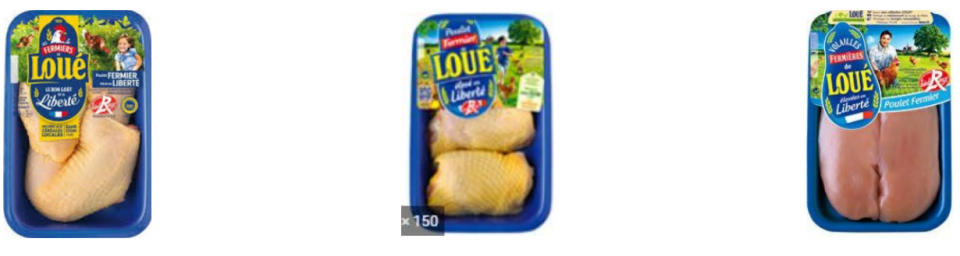
Luxembourg – TRAY OF 2 YELLOW CHICKEN THIGHS, TRAY OF 2 WHITE CHICKEN FILLETS, TRAY OF 3 HIGH CHICKEN THIGHS FROM THE LDC BRAND – PRESENCE OF SALMONELLA

SAP

Last name Tray of 2 yellow chicken thighs
Mark LDC
Bar code 0217823000000
Best before date (DLC) 09/09/2020
Lot 2020037392
Last name Tray of 2 white chicken fillets
Mark LDC
Bar code 3266980282882
Best before date (DLC) 09/08/2020 & 09/09/2020
Lot 2020037371
Last name Tray of 3 tall chicken thighs
Mark LDC
Bar code 3266980006969
Best before date (DLC) 09/11/2020
Lot 2020037371

Danger: Presence of salmonella


Salmonella can cause symptoms such as nausea, vomiting, abdominal cramps, diarrhea, fever and headache within 6 to 72 hours after consumption. These symptoms may be aggravated in young children, immunocompromised individuals and the elderly. People who have consumed these products and who present these symptoms are advised to consult a doctor, notifying him of this consumption.


Sale in Luxembourg by: Auchan

A sale by other operators cannot be excluded.

Source of information: Auchan recall notification.


Communicated by: Government Commission for Quality, Fraud and Food Safety .


South Korea – Increase in Vibrio vulnificus Cases

Outbreak News today

KSWFOODWORLD

The Korea Centers for Disease Control and Prevention (KCDC) has reported an increase in Vibrio vulnificus infections in the first eight months of 2020.

Epidemiological investigations of five patients who died from Vibrio vulnificus infection found that all of them were at high risk for the illness, with underlying conditions such as alcoholism, diabetes and liver disease, The Korea Times reports.

Vibrio vulnificus can cause disease in those who eat contaminated seafood or have an open wound that is exposed to warm seawater containing the bacteria. Ingestion of Vibrio vulnificus can cause vomiting, diarrhea and abdominal pain. Vibrio vulnificus can also cause an infection of the skin when open wounds are exposed to warm seawater; these infections may lead to skin breakdown and ulcers.

USA – Brazil Nuts Cause Salmonella Outbreak in UK; America Could be Next

Brazil Nuts Cause Salmonella Outbreak in UK; America Could be Next

RASFF Alerts – Salmonella – Sesame Seeds – Chicken Thighs – Minced Beef – Chicken Quarters – Chicken Wings – Chicken Breast – Minced Veal – Beef Strips – Betel Leaves – Salad made of Rice, Vegetables, Eggs and Tuna – Eggs – Poultry Kebabs – Pepper – Black Pepper – Turkey Rump

European Food Alerts

RASFF

Salmonella (presence /25g) in hulled sesame seeds from Nigeria in Greece

RASFF

Salmonella (presence /25g) in frozen chicken thighs from the Netherlands in Netherlands

RASFF

Salmonella enterica ser. Infantis (presence /25g) in chilled minced beef from the Netherlands, with raw material from Hungary in Sweden

RASFF

Salmonella enterica ser. Enteritidis (presence /25g) in chilled chicken quarters from Poland in Poland

RASFF

Salmonella group C1 (presence /25g) in chicken wings from Poland in Poland

RASFF

Salmonella enterica ser. Infantis (presence /25g) in chilled chicken breast fillets from the Netherlands in the UK

RASFF

Salmonella enterica ser. Infantis (presence /25g) in frozen chicken thigh meat boneless skinless from Poland in Estonia

RASFF

Salmonella enterica ser. Infantis (in 2 out of 5 samples /25g) in frozen chicken broiler thighs from Hungary in Lithuania

RASFF

Salmonella (presence /25g) in frozen beef strips from Germany in Germany

RASFF

Salmonella (4 of 5 samples /25g) in betel leaves from Thailand in the UK

RASFF

Salmonella (presence /25g) in betel leaves from Thailand in the UK

RASFF

Salmonella (2 out of 5 samples /25g) and too high count of Escherichia coli (1200 CFU/g) in betel leaves from Thailand in the UK

RASFF

Salmonella (presence /25g) in chilled salad made of rice, vegetables, eggs and tuna from France in France

RASFF

Salmonella enterica ser. Enteritidis (in 1 out of 5 samples /25g) in chilled chicken thighs from Poland in Poland

RASFF

suspicion of Salmonella enterica ser. Enteritidis (found on egg shells /25g) in eggs from Poland in Poland

RASFF

Salmonella enterica ser. Typhimurium (in 4 out of 5 samples /25g) in chilled chicken meat from Poland in Poland

RASFF

Salmonella (in 3 out of 5 samples /25g) in frozen poultry kebab from Belgium in Belgium

RASFF

Salmonella enterica ser. Agona (presence /25g) and Salmonella enterica ser. Soerenga (presence /25g) in pepper from Brazil in Germany

RASFF

Salmonella enterica ser. Abaetetuba (presence /25g) and Salmonella enterica ser. Sandiego (presence /25g) in black pepper from Brazil in Germany

RASFF

Salmonella (presence /25g), Salmonella enterica ser. Enteritidis (presence /25g) and Salmonella enterica ser. Newport (presence /25g) in skinless boneless chicken fillets from Poland in Italy

RASFF

Salmonella enterica ser. Indiana (in 2 out of 5 samples /25g) and Salmonella enterica ser. Typhimurium monophasic (1 ,4, [5], 12:i:-) (in 3 out of 5 samples /25g) in frozen turkey rump from France in France

RASFF

Salmonella (presence /25g) in sesame seeds from India in the Netherlands

RASFF

Salmonella (presence /25g) in frozen salted chicken half breasts from Brazil in the Netherlands

Belgium – Pasta Mici, chopped prepared (1kg) of Georges mark – Salmonella

AFSCA

In agreement with the AFSCA, the company LMCHOP is withdrawing from sale the product “Pasta de Mici” 1kg (prepared chopped) and is recalling it to consumers because of a possible presence of Salmonella.

LMCHOP asks its customers not to consume this product and to bring it back to the point of sale where it was purchased: Georges, Rue Ropsy Chaudron 24, 1070 Anderlecht.

Product description

– Product name: Pasta de Mici 1kg
– Brand: Georges
– Use by date (DLC) (“To be consumed until”): 01/09/2020
– Lot number: PDM280820
– Sale period: from 08/28/2020 to 08/30/2020
– Type of packaging: plastic container
– Weight: 1kg

The product was sold via Georges (rue Ropsy Chaudron 24, 1070 Anderlecht).

For any further information , please contact:
Mr. Lucas Hudders
Tel. : 052306421

France – Salade & Compagnie Antibes Recipe SODEBO brand – Salmonella

ENCOUNTERED PROBLEM

Presence of salmonella

PROPOSED SOLUTION

People who hold this product are asked not to consume it and to return it to the point of sale where it was purchased for reimbursement.

https://www.oulah.fr/rappel-produit-salade-compagnie-recette-antibes-de-marque-sodebo/

France – Cavet brand organic white goat cheese – Salmonella

ENCOUNTERED PROBLEM

Presence of salmonella

PROPOSED SOLUTION

People who hold this product are asked not to consume it and to return it to the point of sale where it was purchased for reimbursement.

Foodborne illness caused by Salmonella results in gastrointestinal disturbances, diarrhea, vomiting and abdominal pain, often accompanied by fever; these symptoms may be more severe in young children, immunocompromised individuals and the elderly. The incubation period can range from 6 to 72 hours.
People who have consumed the products mentioned below and who have these symptoms are invited to consult their doctor, notifying him of this consumption.

https://www.oulah.fr/rappel-produit-chevre-blanc-bio-x2-de-marque-cavet/


USA – CDC update – Outbreak Investigation of Salmonella Enteritidis: Peaches (August 2020)

FDA

The FDA, along with CDC and state and local partners, is investigating an ongoing multistate outbreak of Salmonella Enteritidis infections potentially linked to peaches packed or supplied by Prima Wawona or Wawona Packing Company.

CDC reports that epidemiologic evidence indicates that peaches are the likely source of this outbreak. As of August 27, 2020, CDC is reporting a total of 78 cases across 12 states. FDA’s investigation to identify a source of contamination is ongoing.

Available recall information is included below and will be updated as more products are identified and recalled.

Recommendation

Advice for consumers, restaurants, and retailers: Consumers, restaurants, and retailers should not eat, sell, or serve recalled peaches packed or supplied by Prima Wawona.

Recalled bagged peaches packed or supplied by Prima Wawona from June 1, 2020 to August 19, 2020 should not be eaten and should be thrown away. Recalled loose/bulk peaches packed or supplied by Prima Wawona from June 1, 2020 to August 3, 2020 should not be eaten and should be thrown away.

Consumers who cannot identify the brand or remember the date of purchase, should throw the product away. Consumers who may have frozen peaches supplied by Prima Wawona should throw them away.

FDA recommends that anyone who received recalled peaches packed or supplied by Prima Wawona use extra vigilance in cleaning and sanitizing any surfaces and containers that may have come in contact with the produce to reduce the risk of cross-contamination. This includes cutting boards, slicers, countertops, refrigerators, and storage bins.

Consumers who have symptoms of Salmonella infection should contact their health care provider. Most people with salmonellosis develop diarrhea, fever, and abdominal cramps. More severe cases of salmonellosis may include a high fever, aches, headaches, lethargy, a rash, blood in the urine or stool, and in some cases may become fatal.

Suppliers and distributors: Suppliers, distributors, and others in the supply chain should not use, ship or sell recalled peaches packed or supplied by Prima Wawona.

Recalled bagged peaches packed or supplied by Prima Wawona from June 1, 2020 to August 19, 2020 should not be eaten and should be thrown away. Recalled loose/bulk peaches packed or supplied by Prima Wawona from June 1, 2020 to August 3, 2020 should not be eaten and should be thrown away.

Suppliers and distributors that re-packaged recalled peaches packed or supplied by Prima Wawona from should use extra vigilance in cleaning and sanitizing any surfaces and storage areas that may have come into contact with recalled peaches packed or supplied by bagged Prima Wawona. If there has been potential cross contamination or mixing of peaches from other sources with these recalled bagged products, then comingled products should be discarded.

Investigation Update

August 28, 2020

As of August 28, 2020, CanadaExternal Link DisclaimerSingaporeExternal Link Disclaimer, and New ZealandExternal Link Disclaimer have issued recalls of Prima Wawona peaches. Information received by FDA indicates that recalled Wawona peaches were shipped to foreign consignees in Australia, Canada, China, Costa Rica, Ecuador, El Salvador, Guatemala, Honduras, Mexico, Panama, the Philippines, Singapore, Taiwan, and the United Arab Emirates. FDA is sharing distribution information directly with foreign food safety authorities in these jurisdictions.

Additional information regarding the foreign distribution of recalled product is included in the table below.

FDA’s traceback investigation is working to identify the source of this ongoing outbreak, whether additional peaches are affected, and to determine if potentially contaminated product has been shipped to additional retailers.

Recall Information (Updated August 28, 2020)

Recalled Peaches

On August 22, 2020, Prima Wawona recalled bagged and bulk, or loose, peaches that they supplied to retailers nationwide.

The firm’s press states it is recalling “bulk/loose peaches distributed and sold from June 1 through August 3 and its bagged Wawona and Wawona Organic peaches distributed and sold from June 1 through August 19th because the products could possibly be contaminated with Salmonella.”

The bagged peaches were distributed and sold in supermarkets with the following product codes:

  • Wawona Peaches – 033383322001
  • Wawona Organic Peaches – 849315000400
  • Prima® Peaches – 766342325903
  • Organic Marketside Peaches – 849315000400
  • Kroger Peaches – 011110181749
  • Wegmans Peaches – 077890490488

For bagged peaches, the product codes may be found at the bottom of each package. All affected peaches may be found in stores nationwide.

Retailers that received recall product from Prima Wawona or Wawona Packing Company include, but are not limited to:

The bulk/loose peaches supplied by Prima Wawona are sold in grocery stores in a variety of formats, typically bins where consumers may select their own fruit and may have the following stickers with PLU numbers on them: 4037, 4038, 4044, 4401, 94037, 94038, 94044, 94401. Please note that not all peaches with these PLU codes are supplied by Prima Wawona. If you are unsure of the brand or variety of your loose peaches, you can contact your retailer or supplier, or throw them out.

Recalls have also been initiated by companies that sold peaches or products containing recalled peaches.

  • Russ Davis Wholesale
    • Recalling peach salsa and gift baskets made from recalled Prima Wawona peaches

Below is a list of consignees that the FDA had reason to believe received peaches from Prima Wawona that shipped or distributed to countries outside the United States. It is possible that this list may not include all such consignees who may have received the peaches. However, this list represents the best information currently available to the FDA:


Product Images

Outbreak Investigation of Salmonella Enteritidis in Bagged Peaches (August 2020) - Photos of Recalled Bagged Peaches

View larger images

Case Count Map Provided by CDC

Outbreak Investigation of Salmonella Enteritidis in Peaches (August 2020) - Case Count Map from CDC 8/27/2020

Australia – Godel’s Chicken Wurst 200g – Listeria monocytogenes

FSANZ

Product information

Solomon Kosher Butcher Pty Ltd is conducting a recall of 200g Vacuum Packaged Godel’s Chicken Wurst. The product has been available for sale at Solomon Kosher Butcher, Kosher Kingdom, and Budget Rite in Doncaster VIC, and Krinsky’s Supermarket, Bondi NSW.

Date markings

Use by 8/9/20, 17/9/20

Godels chicken wurst

Problem

The recall is due to to a possible Listeria monocytogenes contamination.

Food safety hazard

Listeria monocytogenes may cause illness in pregnant women and their unborn babies, the elderly, and people with low immune
systems.

Country of origin

Australia

What to do​

Consumers should not eat this product. Any consumers concerned about their health should seek medical advice.  Customers should return the product to the place of purchase for a full cash refund.


For further information please contact:

Solomon Kosher Butcher Pty Ltd
(03) 9532 8855; www.solomon.com.au

Related links:

Research – Effectiveness of edible coatings to inhibit browning and inactivate foodborne pathogens on fresh‐cut apples

Wiley Online

Multiple formulations of edible coating solutions were developed and evaluated for their ability to maintain the quality and minimize populations of foodborne bacteria on fresh‐cut apples. Fresh‐cut apples were artificially inoculated with Salmonella spp., Escherichia coli O157:H7, and Listeria monocytogenes , and dip‐treated with coating solutions. Changes in populations of pathogens and molds and yeasts (M&Y) were evaluated after solution treatments and during storage at 4°C for 35 days. Changes in color, texture firmness, and weight loss during storage were also determined. Among the formulations, the solution containing 1% of three organic acids (acetic, lactic, and levulinic acids), 2% N‐acetyl‐l‐cysteine or L‐cysteine with 0.5% chitosan demonstrated the best effectiveness for the simultaneous reduction of pathogenic and spoilage microorganisms, control of browning, and maintenance of the quality of fresh‐cut apples. The treated apple slices had nondetectable pathogens and M&Y (<1 log CFU) and the least quality changes for 35‐day storage. The developed solutions can be used at processing plants, retail stores, or homes to protect fresh‐cut apples or other fresh‐cut fruits and vegetables from microbiological and quality deterioration.