Category Archives: Norovirus

Ireland – Hepatitis A – Outbreaks

Food Safety News

Two outbreaks of hepatitis A virus (HAV) with 17 infections are under investigation in Ireland.

A total of 21 patients have been identified during a three-month period in Dublin, with 17 linked to the outbreaks that began in November 2020. One of the outbreak strains has genotype IA.

Some cases are associated with food premises

France – Collective food poisoning suspected to be linked to the consumption of oysters contaminated by Norovirus

Sante Publique

Several collective food poisoning infections possibly linked to the consumption of contaminated oysters have been reported since mid-February 2021 in several regions of France.

Since mid-February 2021, 46 mandatory declarations (DO) of collective food poisoning (TIAC) ​​suspected of being linked to the consumption of oysters have been sent to Public Health France and / or to the General Directorate of food . 

The meal dates at the origin of these toxi-infections are between 02/11/2021 and 02/25/2021 with a majority of meals reported on 02/14 (21 TIAC, 46%). All these TIACs took place in the context of a family meal with between 2 and 8 patients. A total of 164 patients were recorded and two people were hospitalized. 

Several departments affected, in particular the West region

These TIACs mainly took place in New Aquitaine (23 in the department 33, 7 in the 17, 4 in the 40 and 2 in the 64), 5 in Pays de la Loire, 3 in Occitanie, 1 in Brittany and 1 in Bourgogne-Franche-Comté. For 36 of these TIACs, the origin of the oysters is known: Arcachon basin for 24 TIAC, Hossegor lake for 5, Marennes d’Oléron for 6 and Baie de Plouharnel for 1. 

The investigations carried out

Stool analyzes carried out by the National Reference Center for Gastroenteritis Viruses in patients following 2 TIACs confirmed the presence of norovirus.

Shellfish collected from individuals who were sick after consuming oysters as well as from suppliers were analyzed by reference laboratories and laboratories approved by the Ministry of Agriculture and Food: noroviruses were identified . Noroviruses have also been detected in several production areas of consumed oysters.

The contamination of shellfish by norovirus for other TIACs is also suspected in view of the symptoms of sick people, mainly diarrhea and vomiting, and the incubation times between the consumption of shellfish and the onset of symptoms found during investigations of patients. TIAC. The torrential rains observed at the beginning of February may have favored the contamination of the environment / production areas and therefore of shellfish.

Actions taken since case detection

Four areas are currently closed by prefectural decrees temporarily prohibiting fishing, collection, transport, purification, shipping, storage, distribution, marketing and release for human consumption. shellfish following the discovery of the contamination of shellfish by noroviruses: the Arcachon basin (Gironde) since 02/18/2021, Hossegor lake (Landes) since 03/02/2021, the Chenaux du Payré (Vendée) since 25/02 and the bay of Plouharnel (Morbihan) since 03/03/2021.

Taiwan – CDC issues Norovirus warning after Taiwan sees surge in cases

Taiwan News

Food Borne Illness - Norovirus -CDC Photo

The health authorities are sounding the alarm over norovirus-induced gastroenteritis, with cases soaring over the past week.

Taiwan recorded over 138,000 cases of diarrhea between Feb. 21 and 27, reflecting an uptick in stomach illnesses following the Lunar New Year. Over the past four weeks, 87 diarrhea clusters have been reported nationwide, and 97 percent of the 58 cases where pathogens were identified pointed to norovirus as the culprit, according to the Taiwan Centers for Disease Control (CDC).

Members of the public are urged to improve their hygiene, as the virus is transmitted via the fecal-oral route, which involves contaminated food or water or contact with infected persons.

Research – Does Norovirus cause a sore throat? Other symptoms and more

Medical News Today

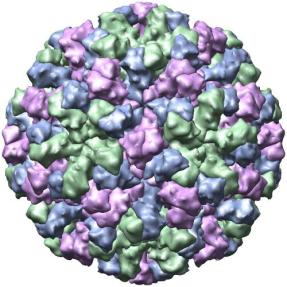
Norwalk_Caspid

The norovirus is a foodborne illness that causes a variety of symptoms, including vomiting, diarrhea, and stomach pain. It does not cause a sore throat directly, but a sore throat could come as a result of vomiting or happen due to another condition altogether.

CDC Norovirus Information

Research – Food risk survey shows low awareness of Campylobacter

Food Safety News

There is low awareness of Campylobacter and its impact despite it being the main cause of food poisoning in the UK, according to a project on how people perceive food-related risks.

Results come from a survey by Kantar Public and analysis at the Food Standards Agency (FSA). The study was online and had 1,194 participants in March 2017 but results were only published this month.

The objective was to improve the FSA’s understanding of consumer perceptions on food risk. This could help develop the targeting, messaging and effectiveness of communication with the public, researchers said.

Consumer risk perception on 17 topics identified by FSA and Food Standards Scotland (FSS) including E. coli O157, food allergens, chemicals in food, Campylobacter, norovirus, pesticides, and radioactivity in food were measured.

RASFF Alert – Norovirus – Razor Clams

European Food Alerts

RASFF

norovirus (GII /2g) in chilled razor clams (Ensis directus) from the Netherlands in Italy

Greece – Evidence for waterborne origin of an extended mixed gastroenteritis outbreak in a town in Northern Greece, 2019

Cambridge Core

We investigated a large gastroenteritis outbreak that occurred in Northern Greece in 2019. A case was defined as anyone presenting with diarrhoea and/or vomiting from 24/01/2019 to 04/02/2019. We conducted a case-control study (CCS) using random selection of participants >16 years of age, residents of town X, who visited the health care centre between 25-28/01/2019.

Moreover, we conducted a retrospective cohort study (CS) at the four elementary schools of the town. We collected clinical and water samples and the water supply system was inspected. In total, we recorded 638 cases (53% female; median age was 44 years (range 0-93)). Forty-eight cases and 52 controls participated in the CCS and 236 students in the CS. Both CCS and CS indicated tap water as the most likely source (OR=10, 95% CI, 2.09-93.4, explaining 95.7% of cases; RR= 2.22, 95% CI, 1.42-3.46, respectively).

More than one pathogen were detected from stool samples of 6 of the 11 cases tested (norovirus, Campylobacter jejuni, EHEC and EPEC). Water samples, collected after ad-hoc chlorination, tested negative. Technical failures of the water tanks’ status were identified. Our results suggested a waterborne outbreak. We recommended regular monitoring of the water supply system and immediate repair of technical failures.

RASFF Alert – Norovirus – Oysters

European Food Alerts

RASFF

norovirus (presence /2g) in oysters (Crassostrea gigas) from France in Italy

Belgium – Norovirus outbreak reported at Belgian school; raw vegetables blamed

Food Safety News

Food Borne Illness - Norovirus -CDC Photo

More than 150 students and staff at a school in Belgium fell ill during an outbreak of norovirus earlier this month, according to information recently released.

The Federal Agency for the Safety of the Food Chain (FASFC) reported the food poisoning at the Atheneum Pegasus school in the city of Ostend was caused by crudités, which are mixed raw vegetables.

The FASFC, known in French as AFSCA and Dutch as FAVV, was informed in early December about the incident and started investigating with Zorg en Gezondheid (The Agency for Care and Health), and Sciensano, the national reference laboratory, to determine the source of contamination.

A total of 71 students and some staff were absent on one day and complained of vomiting, abdominal pain and fever.

Research – Sporadic Pediatric Norovirus Cases May Predict Broader Outbreaks

Contagion Live

Norovirus Food Safety kswfoodworld

Seasonal increases in sporadic pediatric cases of norovirus gastroenteritis correlate with norovirus outbreaks among older populations, a new study found.

The study, published in Clinical Infectious Diseases, analyzed seasonal patterns and genotypic characteristics of norovirus cases between December 2012 and June 2016 in middle Tennessee.

“Sporadic case surveillance and outbreaks followed very similar patterns geographically and temporally,” John R. Dunn, DVM, PhD, state epidemiologist with the Tennessee Department of Health, told Contagion®. “These commonalities in the different surveillance systems indicate that opportunities may exist to slow or prevent outbreaks when sporadic cases start to increase in the community.”

During the study period, 755 pediatric sporadic norovirus cases and 45 outbreaks involving 1924 people were reported.

The mean age of sporadic pediatric cases was 2.9 years, 81.3% were among children younger than 5, and 30% reported attending childcare facilities.

Among 740 outbreak cases with reported ages, 61.6% were in people older than 50, and 42% of outbreaks occurred in long-term care facilities. Childcare facilities and restaurants each accounted for 8.9% of outbreaks. Person-to-person transmission was reported in 80% of outbreaks and 8.9% were reported as foodborne transmission.