Category Archives: Mycotoxin

Denmark – Aflatoxin in popcorn corn

DVFA

Nordic Food Partners A/S is recalling Rema 1000 popmajs ØKO, Salling ØKO Popcorn Majs and ØGO Organic Popcorn Majs, as an excessively high content of the fungal toxin aflatoxin B1 has been found in the products. The products should be returned to the store where they were purchased or discarded.

Recalled foods , Published: April 13, 2023

Modified April 14, 2023

​​​​​​​​Which foods:

Rema 1000 pop corn ORGANIC
Net content : 400g
EAN code: 5705830008961
Best before date: 13.02.2024, Lot number: 35068
Best before date: 13.03.2024, Lot number: 35183

Sold in: Rema 1000 stores throughout the country.

Salling ØKO Popcorn majs
Net content: 400g
EAN code: 5712874018955
Best before date: 13.02.2024, Lot number: 35068
Best before date: 14.02.2024, Lot number: 35068
Best before date: 14.03.2024, Lot number: 35183

Sold in: Bilka, Føtex and Salling stores throughout the country.

ØGO Organic Popcorn Corn
Net content: 400g
EAN code: 5712872348313
Best before dates: 14.02.2024, 20.02.2024, 09.03.2024, 10.03.2024
Lot number: 35068

Sold in: Netto and Basalt stores throughout the country.

​Why are the products being recalled:

​An excessively high content of the fungus toxin aflatoxin B1 has been found in the products. A health risk cannot therefore be ruled out if you eat the products. The decisive thing is that you do not have too high an intake of aflatoxin over a long period of time. So it is not the individual meal that is decisive, but rather intake over a longer period of time. Therefore, you will not experience acute symptoms if you have eaten the products.

Read more about aflatoxin here

What should you do as a consumer:

​The Danish Food Agency advises consumers to return the products to the store where they were purchased, or to discard them.

Who is recalling the products:

Nordic Food Partners A/S
Ørslevklostervej 58A
7840 Højslev
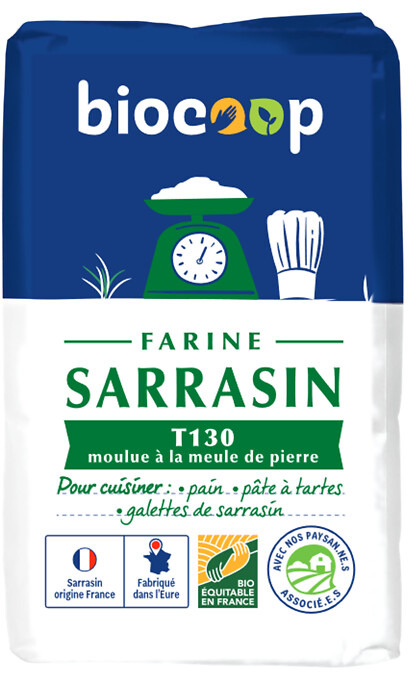
France – Buckwheat flour T130 1kg – Ochratoxin A

Gov france

Identification information of the recalled product

  • Product category Feed
  • Product subcategory Cereals and baked goods
  • Product brand name Biocoop
  • Model names or references Buckwheat flour T130 1kg
  • Identification of products
    GTIN Batch Date
    3558630113005 130323FSAT130 Date of minimum durability 13/03/2024
  • Products List Poster_withdrawal_reminder_BR0216_-_Buckwheat_flour_T130_1kg.pdf Attachment
  • Packaging1kg package
  • Marketing start/end date From 03/24/2023 to 04/14/2023
  • Storage temperature Product to be stored at room temperature
  • Geographic area of ​​sale Whole France
  • Distributors Biocoop

Practical information regarding the recall

  • Reason for recall Following analysis, the level of ochratoxin A (OTA) is higher than the regulations in force.

RASFF Alerts – Aflatoxin – Pistachios and Hazelnuts

RASFF

Aflatoxin in Pistachio from Turkey in Italy

RASFF

Aflatoxins in hazelnuts from Georgia in Germany and Bulgaria

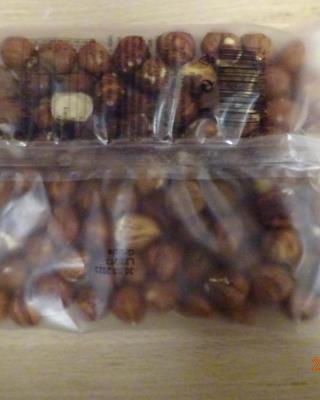
Czech Republic – Albert Hazelnut kernels natural 200 g – Aflatoxins

Potravinynapranyri

Illustrative photo #1

Illustrative photo #2

Place of inspection:
Hrádek nad Nisou ( Liberecká 642, 463 34 Hrádek nad Nisou )
ID: 44012373
Food group: Nuts Nuts

albert Hazelnut kernels natural 200 g
Category: Dangerous foods
Invalid parameter:

aflatoxin B1
sum of aflatoxins B1, B2, G1, G2
appearance

The maximum limit for aflatoxin content was exceeded several times in the food.

The kernels were brown inside and were found to contain live pests.

Batch: L22015
Best before date: 13/04/2023
Packaging: PP bag with print, sealed with welds
Quantity of the product in the package: 0.2 kg
Manufacturer: Ing. Bohumil Kratochvíl – IBK Trade, Dolanská 7/337, 161 00 Prague 6
Country of origin:  Georgia
Date of sample collection: 7/11/2022
Reference number: 23-000005-SZPI-CZ
The sample was detected by the official control of the State Agricultural and Food Inspection.

Research – Special Issue: Coffee, Fungi, Mycotoxins, and Climate Change

MDPI

Coffee is very lucrative and enjoyed by many. It is a major cash crop, especially for countries without many alternative sources of income. However, production is threatened by climate change, a phenomenon that is now universally accepted as occurring and represents a major threat to societies and industry worldwide. Paterson and Lima [1] expressed great concern in 2010 about the lack of methods to combat climate change. Thirteen years later, there has been little tangible action to reduce climate change, despite many warm words about what will be done “sometime in the future”.
It is apposite to consider what would be the effect of climate change on coffee, particularly in relation to spoilage fungi and the production of mycotoxins. Fungi already cause considerable damage to coffee and mycotoxins have highly significant consequences on human and animal health. The commodity can be rejected by authorities when the concentrations of ochratoxin A (OTA) are too high.
We were hoping for more than four papers on the subject, but were pleased that the quality was so high of those we did receive. Gratitude is extended to Naresh Magan’s group for contributing two papers [2,3], both of which present novel data. Akbar et al. [2] have already been cited 15 times (Scopus (18 February 2023)), indicating the high relevance of their work. The growth and OTA production of Aspergillus westerdijkiae were tested in relation to, for example, water activity, temperature and CO2 in media and beans. Interestingly, in green coffee-based media, OTA production was optimum at 0.98–0.95 aw and 30 °C. However, in roasted coffee-based media, very little OTA was produced. In stored green coffee beans, optimum OTA was produced at 0.95–0.97 aw/30 °C.
The objective of Akbar et al. [3] (five Scopus citations ((18 February 2023))) was to examine the effect of treatment of coffee beans with gaseous ozone (O3) for the control of ochratoxigenic fungi and OTA contamination during storage. The paper revealed that, inter alia, it is unlikely that fungi and the OTA contamination of stored coffee beans would be controlled even with high O3 concentrations under wetter conditions.
Our first review on the topic came from Brazil [4], which already has six citations (Scopus ((18 February 2023)). Brazil produces the most coffee globally and we were especially pleased to receive this paper. Temperatures in coffee-producing municipalities in Brazil have increased by about 0.25 °C per decade and annual precipitation has decreased. Therefore, the coffee sector will face serious challenges in the next few decades and the impacts of climate change directly affect coffee mycobiota. Aflatoxins may become dominant with climate change, promoting greater food insecurity in coffee production. Closer attention by authorities is fundamental to stimulate the displacement of areas currently apt for coffee production, that will deteriorate in the future to novel climate zones with suitable climates. This will ameliorate the scarcity of coffee on the world market in the future.
Adhikari et al. [5] (13 citations Scopus ((18 February 2023))) reviewed how (a) suitable areas for coffee cultivation and (b) the toxigenic fungal taxa belonging to AspergillusPenicillium, and Fusarium will be affected due to climate change. Studies predict that suitable coffee cultivation areas could drop by 50%. Increased temperatures will see an overall increase in mycotoxin production such as aflatoxins, particularly by A. flavus, which grows at higher temperatures. Information regarding climate change parameters and mycotoxin concentrations in real coffee samples is provided. Modelling of future changes in coffee cultivation is also required. Indications show that climate change will result in an increase in mycotoxin contamination.
The current author expresses his appreciation to all the authors of this Special Issue and trusts the papers will be of considerable use to workers in the field. He also hopes that very large advances in reducing climate change will occur in the next 13 years, unlike the previous 13.

RASFF Alerts – Aflatoxin – Popcorn – Shelled Pistachios- Groundnuts

RASFF

Aflatoxin in popcorn in  Denmark, Finland, Italy, Lithuania, Sweden

RASFF

aflatoxins beyond the permitted limits in shelled pistachios from Iran in Italy

RASFF

Aflatoxin in groundnuts from Argentina in the Netherlands

RASFF

Aflatoxin in Indian groundnuts in the Netherlands and Switzerland

RASFF Alert- Mycotoxin – Ochratoxin A – Cereal Bars for Children

RASFF

Ochratoxin A in cereal bars for children from Italy in Finland

RASFF Alert – Mycotoxin – Ergot Alkaloids – Rye Flour

RASFF

Ergot alkaloids in wholemeal rye flour from Spain in Andorra

RASFF Alert- Mycotoxin – Fumonisins – Corn Snack

RASFF

Fumonisins in corn snack for children  from Finland in the Netherlands

RASFF Alert – Mycotoxins – Dried Figs

RASFF

Mycotoxins (total aflatoxins, tenuazonic acid) in dried figs from Türkiye in France and Germany