Category Archives: Mould Toxin

Ireland – Withdrawal of a Batch of Dried Figs due to Aflatoxin above the legal limit

FSAI

Summary
Category 2: For Information
Alert Notification: 2021.01
Product: Dried Figs – Imported  by Carpios Foods Ltd.   Pack Size 200g
Batch Code: Best Before 04/21
Country Of Origin: Spain

Message:

A batch of Dried Figs imported from Spain by Carpios Foods Ltd is being withdrawn due to Aflatoxin above the legal limit.

Nature Of Danger:

Aflatoxin is one of a group of a naturally occurring chemicals (mycotoxins) produced by certain moulds. They can grow on a variety of different crops and foodstuffs often under warm and humid conditions.

Mycotoxins can cause a variety of adverse health effects in humans including cancer (some are genotoxic), kidney and liver damage, gastrointestinal disturbances, reproductive disorders or suppression of the immune system. Mycotoxins are naturally occurring, so their presence in foods cannot be completely avoided.

Carpios Foods Dried Figs

Australia – Monde Nissin Australia Pty Ltd t/as nudie Foods — nudie nothing but 2 apples 200mL – Mycotoxin – Patulin

FSANZ

Photograph of nudie nothing but 2 apples 200ml

Identifying features

Other
APN/EAN 9332991002130

What are the defects?

The recall is due to microbial (mycotoxin – patulin) contamination.

What are the hazards?

Food products containing the mycotoxin patulin may cause illness if consumed.

What should consumers do?

Any consumers concerned about their health should seek medical advice and should return the product to the place of purchase for a full refund.

For further information, please contact Monde Nissin Australia Pty Ltd by phone on 1800 466 834 or email info@nudie.com.au or via www.nudie.com.au

Traders who sold this product

Independent food retailers including IGA in NSW, Vic & SA, Independent food retailers in Qld, Tas & WA and Woolworths nationally.

Where the product was sold
Nationally
International
Dates available for sale
  • 26 October 2020 – 24 December 2020

Recall advertisements and supporting documentation

Coordinating agency

Food Standards Australia New Zealand is the coordinating agency for this recall.

Research – Influence of Light and Water Activity on Growth and Mycotoxin Formation of Selected Isolates of Aspergillus flavus and Aspergillus parasiticus

MDPI

kswfoodworld

Image CDC

Aspergillus flavus and A. parasiticus are the main causes of aflatoxin contamination in various foods, particularly grains, as they can thrive in environments with lower water activity and higher temperatures. The growth of Aspergillus and the formation of the mycotoxins aflatoxin and cyclopiazonic acid are strongly influenced by environmental stimuli and can be reduced by modulating parameters such as water activity, pH, temperature and light during the storage. This study has two objectives—on the one hand, to assess how global warming and an increase in exposure to sunlight affect growth and mycotoxin formation, and on the other hand, how the findings from these experiments can be used to reduce fungal growth and mycotoxin formation in stored foods. Using growth substrates with two different water activities (aw 0.95, aw 0.98), together with a light incubation device consisting of different chambers equipped with diodes emitting visible light of five different wavelengths (455 nm, 470 nm, 530 nm, 590 nm, 627 nm) plus white light, we analyzed the growth and mycotoxin formation of selected Aspergillus flavus and A. parasiticus isolates. It was shown that light with a wavelength of 455/470 nm alone, but especially in combination with a lower water activity of aw 0.95, leads to a significant reduction in growth and mycotoxin formation, which was accompanied by reduced transcriptional activity of the responsible mycotoxin biosynthetic genes. Therefore, these results can be used to significantly reduce the growth and the mycotoxin formation of the analyzed fungi during storage and to estimate the trend of fungal infestation by Aspergillus flavus and A. parasiticus in water activity- and light exposure-equivalent climate change scenarios. Mycotoxin-producing aspergilli can be effective and sustainably inhibited using a combination of short-wave light and lowered water activity in the substrate. A higher annual mean temperature accompanying climate change may lead to an increased spread of aflatoxin-producing fungi in areas that were previously too cold for them. On the other hand, there will be regions in the world where contamination with aflatoxin-producing fungi will be reduced due to increased drought and sun exposure.

Research – Food safety against milk mycotoxins

All About Feed

According to the FAO and USDA, 25% of world agricultural crops are contaminated with some kind of mycotoxin and, as a consequence over, 532 million/ton of grains are contaminated. Considering that the base of animal feed is constituted by grains and cereals, most of this production may be contaminated with mycotoxins, which is very alarming. Economic consequences are significant and are not limited only to the added value of raw materials, but also to losses related to the loss of animal productivity, since the spread of mycotoxins occurs throughout the food chain, leading to contamination of final products, such as meat, milk and eggs.

Aflatoxins are secondary metabolites produced by Aspergillus parasiticus, Aspergillus flavus and the uncommon Aspergillus nomius. They appear in foods in the forms of aflatoxin B1 (AFB1), B2, G1 and G2 and in milk in the oxidative forms M1 and M2.

USA – FDA Alert: Certain Lots of Sportmix Pet Food Recalled for Potentially Fatal Levels of Aflatoxin

FDA

Fast Facts

  • FDA is alerting pet owners and veterinary professionals about certain Sportmix pet food products (see list below) manufactured by Midwestern Pet Foods, Inc. that may contain potentially fatal levels of aflatoxin.
  • FDA is aware of at least 28 deaths and 8 illnesses in dogs that ate the recalled product.
  • This is an ongoing investigation. Case counts and the scope of this recall may expand as new information becomes available.
  • Aflatoxin is a toxin produced by the mold Aspergillus flavus, which can grow on corn and other grains used as ingredients in pet food. At high levels, aflatoxin can cause illness and death in pets.
  • Pets experiencing aflatoxin poisoning may have symptoms such as sluggishness, loss of appetite, vomiting, jaundice (yellowish tint to the eyes or gums due to liver damage), and/or diarrhea. In severe cases, this toxicity can be fatal. In some cases, pets may suffer liver damage but not show any symptoms.
  • Pet owners should stop feeding their pets the recalled products listed below and consult their veterinarian, especially if the pet is showing signs of illness.  The pet owner should remove the food and make sure no other animals have access to the recalled product.
  • FDA is asking veterinarians who suspect aflatoxin poisoning in their patients to report the cases through the Safety Reporting Portal or by calling their local FDA Consumer Complaint Coordinators. Pet owners can also report suspected cases to the FDA.

What is the Problem?

On December 30, 2020, Midwestern Pet Food, Inc. announced a recall of certain lots of Sportmix pet food products after FDA was alerted about reports of at least 28 dogs that have died and eight that have fallen ill after consuming the recalled Sportmix pet food. Multiple product samples were tested by the Missouri Department of Agriculture and found to contain very high levels of aflatoxin. Aflatoxin is a toxin produced by the mold Aspergillus flavus and at high levels it can cause illness and death in pets. The toxin can be present even if there is no visible mold.

FDA is issuing this advisory to notify the public about the potentially fatal levels of aflatoxin in pet food products that may still be on store shelves, online, or in pet owners’ homes.

FDA is conducting follow-up activities at the manufacturing facility.

This is a developing situation and the FDA will update this page with additional information as it becomes available.

What are the Symptoms of Aflatoxin Poisoning in Pets?

Pets are highly susceptible to aflatoxin poisoning because, unlike people, who eat a varied diet, pets generally eat the same food continuously over extended periods of time. If a pet’s food contains aflatoxin, the toxin could accumulate in the pet’s system as they continue to eat the same food.

Pets with aflatoxin poisoning may experience symptoms such as sluggishness, loss of appetite, vomiting, jaundice (yellowish tint to the eyes, gums or skin due to liver damage), and/or diarrhea. In some cases, this toxicity can cause long-term liver issues and/or death. Some pets suffer liver damage without showing any symptoms. Pet owners whose pets have been eating the recalled products should contact their veterinarians, especially if they are showing signs of illness.

There is no evidence to suggest that pet owners who handle products containing aflatoxin are at risk of aflatoxin poisoning. However, pet owners should always wash their hands after handling pet food.

What Products are Involved?

On December 30, 2020, Midwest Pet Food, Inc. announced a recall of nine total lots of Sportmix pet food products. FDA and the Missouri Department of Agriculture are working with the firm to determine whether any additional products may have been made with the same ingredients containing potentially fatal levels of aflatoxin. As new information becomes available, this product list may continue to expand.

The list of recalled dry pet food products announced by Midwestern Pet Food, Inc. on December 30, 2020 is:

  • Sportmix Energy Plus, 50 lb. bag
    • Exp 03/02/22/05/L2
    • Exp 03/02/22/05/L3
    • Exp 03/03/22/05/L2
  • Sportmix Energy Plus, 44 lb. bag
    • Exp 03/02/22/05/L3
    • Sportmix Premium High Energy, 50 lb. bag
    • Exp 03/03/22/05/L3
  • Sportmix Premium High Energy, 44 lb. bag
    • Exp 03/03/22/05/L3
    • Sportmix Original Cat, 31 lb. bag
    • Exp 03/03/22/05/L3
  • Sportmix Original Cat, 15 lb. bag
    • Exp 03/03/22/05/L2
    • Exp 03/03/22/05/L3

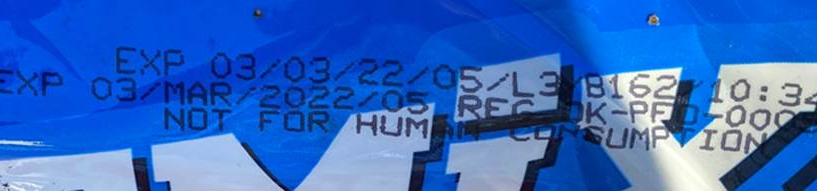
Lot code information may be found on the back of bag and will appear in a three-line code, with the top line in format “EXP 03/03/22/05/L#/B###/HH:MM”

Example product label demonstrating location and format of lot code information.

The affected products were distributed to online retailers and stores nationwide within the United States.

What Do Retailers Need to Do?

Don’t sell or donate the affected pet food products. Contact the manufacturer for further instructions. The FDA also encourages retailers to contact consumers who have purchased recalled products, if they have the means to do so (such as through shopper’s card records or point-of-sale signs).

What Do Pet Owners Need to Do?

If your pet has symptoms of aflatoxin poisoning, contact a veterinarian immediately. Even pets without symptoms may have suffered liver damage, so you may want to contact your veterinarian if your dog has eaten any of the recalled products. Provide a full diet history to your veterinarian. You may find it helpful to take a picture of the pet food label, including the lot number.

Don’t feed the recalled products to your pets or any other animal. Contact the company listed on the package for further instructions or throw the products away in a way that children, pets and wildlife cannot access them. Sanitize pet food bowls, scoops, and storage containers using bleach, rinsing well afterwards with water, and drying thoroughly.

There is no evidence to suggest that pet owners who handle products containing aflatoxin are at risk of aflatoxin poisoning. However, pet owners should always wash their hands after handling any pet food.

You can report suspected illness to the FDA electronically through the Safety Reporting Portal or by calling your state’s FDA Consumer Complaint Coordinators. It’s most helpful if you can work with your veterinarian to submit your pet’s medical records as part of your report. For an explanation of the information and level of detail that would be helpful to include in a complaint to the FDA, please see How to Report a Pet Food Complaint.

What Do Veterinarians Need to Do?

The FDA urges veterinarians treating aflatoxin poisoning to ask their clients for a diet history. We also welcome case reports, especially those confirmed through diagnostic testing. You can submit these reports electronically through the FDA Safety Reporting Portal or by calling your state’s FDA Consumer Complaint Coordinators. For an explanation of the information and level of detail that would be helpful to include in a complaint to the FDA, please see How to Report a Pet Food Complaint.

The information in this release reflects the FDA’s best efforts to communicate what it has learned from the manufacturer and parties involved in the investigation. The agency will update this page as more information becomes available. 

Additional Information

RASFF Alerts – Aflatoxin – Dried Figs – Organic Peanut Kernels – Roasted and Salted Watermelon Seeds

RASFF

aflatoxins (B1 = 81 µg/kg – ppb) in dried figs from Spain in Spain

RASFF

aflatoxins (B1 = 54; Tot. = 64 µg/kg – ppb) in organic peanut kernels from Egypt in the Netherlands

RASFF

aflatoxins (B1 = 13.7 mg/kg – ppm) and ochratoxin A (11.4 mg/kg – ppm) in roasted and salted watermelon seeds from Turkey in Germany

RASFF

aflatoxins (B1 = 36; Tot. = 90 µg/kg – ppb) in organic dried figs from Turkey in the Netherlands

RASFF

aflatoxins (B1 = 53; Tot. = 55 µg/kg – ppb) in dried figs from Turkey in France

RASFF

aflatoxins (B1 = 17; Tot. = 18 µg/kg – ppb) in dried figs from Turkey in France

RASFF

aflatoxins (B1 = 17; Tot. = 22 µg/kg – ppb) in dried figs from Turkey

RASFF

aflatoxins (B1 = 48; Tot. = 109 µg/kg – ppb) in dried figs from Turkey in France

RASFF Alert – Mould – Hazlenuts

European Food Alerts

RASFF

Cladosporium moulds in hazelnuts from Turkey, via Spain in the Netherlands

RASFF Alerts – Mycotoxin – Ergot Alkaloids – Rye

RASFF

ergot (Claviceps purpurea) alkaloids (1069 mg/kg – ppm) in rye from Poland in Belgium

Research – The Occurrence of Aflatoxins in Nuts and Dry Nuts Packed in Four Different Plastic Packaging from the Romanian Market

MDPI

kswfoodworld

Image CDC

Mycotoxins are secondary metabolites produced by various fungi. A very important category of mycotoxins are aflatoxins, considered to be the most dangerous in humans. Aflatoxin B1, well known as a favorable factor in the occurrence of hepatocellular carcinoma in humans, is the most controversial of all mycotoxins. Aflatoxins, found in naturally contaminated food, are resistant to degradation by heat. Current food processing practices and conventional storage conditions do not completely eliminate aflatoxin contamination from the food supply chain. Long storage food products—such as peanuts, pistachio, nuts in general, and dried fruits—are susceptible to aflatoxins contamination. The type of plastic material can influence the concentration of aflatoxins during storage due to the permeability to gas and moisture exchange with the external milieu. Nuts in general and dried fruits are consumed in large quantities worldwide. Therefore, herein we investigated the effect of plastic material on the total aflatoxins and aflatoxin B1 content in 64 samples of nuts and dried fruits packed and stored in low-density polyethylene (LDPE), polypropylene (PP), polyethylene (PE), and polyethylene terephthalate (PET). The method consisted in a cleanup procedure using immunoaffinity columns coupled with RIDASCREEN FAST immunoenzymatic competitive assays based on the ELISA technique. Collected data were subjected to statistical analysis and multiple comparisons tests were applied. From the total analyzed samples, 14.06% exceeded the maximum admitted European levels for total aflatoxins. The highest concentrations of total aflatoxins were obtained from samples packed in LDPE, followed by PP, PE, and PET. Aflatoxin B1 was detected in all samples packed in LDPE, PP, and PE. Most of the samples packed in PET had concentrations <1 µg/kg. These results indicate that nuts in general packed and stored in LDPE are more prone to contamination with aflatoxins, while PET is more suitable for maintaining the quality and safety of these products. View Full-Text

Germany – Delicious dried figs, 250g – Ochratoxin A

LMW

Warning type: Food
Date of first publication:December 24, 2020
Product name:

Delicious dried figs, 250g

Product pictures:

Product image.JPG

Company Eurogroup Germany GmbH

Manufacturer (distributor): Company Eurogroup Deutschland GmbH, 40764 Langenfeld Sales through branches of the REWE Group
Reason for warning:

Detection of ochratoxin A

Packaging Unit: 250 g
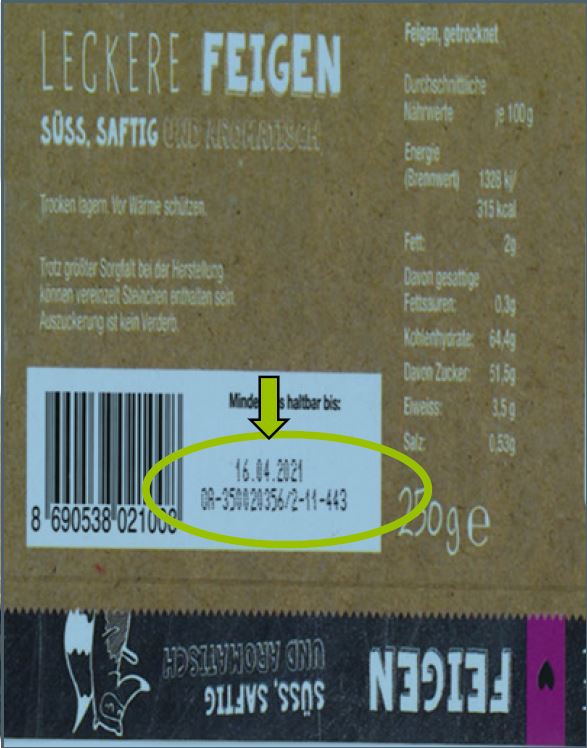
Durability: 04/16/2021
Lot identification: OA350020356 / 2 – 11 – 443
Further information:

Products with different best-before
dates and batches are not affected by this measure .

Further information can be found in the enclosed consumer information.

Contact to the responsible authorities:

Hesse:Schnellwarnung@rpda.hessen.de

North Rhine-Westphalia:poststelle@mulnv.nrw.de
Rhineland-Palatinate:Poststelle.Referat22@lua.rlp.de
Saxony-Anhalt:poststelle@ms.sachsen-anhalt.de
Thuringia:LM-Ueberendung@tlv.thueringen.de
Press releases and information
title Attachment or web link
Consumer information