Category Archives: Microbiology

Iceland – Listeria guidelines for companies producing ready-to-eat foods

MAST

The Food Administration has published new guidelines for the analysis of Listeria monocytogenes (listeria) in ready-to-eat foods .

Companies that produce “ready-to-eat food” need to submit a sampling plan based on the manufacturer’s risk assessment for listeria. The risk assessment is an assessment of how likely listeria is to enter the food and then what the growth conditions of the bacterium are during the shelf life of the product. The information should be used by companies to classify the food they produce under the correct food safety criteria in terms of listeria. They are roughly divided into three main risk categories and several sub-categories.

The guidelines are intended to assist food companies in classifying their products according to the correct food safety criteria, estimating the frequency and number of samples and how to react if listeria is detected in products or processing environments.

Related material

Research – Risk of Foodborne Illness from Pet Food: Assessing Pet Owners’ Knowledge, Behavior, and Risk Perception

Journal of Food Protection

Pet food has been identified as a source of pathogenic bacteria, including Salmonella and Escherichia coli. A recent outbreak linked to Salmonella-contaminated pet treats infected >150 people in the United States. The mechanism by which contaminated pet food leads to human illness has not been explicated, and pet owners’ food safety knowledge and their pet food handling practices have not been reported. This study was conducted to evaluate pet owners’ food safety knowledge and pet food handling practices through an online consumer survey. The survey consisted of 62 questions and assessed (i) owners’ food safety knowledge and pet food handling practices; (ii) owners’ interaction with pets; and (iii) owners’ risk perception related to their own health, their children’s health, and their pets’ health. The survey was pilot tested among 59 pet owners before distribution to a national consumer panel managed by Qualtrics XM (Provo, UT). All participants (n = 1,040) were dog and/or cat owners in the United States. Almost all pet owners (93%) interacted with their pets, and most cuddled, allowed their pets to lick them, and slept with their pets. Less than one-third of pet owners washed their hands with soap after interacting with their pets. Over half (58%) of the owners reported washing their hands after feeding their pets. Most pet owners fed their pets dry pet food and dry pet treats. Some fed their pets raw meat or raw animal product diets because they believed these diets to be beneficial to the pet’s overall health. Many owners (78%) were unaware of pet food recalls or outbreaks associated with foodborne pathogens. Less than 25% considered dry pet foods and treats as a potential source of foodborne pathogens. Pet owners were more concerned when seeing news about pets becoming ill from pet food and less concerned when seeing news about people becoming ill from pet food. The findings of this study indicated the need for consumer education about handling pet food. These results can help researchers develop more accurate risk assessment models and consumer education messages related to pet food handling.

HIGHLIGHTS
  • Most surveyed pet owners were unaware of pet food recalls or outbreaks due to pathogens.
  • Pet owners may lack knowledge of safe pet food handling practices.
  • Most pet owners perceived raw meat and animal parts to pose a microbial risk.
  • Owners were more concerned about pets than people becoming ill from pet food.
  • Many pet owners got pet food safety information from television and social media.

USA – Marler Clark, The Nation’s Food Safety Law Firm, relaunches www.about-listeria.com – www.about-HUS.com – www.about-ecoli.com

Food Poison Journal

With another Listeria outbreak just announced, this one sickening 10 with 1 dead likely linked to deli meat , Marler Clark, The Nation’s Food Safety Law Firm, relaunches www.about-listeria.com.

Food Poison Journal

In the beginning of yet another – in fact two E. coli Outbreaks that have sickened dozens, Marler Clark, The Nation’s Food Safety Law Firm, relaunches www.about-hus.com.

Food Poison Journal

In the beginning of yet another – in fact two E. coli Outbreaks that have sickened dozens, Marler Clark, The Nation’s Food Safety Law Firm, relaunches www.about-ecoli.com.

Europe – Multi-country outbreak of Salmonella Typhimurium and S. Anatum infections linked to Brazil nuts

Click to access salmonella-typhimurium-rapid-outbreak-assessment-october-2020.pdf

Canada – Updated Food Recall Warning – Alwatania brand Halva Extra recalled due to Salmonella

CFIA

Recall date:October 30, 2020Reason for recall:

Microbiological – Salmonella Hazard

classification:Class 2Company / Firm:Migahid & Elsawi Co. Ltd.Distribution:

OntarioExtent of the distribution:Consumer

Ottawa, October 30, 2020 – The food recall warning issued on October 15, 2020 has been updated to include additional product information. This additional information was identified during the Canadian Food Inspection Agency’s (CFIA) food safety investigation.

Migahid & Elsawi Co. Ltd. is recalling Alwatania brand Halva Extra from the marketplace due to Salmonella. Consumers should not consume the recalled products described below.

Recalled products

Brand Product Size UPC Codes
Alwatania Halva Extra 450 g 6 224007 246337 PRO : 20/05/2019
EXP : 19/05/2021

What you should do

If you think you became sick from consuming a recalled product, call your doctor.

Check to see if you have the recalled product in your home. Recalled products should be thrown out or returned to the store where they were purchased.

RASFF Alerts – Salmonella – Soy Bean Meal

European Food Alerts

RASFF

Salmonella enterica ser. Agona (presence /25g) in soy bean meal from Brazil, via Belgium in Belgium

RASFF

Salmonella enterica ser. Senftenberg (presence /25g) in soy bean meal from Italy in Belgium

RASFF Alerts – Animal Feed – Moulds – Dried beet Pulp

European Food Alerts

RASFF

dried beet pulp from Ukraine infested with moulds in Poland

RASFF

dried beet pulp from Ukraine infested with moulds in Poland

Research – Determining the potential food safety risks associated with dropped produce on floor surfaces in grocery stores

Journal of Food Protection

Grocery stores handle fresh produce in large quantities daily. According to the Food and Drug Administration Food Code, food is to be stored at least 15 cm above the floor, and all foods shall be protected from any source of contamination or otherwise discarded. It is reported in the literature that dropped produce could be a potential source of microbial contamination. Both consumers and employees often drop produce on the floor and place it back into a display case or bin, which could potentially serve as a source of contamination. This study aims to determine the bacterial transfer rate on different produce types when dropped onto Listeria monocytogenes contaminated floor surfaces for various contact times. Apples, peaches, and romaine lettuce were dropped separately onto carpet and tile surfaces from a distance of 1 m and held for 5s, 1min, 10min, 1h, and 4h.  Results showed that transfer from all produce types occurred from both the carpet (10.56%) and tile (3.65%) surfaces. Still, percent transfer was not statistically significant among different times used in this study (p>0.05). Dropped romaine lettuce had the most transfer (28.97%) from both the surfaces combined, followed by apple(s) (8.80%) and peach(es) (7.32%) with minimal transfer. Even with a low transfer level, grocery stores should include signage to alert consumers not to pick up dropped produce, and train their employees accordingly.

USA – Most Listeria Cases Are in Massachusetts in Deli Meat Listeria Outbreak

Food Poisoning Bulletin

Most Listeria cases are in Massachusetts in the deli meat Listeria monocytogenes outbreak announced last week by the Centers for Disease Control and Prevention (CDC). All ten patients have been hospitalized, and one person, who  lived in Florida, has died.

Netherlands – Important safety warning for various ripened goat cheeses Bettinehoeve – Listeria monocytogenes

NVWA

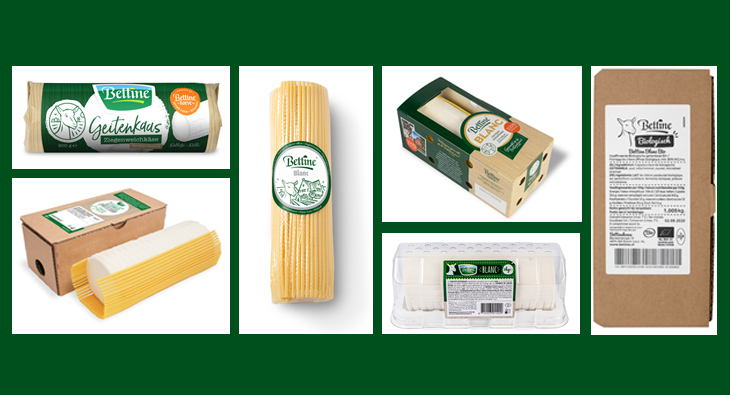
Bettinehoeve is preventively recalling its ripened goat’s cheeses with white mold rind due to a possible listeria contamination.

It concerns the following products:  

Warning
Product name EAN code ce Expiry dates
  • Bettine matured goat cheese 200g
  • 8712023011292
Between 10/28/2020 and 12/30/2020
  • Bettine Blanc matured goat cheese 450g
  • 8712023020089
Between 10/28/2020 and 12/30/2020
  • Bettine Blanc matured goat cheese 1kg
  • 8712023011209
  • 8712023001774
  • 8712023020027
  • 8712023000852
  • 8712023000821
  • 290020CWWWWWC
  • 2885220WWWWWC
Between 10/28/2020 and 12/30/2020
  • Bettine BIO Blanc matured goat cheese 1kg
  • 8712023014156
Between 10/28/2020 and 12/30/2020

Bettinehoeve advises not to consume these cheeses, because they may contain traces of Listeria monocytogenes. This can pose serious health risks, especially in risk groups such as very young children, pregnant, elderly and people with low immunity. 

No contamination has been demonstrated on the end products. A potential source of contamination has only been identified during testing in the environment at the production site. Bettinehoeve has decided to recall all matured goat cheese products (with white mold crust) as a precaution from distributors, retailers and food service partners. 

Contamination is excluded for all other products such as fresh goat’s cheeses and dairy products. These goat dairy products are not contaminated, because these products are produced at a different production location. 

Consumers can call the telephone number +31 (0) 76-502 22 47 

See also: website Bettinehoeve

Download ‘Important safety warning for various ripened goat cheeses Bettinehoeve’

PDF document | 1 page | 127 KB

Warning | 28-10-2020

Different packs of goat cheese